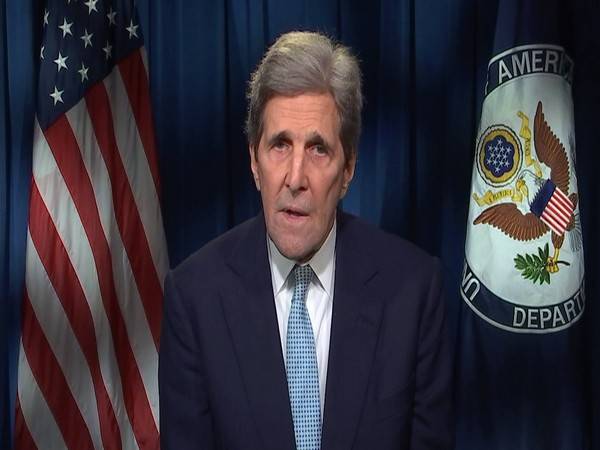
India’s environment minister, Bhupendra Yadav had a telecon with Kerry on Tuesday to discuss the Climate Action and Finance Mobilization Dialogue…reports Asian Lite News
John Kerry, Special Presidential Envoy for Climate is likely to visit India next month to further India-US partnership on Clean Energy ahead of UN Climate Change negotiations (COP 26) in November. The partnership will mobilize finance and speed clean energy deployment during this decade.
India’s environment minister, Bhupendra Yadav had a telecon with Kerry on Tuesday to discuss the Climate Action and Finance Mobilization Dialogue (CAFMD) under India-US Climate and Clean Energy Agenda 2030 Partnership.
“Both sides agreed that India and the USA, will engage for a constructive engagement under the “India-US Climate and Clean Energy Agenda 2030 Partnership.” The Environment Minister stated that these platforms provide greater opportunities for working together for climate actions and emphasized that India stands committed to working with the US on Clean Energy,” a statement from MoEFCC said.
Kerry told Yadav that Clean Energy Agenda 2030 Partnership to enhance actions to curb greenhouse gas emissions in the current decade will help meet the goals under the Paris Agreement
“Had a telephonic conversation with US Special Presidential Envoy for Climate Mr @JohnKerry and discussed at length how the largest and oldest democracies can set examples for other countries on Climate Action,” tweeted Yadav on Tuesday.
The partnership will aim to mobilize finance and speed clean energy deployment; demonstrate and scale innovative clean technologies needed to decarbonize sectors including industry, transportation, power, and buildings; and build capacity to measure, manage, and adapt to the risks of climate-related impacts. The partnership will proceed along two main tracks: the Strategic Clean Energy Partnership and the Climate Action and Finance Mobilization Dialogue, which will build on and subsume a range of existing processes, a joint statement by India and US had stated on April 22.
“Both the United States and India have set ambitious 2030 targets for climate action and clean energy. In its new nationally determined contribution, the United States has set an economy-wide target of reducing its net greenhouse gas emissions by 50–52 percent below 2005 levels in 2030. As part of its climate mitigation efforts, India has set a target of installing 450 GW of renewable energy by 2030. Through the Partnership, the United States and India are firmly committed to working together in achieving their ambitious climate and clean energy targets and to strengthening bilateral collaboration across climate and clean energy,” the statement added.
Kerry had visited India in April when he had met PM Modi regarding clean energy and collaborating on climate change. Focusing on actions taken during the 2020 to 2030 decade will set the road map for achieving net zero emissions by 2050, Kerry had said. “India understands the challenge. It would be great if India wanted to say that (committing to a net zero emissions target by 2050) but I don’t think it’s an absolute requirement because India is doing all the things it needs to do to get us there. That’s better than a lot of nations. India has a plan for 450 GW of renewable energy, if deployed India will be one of the key nations helping to keep the 1.5 degree C target alive. What’s more important than making a pledge, I mean we welcome the pledge, it’s helpful to get everybody doing it but what’s more important is real actions now between 2020 and 2030,” he said.
In another event on Tuesday organised by The Energy and Resources Institute (TERI) where Yadav delivered the Presidential Address at the 20th Darbari Seth Memorial Lecture he made India’s stand clear and underlined that countries should determine action on climate change based on respective capabilities.
“Science is very clear. The recent IPCC report has sounded ‘code red’. The findings reaffirm that historical cumulative emissions are the source of the current climate crisis. Equitable carbon and development space to achieve sustainable development required due consideration to principles of ‘Common but Differentiated Responsibilities and Respective Capabilities (CBDR-RC)’ and ‘polluters pay,’ he said.