October 28, 2021
2 mins read

Cambridge college hands over looted African bronze

Jesus College is the first UK institution to hand back a Benin bronze, raising pressure on other establishments, including the British Museum, to follow suit…reports Asian Lite News.

To cheers and a trumpet fanfare, a Cambridge University college on Wednesday handed a bronze statue looted in the 19th century back to Nigerian officials, in the first such move by a UK institution.

Sonita Alleyne, the head of Jesus College, gave the elaborately carved cockerel known as “Okukor” to a Nigerian delegation.

Okukor was among thousands of African artefacts stolen from the continent during British colonial rule.

It was looted along with hundreds of sacred sculptures and carvings known as the Benin Bronzes by a punitive British military expedition in the former kingdom of Benin in southern Nigeria in 1897.

Jesus College is the first UK institution to hand back a Benin bronze, raising pressure on other establishments, including the British Museum, to follow suit.

“We are proud to be the first institution to simply act,” said Alleyne, hailing a “really historic occasion” as she formally transferred the cockerel’s ownership.

“We are delighted that it is now with its rightful owner,” she added.

Jesus College was given the bronze in 1905 by the father of a student, and more recent students had been campaigning for its restitution.

The Benin Bronzes are held in collections of numerous British, European and US museums and institutions.

The British Museum, which has the largest collection, has not agreed to return its bronzes.

It has long argued that its vast trove of foreign artefacts, such as the Elgin Marbles taken from the Parthenon in Athens, are best housed with explanatory notices in purpose-built premises.

Nigerian officials taking part in the ceremony included ambassador to the UK Sarafa Tunji Isola and Prince Aghatise Erediauwa, the brother of the historic kingdom’s traditional ruler, the Oba of Benin.

At the end, they held the cockerel aloft to cheers, applause and a trumpet acclamation.

“I thank you for this wonderful initiative. The people of Nigeria are grateful,” the ambassador said, passing on the thanks of Nigerian President Muhammadu Buhari.

Prince Aghatise Erediauwa said that “Jesus College is indeed challenging the erroneous arguments that stolen art cannot be returned because of the existence of different legal jurisdictions on the matter”.

Jesus College used to display the cockerel in its dining hall, but removed it in 2016. British campuses in general have seen a recent wave of soul-searching spurred on by the “Black Lives Matter” movement.

Abba Isa Tijani, the director general of the Nigerian National Commission for Museums and Monuments, hailed the college’s act as “a great example for other institutions and other countries”.

He urged the British Museum to change its stance on the bronzes in its collection, and noted that Nigeria has handed over a formal request for their repatriation.

Tijani insisted that the sculptures “are going to the right place and they will be looked after”.

ALSO READ-FB paid billions to spare Zuck in Cambridge Analytica probe

READ MORE-Hong Kong leader cuts ties with Cambridge

Previous Story

Tibetan Plateau to Get Spotlight at COP26

Next Story

Prince Charles to deliver opening address at COP26

Previous Story

Tibetan Plateau to Get Spotlight at COP26

Next Story

Prince Charles to deliver opening address at COP26

Latest from -Top News

Nepal Floods Cause $1.66 Billion In Damage, Says World Bank

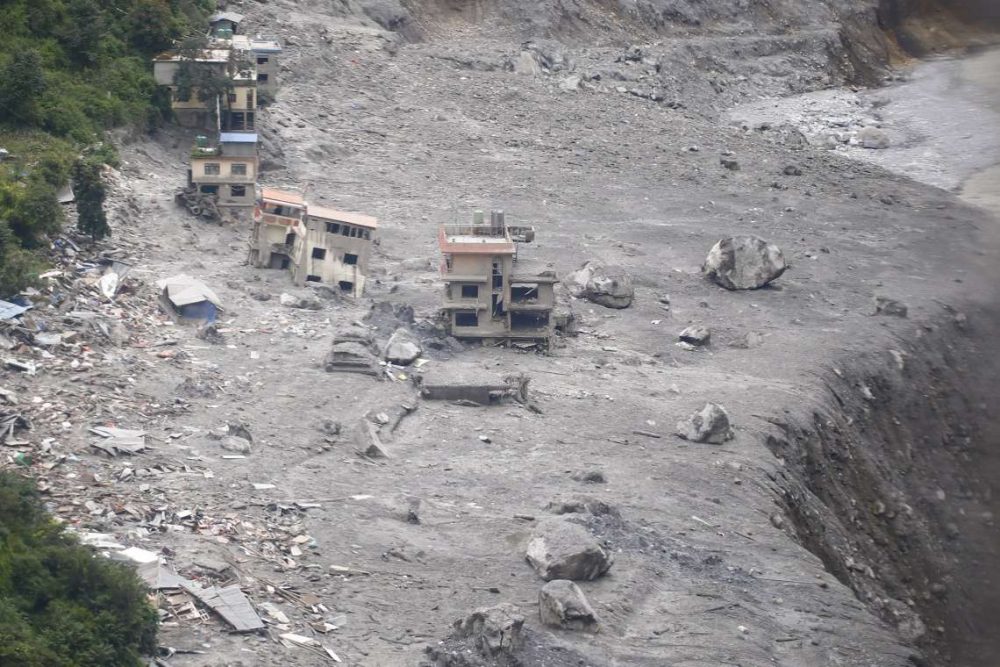
Nepal’s August 2026 floods caused an estimated US$1.66 billion in direct physical damage, with infrastructure accounting for 83 per cent of the total…reports Asian Lite News Desk Nepal’s devastating floods in August 2026 caused an estimated US$1.66 billion in direct physical damage, with infrastructure accounting for 83 per cent of the total, according to a World Bank report. The estimate, included in the World Bank’s Nepal Development Update unveiled this week, is close to the Nepal government’s preliminary Rapid Damage and Needs Assessment (RDNA), which put physical damage at US$1.81 billion. The government’s assessment also estimated losses beyond physical assets at US$883.32 million, taking the total economic effects of the disaster to approximately US$2.7 billion. The World Bank’s Global Rapid Post-Disaster Damage Estimation (GRADE) found that infrastructure suffered the greatest damage, estimated at US$1.38 billion, or 83 per cent of the total. Residential buildings accounted for US$185 million, or 11 per cent, while non-residential buildings sustained damage worth US$101 million, or 6 per cent. The floods along the Bhotekoshi and Trishuli rivers caused extensive damage to hydropower projects, solar energy facilities, electricity transmission infrastructure and transport networks. The energy sector, particularly hydropower, was among the worst affected. The August 2026 floods affected 12 hydropower projects and one solar project, involving 281.1 MW of operational capacity and 395.02 MW of capacity under construction. Damage to transmission lines and substations also disrupted the transmission of 149.6 MW of electricity to the national grid. The total affected capacity reached approximately 430.7 MW, equivalent to 10.6 per cent of Nepal’s installed hydropower and solar capacity at the end of fiscal year 2025-26, which concluded in mid-July. The disaster also severely damaged transport infrastructure along the 82-km Rasuwa trade corridor, which connects Kathmandu with the Rasuwagadhi border point with China. More than 55 km of the corridor was damaged, including 40 km that was completely destroyed. The floods also damaged 37 motorable bridges and 68 suspension bridges. The disaster resulted in significant human losses along the affected corridor and beyond. According to Nepal’s National Disaster Risk Reduction and Management Authority, 1,455 people had been confirmed dead, while 5,285 remained missing following the disaster. The World Bank report found that the physical damage was concentrated in three districts in central Nepal: Rasuwa, Nuwakot and Dhading. Rasuwa was the worst-affected district, accounting for US$1.07 billion, or 64 per cent, of the total direct damage. Nuwakot recorded an estimated US$551 million in damage, while Dhading suffered approximately US$39 million. “The findings highlight the concentration of physical damage in a small number of districts and the disproportionate impact on infrastructure, underscoring the scale of the reconstruction challenge facing the affected areas,” the World Bank said. The global development financier said the floods had demonstrated the scale and complexity of disaster risks in Nepal’s Himalayan environment. The event also showed how a single extreme weather event could trigger cascading impacts across sectors and geographical areas. The report said recovery efforts should extend beyond restoring infrastructure to its pre-disaster condition. While the principle of “Build Back Better” remained relevant, the World Bank stressed that rebuilding infrastructure to higher engineering standards in the same locations might not always be sufficient. “In some cases, simply rebuilding the same infrastructure in the same location to a higher engineering standard may not be sufficient. Nepal may need to build differently — based on a better understanding of risk, more careful decisions about location and design, greater redundancy in critical networks, stronger monitoring and early warning, and a more integrated approach to infrastructure development in the Himalayas,” the report said. The World Bank said Nepal’s recovery strategy should incorporate improved risk assessment, more informed infrastructure planning, stronger monitoring systems and better early warning mechanisms. The report emphasised that reconstruction should not only restore damaged assets but also reduce the impact of future disasters, particularly in the country’s vulnerable Himalayan regions.

Vaccine Delays Fuel Bangladesh Measles Outbreak

More than 32,000 suspected cases and over 250 deaths have been reported since mid-March, with children making up most of the fatalities….reports Asian Lite News Desk Bangladesh’s measles outbreak has intensified, with

Tsai: Stand With Taiwan, Strengthen The Indo-Pacific

The former president said stronger international partnerships would help Taiwan withstand mounting military, cyber and economic pressure while reinforcing democratic resilience….repots Asian Lite News Desk Former Taiwan President Tsai Ing-wen has called
Go toTop