Analysts see China’s willingness to work with the international community for a safe and stable Afghanistan as a significant shift in its approach to the new regime in Kabul…reports Asian Lite News
In a major shift in its stance on the situation in Afghanistan, China now wants the United Nations to coordinate the transition in Afghanistan following the Taliban’s return to Kabul.
At the second meeting of the foreign ministers of the neighbouring countries of Afghanistan hosted by Tehran on Wednesday, Chinese State Councillor and Foreign Minister Wang Yi not only stressed on Taliban making “a clean break with terrorist forces” but also batted for “expanding multilateral coordination” in the country.
Foreign ministers of the six countries bordering Afghanistan, including China, Iran, Tajikistan, Turkmenistan, Uzbekistan and Pakistan participated in the conference along with Russia which began with a video message from UN Secretary General Antonio Guterres.
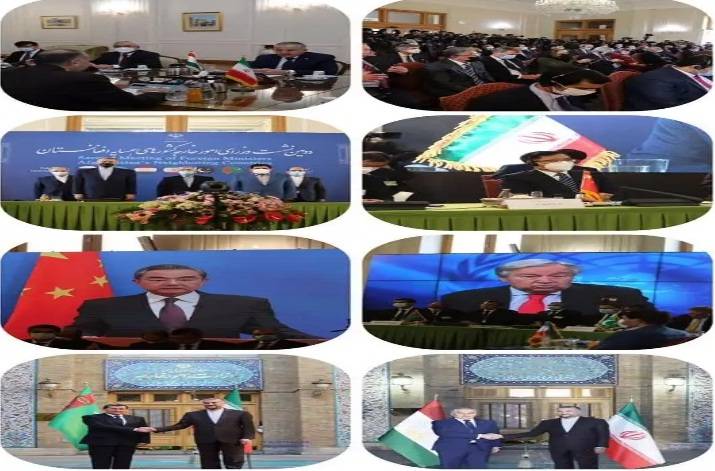
“We need to increase mutual reinforcement and build synergy between the various mechanisms on Afghanistan, and support the United Nations as a key coordinator in such fields as maintaining stability, preventing chaos, and providing emergency assistance,” said Wang Yi who is currently on a tour of Europe.
Analysts see China’s willingness to work with the international community for a safe and stable Afghanistan as a significant shift in its approach to the new regime in Kabul as Beijing fears that the country is becoming a safe haven for terrorism once again.
It was not too long ago that China had opposed the global organisation when it had expressed serious concerns about Afghanistan’s future going forward.
A few days after the Taliban had taken control of Kabul on August 15, China had refused to back a UN Security Council resolution put forward by the United States, United Kingdom and France, outlining clear expectations from the new regime regarding the future of Afghanistan.
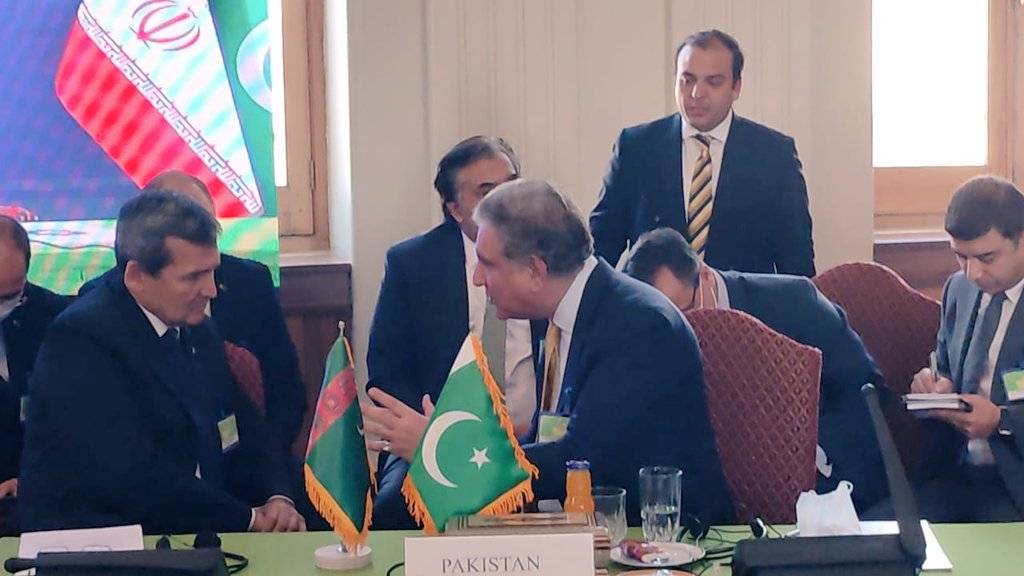
On Wednesday, a day after he had met a delegation of the interim government of the Afghan Taliban in Doha, the Chinese Foreign Minister insisted on forging “a united front against terrorism” through multilateral platforms such as the UN and the Shanghai Cooperation Organisation.
“We need to positively consider holding bilateral and multilateral counter-terrorism dialogues and cooperation with Afghanistan at an appropriate time,” he said.
Wang Yi also told the gathering that he had a “deep-going exchange of views” with the senior Taliban members in Doha on Tuesday where he expressed the “shared concerns” of Afghanistan’s neighbours. He said that the Taliban is eager to have dialogue and cooperation with the outside, and is serious about it.
The Taliban delegation which met Wang Yi in Qatar was led by Amir Khan Muttaqi, the Acting Foreign Minister of the Afghan Taliban’s interim government.

According to China, the Taliban said that it is having some practical difficulties in developing the economy, improving people’s livelihood and governing the country, and they hope to get external assistance and support.
“The Taliban stated that they take seriously the calls of the international community, especially Afghanistan’s neighbours, and that they will take further positive steps in domestic and foreign policies,” said the Chinese Foreign Minister.
China’s changing viewpoint on Afghanistan was highly visible in the Joint Ministerial Statement released after the foreign ministers’ meeting in Tehran.
It emphasised that international and regional organisations “in particular the United Nations agencies and relevant members of the UN Security Council” should abide by their responsibility for political settlement of Afghanistan issues, rendering support to Afghans to develop the socio-economic infrastructure and providing economic and humanitarian assistance.
(The content is being carried under an arrangement with indianarrative.com)