Examples from countries, which are now battling a surge in infections, suggest that Chinese jabs may not be very effective at preventing new Covid variants…reports Asian Lite News
Countries like Mongolia, Seychelles and Bahrain had relied on the easily accessible Chinese COVID-19 vaccines to combat the coronavirus pandemic and bring back normalcy. These countries are now battling a surge in infections.
Examples from several countries suggest that the Chinese vaccines may not be very effective at preventing the spread of the virus, particularly the new variants, reported The New York Times (NYT).
In Seychelles, Chile, Bahrain and Mongolia, about 50 to 68 percent of the populations have been fully inoculated with Chinese vaccines, outpacing the United States, according to Our World in Data, a data-tracking project. They are also among the top 10 countries with the worst COVID-19 outbreaks as recently as last week.
“If the vaccines are sufficiently good, we should not see this pattern,” said Jin Dongyan, a virologist at the University of Hong Kong. “The Chinese have a responsibility to remedy this.”
Amid uncertainty over how countries with relatively high inoculation rates are suffering new outbreaks, scientists have pointed out to relaxing of social controls and careless behaviour.
Israel, which has the second-highest vaccination rate in the world with shots from Pfizer after Seychelles, reports 4.95 new COVID-19 cases per million. On the other hand, Seychelles, which relied mostly on Sinopharm, that number is more than 716 cases per million.
China, as well as the more than 90 nations that have received the Chinese shots, may end up as a country that is fully vaccinated but partly protected from the virus, contending with rolling lockdowns, testing and limits on day-to-day life for months or years to come. Moreover, economies could remain held back, reported NYT.
Beijing saw its vaccine diplomacy as an opportunity to emerge from the pandemic as a more influential global power. China’s top leader, Xi Jinping, pledged to deliver a Chinese shot that could be easily stored and transported to millions of people around the world.
ALSO READ: Nepal to buy 4mn vaccines from China
Mongolia, relying on Chinese aid, quickly rolled out an inoculation program and eased restrictions, vaccinating 52 per cent of its population. However, it recorded 2,400 new infections on Sunday, a quadrupling from a month before.In a statement, China’s Foreign Ministry said it did not see a link between the recent outbreaks and its vaccines. It cited the World Health Organization as saying that vaccination rates in certain countries had not reached sufficient levels to prevent outbreaks, and that countries needed to continue to maintain controls, according to NYT.

“Relevant reports and data also show that many countries that use Chinese-made vaccines have expressed that they are safe and reliable, and have played a good role in their epidemic prevention efforts,” the ministry said.
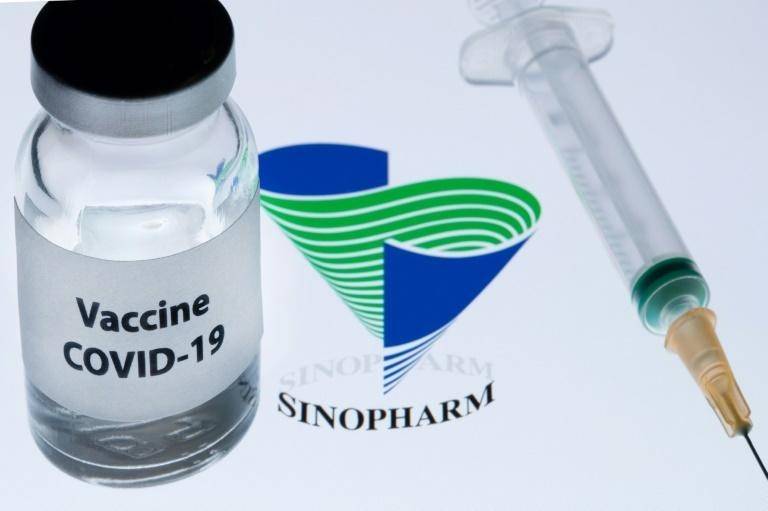
While the Pfizer-BioNTech and Moderna vaccines have efficacy rates of more than 90 per cent, China’s Sinopharm vaccine has an efficacy rate of 78.1 per cent and the Sinovac vaccine has an efficacy rate of 51 per cent.
Moreover, the Chinese companies have not released much clinical data to show how their vaccines work at preventing transmission. Data on breakthrough infections has not been made available, either, though a Sinovac study out of Chile showed that the vaccine was less effective than those from Pfizer-BioNTech and Moderna at preventing infection among vaccinated individuals.William Schaffner, medical director of the National Foundation for Infectious Diseases at Vanderbilt University, said the efficacy rates of Chinese shots could be low enough “to sustain some transmission, as well as create illness of a substantial amount in the highly vaccinated population, even though it keeps people largely out of the hospital”.
Despite the spike in cases, officials in both the Seychelles and Mongolia have defended Sinopharm, saying it is effective in preventing severe cases of the disease.
Nikolai Petrovsky, a professor at the College of Medicine and Public Health at Flinders University in Australia, said that with all of the evidence, it would be reasonable to assume the Sinopharm vaccine had minimal effect on curbing transmission. He said that a major risk with the Chinese inoculation is that vaccinated people may have few or no symptoms and still spread the virus to others.
In Indonesia, where a new variant is spreading, more than 350 doctors and health care workers recently came down with Covid-19 despite being fully vaccinated with Sinovac, according to the risk mitigation team of the Indonesian Medical Association.
Bahrain and the United Arab Emirates were the first two countries to approve the Sinopharm shot, even before late-stage clinical trial data was released. Since then, there have been extensive reports of vaccinated people falling ill in both countries, NYT reported. (ANI)
ALSO READ: SPECIAL: Covid Drains Xi’s Centenary Spirits