Khalilzad said the Taliban had agreed to not enter Kabul until an inclusive government was formed….reports Asian Lite News
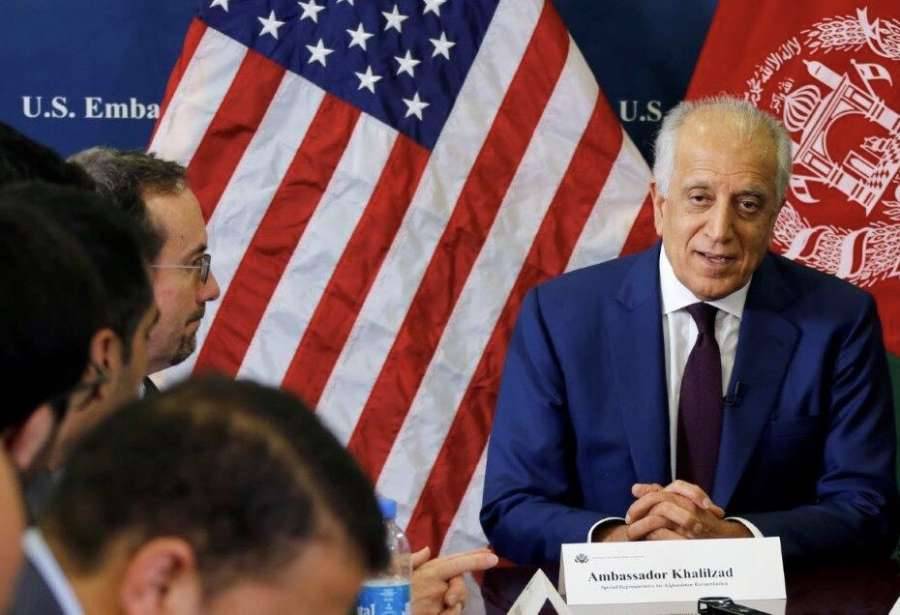
Afghanistan’s leaders are responsible for the failure of the intra-Afghan peace talks according to former US special representative for Afghanistan Zalmay Khalilzad.
In an exclusive interview with TOLOnews on Sunday, Khalilzad said that days before Kabul collapsed, it was decided that all parties should agree to an inclusive government.
According to the former US envoy, a few days before Kabul’s collapse he was in Doha where he talked with Mullah Abdul Ghani Baradar, the current Prime Minister Deputy of the Islamic Emirate, and they agreed to hold talks with the Afghan politicians and a delegation from the then-Afghan government on forming an inclusive interim government.
Khalilzad said the Taliban had agreed to not enter Kabul until an inclusive government was formed.
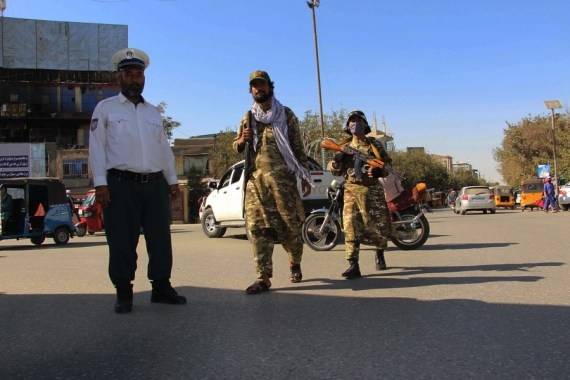
“It was agreed that the Taliban forces would not enter Kabul and a number of their forces who were in the city would leave the capital. In the meantime, a delegation from the government was set to visit Doha and to form an agreement with the Taliban on an inclusive government within two weeks,” Khalilzad said, reported TOLOnews.
He said that it was decided that any decision the delegation would make in Doha about an inclusive government would be final and Ashraf Ghani had accepted this.
The scheduled talks, however, did not take place as Ghani left Kabul on August 15 and later in the day the Taliban forces entered the city.
Khalilzad, however, said both the former Afghan government and the Taliban are responsible for the failure of the intra-Afghan talks intended to bring peace to the country.
According to Khalilzad, the Doha agreement provided a golden opportunity for peace, but the conflicting parties failed to use the opportunity.
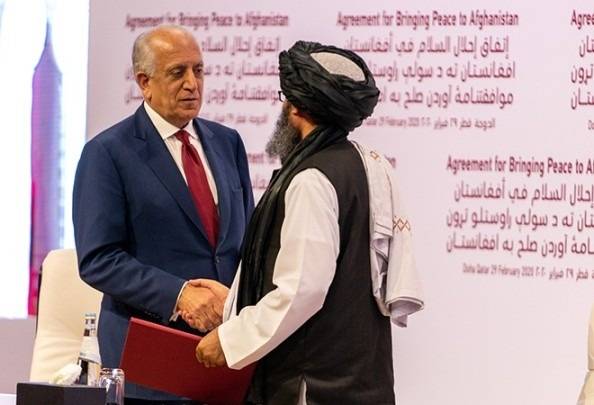
“Although the Doha deal and the joint declaration in Kabul on the same day provided a golden opportunity, unfortunately, the warring parties did not use it. In my view, both sides are responsible for the failure,” TOLOnews quoting him added.
According to Khalilzad, both sides wanted peace on their own terms and did not compromise to allow a middle way. “For me, Afghanistan leaders, including Taliban and non-Taliban, are more responsible because they did not accept a middle way.”
He also said that US President Joe Biden was disappointed by the Afghans’ disagreement and that he preferred a time-based withdrawal instead of a condition-based one. “It was feared that if we condition the withdrawal on the intra-Afghan agreement, it was possible that the Afghans would never reach an agreement.”
According to Khalilzad, during the peace talks the US had discussed a power-sharing government with the Taliban, but Ashraf Ghani’s administration was reluctant to form such a government.
“We were talking with the Taliban about a power-sharing government. I made a proposal and soon Kabul released the proposal. Releasing a secret agreement (proposal) that had been given to the government and the Taliban itself meant that the (the government) wanted to damage it,” he said.
Khalilzad said amid the increase in fighting in the months prior to August, the US pressured the Taliban and they agreed to not attack cities and highways. He said the government in Kabul was insisting on an immediate ceasefire, according to the broadcaster. (ANI)