September 18, 2021
2 mins read

Abu Dhabi Crown Prince visits children’s disease centre in London

Sheikh Mohamed bin Zayed Al Nahyan, the Crown Prince of Abu Dhabi, was received by Health Secretary Sajid Javid, Education Secretary Nadhim Zahawi, reports Asian Lite News

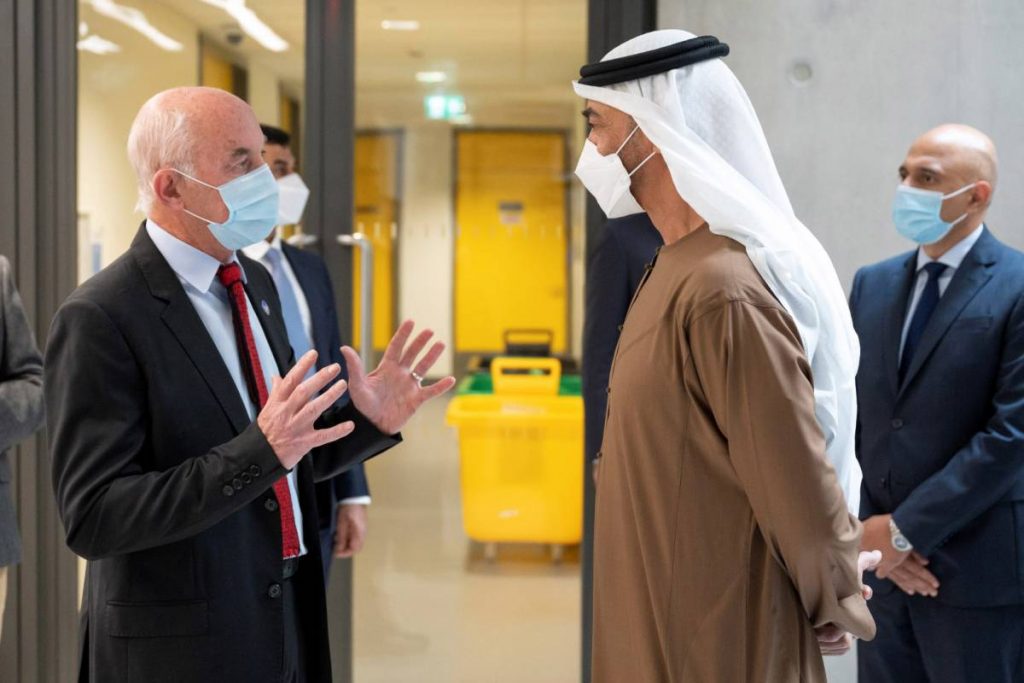
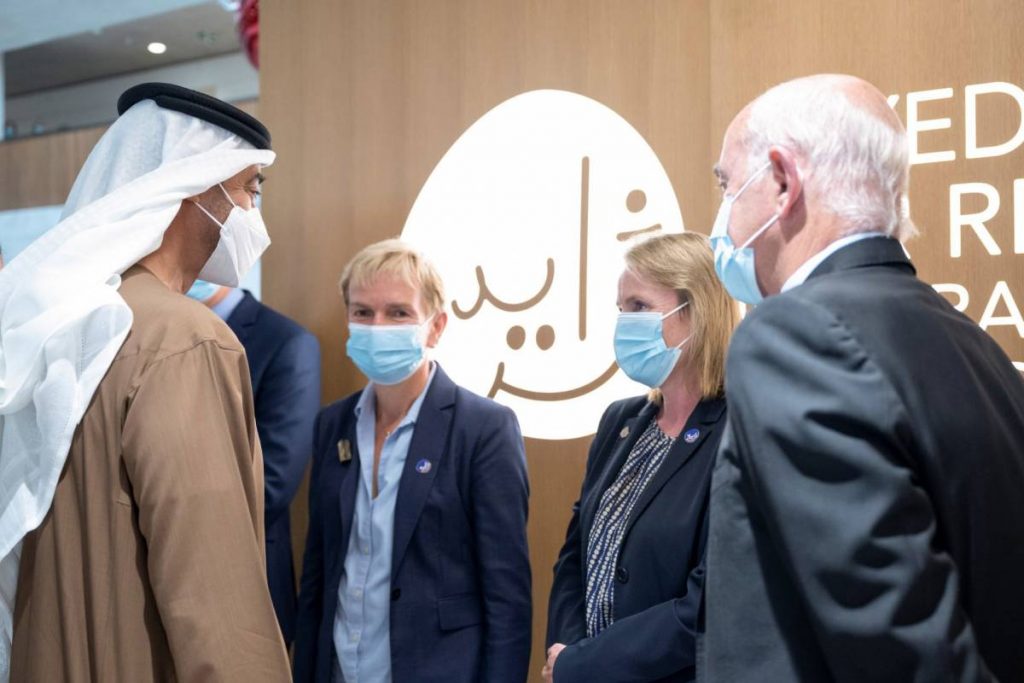
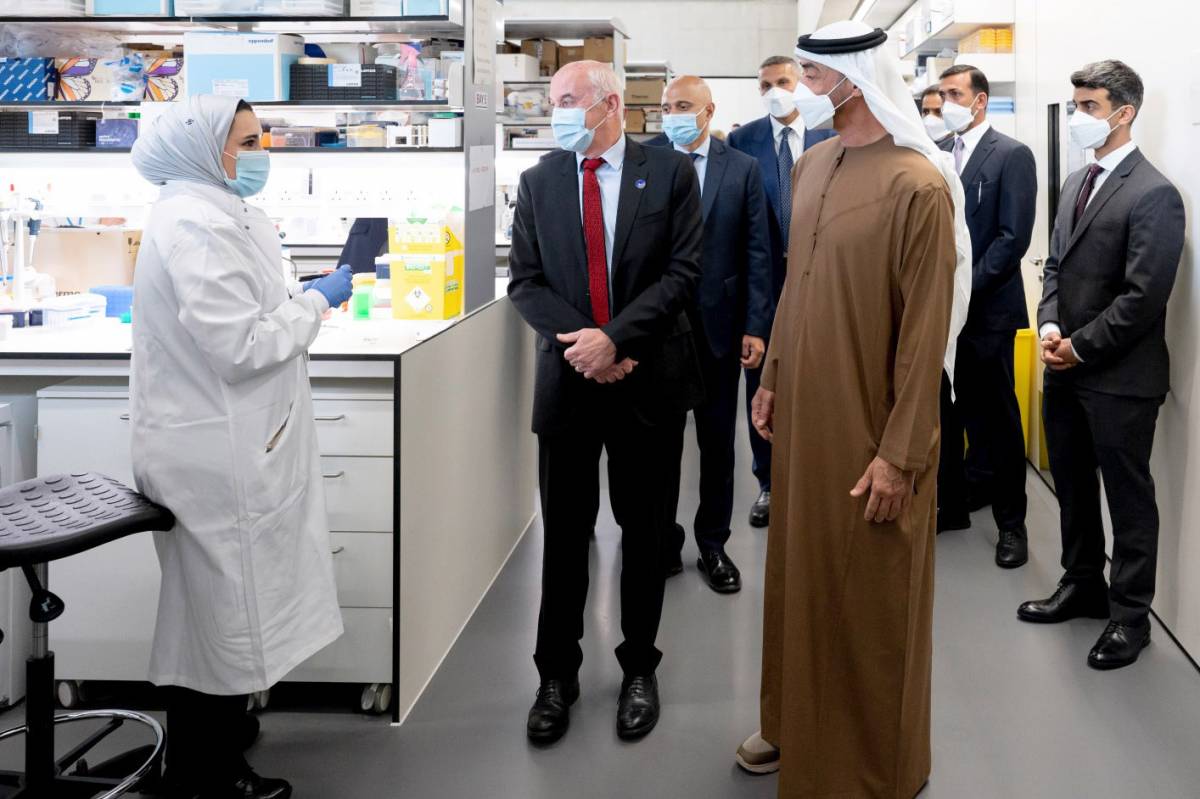
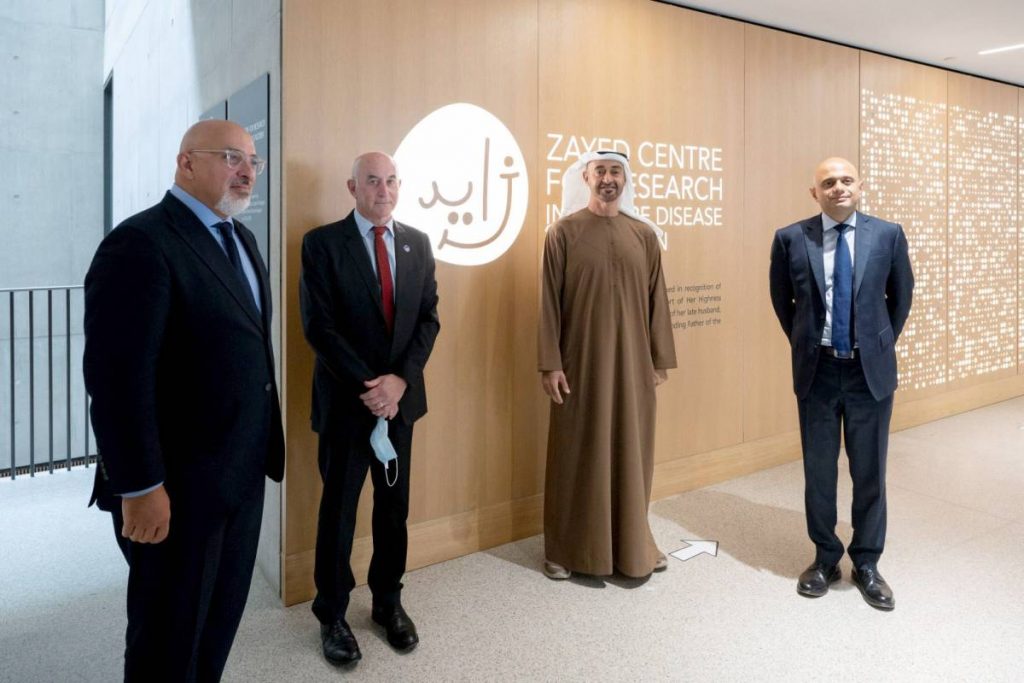
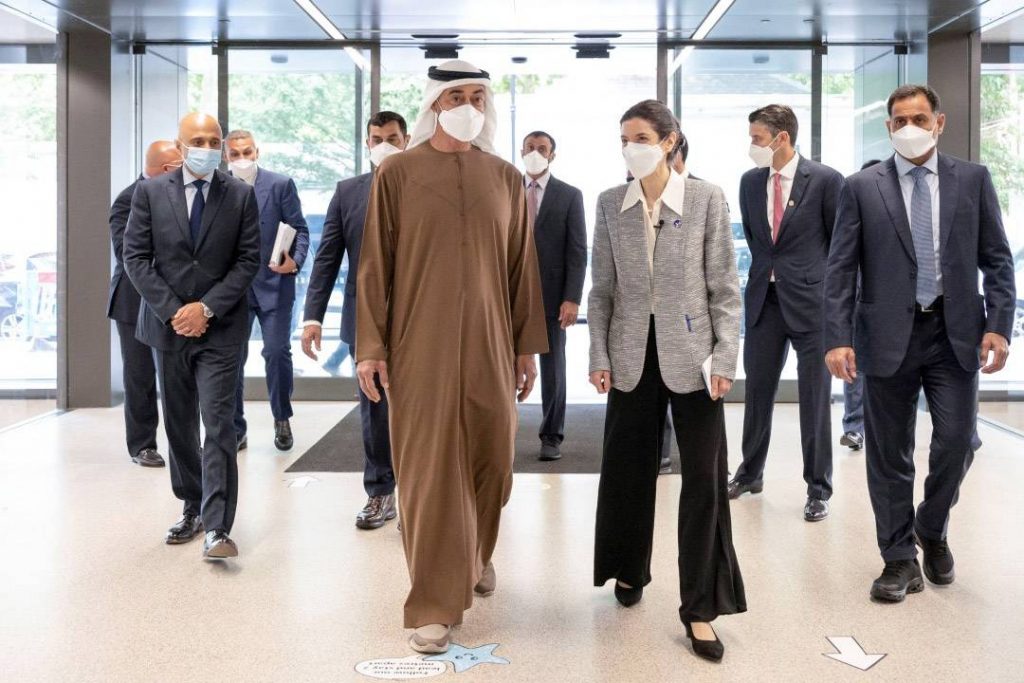
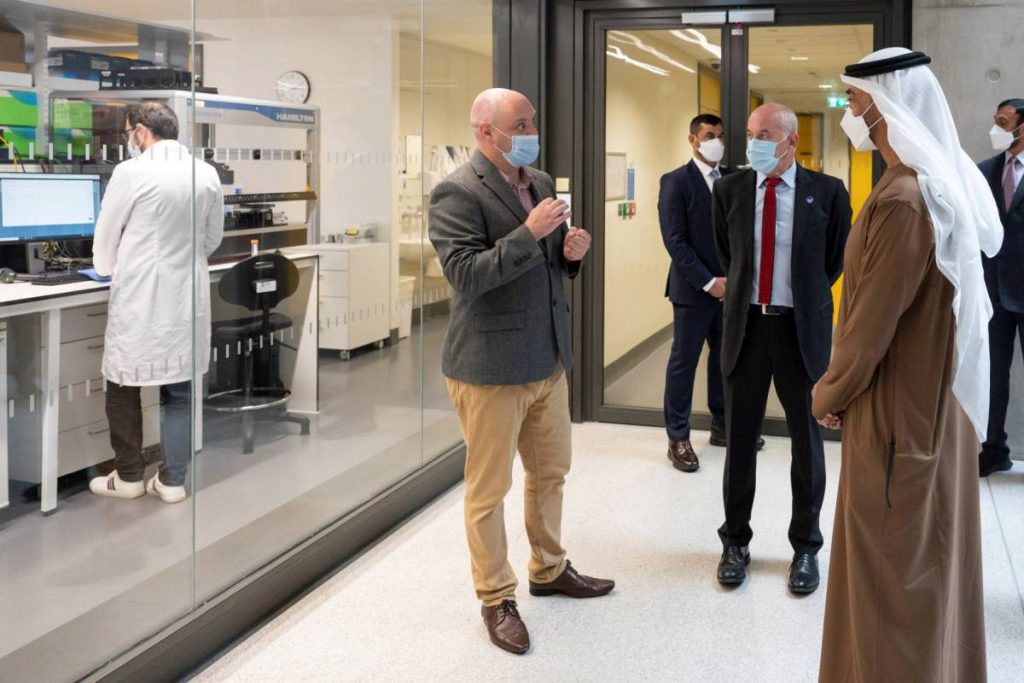
The Zayed Centre for Research into Rare Disease in Children (ZCR) on Friday welcomed Crown Prince of Abu Dhabi Sheikh Mohamed bin Zayed Al Nahyan, who toured the facility and met with researchers, professors and doctors to learn about the Centre’s lifesaving research and treatments.

Sheikh Mohamed was received by Health Secretary Sajid Javid, Education Secretary Nadhim Zahawi.
Abu Dhabi

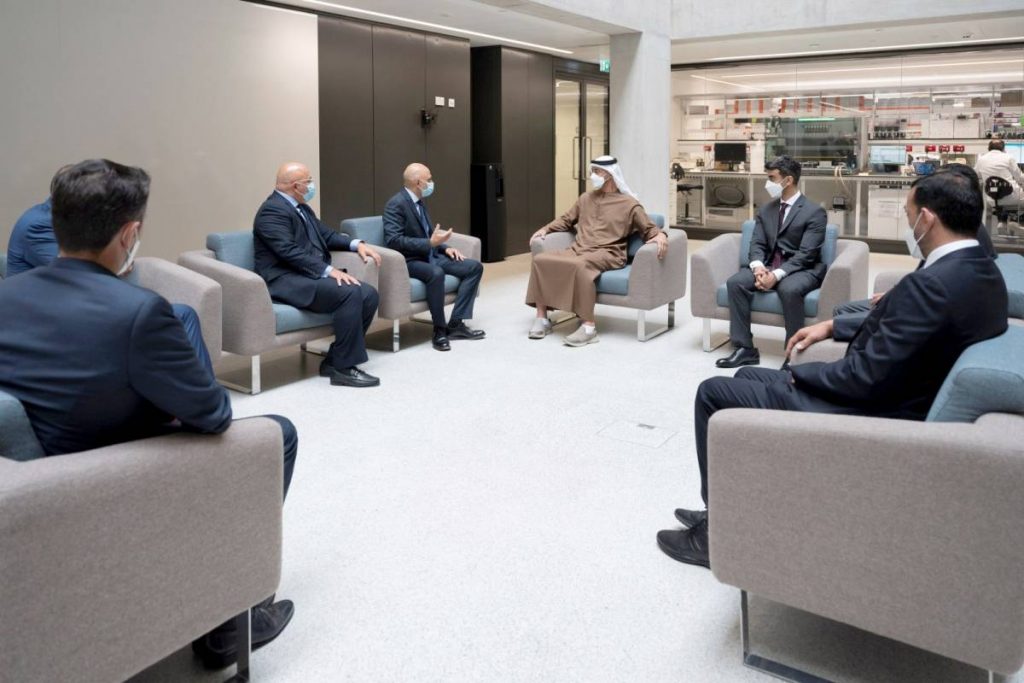
Matthew Shaw, Chief Executive of Great Ormond Street Hospital, and Prof Rosalind Smyth, Director of UCL Great Ormond Street Institute of Child Health, explained the Centre’s world-first model for paediatric medicine, which brings together under one roof cutting edge research and world class clinical care. This bench-to-bedside approach accelerates the diagnoses, treatment and cures of rare diseases in children.

Sheikh Mohamed bin Zayed toured the main laboratory, which includes 140 dedicated research benches and the genomics team lab, and was briefed on the Centre’s specialist facilities that have enabled it to play a vital role in the global response to covid19. The Pathogen Genomics Unit has sequenced 15,500 samples, informing scientists of the changing nature of the virus, and the impact of new and repurposed drugs in the treatment of serious viral infections in children.
The visit also included a briefing on the importance of the state-of-the-art specialist clean rooms – the largest single academic manufacturing unit for gene and cell therapies in the UK and one of the largest in the world – where products are manufactured for use in groundbreaking gene therapy trials.

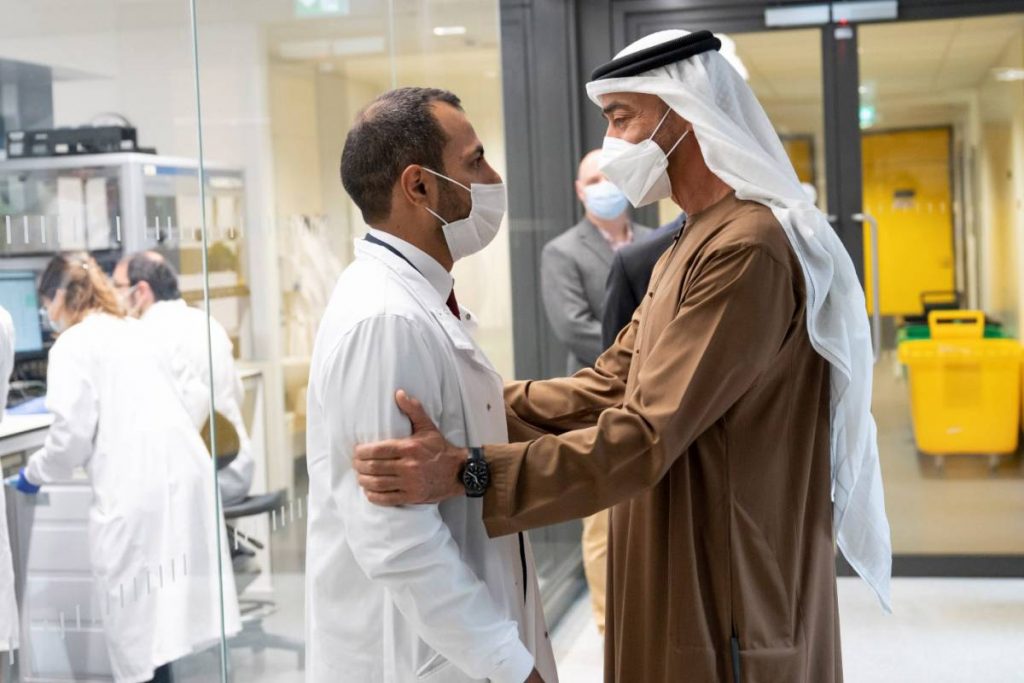
The crown prince thanked Mohamed Al Ameri, a ZCR Researcher and PhD candidate of Epigenetics of Pediatric Leukaemia Diagnostics, UCL, for his pioneering research into how a person’s DNA is altered in cancer cells, highlighting that this work has the potential to not only benefit cancer patients in the United Arab Emirates, but also the world over.
While at the Centre, he also met Ali Hamed Al Ketbi, a 10-year old patient, who is improving steadily as he undergoes treatment at Great Ormond Street Hospital.

The Centre, which will celebrate its second anniversary in November, is a partnership between Great Ormond Street Hospital (GOSH), University College London and Great Ormond Street Hospital Children’s Charity.
Newsdesk

Newsdesk

Aravind Rajeev is Deputy News Editor at Asian Lite, mostly covering the Middle East and GCC. He has over eight years of experience as a journalist, with a background in ground-level reporting, crime reporting, as well as international and regional news.

Previous Story

Tajikistan lone Afghan neighbour taking tough stand against Taliban

Next Story

French envoys to US, Australia recalled over submarine row

Previous Story

Tajikistan lone Afghan neighbour taking tough stand against Taliban

Next Story

French envoys to US, Australia recalled over submarine row

Latest from -Top News

Pakistan Risks Overstretching Itself in Yemen War

Pakistan’s expanding military role in Saudi Arabia amid the Yemen conflict could strain its defence resources and fragile finances…reports Asian Lite News Desk Pakistan’s military involvement in the war in Yemen may prove unsustainable because of mounting financial pressures and competing security demands, according to a new report. Islamabad’s growing military presence in Saudi Arabia risks stretching its defence resources while exposing the country to greater strategic and economic challenges. An article by Andrew Wilson in One World Outlook describes Pakistan’s involvement as a case of “fiscal and strategic overreach”, arguing that the country lacks the financial flexibility to sustain an expanded military commitment. Pakistan’s external finances depend heavily on an International Monetary Fund (IMF) programme, financial support from Gulf countries and remittances from Pakistani workers in the region. The report argues that deeper military involvement in the conflict could place additional pressure on these sources of financial stability. It also warns that deploying troops and military equipment abroad could weaken Pakistan’s capacity to address security challenges along its eastern border and deal with two domestic insurgencies. The move could also draw Islamabad into a conflict it has sought to approach cautiously. A Reuters report in May, citing Pakistani security and government sources, said Islamabad had deployed around 8,000 troops, a squadron of approximately 16 aircraft, mostly JF-17 fighter jets, two drone squadrons and a Chinese HQ-9 air-defence battery to Saudi Arabia. According to those sources, Riyadh was financing the deployment, with Pakistani personnel operating the equipment. The sources also said a confidential agreement contemplated the possibility of deploying up to 80,000 troops. Islamabad has not confirmed those figures, although it has acknowledged its military presence in Saudi Arabia, including the deployment of fighter jets at King Abdulaziz Air Base from April. The One World Outlook article argues that Saudi financial support can cover allowances and operating expenses but cannot easily replace military equipment needed elsewhere or resolve the political and strategic challenges of participating in the Yemen conflict. Pakistan’s defence budget is another concern. For the 2026-27 financial year, the federal government allocated PKR 3 trillion, or approximately $10.8 billion, to defence services. The allocation represents an 18 per cent increase from the original PKR 2.55 trillion provision and amounts to around 2.1 per cent of projected gross domestic product (GDP). Defence spending accounts for approximately 16 per cent of the federal government’s PKR 18.8 trillion expenditure. Military pensions are budgeted separately at PKR 822 billion, while debt servicing costs stand at approximately PKR 8 trillion, more than two-and-a-half times the defence allocation. The report argues that these competing financial obligations leave little room for additional military expenditure without placing further pressure on public finances. Pakistan’s reliance on IMF assistance also limits its fiscal flexibility. The country must meet the conditions attached to the programme, including a primary budget surplus target of 2 per cent of GDP and continued restraint on development spending. According to the article, these requirements make it difficult for Islamabad to finance an additional military commitment without compromising other budgetary priorities. Pakistan’s economic indicators offer limited reassurance. Economic growth for the 2025-26 financial year is estimated at between 3.6 and 3.7 per cent, while inflation reached approximately 10.3 per cent in September following an energy price shock. Foreign exchange reserves stood at around $21.5 billion at the end of September. Although this marks an improvement from the low levels recorded in 2023, the report notes that the reserves cover only a few months of imports. Financial assistance from Gulf partners remains central to Pakistan’s external stability. The article says Islamabad holds approximately $8 billion in Saudi deposits at its central bank. In July, the State Bank of Pakistan said Riyadh had extended the maturity of $5 billion in deposits to December 2028, easing the country’s immediate external financing requirements. A further $3 billion deposit was also extended in the spring. However, the article argues that these arrangements provide temporary relief rather than long-term financial independence, particularly as regional conflict threatens the stability of the Gulf economies on which Pakistan relies. The report concludes that Pakistan faces a difficult balance between supporting Saudi Arabia militarily and preserving the financial and military resources needed to address its domestic and regional challenges.

UK and Germany Ratify Kensington Treaty

Britain and Germany ratify the Kensington Treaty, agreeing new cooperation on AI, quantum research, defence and security while targeting investment, jobs and Russian hybrid threats…reports Asian Lite News Desk Britain and Germany

Economic tide is turning in Bangladesh

If there is one thing that can bring some comfort to the struggling Bangladeshi economy, it is good relations with India. Bangladesh should remember that Delhi’s backing, through easy supplies of essentials
Go toTop

Don't Miss

ASA cracks down on misleading broadband price ads

The guidance sets stricter rules on the prominence that must

UK all set to host COP26 summit in November

The COP26 President Alok Sharma said: “The COP26 summit in