September 4, 2021
4 mins read

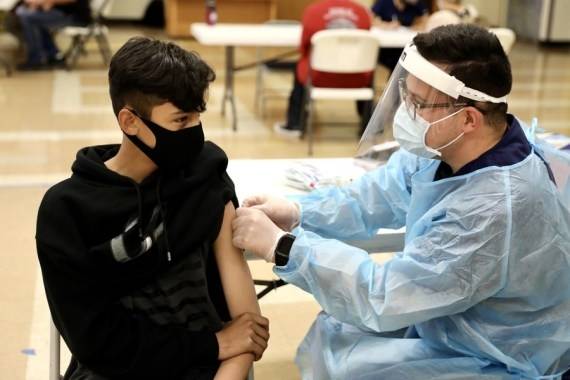
UK scientists advise against jabs for healthy children

As it is not within the JCVI’s remit to consider the wider societal impacts of vaccination, four chief medical officers of UK will decide on vaccinating healthy children aged 12-15 years on health grounds alone, reports Asian Lite Newsdesk

Joint Committee on Vaccine and Immunisation (JCVI), the UK’s vaccine advisory body, has refused to give the go-ahead for vaccinating healthy children aged 12-15 years on health grounds alone.

The JCVI said children were at such a low risk from the virus that jabs would offer only a marginal benefit, the BBC reported.

The UK’s four chief medical officers have now been asked to have the final say, and to consider the wider impact on schools and society, it was reported.

“It is not within the JCVI’s remit to consider the wider societal impacts of vaccination, including educational benefits. The government may wish to seek further views on the wider societal and educational impacts from the Chief Medical Officers of the UK 4 nations,” the JCVI said in a statement through Public Health England.
UK
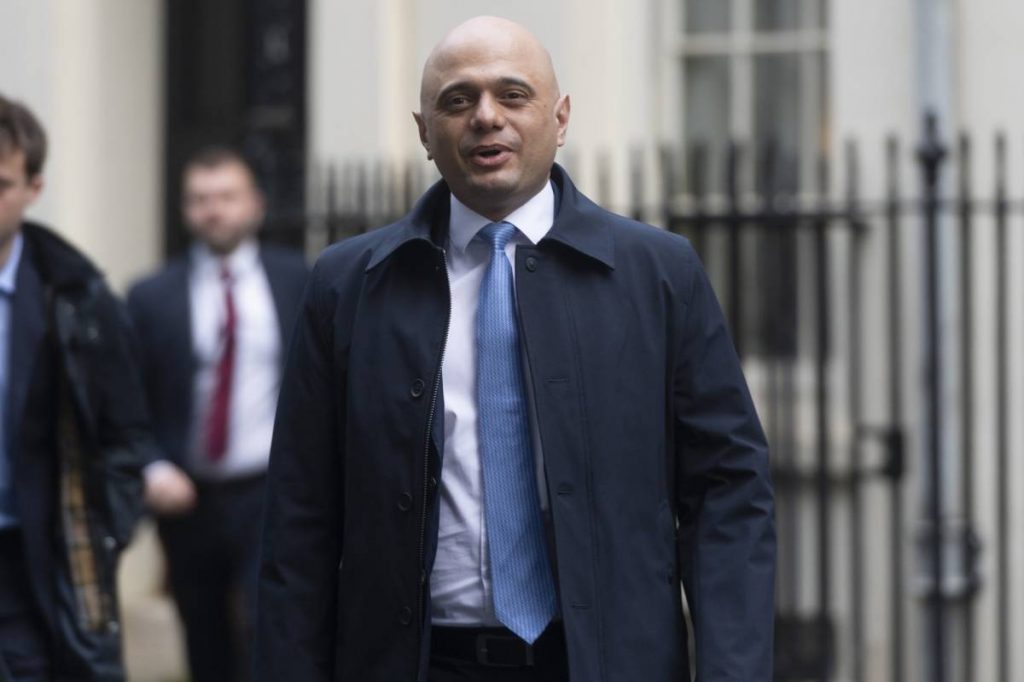
UK Health Secretary Sajid Javid

Meanwhile, Health Secretary Sajid Javid said a decision would be made shortly.

According to BBC report, the JCVI did advise widening the existing vaccine programme to include an extra 200,000 teenagers with specific underlying conditions. Doctors identified that children with chronic heart, lung and liver conditions were at much higher risk of Covid than healthy children.

“Children aged 12 to 15 years old with underlying health conditions that put them at higher risk of severe COVID-19 should be offered COVID-19 vaccination. The range of underlying health conditions that apply has recently been expanded,” Professor Wei Shen Lim, Chair of COVID-19 Immunisation for the JCVI, said.

He said, for otherwise healthy 12 to 15 year old children, their risk of severe COVID-19 disease is small and therefore the potential for benefit from COVID-19 vaccination is also small. The JCVI’s view is that overall, the health benefits from COVID-19 vaccination to healthy children aged 12 to 15 years are marginally greater than the potential harms, he added.

“Taking a precautionary approach, this margin of benefit is considered too small to support universal COVID-19 vaccination for this age group at this time. The committee will continue to review safety data as they emerge,” Professor Wei Shen Lim said.

Meanwhile, another 42,076 people in UK have tested positive for COVID-19, bringing the total number of coronavirus cases in the country to 6,904,969, according to official figures released Friday.
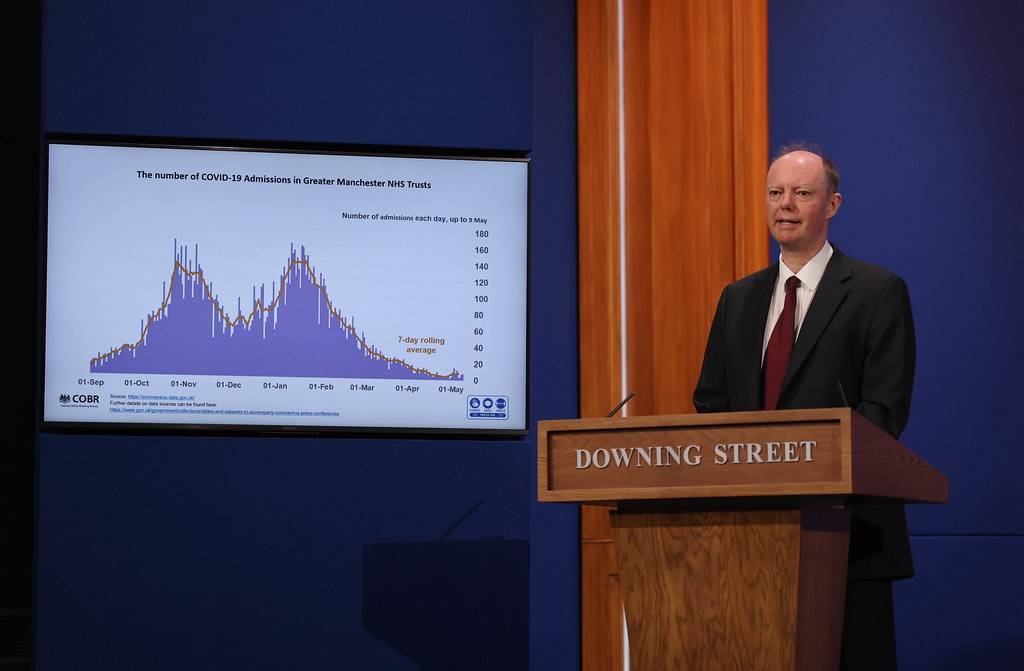
Chief Medical Officer, Professor Chris Whitty during a press conference. Picture by Andrew Parsons / No 10 Downing Street

The country also reported another 121 coronavirus-related deaths. The total number of coronavirus-related deaths in Britain now stands at 133,041. These figures only include the deaths of people who died within 28 days of their first positive test.

More than 88 percent of people aged 16 and over in Britain have had their first dose of vaccine and nearly 80 percent have received both doses, the latest figures showed.

 Long Covid and children

Up to one in seven children and young people who caught SARS-CoV-2 may have symptoms linked to the virus about three months later, suggest preliminary findings from the world’s largest study on ‘long Covid’ in children.

The study, led by the UCL and Public Health England researchers, surveyed 3,065 11- to 17-year-olds in England who had positive results in a PCR test between January and March as well as a matched control group of 3,739 11- to 17-year-olds who tested negative over the same period.

The findings, published on the preprint site Research Square, showed that when surveyed at an average of 15 weeks after their test, 14 per cent more young people in the test positive group had three or more symptoms of ill health, including unusual tiredness and headaches, than those in the test negative group, while 7 per cent (one in 14) more had five or more symptoms.
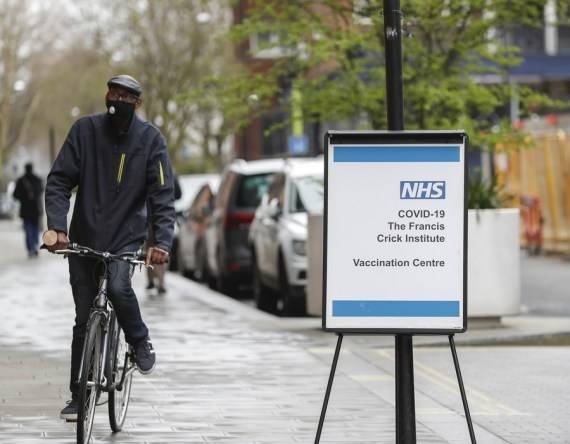
A man wearing a face mask cycles past the Francis Crick Institute Vaccination Centre in London. (Xinhua/Han Yan/IANS)

“There is consistent evidence that some teenagers will have persisting symptoms after testing positive for SARS-CoV-2. Our study supports this evidence, with headaches and unusual tiredness the most common complaints,” said lead author Professor Sir Terence Stephenson, from UCL.

“The difference between the positive and negative groups is greater if we look at multiple symptoms, with those who had a positive test twice as likely to report three or more symptoms 15 weeks later. This suggests that the number of symptoms should be considered when clinicians seek to define long Covid in children,” he added.

The study also followed-up the children for up to two years which showed that there was no difference in mental health and wellbeing scores between children who tested positive compared to those who tested negative, but a high proportion in both groups reported being a bit or very worried, sad or unhappy (41 per cent of people who tested positive versus 39 per cent of those who tested negative).

ALSO READ – UK records highest daily Covid death toll since March

Newsdesk

Newsdesk

Aravind Rajeev is Deputy News Editor at Asian Lite, mostly covering the Middle East and GCC. He has over eight years of experience as a journalist, with a background in ground-level reporting, crime reporting, as well as international and regional news.

Previous Story

UK sanctions target key biz associate of Myanmar junta

Next Story

‘India-UK green partnership a model to learn from’

Previous Story

UK sanctions target key biz associate of Myanmar junta

Next Story

‘India-UK green partnership a model to learn from’

Latest from -Top News

Pakistan Risks Overstretching Itself in Yemen War

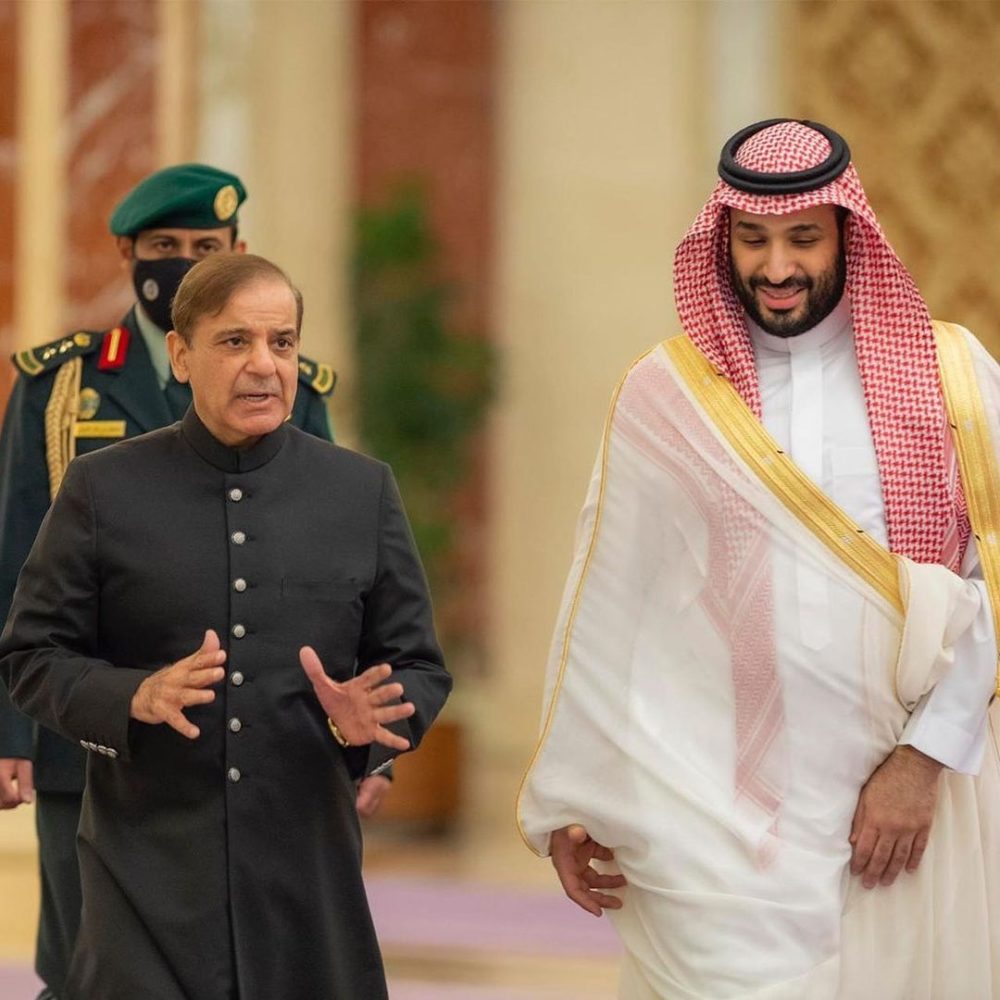
Pakistan’s expanding military role in Saudi Arabia amid the Yemen conflict could strain its defence resources and fragile finances…reports Asian Lite News Desk Pakistan’s military involvement in the war in Yemen may prove unsustainable because of mounting financial pressures and competing security demands, according to a new report. Islamabad’s growing military presence in Saudi Arabia risks stretching its defence resources while exposing the country to greater strategic and economic challenges. An article by Andrew Wilson in One World Outlook describes Pakistan’s involvement as a case of “fiscal and strategic overreach”, arguing that the country lacks the financial flexibility to sustain an expanded military commitment. Pakistan’s external finances depend heavily on an International Monetary Fund (IMF) programme, financial support from Gulf countries and remittances from Pakistani workers in the region. The report argues that deeper military involvement in the conflict could place additional pressure on these sources of financial stability. It also warns that deploying troops and military equipment abroad could weaken Pakistan’s capacity to address security challenges along its eastern border and deal with two domestic insurgencies. The move could also draw Islamabad into a conflict it has sought to approach cautiously. A Reuters report in May, citing Pakistani security and government sources, said Islamabad had deployed around 8,000 troops, a squadron of approximately 16 aircraft, mostly JF-17 fighter jets, two drone squadrons and a Chinese HQ-9 air-defence battery to Saudi Arabia. According to those sources, Riyadh was financing the deployment, with Pakistani personnel operating the equipment. The sources also said a confidential agreement contemplated the possibility of deploying up to 80,000 troops. Islamabad has not confirmed those figures, although it has acknowledged its military presence in Saudi Arabia, including the deployment of fighter jets at King Abdulaziz Air Base from April. The One World Outlook article argues that Saudi financial support can cover allowances and operating expenses but cannot easily replace military equipment needed elsewhere or resolve the political and strategic challenges of participating in the Yemen conflict. Pakistan’s defence budget is another concern. For the 2026-27 financial year, the federal government allocated PKR 3 trillion, or approximately $10.8 billion, to defence services. The allocation represents an 18 per cent increase from the original PKR 2.55 trillion provision and amounts to around 2.1 per cent of projected gross domestic product (GDP). Defence spending accounts for approximately 16 per cent of the federal government’s PKR 18.8 trillion expenditure. Military pensions are budgeted separately at PKR 822 billion, while debt servicing costs stand at approximately PKR 8 trillion, more than two-and-a-half times the defence allocation. The report argues that these competing financial obligations leave little room for additional military expenditure without placing further pressure on public finances. Pakistan’s reliance on IMF assistance also limits its fiscal flexibility. The country must meet the conditions attached to the programme, including a primary budget surplus target of 2 per cent of GDP and continued restraint on development spending. According to the article, these requirements make it difficult for Islamabad to finance an additional military commitment without compromising other budgetary priorities. Pakistan’s economic indicators offer limited reassurance. Economic growth for the 2025-26 financial year is estimated at between 3.6 and 3.7 per cent, while inflation reached approximately 10.3 per cent in September following an energy price shock. Foreign exchange reserves stood at around $21.5 billion at the end of September. Although this marks an improvement from the low levels recorded in 2023, the report notes that the reserves cover only a few months of imports. Financial assistance from Gulf partners remains central to Pakistan’s external stability. The article says Islamabad holds approximately $8 billion in Saudi deposits at its central bank. In July, the State Bank of Pakistan said Riyadh had extended the maturity of $5 billion in deposits to December 2028, easing the country’s immediate external financing requirements. A further $3 billion deposit was also extended in the spring. However, the article argues that these arrangements provide temporary relief rather than long-term financial independence, particularly as regional conflict threatens the stability of the Gulf economies on which Pakistan relies. The report concludes that Pakistan faces a difficult balance between supporting Saudi Arabia militarily and preserving the financial and military resources needed to address its domestic and regional challenges.
Go toTop

Don't Miss

Storm Gerrit batters UK

Eighteen British Airways flights were cancelled due to air traffic

UK fears AI warfare

Former Prime Minister Liz Truss demanded Sunak “reconsider” China’s invite