September 4, 2021
4 mins read

‘India-UK green partnership a model to learn from’

This global partnership will boost private finance to support India’s ambitious commitment to deploy 450 GW of renewable energy by 2030, a report by VISHAL GULATI

With the UK announcing a $1.2 billion package of public and private investment in green projects and renewable energy in India to tackle climate change, climate advocates on Friday said the partnership is a trendsetter for countries that how the public and private sectors can work together to speed the clean energy transition.

This global partnership will boost private finance to support India’s ambitious commitment to deploy 450 GW of renewable energy by 2030.

Responding to the announcement by UK Chancellor Rishi Sunak and Finance Minister Nirmala Sitharaman on Thursday, Michael R. Bloomberg, UN Special Envoy on Climate Ambition and Solutions and Chair of Climate Finance Leadership Initiative (CFLI), said: “This partnership is a great example of how the public and private sectors can work together to speed the transition to clean energy and make possible the deep emissions cuts we need to reach the goals of the Paris Agreement and beyond.

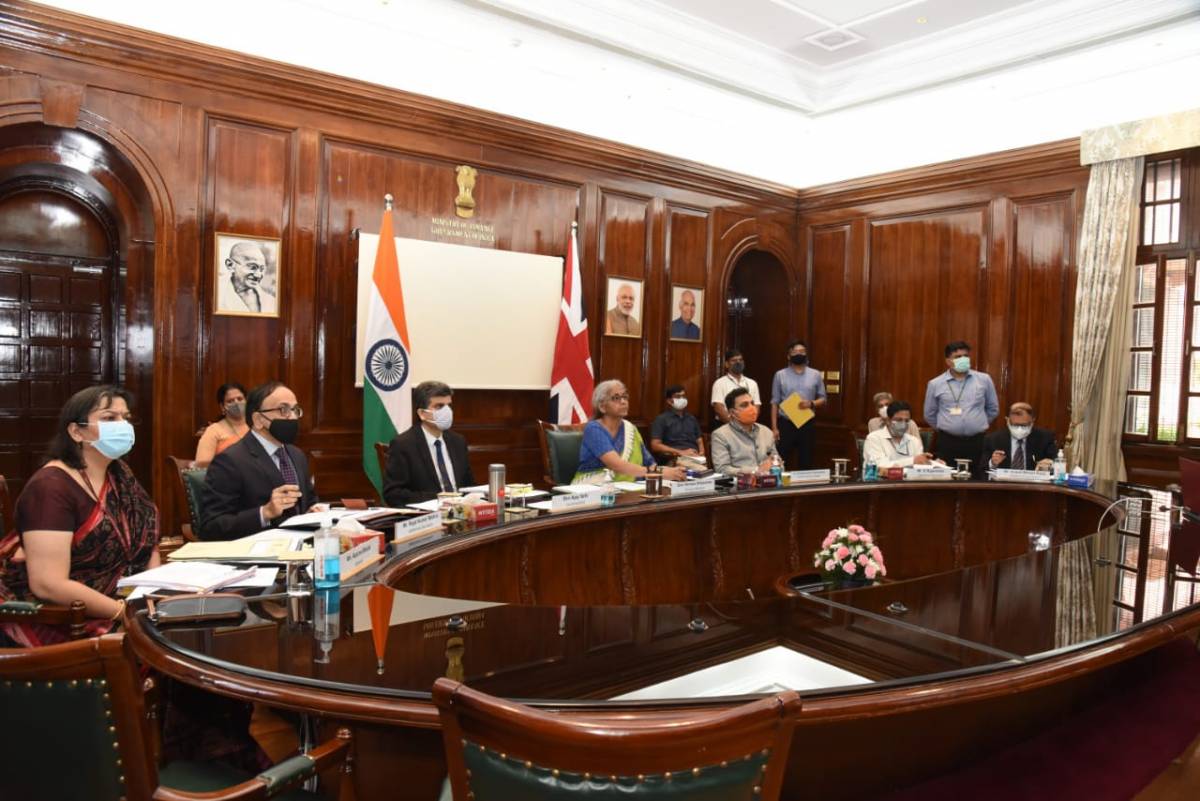
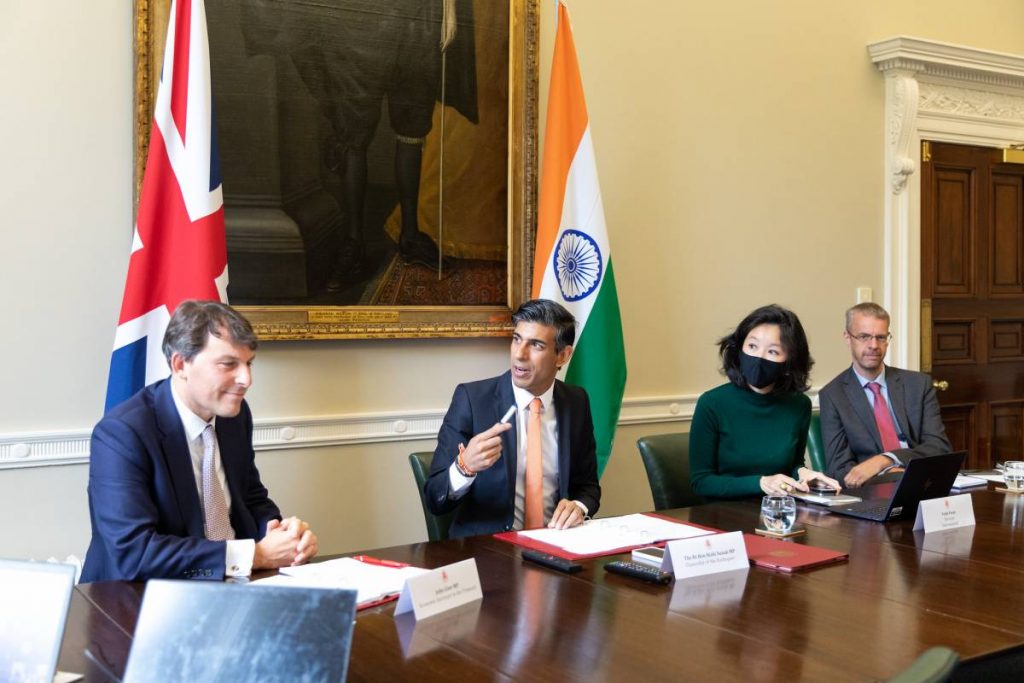
Finance Minister of India, Nirmala Sitharaman and UK Chancellor of Exchequer, Rishi Sunak held a virtual business engagement with Chairpersons of India-UK Financial Partnership (IUKFP) and Climate Finance Leadership Initiative India Chapter (CFLI India), at the sidelines of 11th India-U.K. Economic and Financial Dialogue.

“The Climate Finance Leadership Initiative is working to eliminate barriers to investment and create market conditions to drive more capital to green projects — and this collaboration between India and the UK, two of the world’s largest and most dynamic economies, can create a model for countries around the world to learn from.”

Climate Program WRI Director Ulka Kelkar said the massive scale of India’s low carbon transition will require upfront capital investments.

“Dedicated funding like this can be used to build new green energy, industry, and urban infrastructure and avoid lock-in to carbon-intensive projects. These new funding initiatives should also prioritise investments in decentralised rural energy and micro, small and medium enterprises (MSMEs), which have great potential to reduce emissions and support livelihoods but have lower capacity to access finance.”

Adequate financial support has always been a vital concern for climate action, and more so as India moves ahead in its quest for a clean future, said Akhilesh Magal, Head (Research Advisory), Gujarat Energy Research and Management Institute (GERMI).
“Today’s announcement adds confidence towards constructive negotiations at COP26. It remains to see how funds will come, from what sources, and where they will be used. Even so, this development should contribute towards the flow of low cost finance for clean energy goals,” he said.

India is taking bold steps to decarbonize its economy and has seen rapid growth in clean energy and other low carbon sectors in the last decade.

Indian wind and solar capacities have quintupled to reach 76GW in 2020, making it a global success story for renewables deployment. Despite this success, BloombergNEF estimates deployment must accelerate and an additional $649 billion in financing may be needed across the power sector for India to reach its 450GW renewable energy target — a financing gap the private sector can help to fill.

CFLI India presents a new approach to mobilising climate finance at scale to deploy emerging clean technologies, develop sustainable and resilient infrastructure, and help achieve India’s renewable energy target.

Climate Trends Director Aarti Khosla told IANS financing climate action has been a persistent issue.

“Coming ahead of the COP26, this India-UK partnership should bring in more private capital for sustainable infrastructure, including wind and solar. This will create a multiplier effect towards reducing emissions from key sectors like power and transport. This is good news ahead of the important meetings to be held over the next few months. It makes the commitments to finance real and not a symbolic gesture alone.”

Thursday’s announcement brings to life the key factors for creating enabling environments in emerging markets outlined in the CFLI’s latest report: Unlocking Private Climate Finance in Emerging Markets: Private Sector Considerations for Policymakers.

CFLI India is the first in a series of country pilots stemming from the CFLI’s work, with the goal of replicating this model in other countries in the years ahead.

Since early 2019, the CFLI, under Michael Bloomberg’s leadership, has worked to identify barriers and solutions to mobilising climate finance at scale, particularly in high-emitting countries, industries, and sectors.

This includes an ambitious agenda for public and private-sector engagement to strengthen investment conditions for private finance. The group, responsible for $6.2 trillion in assets, has published thought leadership and research on this topic, as well as partnered with groups like the Association of European Development Finance Institutions (EDFI) to build project pipelines, manage risks, and broaden opportunities for private sector financing and investment in emerging and frontier markets.

ALSO READ – UK scientists advise against jabs for healthy children

Newsdesk

Newsdesk

Aravind Rajeev is Deputy News Editor at Asian Lite, mostly covering the Middle East and GCC. He has over eight years of experience as a journalist, with a background in ground-level reporting, crime reporting, as well as international and regional news.

Previous Story

UK scientists advise against jabs for healthy children

Next Story

Taliban meet Pak officials in Doha

Previous Story

UK scientists advise against jabs for healthy children

Next Story

Taliban meet Pak officials in Doha

Latest from -Top News

Pakistan Risks Overstretching Itself in Yemen War

Pakistan’s expanding military role in Saudi Arabia amid the Yemen conflict could strain its defence resources and fragile finances…reports Asian Lite News Desk Pakistan’s military involvement in the war in Yemen may prove unsustainable because of mounting financial pressures and competing security demands, according to a new report. Islamabad’s growing military presence in Saudi Arabia risks stretching its defence resources while exposing the country to greater strategic and economic challenges. An article by Andrew Wilson in One World Outlook describes Pakistan’s involvement as a case of “fiscal and strategic overreach”, arguing that the country lacks the financial flexibility to sustain an expanded military commitment. Pakistan’s external finances depend heavily on an International Monetary Fund (IMF) programme, financial support from Gulf countries and remittances from Pakistani workers in the region. The report argues that deeper military involvement in the conflict could place additional pressure on these sources of financial stability. It also warns that deploying troops and military equipment abroad could weaken Pakistan’s capacity to address security challenges along its eastern border and deal with two domestic insurgencies. The move could also draw Islamabad into a conflict it has sought to approach cautiously. A Reuters report in May, citing Pakistani security and government sources, said Islamabad had deployed around 8,000 troops, a squadron of approximately 16 aircraft, mostly JF-17 fighter jets, two drone squadrons and a Chinese HQ-9 air-defence battery to Saudi Arabia. According to those sources, Riyadh was financing the deployment, with Pakistani personnel operating the equipment. The sources also said a confidential agreement contemplated the possibility of deploying up to 80,000 troops. Islamabad has not confirmed those figures, although it has acknowledged its military presence in Saudi Arabia, including the deployment of fighter jets at King Abdulaziz Air Base from April. The One World Outlook article argues that Saudi financial support can cover allowances and operating expenses but cannot easily replace military equipment needed elsewhere or resolve the political and strategic challenges of participating in the Yemen conflict. Pakistan’s defence budget is another concern. For the 2026-27 financial year, the federal government allocated PKR 3 trillion, or approximately $10.8 billion, to defence services. The allocation represents an 18 per cent increase from the original PKR 2.55 trillion provision and amounts to around 2.1 per cent of projected gross domestic product (GDP). Defence spending accounts for approximately 16 per cent of the federal government’s PKR 18.8 trillion expenditure. Military pensions are budgeted separately at PKR 822 billion, while debt servicing costs stand at approximately PKR 8 trillion, more than two-and-a-half times the defence allocation. The report argues that these competing financial obligations leave little room for additional military expenditure without placing further pressure on public finances. Pakistan’s reliance on IMF assistance also limits its fiscal flexibility. The country must meet the conditions attached to the programme, including a primary budget surplus target of 2 per cent of GDP and continued restraint on development spending. According to the article, these requirements make it difficult for Islamabad to finance an additional military commitment without compromising other budgetary priorities. Pakistan’s economic indicators offer limited reassurance. Economic growth for the 2025-26 financial year is estimated at between 3.6 and 3.7 per cent, while inflation reached approximately 10.3 per cent in September following an energy price shock. Foreign exchange reserves stood at around $21.5 billion at the end of September. Although this marks an improvement from the low levels recorded in 2023, the report notes that the reserves cover only a few months of imports. Financial assistance from Gulf partners remains central to Pakistan’s external stability. The article says Islamabad holds approximately $8 billion in Saudi deposits at its central bank. In July, the State Bank of Pakistan said Riyadh had extended the maturity of $5 billion in deposits to December 2028, easing the country’s immediate external financing requirements. A further $3 billion deposit was also extended in the spring. However, the article argues that these arrangements provide temporary relief rather than long-term financial independence, particularly as regional conflict threatens the stability of the Gulf economies on which Pakistan relies. The report concludes that Pakistan faces a difficult balance between supporting Saudi Arabia militarily and preserving the financial and military resources needed to address its domestic and regional challenges.
Go toTop

Don't Miss

Indian scientists to dig deep ice to know past climate at Antarctica

It is for the first time that Indian scientists would

Mohammed bin Rashid: UAE continues to be a pioneer in climate action

The United Arab Emirates (UAE) was and continues to be