October 10, 2026
4 mins read

Trump’s Russian Diesel Deal Fuels US Double-Standards Row

Trump’s decision to ease restrictions on Russian diesel imports has triggered criticism over US sanctions policy, India and China’s oil purchases and Washington’s support for Ukraine…reports Asian Lite News Desk

US President Donald Trump’s agreement to bring Russian diesel into American and global markets has triggered criticism over Washington’s contrasting approaches to Russian energy purchases, particularly its threats of tariffs against countries such as India that buy Russian oil.

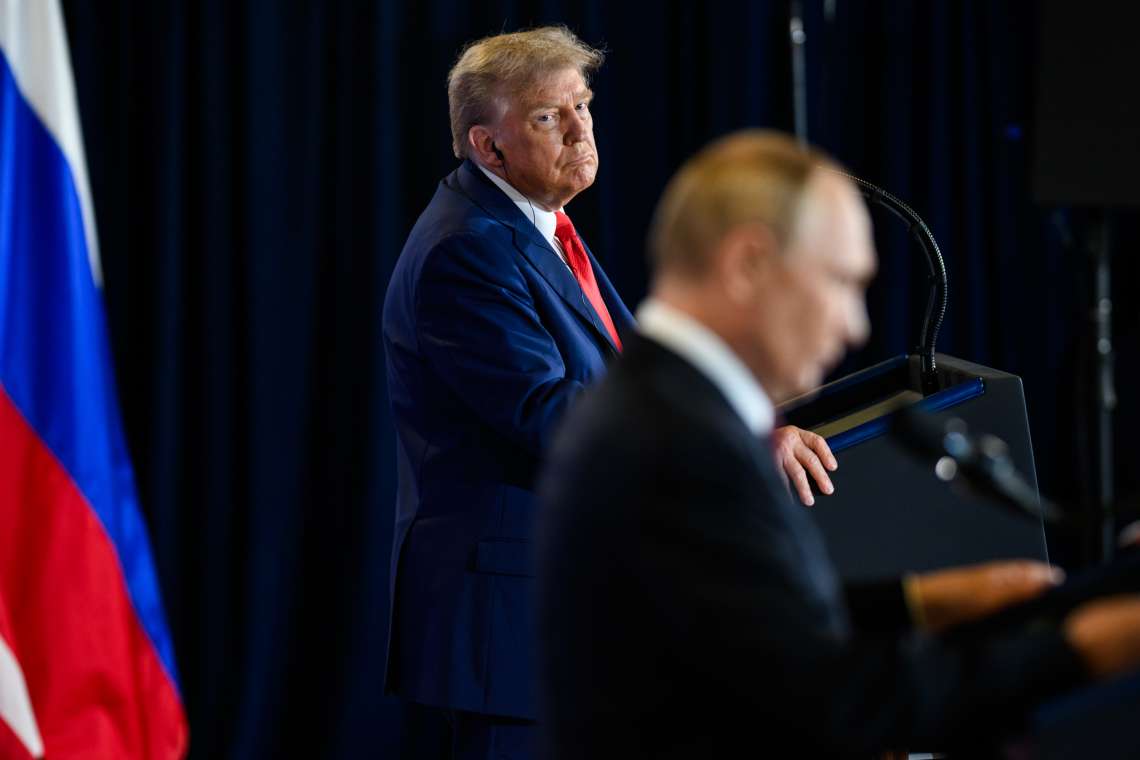
Trump announced on Friday that Russian President Vladimir Putin had agreed to supply millions of tonnes of diesel following a telephone conversation between the two leaders. The move comes weeks after Trump signed bipartisan legislation aimed at restricting Moscow’s energy revenues and authorising tariffs of up to 100 per cent on major purchasers of Russian oil and gas.

The US Treasury Department subsequently issued a temporary licence easing sanctions on transactions involving Russian-origin diesel, allowing specified sales, deliveries and imports until April 7, 2027.

The announcement prompted questions from American commentators and social media users about whether Washington would apply the same standards to its own purchases that it has demanded of other countries.

American journalist Catherine Rampell questioned the apparent contradiction in a post on X, asking whether the new policy meant the United States would soon be imposing tariffs on itself.

Political journalist Sam Stein also highlighted the contrast between Trump’s recent signing of the Russia sanctions legislation and his subsequent agreement with Putin on diesel supplies.

The verified X account News Matrix drew comparisons with Trump’s earlier criticism of India’s Russian oil imports, asking whether the argument that such purchases financed Moscow’s war effort would also apply to the United States.

The debate has also spread across Reddit, where users questioned whether Washington was applying different standards to itself and other countries.

US lawmakers condemn diesel agreement

The agreement has drawn criticism from senior Democratic lawmakers, who argue that easing restrictions on Russian fuel undermines efforts to limit Moscow’s ability to finance its war against Ukraine.

Senate Democratic leader Chuck Schumer, Senator Jeanne Shaheen and Senator Elizabeth Warren issued a joint statement criticising the decision.

“The President must end his war with Iran instead of funding Russia’s war machine,” they said.

The senators argued that the move weakened congressional efforts to restrict Russian energy revenues and raised questions about the administration’s commitment to its own sanctions legislation.

Their criticism follows a bipartisan letter sent on October 7 by Shaheen and Republican Senator Roger Wicker to Secretary of State Marco Rubio and Treasury Secretary Scott Bessent, urging tougher action against Russia’s oil tankers, financial networks and suppliers of military technology.

The lawmakers called for stronger measures against Russia’s so-called shadow fleet, which is used to transport oil and circumvent restrictions.

Trump says Russian supplies will lower fuel prices

Trump has defended the arrangement as necessary to ease pressure on American consumers, farmers and truckers facing sharply higher fuel costs.

In a post on Truth Social, he said Russia would immediately supply more than 300,000 tonnes of diesel, followed by another 500,000 tonnes in November and one million tonnes thereafter. A further three million tonnes could be delivered within a short period, depending on the condition of Russian refineries.

The announcement comes amid an energy price surge linked to the US-Iran war and disruption to supplies through the Strait of Hormuz.

However, energy experts have questioned whether the additional Russian supplies will significantly reduce prices. The Associated Press reported that US diesel prices averaged about $6.28 a gallon on Friday, compared with approximately $3.68 a year earlier.

Analysts said additional Russian supplies could offer limited relief in some markets but were unlikely to bring substantial reductions in prices across the United States or globally, as existing buyers could be forced to seek alternative supplies.

Zelenskyy warns of benefits to Moscow

Ukrainian President Volodymyr Zelenskyy criticised the agreement, warning that the additional revenue could help Russia sustain its military campaign.

He described the decision as a weak move by Ukraine’s partners and argued that the arrangement could prolong the war rather than help bring it to an end.

The deal was announced as US envoy Steve Witkoff and President Trump’s son-in-law Jared Kushner were meeting Ukrainian officials in Miami to discuss proposals to end the conflict.

The Russian diesel arrangement has therefore raised questions beyond energy prices, including its implications for sanctions enforcement, US support for Ukraine and Washington’s relations with its European allies.

While the Trump administration has presented the deal as a response to rising fuel costs, critics argue that it sits uneasily alongside its recent efforts to restrict Russian energy revenues and penalise countries that continue buying Moscow’s oil and gas.

Newsdesk

Newsdesk

Aravind Rajeev is Deputy News Editor at Asian Lite, mostly covering the Middle East and GCC. He has over eight years of experience as a journalist, with a background in ground-level reporting, crime reporting, as well as international and regional news.

Previous Story

JD Vance’s Visa Crackdown Sparks India-US Technology Row

Previous Story

JD Vance’s Visa Crackdown Sparks India-US Technology Row

Latest from -Top News

Pakistan Risks Overstretching Itself in Yemen War

Pakistan’s expanding military role in Saudi Arabia amid the Yemen conflict could strain its defence resources and fragile finances…reports Asian Lite News Desk Pakistan’s military involvement in the war in Yemen may prove unsustainable because of mounting financial pressures and competing security demands, according to a new report. Islamabad’s growing military presence in Saudi Arabia risks stretching its defence resources while exposing the country to greater strategic and economic challenges. An article by Andrew Wilson in One World Outlook describes Pakistan’s involvement as a case of “fiscal and strategic overreach”, arguing that the country lacks the financial flexibility to sustain an expanded military commitment. Pakistan’s external finances depend heavily on an International Monetary Fund (IMF) programme, financial support from Gulf countries and remittances from Pakistani workers in the region. The report argues that deeper military involvement in the conflict could place additional pressure on these sources of financial stability. It also warns that deploying troops and military equipment abroad could weaken Pakistan’s capacity to address security challenges along its eastern border and deal with two domestic insurgencies. The move could also draw Islamabad into a conflict it has sought to approach cautiously. A Reuters report in May, citing Pakistani security and government sources, said Islamabad had deployed around 8,000 troops, a squadron of approximately 16 aircraft, mostly JF-17 fighter jets, two drone squadrons and a Chinese HQ-9 air-defence battery to Saudi Arabia. According to those sources, Riyadh was financing the deployment, with Pakistani personnel operating the equipment. The sources also said a confidential agreement contemplated the possibility of deploying up to 80,000 troops. Islamabad has not confirmed those figures, although it has acknowledged its military presence in Saudi Arabia, including the deployment of fighter jets at King Abdulaziz Air Base from April. The One World Outlook article argues that Saudi financial support can cover allowances and operating expenses but cannot easily replace military equipment needed elsewhere or resolve the political and strategic challenges of participating in the Yemen conflict. Pakistan’s defence budget is another concern. For the 2026-27 financial year, the federal government allocated PKR 3 trillion, or approximately $10.8 billion, to defence services. The allocation represents an 18 per cent increase from the original PKR 2.55 trillion provision and amounts to around 2.1 per cent of projected gross domestic product (GDP). Defence spending accounts for approximately 16 per cent of the federal government’s PKR 18.8 trillion expenditure. Military pensions are budgeted separately at PKR 822 billion, while debt servicing costs stand at approximately PKR 8 trillion, more than two-and-a-half times the defence allocation. The report argues that these competing financial obligations leave little room for additional military expenditure without placing further pressure on public finances. Pakistan’s reliance on IMF assistance also limits its fiscal flexibility. The country must meet the conditions attached to the programme, including a primary budget surplus target of 2 per cent of GDP and continued restraint on development spending. According to the article, these requirements make it difficult for Islamabad to finance an additional military commitment without compromising other budgetary priorities. Pakistan’s economic indicators offer limited reassurance. Economic growth for the 2025-26 financial year is estimated at between 3.6 and 3.7 per cent, while inflation reached approximately 10.3 per cent in September following an energy price shock. Foreign exchange reserves stood at around $21.5 billion at the end of September. Although this marks an improvement from the low levels recorded in 2023, the report notes that the reserves cover only a few months of imports. Financial assistance from Gulf partners remains central to Pakistan’s external stability. The article says Islamabad holds approximately $8 billion in Saudi deposits at its central bank. In July, the State Bank of Pakistan said Riyadh had extended the maturity of $5 billion in deposits to December 2028, easing the country’s immediate external financing requirements. A further $3 billion deposit was also extended in the spring. However, the article argues that these arrangements provide temporary relief rather than long-term financial independence, particularly as regional conflict threatens the stability of the Gulf economies on which Pakistan relies. The report concludes that Pakistan faces a difficult balance between supporting Saudi Arabia militarily and preserving the financial and military resources needed to address its domestic and regional challenges.

UK and Germany Ratify Kensington Treaty

Britain and Germany ratify the Kensington Treaty, agreeing new cooperation on AI, quantum research, defence and security while targeting investment, jobs and Russian hybrid threats…reports Asian Lite News Desk Britain and Germany

Economic tide is turning in Bangladesh

If there is one thing that can bring some comfort to the struggling Bangladeshi economy, it is good relations with India. Bangladesh should remember that Delhi’s backing, through easy supplies of essentials
Go toTop