October 10, 2026
3 mins read

Saudi-Led Coalition Launches Large-Scale Strikes on Yemen’s Houthis

Saudi-led coalition targets Houthi missile networks and rocket launchers as Riyadh vows to defend its territory and protect Red Sea navigation amid escalating regional tensions…reports Asian Lite News Desk

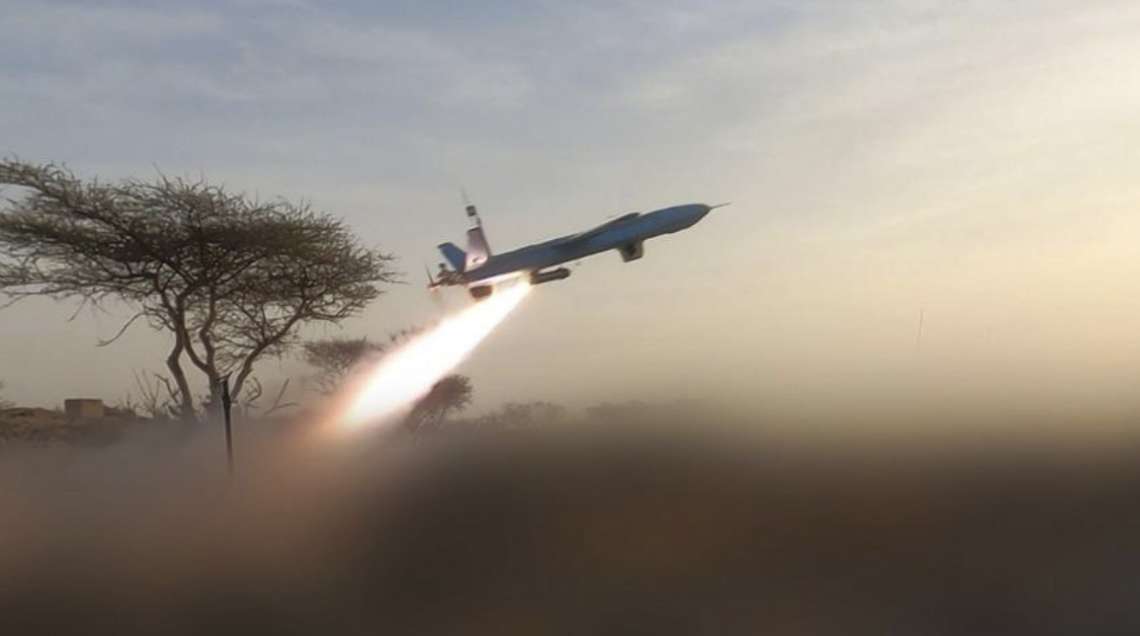
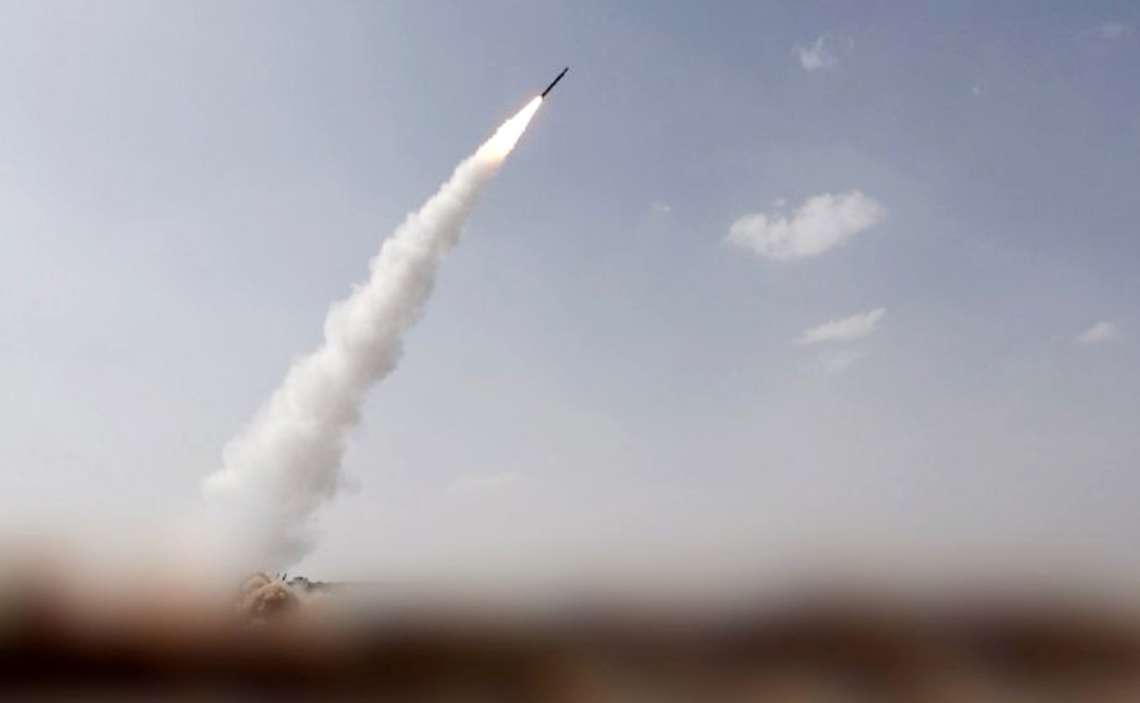
The Saudi-led coalition supporting Yemen’s internationally recognised government has launched large-scale military operations against Houthi forces, targeting the group’s ballistic missile network and rocket launch platforms amid escalating regional tensions.

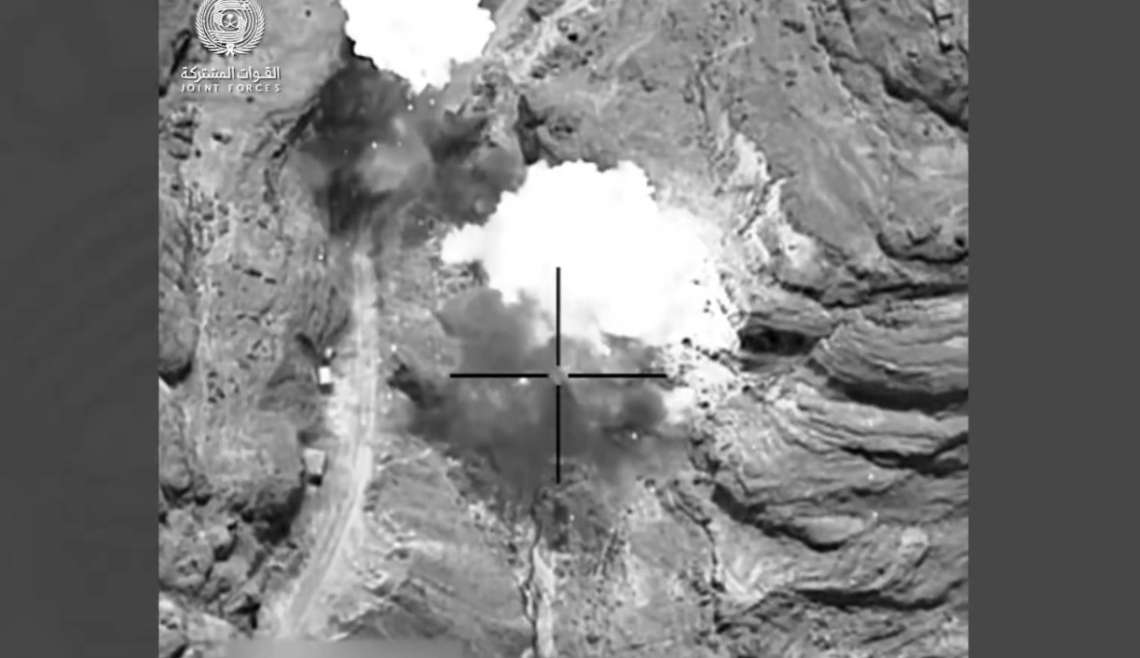
Coalition spokesman Maj. Gen. Turki Al-Maliki said on Friday that the strikes targeted several Houthi military capabilities, including its missile infrastructure.

“We are working to dismantle and destroy the ballistic missile network of the terrorist Houthi militia,” Al-Maliki said in a post on X, alongside footage of the airstrikes.

He said coalition forces were providing air support to Yemeni government forces around the clock.

In subsequent posts, Al-Maliki shared footage showing coalition aircraft striking Houthi fighters who he said were attempting to conceal themselves as government forces advanced in the Bab Al-Mandab area. Other footage purportedly showed fighters fleeing their positions.

The coalition also destroyed three Houthi rocket launch platforms, which Al-Maliki said had been used to threaten regional security. He warned that attacks on civilians and civilian infrastructure would be met with resolve.

The operations highlight military coordination between Saudi Arabia and Yemen’s internationally recognised government as fighting intensifies along the western Red Sea coast and near the strategically important Bab Al-Mandab Strait, a key maritime passage connecting the Red Sea with the Gulf of Aden.

Meanwhile, Yemeni government forces had taken control of Bab Al-Mandab and Mayun Island after clearing the area, Al Arabiya reported on Friday, citing military sources.

Saudi Arabia vows to defend its territory

Saudi Arabia has warned that it will not allow Yemen to become a base for attacks against its territory or threats to international shipping.

Addressing an emergency meeting of the UN Security Council on Friday, Saudi Arabia’s Permanent Representative to the United Nations, Abdulaziz Alwasil, said the Kingdom would defend its sovereignty and citizens while continuing to support a political settlement to the conflict.

“The Kingdom affirms that it will not allow Yemen to be turned into a staging ground for threats to its security or to the freedom of navigation in the Red Sea and Bab Al-Mandab Strait,” he told the council.

Alwasil accused the Houthis of rejecting diplomatic initiatives in favour of military escalation and called on the Security Council to enforce relevant resolutions, including the arms embargo on the group.

His remarks followed two reported attacks on King Khalid International Airport in Riyadh on Thursday that killed three Saudi nationals, including Saudia Airlines pilot Capt. Hamoud bin Ali Alkalthami, and injured several others.

Saudi aviation authorities said the first attack targeted airport facilities, while the second struck an aircraft belonging to the national carrier. The incidents caused damage and disrupted flights, with those injured including residents of several nationalities.

Saudi officials have also cited a series of reported Houthi attacks in recent weeks targeting Riyadh, Abha, Khamis Mushayt, Jazan and Najran. They have additionally referred to an attempted attack on Makkah on September 15 and a September 29 strike on the Taiba electricity distribution station in Madinah.

Alwasil warned that the attacks threatened Saudi security, commercial shipping, energy supplies and international trade. He also said external military and technical assistance had strengthened the Houthis’ capabilities, contributing to instability in Yemen and the wider region.

Riyadh reiterates support for Yemen’s government

Saudi Arabia has repeatedly backed Yemen’s internationally recognised government and efforts to restore state authority, stressing that any lasting political settlement must preserve the country’s sovereignty, unity and territorial integrity.

The Kingdom has also provided economic, development and humanitarian assistance to Yemen. Alwasil said Saudi economic and development support exceeded $12.6 billion between 2012 and 2026, alongside more than $4.5 billion in humanitarian assistance.

Saudi Arabia also provided budget support worth more than 224 million Saudi riyals, equivalent to about $59.7 million, on October 4, he said.

The latest operations come as renewed fighting raises concerns over regional security and maritime traffic through one of the world’s strategically important shipping corridors.

Riyadh says it remains committed to a political solution to the Yemeni conflict but maintains that attacks on Saudi territory and threats to freedom of navigation must be addressed.

Newsdesk

Newsdesk

Aravind Rajeev is Deputy News Editor at Asian Lite, mostly covering the Middle East and GCC. He has over eight years of experience as a journalist, with a background in ground-level reporting, crime reporting, as well as international and regional news.

Previous Story

Trump’s Russian Diesel Deal Fuels US Double-Standards Row

Previous Story

Trump’s Russian Diesel Deal Fuels US Double-Standards Row

Latest from -Top News

Pakistan Risks Overstretching Itself in Yemen War

Pakistan’s expanding military role in Saudi Arabia amid the Yemen conflict could strain its defence resources and fragile finances…reports Asian Lite News Desk Pakistan’s military involvement in the war in Yemen may prove unsustainable because of mounting financial pressures and competing security demands, according to a new report. Islamabad’s growing military presence in Saudi Arabia risks stretching its defence resources while exposing the country to greater strategic and economic challenges. An article by Andrew Wilson in One World Outlook describes Pakistan’s involvement as a case of “fiscal and strategic overreach”, arguing that the country lacks the financial flexibility to sustain an expanded military commitment. Pakistan’s external finances depend heavily on an International Monetary Fund (IMF) programme, financial support from Gulf countries and remittances from Pakistani workers in the region. The report argues that deeper military involvement in the conflict could place additional pressure on these sources of financial stability. It also warns that deploying troops and military equipment abroad could weaken Pakistan’s capacity to address security challenges along its eastern border and deal with two domestic insurgencies. The move could also draw Islamabad into a conflict it has sought to approach cautiously. A Reuters report in May, citing Pakistani security and government sources, said Islamabad had deployed around 8,000 troops, a squadron of approximately 16 aircraft, mostly JF-17 fighter jets, two drone squadrons and a Chinese HQ-9 air-defence battery to Saudi Arabia. According to those sources, Riyadh was financing the deployment, with Pakistani personnel operating the equipment. The sources also said a confidential agreement contemplated the possibility of deploying up to 80,000 troops. Islamabad has not confirmed those figures, although it has acknowledged its military presence in Saudi Arabia, including the deployment of fighter jets at King Abdulaziz Air Base from April. The One World Outlook article argues that Saudi financial support can cover allowances and operating expenses but cannot easily replace military equipment needed elsewhere or resolve the political and strategic challenges of participating in the Yemen conflict. Pakistan’s defence budget is another concern. For the 2026-27 financial year, the federal government allocated PKR 3 trillion, or approximately $10.8 billion, to defence services. The allocation represents an 18 per cent increase from the original PKR 2.55 trillion provision and amounts to around 2.1 per cent of projected gross domestic product (GDP). Defence spending accounts for approximately 16 per cent of the federal government’s PKR 18.8 trillion expenditure. Military pensions are budgeted separately at PKR 822 billion, while debt servicing costs stand at approximately PKR 8 trillion, more than two-and-a-half times the defence allocation. The report argues that these competing financial obligations leave little room for additional military expenditure without placing further pressure on public finances. Pakistan’s reliance on IMF assistance also limits its fiscal flexibility. The country must meet the conditions attached to the programme, including a primary budget surplus target of 2 per cent of GDP and continued restraint on development spending. According to the article, these requirements make it difficult for Islamabad to finance an additional military commitment without compromising other budgetary priorities. Pakistan’s economic indicators offer limited reassurance. Economic growth for the 2025-26 financial year is estimated at between 3.6 and 3.7 per cent, while inflation reached approximately 10.3 per cent in September following an energy price shock. Foreign exchange reserves stood at around $21.5 billion at the end of September. Although this marks an improvement from the low levels recorded in 2023, the report notes that the reserves cover only a few months of imports. Financial assistance from Gulf partners remains central to Pakistan’s external stability. The article says Islamabad holds approximately $8 billion in Saudi deposits at its central bank. In July, the State Bank of Pakistan said Riyadh had extended the maturity of $5 billion in deposits to December 2028, easing the country’s immediate external financing requirements. A further $3 billion deposit was also extended in the spring. However, the article argues that these arrangements provide temporary relief rather than long-term financial independence, particularly as regional conflict threatens the stability of the Gulf economies on which Pakistan relies. The report concludes that Pakistan faces a difficult balance between supporting Saudi Arabia militarily and preserving the financial and military resources needed to address its domestic and regional challenges.

UK and Germany Ratify Kensington Treaty

Britain and Germany ratify the Kensington Treaty, agreeing new cooperation on AI, quantum research, defence and security while targeting investment, jobs and Russian hybrid threats…reports Asian Lite News Desk Britain and Germany
Go toTop

Don't Miss

Virgin Atlantic Launches Heathrow–Riyadh Route

With Riyadh rapidly evolving into a dynamic hub for commerce,

Houthis Claim Missile Strike on Riyadh Airport

Yemen’s Houthi group claims a ballistic missile struck Riyadh’s King