Masdar signs landmark agreements to develop 4 GW-capacity green hydrogen plants in Egypt by 2030…reports Asian Lite News
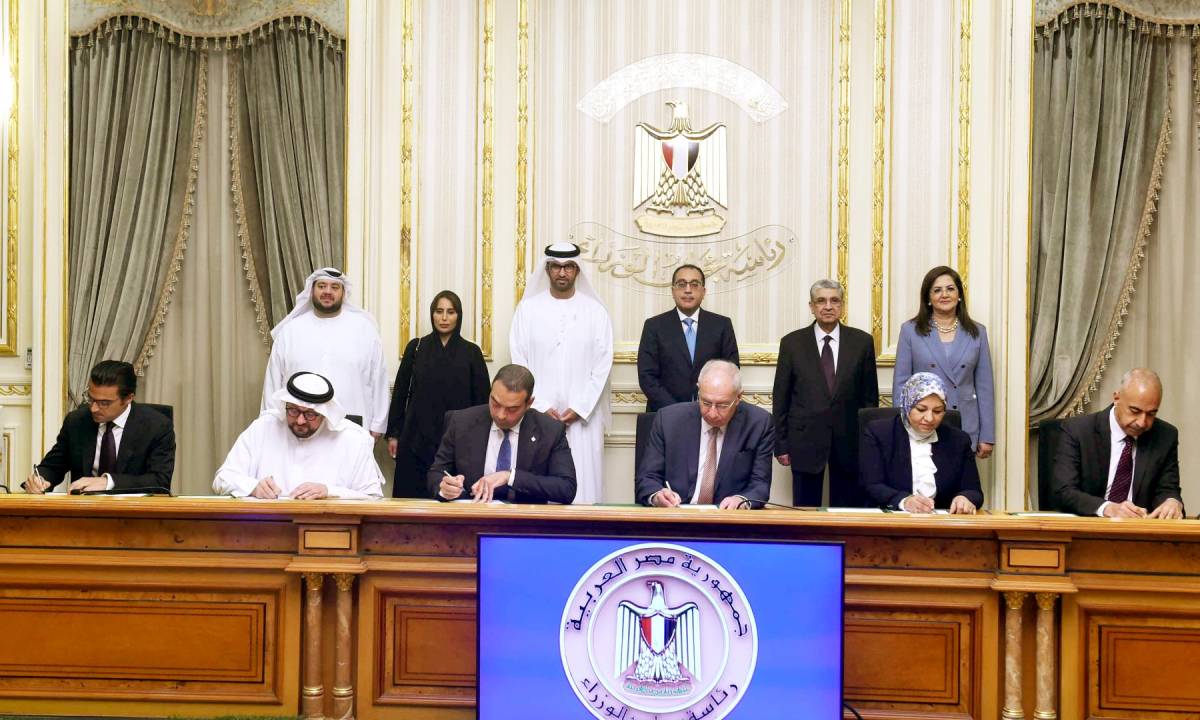
Masdar, one of the world’s leading renewable energy companies, and Hassan Allam Utilities, the investment and development arm of Hassan Allam Holding Group, announced today that they have signed two Memorandums of Understanding with leading Egyptian state-backed organizations to cooperate on the development of green hydrogen production plants in the Suez Canal Economic Zone and on the Mediterranean coast.
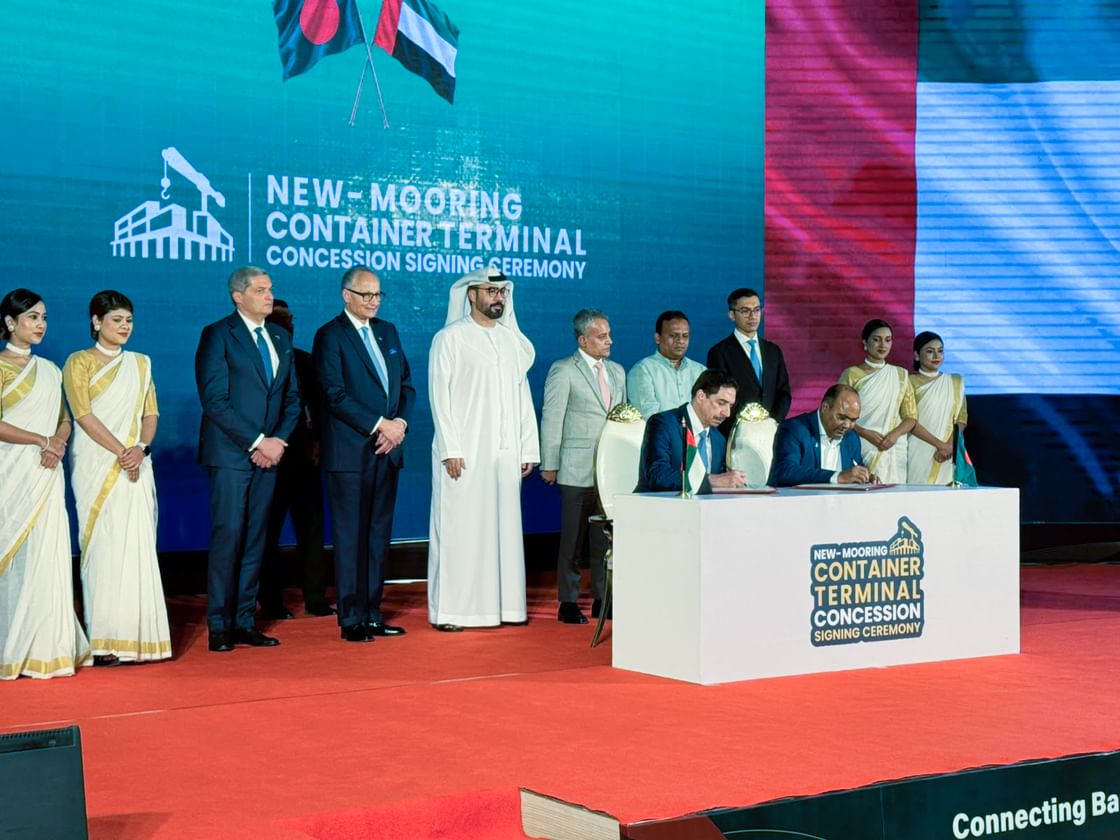
The Memorandums of Understanding were signed in the presence of Mostafa Kamal Madbouly, Prime Minister of the Arab Republic of Egypt, Dr. Sultan bin Ahmed Al Jaber, UAE Minister of Industry and Advanced Technology, Special Envoy for Climate Change and Chairman of Masdar, Dr. Mohamed Shaker El-Markabi, Minister of Electricity and Renewable Energy for Egypt, and Dr. Hala El Said, Minister of Planning and Economic Development and Chairperson of The Sovereign Fund of Egypt.
Amr Allam and Hassan Allam, Co-Chief Executive Officers of Hassan Allam Holding, were also in attendance, along with Mohamed Jameel Al Ramahi, Chief Executive Officer of Masdar. The Egyptian organizations concerned include the New and Renewable Energy Authority, the Egyptian Electricity Transmission Company, The Sovereign Fund of Egypt, and The General Authority for the Suez Canal Economic Zone.
Mostafa Kamal Madbouly, Prime Minister of the Arab Republic of Egypt, expressed his happiness at this signing with Egypt’s brothers in the UAE, highlighting the directives of President Abdel Fattah El-Sisi, to strengthen and consolidate relations with the UAE in various sectors, so as to contribute to achieving the interests of the two nations. He stressed that the state is working to encourage investment in green energy projects, due to Egypt’s potential to become an important pivotal and regional hub in this vital sector, which is expected to transform the global energy system during the upcoming period. These projects will also accelerate the energy transition process in the region.
Dr Sultan bin Ahmed Al Jaber, UAE Minister of Industry and Advanced Technology, UAE Special Envoy for Climate Change and Chairman of Masdar: “Today’s partnership agreements to explore the development of green hydrogen production demonstrates the strength of the close relationship between The United Arab Emirates and the Arab Republic of Egypt. These projects will build on the UAE’s and Masdar’s position as an early mover in the global hydrogen market and expand our capacity to deliver zero carbon energy solutions. As our two countries prepare to host the next two COPs, we look forward to working with our partners in Egypt to make practical advances in the energy transition that will provide significant benefits for the economy and the climate.”
Dr Mohamed Shaker El-Markabi, Minister of Electricity and Renewable Energy in Egypt, confirmed that signing the two memorandums of understanding today supports Egypt’s vision of expanding renewable and clean energy projects. He added that the national strategy for the energy mix is currently under review to include green hydrogen, in preparation for its launch during the coming period.
Dr Hala El Said, Minister of Planning and Economic Development and Chairperson of The Sovereign Fund of Egypt, stressed that Egypt has abundant solar and wind energy resources that would provide a suitable location for renewable energy projects at a competitive cost. Along with its proximity to global markets that are looking to import green hydrogen, this will allow significant growth for this sector in the future, and the agreements are in line with “Egypt Vision 2030” and its sustainable development strategy.
Eng. Yehia Zaki, Chairman of SCZONE: “Today’s signing is the fifth of its kind for green fuel production projects inside Sokhna zone, as SCZONE has a distinctive location and pivotal ports overlooking the Red and the Mediterranean Sea. SCZONE is qualified to be a regional Hub for ship bunkering. All the companies now are conducting feasibility studies for the projects in detail to sign and announce the actual contracts in coinciding with the COP27 climate summit next November.”
Ayman Soliman, Chief Executive Officer of The Sovereign Fund of Egypt: “Our green hydrogen portfolio is growing, taking us another step closer to our target and promise of developing green energy flagship projects under the umbrella of the collaborative effort between Ministry of Electricity, the SCZONE and TSFE. We are excited to work again with Masdar and Hassan Allam. Our joint efforts have established a shared commitment to value creation through innovative sustainable projects. Through these strategic partnerships with world renowned strategic developers, we are transforming Egypt into a regional green energy hub.”
Mohamed Jameel Al Ramahi, Chief Executive Officer of Masdar: “These agreements represent a vital step forward in the development of the green hydrogen economy for both the UAE and Egypt, and will play a significant role in our two nations’ decarbonization efforts. By working with partners such as Hassan Allam Utilities, we can help the green hydrogen market achieve its full potential over the coming years and play its part in supporting the global energy transition.”
Amr Allam, Chief Executive Officer of Hassan Allam Holding: “Our drive into the green energy and infrastructure space, including solar and wind power generation, was all about contributing to a more sustainable future. Through this partnership with Masdar we are looking to harness the leading edge of technology to make a difference in Egypt by leveraging the country’s abundant sources of green energy. In the first phase of the project, Hassan Allam Utilities and Masdar aim to establish a green hydrogen manufacturing facility, which would be operational by 2026, producing 100,000 tonnes of e-methanol annually for bunkering in the Suez Canal,” he added. “The electrolyser facilities in the Suez Canal Economic Zone and on the Mediterranean could be extended to up to 4 GW by 2030 to produce 2.3 million tonnes of green ammonia for export as well as supply green hydrogen for local industries.”
Masdar and Hassan Allam Utilities see Egypt as a hub for green hydrogen production, targeting the bunkering market, export to Europe, and boosting the local industry. Egypt enjoys abundant solar and wind resources that allow the generation of renewable power at a highly competitive cost –a key enabler for green hydrogen production.
Egypt is also located within close proximity to markets where demand for green hydrogen is expected to grow the most, providing a robust opportunity for export. Driven by green hydrogen’s export potential, its ability to attract large-scale foreign direct investment, and opportunities to contribute to the Government’s efforts to optimize generation costs and increase the share of renewables in the country’s energy mix to 42 percent by 2030, the Ministry of Electricity is currently revising its 2030 renewable energy strategy to include green hydrogen and is developing a green hydrogen strategy, which is expected to be issued by October 2022.
Active in more than 40 countries across the world, Masdar is invested in a portfolio of renewable energy assets with a combined value of more than US$20 billion and a total capacity of more than 15 GW. In December, it was announced that Abu Dhabi National Energy Company PJSC (TAQA), Mubadala Investment Company, and Abu Dhabi National Oil Company (ADNOC) will partner under the Masdar brand to create a truly global, clean-energy powerhouse intended to spearhead the drive to net-zero carbon by 2050 while cementing the UAE’s leading role in green hydrogen. (WAM)