The bench asked the ASG to show the figure when MACP was introduced, how many got benefit of the scheme and how many are eligible to get benefit of OROP….reports Asian Lite News
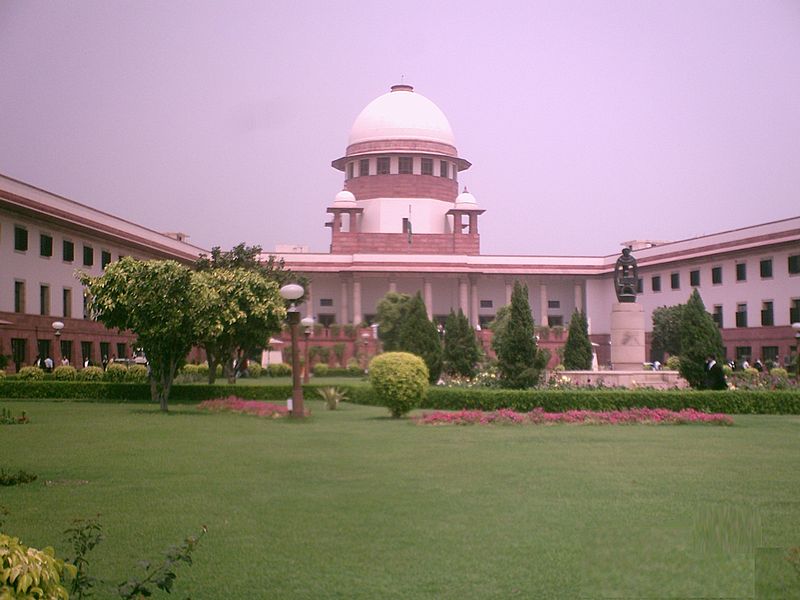
The Supreme Court on Wednesday shot a volley of questions at the Centre in connection with its current policy on One Rank, One Pension (OROP) in the armed forces.
A bench headed by Justice D.Y. Chandrachud and comprising Justices Surya Kant and Vikram Nath told the Centre’s counsel, “How have you implemented OROP, and what happens after…give us some examples, how people have benefitted.”
Additional Solicitor General (ASG) N. Venkatraman, who represented the Centre, pointed out that the petitioners have raised three contentions — they say it should be automatic, not periodic; review once in 5 years is not acceptable; and third is the chart which he will present before the court. He added that the chart shows that one should take the scale and not go by the mean. The bench said the government has taken the mean, but no one is brought down? The ASG agreed.
Venkatraman referred to a tabular chart citing a comparison between sepoys, who retired after 2015 and before 2015. The bench queried suppose somebody retired in 1990 and the Modified Assured Career Progression (MACP) scheme came in 2006, the rank will still remain but the officer will get the different pay scale. The ASG urged the top court not to bring MACP into the matter.
The bench asked the ASG, OROP is a benefit that comes after a service period and MACP comes during service? “We want to know how many people have got MACP. You are saying persons who have MACP are a different specific class,” it queried further.
The ASG replied that MACP is not the subject matter of the writ petition before the court. Justice Kant replied, but it is important for OROP, and if 80 per cent of sepoys get MACP, then will they get OROP? The bench said: “It seems MACP is a barrier for OROP…”
Justice Chandrachud said petitioners’ contention is regarding the discrepancy between parliamentary discussion and the policy, which ultimately came. “Problem is your hyperbole on the policy presents a much rosier picture than what is actually given,” said Justice Chandrachud. The ASG emphasised that the decision on the policy has been taken by the Union Cabinet. Justice Chandrachud said: “As I said OROP is not a statutory term, it is a term of art”.
The ASG replied, “Yes, it is a term of art which we have defined with nuance and without any arbitrariness.”
Justice Kant said the petitioners are claiming that by connecting OROP with MACP the government has reduced the benefits substantially and the principle of OROP gets defeated.
The bench asked the ASG to show the figure when MACP was introduced, how many got benefit of the scheme and how many are eligible to get benefit of OROP.
Senior advocate Huzefa Ahmadi, appearing for Indian Ex-servicemen Movement (IESM), said what is the morality of this government after giving a statement that it has in principle agreed to implement one rank one pension. He added that the sum and substance of their arguments is that they are not inclined to give OROP, but they will give one rank different pensions. He added that the ASG said it could have been given at 10 years but they chose 5 years for the review. “What is the morality of a statement made by a minister on the floor of the House,” said Ahmadi. The plea has been filed through advocate Balaji Srinivasan.
After a detailed hearing in the matter, the top court scheduled it for further hearing next week.
On Tuesday, the top court asked the Centre whether it can consider automatic annual revision instead of the existing policy of periodic review, done once in five years.
The petitioners have questioned the November 7, 2015, notification issued by the Centre while implementing OROP, in which the government adopted a modified definition of the expression, under which the gap between the rates of pension of current and past pensioners were to be bridged at periodic intervals.
The petitioner’s counsel submitted that the government’s decision is arbitrary and mala fide, as it creates a class within a class and effectively grants one rank, different pensions.
The top court, in July 2016, sought Centre’s response on a petition by IEMS seeking implementation of OROP as recommended by the Koshyari Committee with an automatic annual revision, and not the periodic review of once in five years.