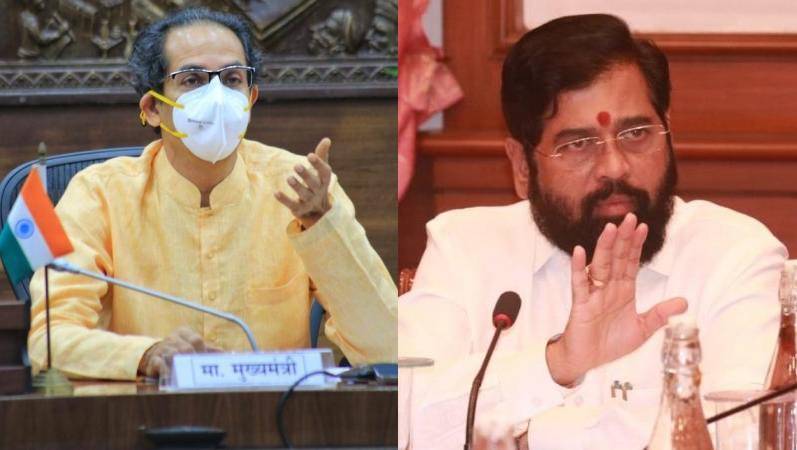
Amid the imbroglio, the anti-defection law – which was enacted not to facilitate defection but to eliminate it – acquires added significance, a report by Sumit Saxena
The ranks of dissidents are swelling in Shiv Sena with each passing day and it seems discontent within the party, which was once steadfastly anchored by charismatic Bal Thackeray, is not likely to dissipate soon.
Amid the imbroglio, the anti-defection law – which was enacted not to facilitate defection but to eliminate it – acquires added significance.
Para 4 of the 10th Schedule of the Constitution, the law on defection, says “the merger of the original political party of a member of a House shall be deemed to have taken place if, and only if, not less than two-thirds of the members of the legislature party concerned have agreed to such merger”. It stressed that the merger has to be between two political parties.
However, the legal scenario is not simple in the Maharashtra political crisis — as rebel Shiv Sena leader Eknath Shinde’s faction has not clarified whether it is merging with the BJP, and is rather insisting that it is the real Shiv Sena, and the Shiv Sena, headed by Chief Minister Uddhav Thackeray, leaving Maha Vikas Aghadi government and joining the BJP does not seem a plausible scenario.
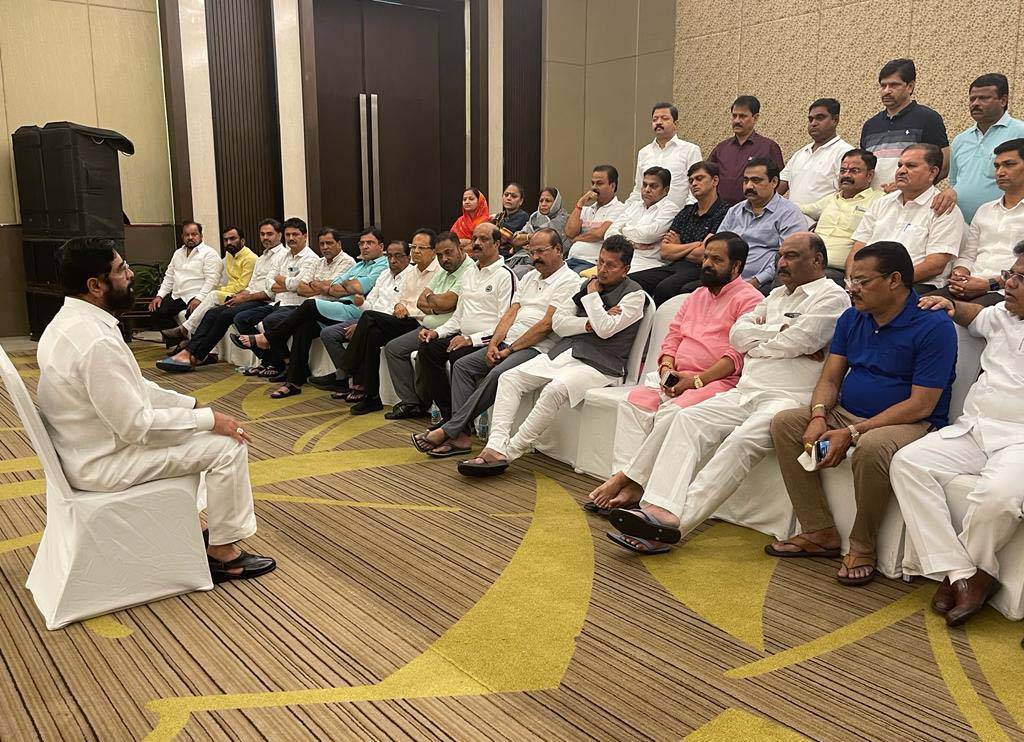
Meanwhile, the Deputy Speaker has issued notices to the 16 rebel MLAs on the disqualification plea by Thackeray’s team.
Talking to IANS, senior advocate Rakesh Dwivedi said the disqualification of MLAs is a long-drawn process – where notices will be issued to the MLAs, then they will file their responses and present their case before the Speaker. “Then the Speaker will pass an order, which could be challenged in the court… it will be interesting to see what grounds do these MLAs take against their disqualification,” he said.
In the Bombay High Court judgment in Girish Chodnakar vs Speaker, Goa Legislative Assembly, it was held that merger of two-third members of a legislative party with another political party would be deemed a merger of the original political parties.
However, senior advocate Aman Lekhi did not agree with this judgment and added that the rebel Shiv Sena MLAs are not talking clearly on the merger with the BJP.
He said the anti-defection law is not happily worded and the MLAs, while sitting in Guwahati, cannot move a resolution before the Speaker and they have to come to Mumbai. “Neither side (Shiv Sena and the rebel MLAs) is making things clear… they are shadow boxing…,” said Lekhi.
In view of para 4 of the 10th Schedule and the high court judgment, it seems that the Shinde faction – with two-third members – cannot become an independent party and to evade disqualification, they would have to merge with the BJP.
Senior advocate Sanjay Hedge said there is no other way – the rebel MLAs will have to merge with the BJP, if they want to avoid disqualification.
He added that the issue of who is the real Shiv Sena or the owner of the party symbol will be decided by the Election Commission. He also contended that it looks the rebel MLAs jumped the ship without checking the legal scenario and after the 2003 amendment to the anti-defection law, there is no question of split, and only a merger counts.
Senior advocate Dinesh Dwivedi said that, according to clause 2 of the 10th Schedule, it seems that the rebels have voluntarily left the party and they also did not attend the all-party meeting of the Shiv Sena.
Clause 2, which deals with the disqualification on the ground of defection, prescribes disqualification for a member if he has “(a) if he has voluntarily given up his membership of such political party; or (b) if he votes or abstains from voting in such House contrary to any direction issued by the political party to which he belongs or by any person or authority authorised by it in this behalf, without obtaining, in either case, the prior permission of such political party, person or authority and such voting or abstention has not been condoned by such political party, person or authority within fifteen days from the date of such voting or abstention”.
Dwivedi said the first question is regarding their disqualification and the issues related to the split and merger will come later.