January 20, 2022
3 mins read

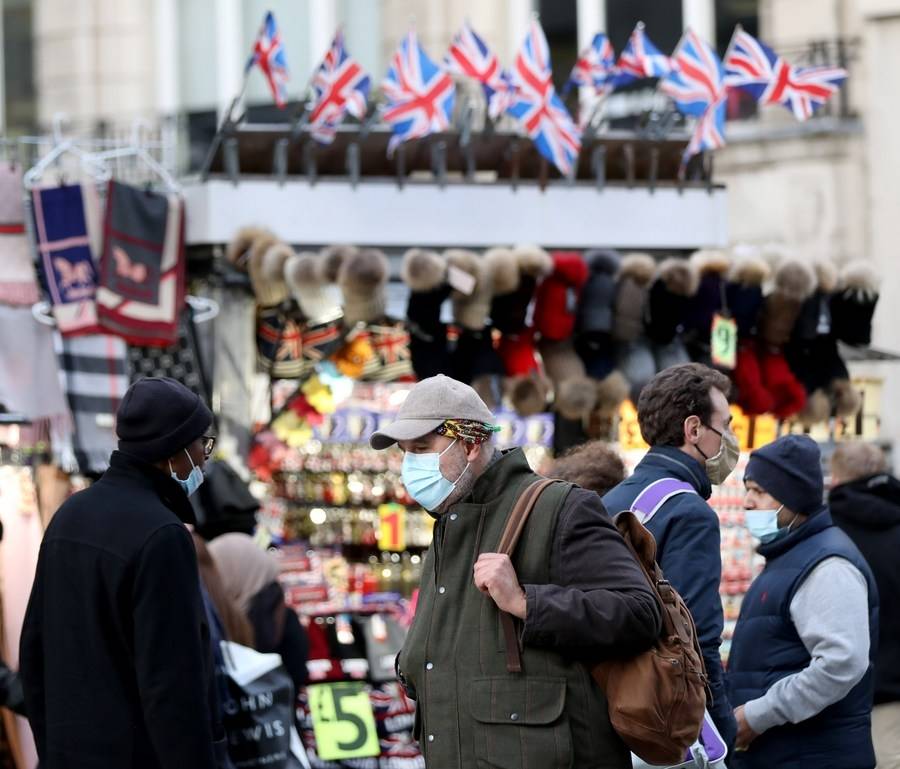
Covid curbs to be lifted next week in UK

Johnson, who only has responsibility for health policy in England, reinstated the curbs last month to cope with what he called a “tidal wave” of expected infections from Omicron…reports Asian Lite News

The government announced Wednesday that restrictions reimposed in England last month to fight the surge in Omicron coronavirus cases would be lifted, citing data that showed infections had peaked.

Guidance advising people to work from home was lifted immediately, while from the middle of next week they will no longer have to wear masks in any setting or use a so-called Covid pass to enter venues such as nightclubs.

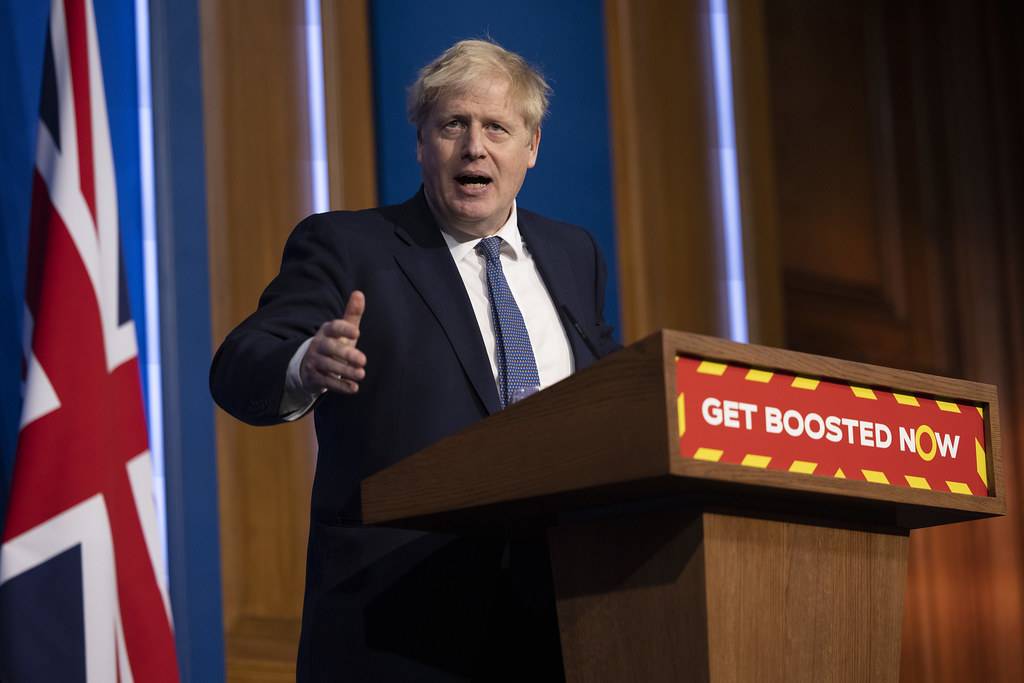
Prime Minister Boris Johnson, who is fighting for his political future amid a scandal over his staff partying during past lockdowns, told MPs the country’s “extraordinary booster campaign” had made the change possible.

He noted more than 36 million booster jabs had been delivered, with over 90 percent of over-60s now given a third dose, while record case rates had dropped for several weeks.

“Our scientists believe it is likely that the Omicron wave has now peaked nationally,” he added, while cautioning “the pandemic is not over”.

“I encourage everyone across the country to continue with all the cautious behaviours that we know help to keep each everybody safe,” Johnson said.

Some have claimed relaxing the rules is driven by the embattled leader wanting to please critics angry at the revelations that he and his staff broke Covid lockdown rules by holding numerous parties at Downing Street.

Johnson, who only has responsibility for health policy in England, reinstated the curbs last month to cope with what he called a “tidal wave” of expected infections from Omicron.

But facing restive Tory backbenchers, the prime minister rebuffed calls by some scientists to impose stricter measures, and allowed socialising and sporting events to continue unimpeded.

The devolved governments of Scotland, Wales and Northern Ireland imposed stricter curbs, banning large crowds at sports fixtures.

Within weeks, Britain’s daily caseload for Covid topped a record 200,000 infections in early January.

That placed significant pressure on the state-run National Health Service nationwide and spiked the country’s Covid death toll, which is now nearing 153,000.

However, with increasing evidence Omicron results in less severe illness and around 15 million boosters administered since the additional rules were implemented, hospitalisations and deaths have remained well below previous peaks.

Meanwhile, infections have dropped steadily in 2022, with around 108,000 new cases announced Wednesday.

Data from the Office of National Statistics — seen as more accurate as it randomly samples the population — showed weekly cases had dropped by around a fifth.

“The steps that we’ve announced today represent a major milestone,” Health Secretary Sajid Javid said at a Downing Street news conference later Wednesday.

“But it’s not the end of the road and we shouldn’t see this as the finish line,” he added.

Aruging “we must learn to live with Covid” in a similar way to seasonal flu, Javid said the government would be setting out a long-term plan for living with coronavirus within months.

That could eventually include ending mandatory self-isolation for those who have tested positive for Covid-19, he noted.

“It’s reasonable to think just as we’re living with flu, for example, we don’t require people to legally self-isolate but to remain cautious,” Javid added.

Devolved leaders in Edinburgh and Wales have also said they will ease the stronger rules reimposed there, with sporting event limits lifted in time for the Six Nations rugby tournament starting next month.

Scottish First Minister Nicola Sturgeon announced Tuesday she would ease other restrictions, allowing nightclubs to reopen and no longer requiring table service in bars.

Guidance asking people to stick to a three household limit on indoor gatherings will also be lifted, she outlined.

The Welsh government has said a decline in Covid cases in intensive care means it will scale down its alert level from two to zero in coming weeks.

ALSO READ-British Sikhs laud Modi govt

Previous Story

Execution for a WhatsApp status?

Next Story

UK Inflation rises to highest since 1992

Previous Story

Execution for a WhatsApp status?

Next Story

UK Inflation rises to highest since 1992

Latest from -Top News

US Green Card Freeze Hits Indian IT Giants

The Trump administration has suspended employment-based green card processing for eight major technology companies, including Infosys, TCS, Wipro and HCL, citing ongoing investigations…reports Asian Lite News Desk The Trump administration has suspended a key employment-based green card process for eight major technology and outsourcing companies, including Indian IT giants Infosys, Tata Consultancy Services, Wipro and HCL, as Vice President JD Vance announced a crackdown on alleged visa fraud. The suspension, announced on Thursday by US Labour Secretary Keith Sonderling at a press conference led by Vance, also covers Cognizant, Capgemini, Microsoft and Adobe. It bars the companies from filing new permanent labour certification applications and halts the processing of pending applications under the programme. Sonderling said the decision followed ongoing criminal and federal investigations into the companies. “Due to ongoing criminal investigations led by the Department of Labour’s Inspector General Anthony DiEsposito, who will get into this shortly, I am hereby suspending from the Permanent Labour Certification Program some of the largest IT outsourcing firms in the world, Cognizant, Infosys, Tata, Wipro, HCL, and Capgemini,” Sonderling said. He added that Microsoft and Adobe were also being suspended because of multiple active federal investigations. “We will not accept or process any pending permanent labour certification applications involving these companies,” he said. The Permanent Labour Certification programme, commonly known as PERM, is a key step in the process through which employers sponsor foreign workers for employment-based permanent residence in the United States. According to figures presented by Sonderling, the eight companies had collectively requested nearly three million foreign workers since 2009. They had received more than 230,000 H-1B visa approvals and over 100,000 permanent labour certifications. The administration did not disclose company-specific findings or provide details of the alleged violations during the press conference. Vance accused employers of using the H-1B visa programme to replace American workers with lower-paid foreign employees. He said the programme was intended to help companies recruit highly skilled workers for positions that could not be filled by American employees. “The H-1B visa program is meant to allow companies to bring in really the best of the best from outside the United States of America for positions that are completely impossible to fill with American workers,” he said. Vance singled out Microsoft, alleging that the company had laid off 6,000 American workers while benefiting from 6,300 H-1B visas and nearly 3,000 green cards. He said the administration wanted companies to change their hiring practices rather than withdraw from the American market. Asked whether the suspension would be temporary or permanent, Vance said, “The suspension of PERM is gonna last as long as it needs to.” He added that the administration had the tools to continue the suspension indefinitely but wanted the companies to improve their conduct. The US Justice Department also announced that it was actively investigating companies suspected of favouring foreign workers over American employees. Attorney General Todd Blanche said the authorities could pursue criminal prosecutions and civil lawsuits as part of the enforcement measures. The decision could have significant implications for Indian technology professionals and outsourcing companies operating in the United States, where Indian firms have long relied on employment-based immigration programmes to deploy skilled workers to American clients. The H-1B visa programme allows US employers to hire foreign workers in qualifying specialised occupations on a temporary basis. PERM, meanwhile, is part of a separate process through which employers seek to sponsor eligible foreign workers for permanent residence. The suspension announced on Thursday specifically concerns permanent labour certification applications involving the eight named companies. It does not, by itself, establish the cancellation of existing H-1B visas or green cards. The impact on individual employees will depend on their immigration status and the stage of their applications. The administration did not provide a detailed timeline for the suspension or specify when processing might resume.

Nepal Floods Cause $1.66 Billion In Damage, Says World Bank

Nepal’s August 2026 floods caused an estimated US$1.66 billion in direct physical damage, with infrastructure accounting for 83 per cent of the total…reports Asian Lite News Desk Nepal’s devastating floods in August 2026 caused an estimated US$1.66 billion in direct physical damage, with infrastructure accounting for 83 per cent of the total, according to a World Bank report. The estimate, included in the World Bank’s Nepal Development Update unveiled this week, is close to the Nepal government’s preliminary Rapid Damage and Needs Assessment (RDNA), which put physical damage at US$1.81 billion. The government’s assessment also estimated losses beyond physical assets at US$883.32 million, taking the total economic effects of the disaster to approximately US$2.7 billion. The World Bank’s Global Rapid Post-Disaster Damage Estimation (GRADE) found that infrastructure suffered the greatest damage, estimated at US$1.38 billion, or 83 per cent of the total. Residential buildings accounted for US$185 million, or 11 per cent, while non-residential buildings sustained damage worth US$101 million, or 6 per cent. The floods along the Bhotekoshi and Trishuli rivers caused extensive damage to hydropower projects, solar energy facilities, electricity transmission infrastructure and transport networks. The energy sector, particularly hydropower, was among the worst affected. The August 2026 floods affected 12 hydropower projects and one solar project, involving 281.1 MW of operational capacity and 395.02 MW of capacity under construction. Damage to transmission lines and substations also disrupted the transmission of 149.6 MW of electricity to the national grid. The total affected capacity reached approximately 430.7 MW, equivalent to 10.6 per cent of Nepal’s installed hydropower and solar capacity at the end of fiscal year 2025-26, which concluded in mid-July. The disaster also severely damaged transport infrastructure along the 82-km Rasuwa trade corridor, which connects Kathmandu with the Rasuwagadhi border point with China. More than 55 km of the corridor was damaged, including 40 km that was completely destroyed. The floods also damaged 37 motorable bridges and 68 suspension bridges. The disaster resulted in significant human losses along the affected corridor and beyond. According to Nepal’s National Disaster Risk Reduction and Management Authority, 1,455 people had been confirmed dead, while 5,285 remained missing following the disaster. The World Bank report found that the physical damage was concentrated in three districts in central Nepal: Rasuwa, Nuwakot and Dhading. Rasuwa was the worst-affected district, accounting for US$1.07 billion, or 64 per cent, of the total direct damage. Nuwakot recorded an estimated US$551 million in damage, while Dhading suffered approximately US$39 million. “The findings highlight the concentration of physical damage in a small number of districts and the disproportionate impact on infrastructure, underscoring the scale of the reconstruction challenge facing the affected areas,” the World Bank said. The global development financier said the floods had demonstrated the scale and complexity of disaster risks in Nepal’s Himalayan environment. The event also showed how a single extreme weather event could trigger cascading impacts across sectors and geographical areas. The report said recovery efforts should extend beyond restoring infrastructure to its pre-disaster condition. While the principle of “Build Back Better” remained relevant, the World Bank stressed that rebuilding infrastructure to higher engineering standards in the same locations might not always be sufficient. “In some cases, simply rebuilding the same infrastructure in the same location to a higher engineering standard may not be sufficient. Nepal may need to build differently — based on a better understanding of risk, more careful decisions about location and design, greater redundancy in critical networks, stronger monitoring and early warning, and a more integrated approach to infrastructure development in the Himalayas,” the report said. The World Bank said Nepal’s recovery strategy should incorporate improved risk assessment, more informed infrastructure planning, stronger monitoring systems and better early warning mechanisms. The report emphasised that reconstruction should not only restore damaged assets but also reduce the impact of future disasters, particularly in the country’s vulnerable Himalayan regions.

Vaccine Delays Fuel Bangladesh Measles Outbreak

More than 32,000 suspected cases and over 250 deaths have been reported since mid-March, with children making up most of the fatalities….reports Asian Lite News Desk Bangladesh’s measles outbreak has intensified, with
Go toTop

Don't Miss

Sunak Celebrates Diwali at 10 Downing Street

The Prime Minister’s office also shared images from the event

UK-Ecuador Partnership Strengthens 

Together, the UK and Ecuador are building a legacy of