EU health ministers agreed in early December to return to a pre-pandemic approach to free movement and travel without any COVID-19 related measures…reports Asian Lite News
The European Union’s Health Security Committee on Thursday called for the bloc’s member states to coordinate and roll out joint measures against COVID-19 as China reopens its borders.
The committee — an informal advisory group on health security at European level — said following an emergency meeting on the COVID-19 situation in China that “coordination of national responses to serious cross border threats to health is crucial.”
“We need to act jointly and will continue our discussions,” it added.
The meeting came after Italy, which was hit hard by the first wave of the pandemic in early 2020, ordered mandatory COVID antigen swabs and virus sequencing for all travellers coming from China.
Health Minister Orazio Schillaci said on Wednesday that “the measure is essential to ensure the surveillance and identification of any variants of the virus in order to protect the Italian population.”
The US also requires a negative COVID-19 test for travellers from China.
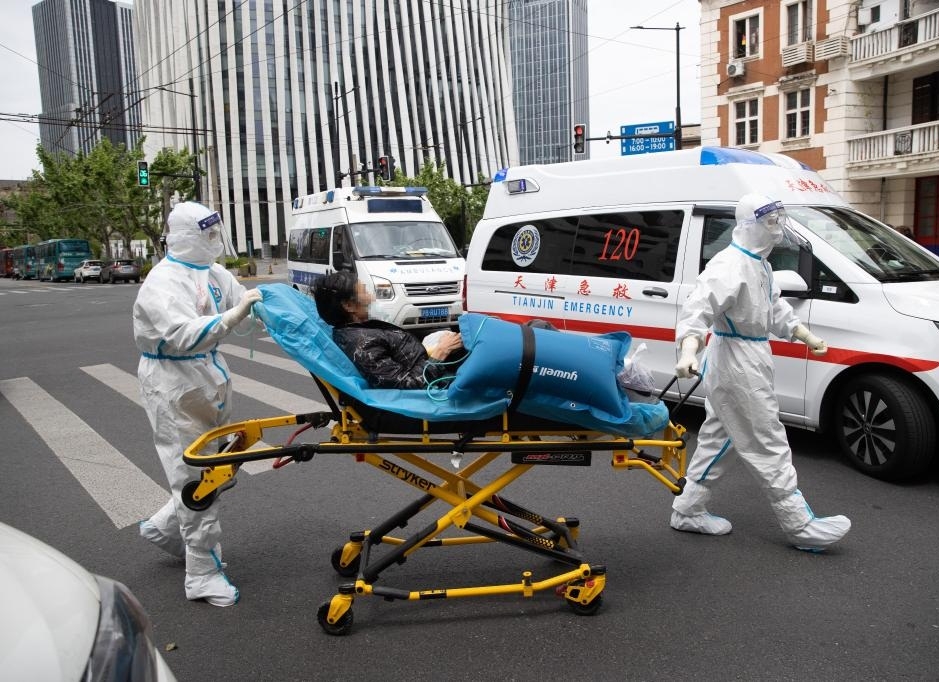
Beijing started loosening its zero-COVID policy and strict travel quarantine rules after protests swept through the country in late November following the death of at least 10 people in a building under quarantine in Urumqi in the western Xinjiang region.
The easing has led to an explosion in cases across China where trust in locally-developed vaccines is low. Western vaccines such as the mRNA jabs by Pfizer-BioNTech and Moderna are not approved by the country’s health authorities.
EU health ministers agreed in early December to return to a pre-pandemic approach to free movement and travel without any COVID-19 related measures. But they kept the possibility to activate an “emergency brake” in a coordinated approach if the epidemiological situation worsens.
“The BF7 omicron variant, which is prevalent in China, is already present in Europe and has not significantly grown. However, we remain vigilant and will be ready to use the emergency brake if necessary,” a Commission spokesperson told Euronews.
The head of the World Health Organisation (WHO) forecast earlier this month that COVID-19 could stop being a global health emergency in 2023 as the number of deaths from the virus continues to dwindle.
“At that time (in 2021), COVID-19 was killing 50,000 people each week. Last week, less than 10,000 people lost their lives,” Dr. Tedros Adhanom Ghebreyesus told reporters.
“We’re hopeful that at some point next year, we will be able to say that COVID-19 is no longer a global health emergency.”
“The criteria for declaring an end to the emergency will be among the topics of conversation when the Emergency Committee meets in January,” he said.
He nonetheless warned that the virus is “here to stay” and that countries “will need to learn to manage it” and renewed his call for vaccination and treatment to be made more readily available worldwide.
“Only one in five people in low-income countries has been vaccinated; access to diagnostics and life-saving treatments for COVID-19 remains unacceptably unaffordable and unequal; the burden of post-COVID-19 condition is only likely to increase; and large gaps in surveillance remain, which is a weakness not only for detecting new variants of COVID-19, but also for monitoring the spread of other infections,” he said.
He also urged “China to share the data and conduct the studies that we have requested, to better understand the origins of this virus.”