May 17, 2022
2 mins read

Fresh wave of blasts in Pakistan upsets China

Analysts say that the suicide attack by Baloch may become a turning point in denting China’s will to stay the course in advancing the China Pakistan Economic Corridor (CPEC) which passes through Balochistan…writes MRITYUNJOY KUMAR JHA

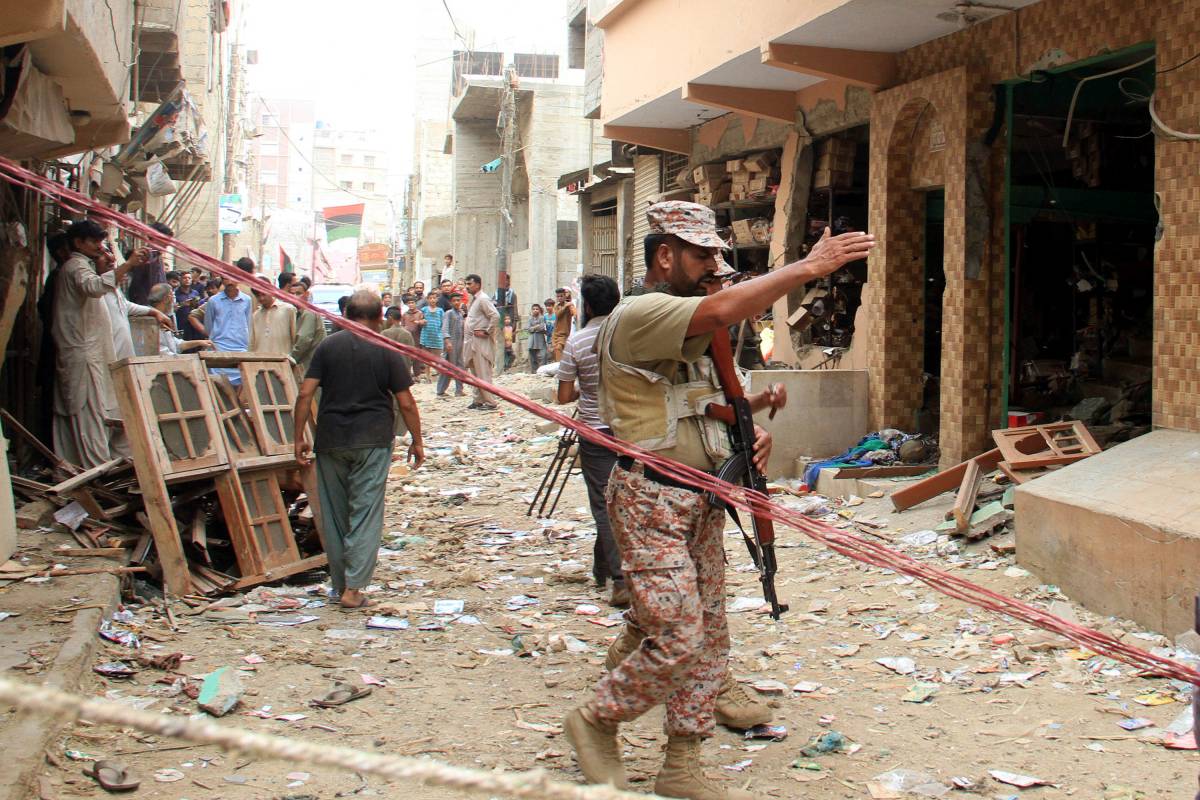
Pakistans business hub Karachi continues to be rocked by bomb blasts. On Monday, one person killed and 11 injured when a crude bomb exploded near Iqbal Market and New Memon Mosque in Karachi’s Kharadar area.

According to Karachi police, an Improvised Explosive Device (IED) was planted in a motorcycle to target a police vehicle.

This blast was “similar” to the earlier explosion, which took place last week. On May 12, one person was killed while 13 others injured in the mega-city’s Saddar area. The explosion took place in the Murshid Bazaar and the target was a vehicle of the Pakistani coast guard. The Sindhudesh Revolutionary Army claimed responsibility for the attack.

The fresh wave of attacks follows a pivotal strike last month, when a female suicide bomber of the banned pro-independence Baloch Liberation Army (BLA), killed three Chinese teachers outside the Karachi university.

The BLA had then warned China to immediately halt what it called its “exploitation projects” under CPEC in Pakistan.

Otherwise, the group warned, hundreds of its “highly-trained male and female members” are ready to carry out “harsher” attacks in future.
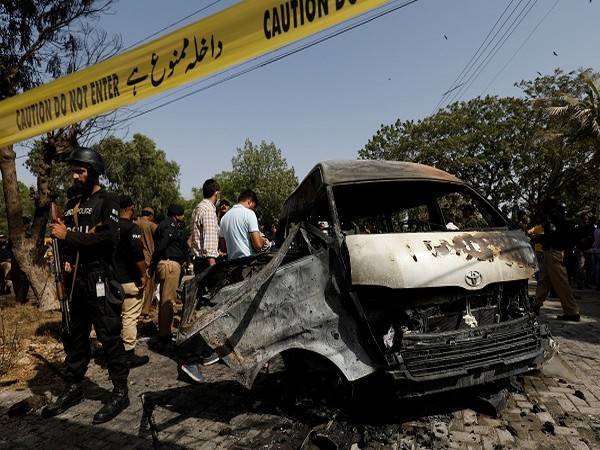
With a military crackdown on Balochistan rebels, Pakistani watchers believe the BLA is likely to refocus its energies on Karachi and make greater use of female fighters who can operate without attracting suspicion.

Analysts say that the suicide attack by Baloch may become a turning point in denting China’s will to stay the course in advancing the China Pakistan Economic Corridor (CPEC) which passes through Balochistan.

Fearing suicide bombings China has recalled its teachers from Pakistan and advised all others to be careful.

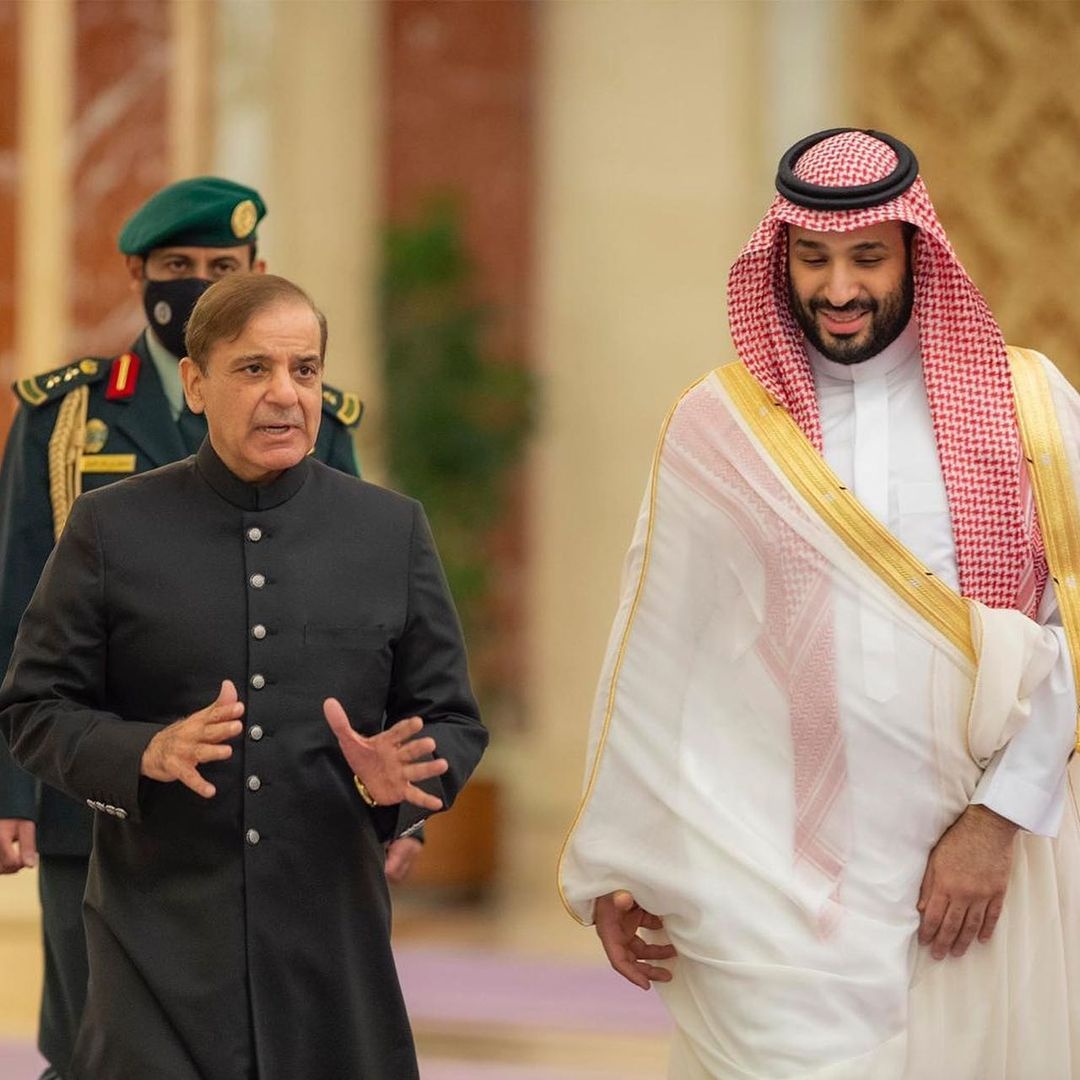
Though Pakistan has been assuring its “iron brother” that it has enhanced security for projects under CPEC, the Chinese nevertheless question the efficacy of Pakistan’s security cover. The Chinese premier Li Keqiang apparently conveyed these concerns to his Pakistani counterpart, Shehbaz Sharf on Monday.

“We hope that Pakistan will bring the perpetrators to justice as soon as possible, make every effort to deal with the aftermath, comfort the bereaved families and the injured, and comprehensively strengthen security measures for Chinese institutions and personnel in Pakistan to ensure that tragedies like this will not happen again,” Premier Li Keqiang was quoted as saying.

During the conversation, Li said that China is shocked and outraged by intensified attacks on its citizen and projects in Pakistan,

China has also decided to post a security officer in the Chinese embassy in Pakistan, to oversee security of Chinese nationals in Pakistan.

(The content is being carried under an arrangement with indianarrative.com)
ALSO READ: China’s chip output shrinks

Previous Story

Russia accuses West of waging war

Next Story

LORD RANGER SLAMS PAKISTAN IN HOUSE OF LORDS

Previous Story

Russia accuses West of waging war

Next Story

LORD RANGER SLAMS PAKISTAN IN HOUSE OF LORDS

Latest from -Top News

Pakistan Risks Overstretching Itself in Yemen War

Pakistan’s expanding military role in Saudi Arabia amid the Yemen conflict could strain its defence resources and fragile finances…reports Asian Lite News Desk Pakistan’s military involvement in the war in Yemen may prove unsustainable because of mounting financial pressures and competing security demands, according to a new report. Islamabad’s growing military presence in Saudi Arabia risks stretching its defence resources while exposing the country to greater strategic and economic challenges. An article by Andrew Wilson in One World Outlook describes Pakistan’s involvement as a case of “fiscal and strategic overreach”, arguing that the country lacks the financial flexibility to sustain an expanded military commitment. Pakistan’s external finances depend heavily on an International Monetary Fund (IMF) programme, financial support from Gulf countries and remittances from Pakistani workers in the region. The report argues that deeper military involvement in the conflict could place additional pressure on these sources of financial stability. It also warns that deploying troops and military equipment abroad could weaken Pakistan’s capacity to address security challenges along its eastern border and deal with two domestic insurgencies. The move could also draw Islamabad into a conflict it has sought to approach cautiously. A Reuters report in May, citing Pakistani security and government sources, said Islamabad had deployed around 8,000 troops, a squadron of approximately 16 aircraft, mostly JF-17 fighter jets, two drone squadrons and a Chinese HQ-9 air-defence battery to Saudi Arabia. According to those sources, Riyadh was financing the deployment, with Pakistani personnel operating the equipment. The sources also said a confidential agreement contemplated the possibility of deploying up to 80,000 troops. Islamabad has not confirmed those figures, although it has acknowledged its military presence in Saudi Arabia, including the deployment of fighter jets at King Abdulaziz Air Base from April. The One World Outlook article argues that Saudi financial support can cover allowances and operating expenses but cannot easily replace military equipment needed elsewhere or resolve the political and strategic challenges of participating in the Yemen conflict. Pakistan’s defence budget is another concern. For the 2026-27 financial year, the federal government allocated PKR 3 trillion, or approximately $10.8 billion, to defence services. The allocation represents an 18 per cent increase from the original PKR 2.55 trillion provision and amounts to around 2.1 per cent of projected gross domestic product (GDP). Defence spending accounts for approximately 16 per cent of the federal government’s PKR 18.8 trillion expenditure. Military pensions are budgeted separately at PKR 822 billion, while debt servicing costs stand at approximately PKR 8 trillion, more than two-and-a-half times the defence allocation. The report argues that these competing financial obligations leave little room for additional military expenditure without placing further pressure on public finances. Pakistan’s reliance on IMF assistance also limits its fiscal flexibility. The country must meet the conditions attached to the programme, including a primary budget surplus target of 2 per cent of GDP and continued restraint on development spending. According to the article, these requirements make it difficult for Islamabad to finance an additional military commitment without compromising other budgetary priorities. Pakistan’s economic indicators offer limited reassurance. Economic growth for the 2025-26 financial year is estimated at between 3.6 and 3.7 per cent, while inflation reached approximately 10.3 per cent in September following an energy price shock. Foreign exchange reserves stood at around $21.5 billion at the end of September. Although this marks an improvement from the low levels recorded in 2023, the report notes that the reserves cover only a few months of imports. Financial assistance from Gulf partners remains central to Pakistan’s external stability. The article says Islamabad holds approximately $8 billion in Saudi deposits at its central bank. In July, the State Bank of Pakistan said Riyadh had extended the maturity of $5 billion in deposits to December 2028, easing the country’s immediate external financing requirements. A further $3 billion deposit was also extended in the spring. However, the article argues that these arrangements provide temporary relief rather than long-term financial independence, particularly as regional conflict threatens the stability of the Gulf economies on which Pakistan relies. The report concludes that Pakistan faces a difficult balance between supporting Saudi Arabia militarily and preserving the financial and military resources needed to address its domestic and regional challenges.

UK and Germany Ratify Kensington Treaty

Britain and Germany ratify the Kensington Treaty, agreeing new cooperation on AI, quantum research, defence and security while targeting investment, jobs and Russian hybrid threats…reports Asian Lite News Desk Britain and Germany

Economic tide is turning in Bangladesh

If there is one thing that can bring some comfort to the struggling Bangladeshi economy, it is good relations with India. Bangladesh should remember that Delhi’s backing, through easy supplies of essentials
Go toTop

Don't Miss

Alliance talks on for Govt in Pakistan

Former president Asif Ali Zardari and Bilawal met with former

Vietnam slams China, Philippines for activities in SCS

The vessels of China and Vietnam confronted each other after