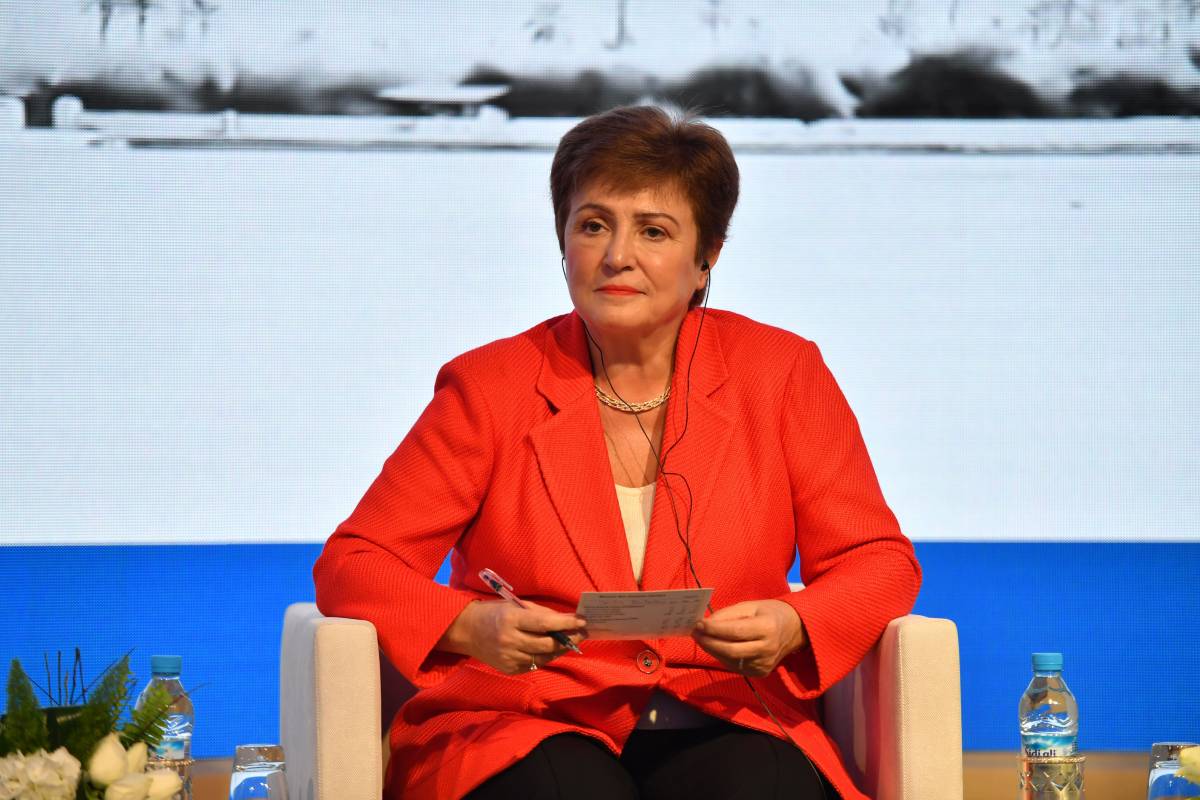
The IMF estimates that countries accounting for about one-third of the world economy will experience at least two consecutive quarters of contraction this or next year….reports Asian Lite News
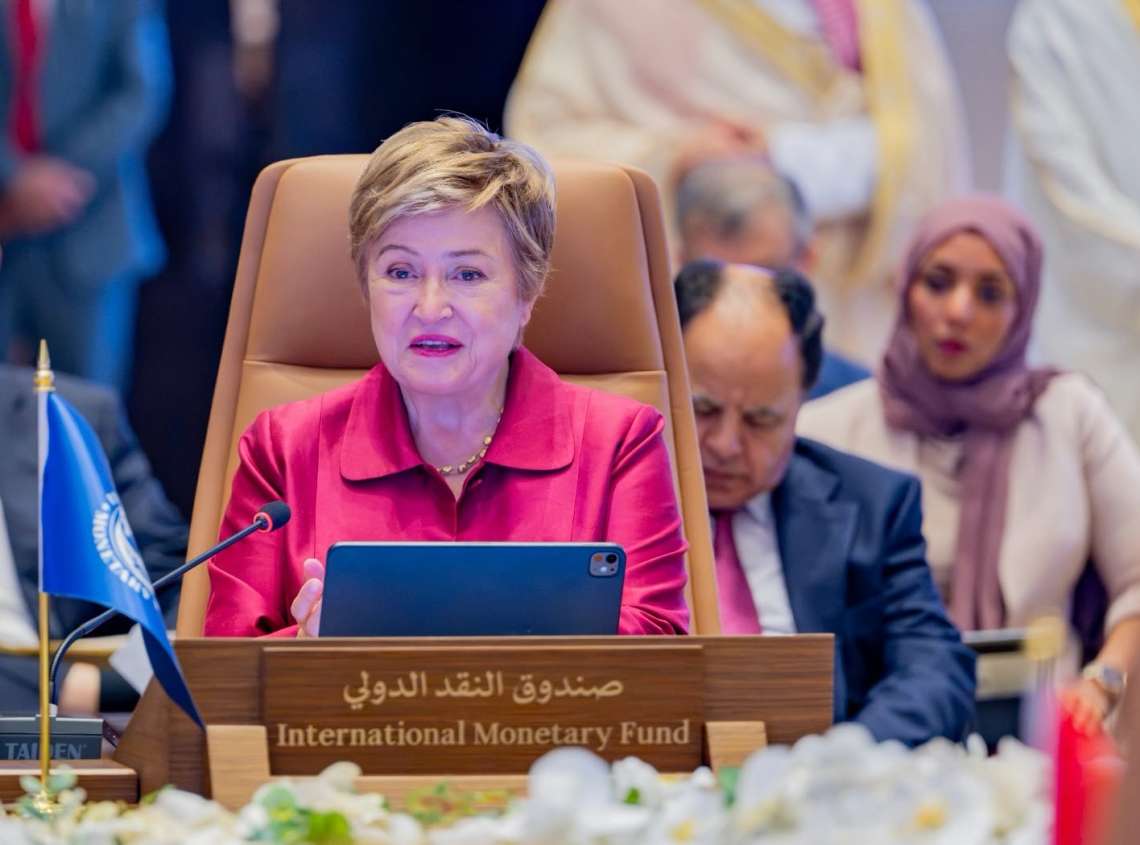
Managing Director of the International Monetary Fund (IMF), Kristalina Georgieva said there is a “fundamental shift” in the global economy, urging countries to bring down inflation, put in place responsible fiscal policy, and jointly support emerging market and developing economies.
The global economy is moving “from a world of relative predictability, with a rules-based framework for international economic cooperation, low interest rates, and low inflation… to a world with more fragility, greater uncertainty, higher economic volatility, geopolitical confrontations, and more frequent and devastating natural disasters”, Georgieva said in a curtain raiser speech ahead of the 2022 Annual Meetings of the IMF and the World Bank scheduled next week.
Stressing the urgency to stabilise the economy, she noted that global outlook has darkened by multiple shocks, among them a war, and inflation has become more persistent, reports Xinhua news agency.
The IMF has downgraded its growth projections already three times since October last year, to only 3.2 per cent for 2022 and 2.9 per cent for 2023, the IMF chief said, adding that the global institution will downgrade growth for next year in its updated World Economic Outlook next week.
“We will flag that the risks of recession are rising,” she noted.
The IMF estimates that countries accounting for about one-third of the world economy will experience at least two consecutive quarters of contraction this or next year.
“And, even when growth is positive, it will feel like a recession because of shrinking real incomes and rising prices,” she added.
Overall, the IMF expects a global output loss of about $4 trillion between now and 2026. This is the size of the German economy, a massive setback for the world economy.
The IMF chief urged policymakers to stay the course to bring down inflation, and to put in place responsible fiscal policy, one that protects the vulnerable, without adding fuel to inflation, while calling for joint efforts to support emerging market and developing economies.
“A stronger dollar, high borrowing costs and capital outflows cause a triple blow to many emerging markets and developing economies,” said Georgieva, noting that the probability of portfolio outflows from emerging markets over the next three quarters has risen to 40 per cent, which could pose “a major challenge” to countries with large external financing needs.
More than a quarter of emerging economies have either defaulted or had bonds trading at distressed levels; and over 60 per cent of low-income countries are in, or at high risk, of debt distress.
The IMF chief urged countries to work together to address issues such as food insecurity, which is now affecting a staggering number of 345 million people, and climate change, the existential threat to humanity.
Since the pandemic began, the IMF has provided $258 billion to 93 countries.
Since the Ukraine-Russia war, it has supported 16 countries with close to $90 billion, which is in addition to last year’s historic $650 billion Special Drawing Rights allocation.