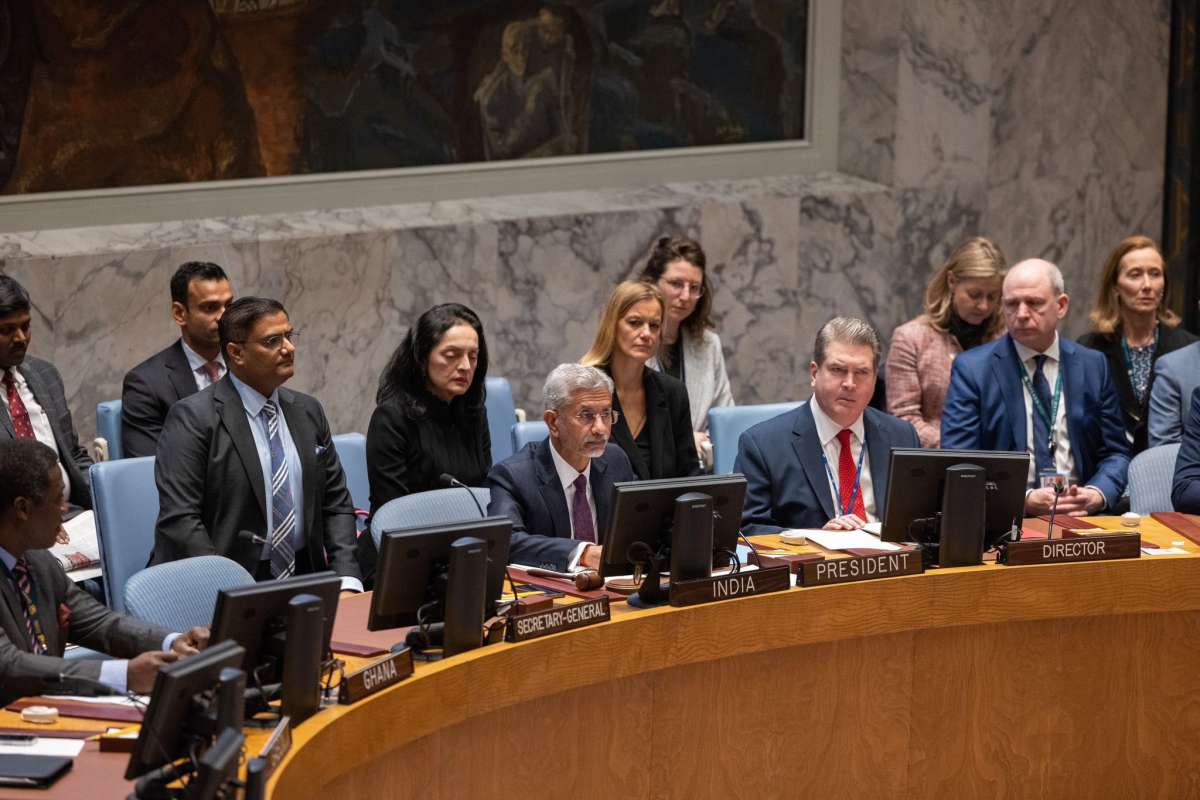
Jaishankar quoted Prime Minister Narendra Modi: “We consider that even a single attack is one too many and even a single life lost is one too many. So, we will not rest till terrorism is uprooted.”…reports Asian Lite News
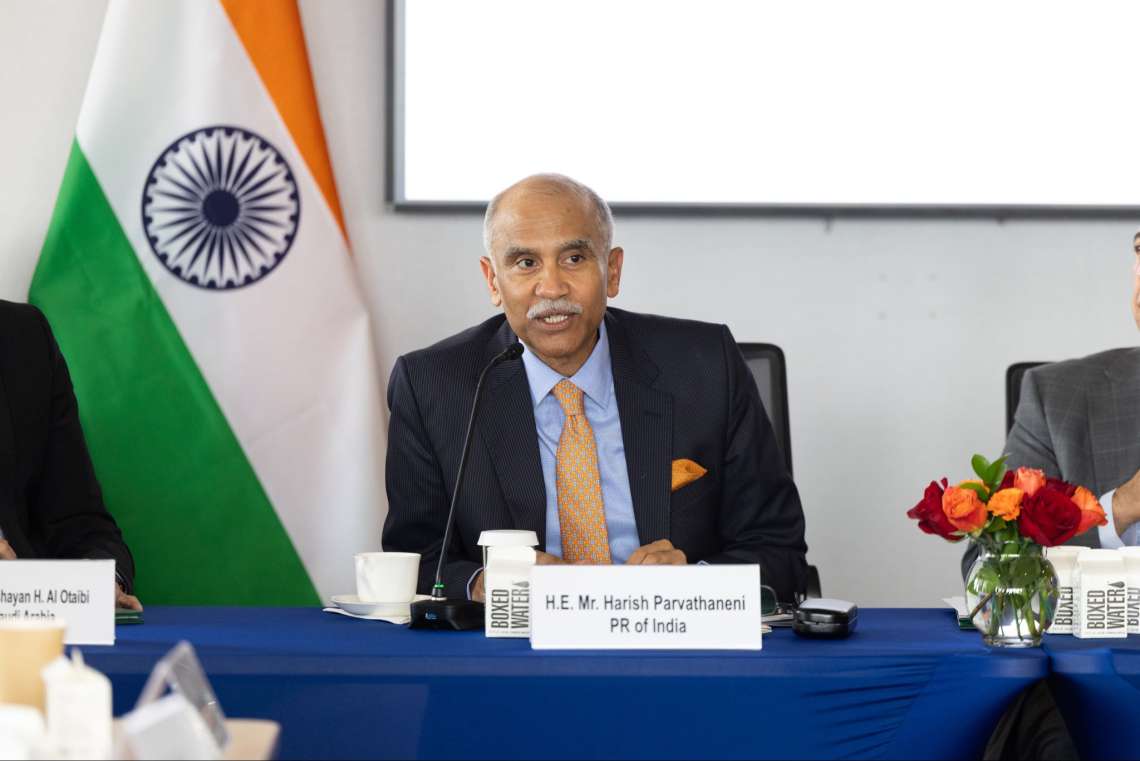
India will seek election to the Security Council for a two-year term that starts in 2028, External Affairs Minister S. Jaishankar has said.
He made the announcement on Thursday at a brief news conference after presiding over a briefing on counter-terrorism at the Council.
India is completing this month its eighth stint as an elected member of the Council.
The elected Council seats are allocated by the region and India will first have to get the support of the 55 countries of the Asia-Pacific Region.
It was unopposed in the region in the election held in 2020 for the two-year term that started the next year.
Japan will assume next year the Asian seat vacated by India.
Even as it will be lobbying for its candidacy for the seat for which elections will be held in 2027, New Delhi will simultaneously work for Council reforms so that it gets a permanent seat.
‘We cannot let another 9/11 or 26/11 happen again’
India’s External Affairs Minister S. Jaishankar hit out on Thursday at double standards on terrorism practised by China and Pakistan and said that the international community should collectively act against those countries trying to gain politically from it.
“We cannot let another ‘9/11 of New York’ or ’26/11 of Mumbai’ happen again,” he declared at the Security Council briefing on counter-terrorism.
Jaishankar quoted Prime Minister Narendra Modi: “We consider that even a single attack is one too many and even a single life lost is one too many. So, we will not rest till terrorism is uprooted.”
The “challenge is how do we deal with double standards, both inside and outside this Council”, he said without mentioning China or Pakistan by name.
“The contemporary epicentre of terrorism remains very much alive and active, whatever gloss may be applied to minimise unpleasant realitiesa and “we cannot forget that old habits and established networks are still alive, especially in South Asia”, he said.
There were double standards in taking action against terrorists, he said, in a reference to China blocking sanctions against Pakistan-based terrorists.
Jaishankar said that the “same criteria are not applied to sanctioning and prosecuting terrorists. It would seem sometimes that the ownership of terrorism is more important than its perpetration or its consequences”.
“For too long, some have persisted with the approach that terrorism is just another instrument or stratagem. Those invested in terrorism have used such cynicism to carry on.”
He warned: “It is not just plain wrong but could be downright dangerous, even for the very people whose toleration extends this far.”
“No individual state should endeavour to seek political gain from terrorism and none of us collectively should ever put up with such calculations,” he said.
“When it comes to tackling terrorism, we must overcome our political differences and manifest a zero-tolerance approach,” he said.
At the start of the session, Jaishankar called for a moment of silence in memory of the victims of terrorism, the Irish peacekeeper killed in Lebanon on Wednesday in Lebanon and all peacekeepers killed in UN operations.
Before Jaishankar spoke, Anjali Vijay Kulthe, a nurse from Cama and Albless Hospital in Mumbai, told the Council about her face-to-face encounter with Pakistan-based terrorists on 26/11 and how she worked to save mothers, mothers-to-be, and newborns at the medical centre.
Jaishankar called on the Council “to re-invigorate its counter-terrorism agenda. And that is overdue because the threat of terrorism has actually become even more serious”.
He called for vigilance against new and emerging technologies being adopted by terrorists.
“This is likely to be the next frontier of our battle,” he said.
Terrorists “have diversified their funding portfolio and expanded their recruitment toolkit” by exploiting “the anonymity afforded by new and emerging technologies”, he said.
“Terrorist groups have also been taking advantage of openness of democratic societies, by spreading false narratives, inciting hatred, and radicalising ideologies,” he added.
ALSO READ-India launches bid for UNSC