May 11, 2022
4 mins read

Indian-Americans distance themselves from Indian govt on Ukraine war

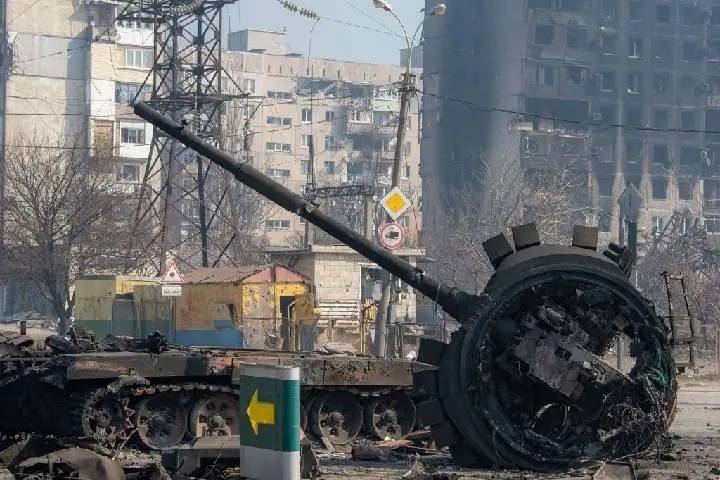
Like most Americans, Indian-Americans have been horrified by Russia’s invasion of Ukraine in February and have been appalled by images of death and destruction coming out of the battle-ravaged country, reports Yashwant Raj

Indian-Americans plan to issue a forceful denouncement of Russia’s invasion of Ukraine in an attempt to shield themselves from the fallout of the Indian government’s continued refusal to condemn the war, which has drawn widespread scrutiny and criticism from within and out of US policy circles.

A bipartisan group of well-connected Indian-American political operatives are expecting to hold a seminar on Capitol Hill on theme of “Indian Americans Against Genocide in Ukraine”, one of the organisers said. June 22 is the tentative date being considered and the event is likely to be headlined by a leading yoga guru and attended by many US lawmakers.

Indian-American speakers could include the four serving members of the US House of Representatives Ami Bera, Pramila Jayapal, Ro Khanna, and Raja Krishnamoorthi, all of whom have been extremely critical of the Russian invasion and both publicly and privately critical of India’s refusal to condemn it.

Politically-active Indian-Americans have been a key driver of the India-US relationship. They helped soften American backlash against India after the 1998 Pokhran II nuclear tests and, most significantly, rallied US lawmakers to pass a legislation that ended India’s nuclear isolation in 2008.

They have stood with the Indian government of the day in a notable display of bipartisan solidarity with their country of origin. And Prime Minister Narendra Modi has been popular with both Republican and Democratic Indian Americans. For the community to break so publicly with his government’s position on Ukraine should cause concern at 7 Race Course Road.

Like most Americans, Indian-Americans have been horrified by Russia’s invasion of Ukraine in February and have been appalled by images of death and destruction coming out of the battle-ravaged country.

They have also watched with growing disquiet the Modi government’s refusal to condemn the invasion and bristle at having to “either defend it or face scorn for it”. One Indian-American said he was asked by a Pennsylvania party official recently, “Why is India supporting the Russians?”

India is not supporting the Russian invasion. While it has refused to condemn it outrightly, it has made clear its opposition to it. New Delhi has called for the immediate cessation of hostilities and that the sovereignty and territorial integrity of nations must be respected. But all of that has been obscured by India abstaining in critical UN votes on the war.

“What the Russian Army has been doing in Ukraine is downright genocide,” said Shekhar Tiwari, a Republican operative who is also chairman of the American Hindu Coalition. He has been a close associate of several top BJP leaders. “Being a Hindu and a son of a Gandhian, it is hard for me to stomach,” he added.

These Indian-Americans are careful not to criticize the Indian government and insist they only want to express their horror over situation in Ukraine, which they described as a “genocide”, as has US President Joe Biden.

They have been concerned about the blowback they are getting for India’s position on the war and believe a public denouncement of Russia will, one, make clear the community feels as revolted as the rest of the country. And, two, that the community is “not in the pocket of the embassy”, as one these Indian-Americans put it.

Breaking with the Indian government over the Ukraine war will serve the twin purposes of signalling their own independence from the government of India and, two, convey their own feelings on the issue.

Some Indian-Americans have also argued, since Russia invaded Ukraine in February, India needs to denounce Moscow and finally pick a side that will be strategically more meaningful.

Ramesh Kapur, a Democratic strategist who worked closely with the presidential campaign of Biden, says India’s refusal to condemn the Russian invasion could be problematic should it need US assistance in a conflict with China. “If India gets into a situation with China, it can expect support from the US, but if the US thinks it cannot count on India they will have a problem,” he said, taking a tactical view of India’s position, as has been put forth by many US lawmakers.

Congressman Khanna told Fox News in March that he thinks India “ought to be condemning Putin” and “they need to realize, they have to pick sides”. He had added: “We, the United States, were with them when China invaded India. Putin wasn’t there. And it’s time for them to buy weapons from the United States, not Russia. We’ve got to look at how we can facilitate that and make that easier. We need India as an ally ultimately to contain China.”

ALSO READ-‘More than 8 million internally displaced in Ukraine’

Previous Story

UN envoy presses Yemen’s warring sides to uphold ceasefire

Next Story

SC seeks govt report on minority status for Hindus by Aug 30

Previous Story

UN envoy presses Yemen’s warring sides to uphold ceasefire

Next Story

SC seeks govt report on minority status for Hindus by Aug 30

Latest from -Top News

Pakistan Risks Overstretching Itself in Yemen War

Pakistan’s expanding military role in Saudi Arabia amid the Yemen conflict could strain its defence resources and fragile finances…reports Asian Lite News Desk Pakistan’s military involvement in the war in Yemen may prove unsustainable because of mounting financial pressures and competing security demands, according to a new report. Islamabad’s growing military presence in Saudi Arabia risks stretching its defence resources while exposing the country to greater strategic and economic challenges. An article by Andrew Wilson in One World Outlook describes Pakistan’s involvement as a case of “fiscal and strategic overreach”, arguing that the country lacks the financial flexibility to sustain an expanded military commitment. Pakistan’s external finances depend heavily on an International Monetary Fund (IMF) programme, financial support from Gulf countries and remittances from Pakistani workers in the region. The report argues that deeper military involvement in the conflict could place additional pressure on these sources of financial stability. It also warns that deploying troops and military equipment abroad could weaken Pakistan’s capacity to address security challenges along its eastern border and deal with two domestic insurgencies. The move could also draw Islamabad into a conflict it has sought to approach cautiously. A Reuters report in May, citing Pakistani security and government sources, said Islamabad had deployed around 8,000 troops, a squadron of approximately 16 aircraft, mostly JF-17 fighter jets, two drone squadrons and a Chinese HQ-9 air-defence battery to Saudi Arabia. According to those sources, Riyadh was financing the deployment, with Pakistani personnel operating the equipment. The sources also said a confidential agreement contemplated the possibility of deploying up to 80,000 troops. Islamabad has not confirmed those figures, although it has acknowledged its military presence in Saudi Arabia, including the deployment of fighter jets at King Abdulaziz Air Base from April. The One World Outlook article argues that Saudi financial support can cover allowances and operating expenses but cannot easily replace military equipment needed elsewhere or resolve the political and strategic challenges of participating in the Yemen conflict. Pakistan’s defence budget is another concern. For the 2026-27 financial year, the federal government allocated PKR 3 trillion, or approximately $10.8 billion, to defence services. The allocation represents an 18 per cent increase from the original PKR 2.55 trillion provision and amounts to around 2.1 per cent of projected gross domestic product (GDP). Defence spending accounts for approximately 16 per cent of the federal government’s PKR 18.8 trillion expenditure. Military pensions are budgeted separately at PKR 822 billion, while debt servicing costs stand at approximately PKR 8 trillion, more than two-and-a-half times the defence allocation. The report argues that these competing financial obligations leave little room for additional military expenditure without placing further pressure on public finances. Pakistan’s reliance on IMF assistance also limits its fiscal flexibility. The country must meet the conditions attached to the programme, including a primary budget surplus target of 2 per cent of GDP and continued restraint on development spending. According to the article, these requirements make it difficult for Islamabad to finance an additional military commitment without compromising other budgetary priorities. Pakistan’s economic indicators offer limited reassurance. Economic growth for the 2025-26 financial year is estimated at between 3.6 and 3.7 per cent, while inflation reached approximately 10.3 per cent in September following an energy price shock. Foreign exchange reserves stood at around $21.5 billion at the end of September. Although this marks an improvement from the low levels recorded in 2023, the report notes that the reserves cover only a few months of imports. Financial assistance from Gulf partners remains central to Pakistan’s external stability. The article says Islamabad holds approximately $8 billion in Saudi deposits at its central bank. In July, the State Bank of Pakistan said Riyadh had extended the maturity of $5 billion in deposits to December 2028, easing the country’s immediate external financing requirements. A further $3 billion deposit was also extended in the spring. However, the article argues that these arrangements provide temporary relief rather than long-term financial independence, particularly as regional conflict threatens the stability of the Gulf economies on which Pakistan relies. The report concludes that Pakistan faces a difficult balance between supporting Saudi Arabia militarily and preserving the financial and military resources needed to address its domestic and regional challenges.

UK and Germany Ratify Kensington Treaty

Britain and Germany ratify the Kensington Treaty, agreeing new cooperation on AI, quantum research, defence and security while targeting investment, jobs and Russian hybrid threats…reports Asian Lite News Desk Britain and Germany

Economic tide is turning in Bangladesh

If there is one thing that can bring some comfort to the struggling Bangladeshi economy, it is good relations with India. Bangladesh should remember that Delhi’s backing, through easy supplies of essentials
Go toTop