China will recoup the cost of its investment in less than 26 months and bleed Pakistan for the next 25 years of contract duration…reports Asian Lite News
Pakistan’s economy is like a ticking time bomb. Factors that contributed to Sri Lanka’s economic crisis have also had a significant impact on Pakistan, whose economy faces similar challenges.
Muhammad Hamza Qamar, writing in Daily Parliament Times said that Pakistan has a large amount of debt, high inflation, a spike in unemployment and a lot of other macroeconomic problems which clearly show the multiple challenges faced by the country.
The import dependence on essential commodities, limited foreign exchange sources, restrictions on free trade and accumulated external debt are among the other alarming similarities between Sri Lanka and Pakistan.
From a critical point of view, China-Pakistan Economic Corridor (CPEC) is built on a USD 46 billion (now USD 55 billion) loan that Pakistan received from China as part of its sovereign Guarantee.
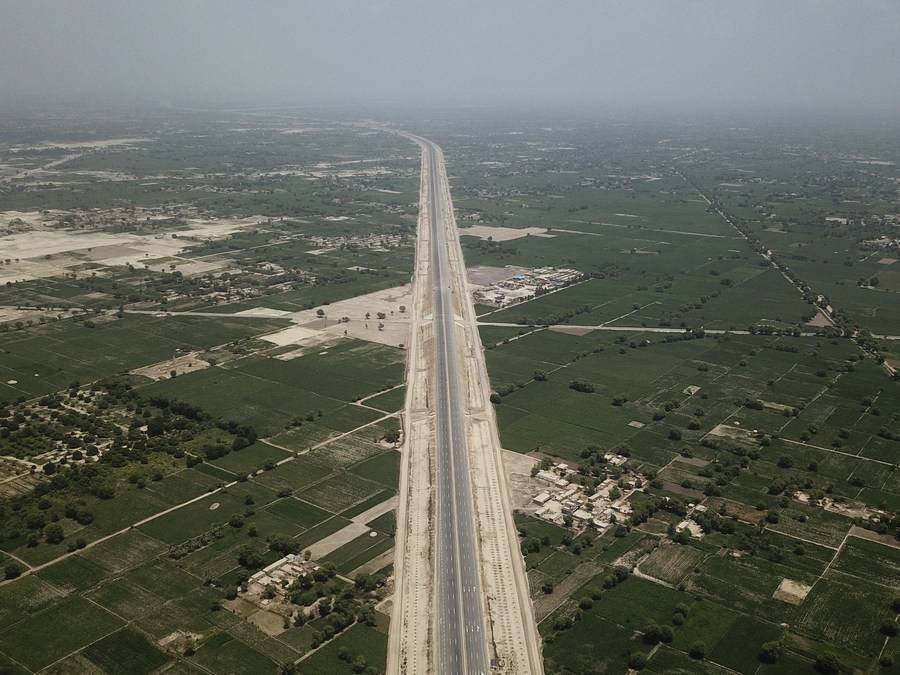
According to official documents, these investments were guaranteed a 17-20 per cent of Rate of Return in dollar terms on their equity (only the equity portion, not the entire project cost), with an estimated debt-to-equity ratio of 80 per cent to 20 per cent, said Qamar.
China will recoup the cost of its investment in less than 26 months and bleed Pakistan for the next 25 years of contract duration. The country’s economy might be crippled by such high costs, making it a wheelchair case, reported Daily Parliament Times.
Sri Lanka provides a historical illustration in this case. In a debt/equity swap, Sri Lanka has transferred the Hambantota port, and power plant and may transfer the airport to Chinese control because it is unable to pay off its debts to China. Additionally, debt service consumes 90 per cent of Sri Lanka’s revenue.
Another example could be Venezuela, where China made the largest investment of any single country so far, investing USD 52 billion from 2008 to 2014. All Chinese loans to Venezuela were backed by commodities, and as a result, Venezuela was obligated to continue providing millions of barrels of oil to China helping the Chinese economy to grow further, said Qamar.
The same can be applied to Pakistan, where the country’s total debt, which does not include debt from CPEC, is close to USD 72 billion or close to 70 per cent of GDP, and the current account deficit has increased close to 120 per cent, reported Daily Parliament Times.
With CPEC, the interest will be in the range of 7 per cent, payable in 25 to 40 years, and Pakistan will be required to pay roughly 7-8 billion dollars as EMI for the ensuing 43 years, beginning in 2018 and so on.
It appears impossible for the nation to pay back both the principal amount and such a hefty interest rate, said Qamar.
Other revelations are that the terms of contracts in investment in CPEC are one-sided including the condition that no-bid contracts against Chinese companies. Exemption from toll tax for Chinese vehicles and preference for the Chinese workforce are some side perks.
The conduct of China in Sri Lankan projects shares a similar pattern which has been followed by Pakistan lately. The piled-up foreign debt and shrinking foreign reserves are egregious to indulge in further loan programs which are required to proceed with the CPEC project. (ANI)