November 23, 2022
3 mins read

Nepal polls: NC-led ruling coalition on the lead

As the vote counting is underway, officials at Nepal’s poll body say it may take at least two more days to announce the final vote tally, a report by Santosh Ghimire…reports Asian Lite News

Two traditional parties—the Nepali Congress (NC) and the Communist Party of Nepal (United Marxist Leninist)—are ahead of other political parties as the preliminary vote counting for Nepal’s House of Representatives and provincial assembly elections is underway.

As per the overall national vote counting results made public by the country’s Election Commission, the ruling NC is in the first position followed by the main opposition CPN (UML) under the first-past-the post category (FPTP).

But the freshly minted Rastriya Swatantra Party (RSP) is in the third position followed by the ruling CPN (Maoist Center).

As the vote counting is underway, officials at Nepal’s poll body say it may take at least two more days to announce the final vote tally.

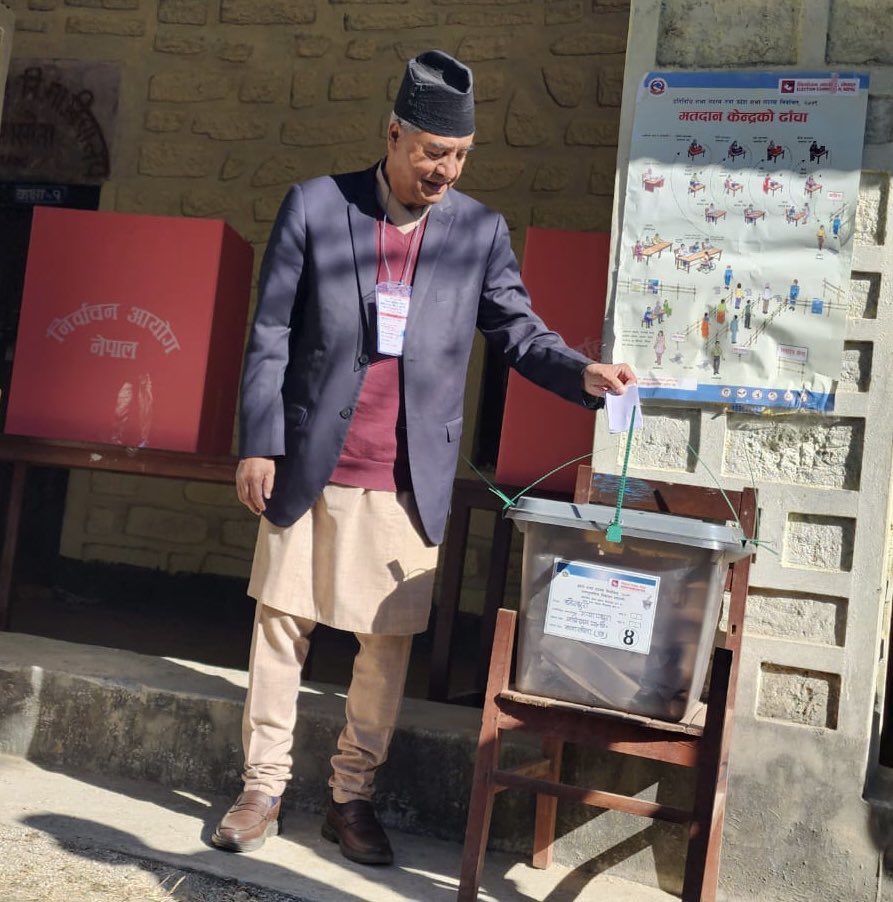
Nepal held the federal parliament and provincial assembly elections on Sunday, November 20, in a single phase across the country. This was the second time Nepalis voted for the general elections after the promulgation of a republican constitution in 2015.

Out of a total of 275 members of the federal Parliament, 165 are to be elected through direct voting (first-past-the-post) and the remaining 110 are to be elected through proportional representation (PR) category.

Similarly, out of a total of 550 members of the provincial legislatures, 330 are to be elected directly and 220 to be elected through the PR system.

Ruling Congress maintains early lead in FPTP category

In its latest update on the polling results, the Election Commission said that the ruling NC has secured four seats while taking lead in the vote count in 46 seats under the House of Representatives, lower house of federal parliament. So far, the party has managed four seats while leading the vote count in 59 seats under seven provincial assemblies.

The UML has won two seats while leading in 43 seats under the lower house so far. The party has not won any seats under provincial assemblies while leading in at least 53 seats.
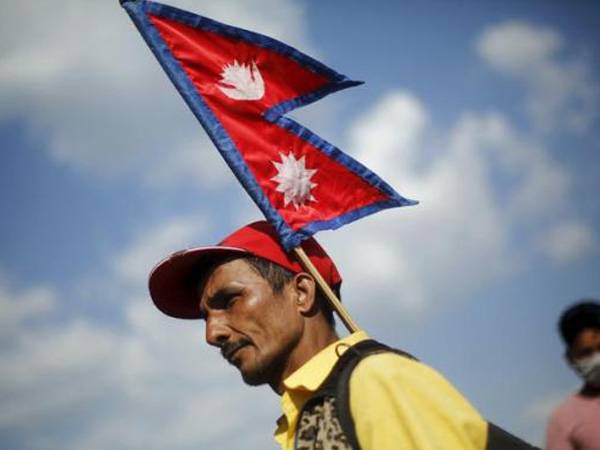
UML takes lead in PR category

The UML, however, is in the first position followed by the ruling NC under the proportional representation (PR) category.

In its update, the election body stated that UML has bagged 76,323 votes while the ruling NC is in the second position with 65,792 votes. The Rastriya Swatantra Party is in the third position, garnering 33,337 votes.

Similarly, the ruling CPN (Maoist Centre) and the royalist Rastriya Prajatantra Party (RPP) have got 29,651 and 19,044 votes to stand fourth and fifth respectively.

Rise of Raut-led Janamat Party in Madhes

Nepal’s Madhes Province, which shares a close socio-cultural connection with neighboring India, has seen the emergence of Janamat Party led by CK Raut following the recent elections.

The older Janata Samajbadi Party (JSP) led by Upendra Yadav and Loktantrik Samajbadi Party (LSP) led by Mahantha Thakur—who had been dominant players both in national and regional politics for the past one decade, are performing poorly in the vote counting.

As of Tuesday afternoon, the Raut-led Janamat party managed to secure two provincial assembly seats while obtaining significant votes in several constituencies in Madhes province under the proportional representation (PR) category.

The Janamat Party, which joined the peaceful parliamentary politics only in 2019 after quitting the secessionist movement, is likely to earn the ‘national party status’, media reports said.

Key leaders about to secure their wins

Key political leaders of Nepal including Prime Minister Sher Bahadur Deuba, CPN (Maoist) Chairman Pushpa Kamal Dahal and UML Chairman KP Sharma Oli are taking leads in the vote counting and are close to secure wins.

New faces including Sagar Dhakal, Ravi Lamichhane and Sobita Gautam, who are mostly in their thirties, are battling strongly with the older politicians.

(Santosh Ghimire’s is the Nepal correspondent of India Narrative based in Kathmandu)
ALSO READ: Nepal Airlines to sell off troublesome Chinese planes

Previous Story

France seal easy 4-1 win against Australia

Next Story

India’s Koo enters Brazil, gets over 1 mn downloads in 48 hours

Previous Story

France seal easy 4-1 win against Australia

Next Story

India’s Koo enters Brazil, gets over 1 mn downloads in 48 hours

Latest from -Top News

Pakistan Risks Overstretching Itself in Yemen War

Pakistan’s expanding military role in Saudi Arabia amid the Yemen conflict could strain its defence resources and fragile finances…reports Asian Lite News Desk Pakistan’s military involvement in the war in Yemen may prove unsustainable because of mounting financial pressures and competing security demands, according to a new report. Islamabad’s growing military presence in Saudi Arabia risks stretching its defence resources while exposing the country to greater strategic and economic challenges. An article by Andrew Wilson in One World Outlook describes Pakistan’s involvement as a case of “fiscal and strategic overreach”, arguing that the country lacks the financial flexibility to sustain an expanded military commitment. Pakistan’s external finances depend heavily on an International Monetary Fund (IMF) programme, financial support from Gulf countries and remittances from Pakistani workers in the region. The report argues that deeper military involvement in the conflict could place additional pressure on these sources of financial stability. It also warns that deploying troops and military equipment abroad could weaken Pakistan’s capacity to address security challenges along its eastern border and deal with two domestic insurgencies. The move could also draw Islamabad into a conflict it has sought to approach cautiously. A Reuters report in May, citing Pakistani security and government sources, said Islamabad had deployed around 8,000 troops, a squadron of approximately 16 aircraft, mostly JF-17 fighter jets, two drone squadrons and a Chinese HQ-9 air-defence battery to Saudi Arabia. According to those sources, Riyadh was financing the deployment, with Pakistani personnel operating the equipment. The sources also said a confidential agreement contemplated the possibility of deploying up to 80,000 troops. Islamabad has not confirmed those figures, although it has acknowledged its military presence in Saudi Arabia, including the deployment of fighter jets at King Abdulaziz Air Base from April. The One World Outlook article argues that Saudi financial support can cover allowances and operating expenses but cannot easily replace military equipment needed elsewhere or resolve the political and strategic challenges of participating in the Yemen conflict. Pakistan’s defence budget is another concern. For the 2026-27 financial year, the federal government allocated PKR 3 trillion, or approximately $10.8 billion, to defence services. The allocation represents an 18 per cent increase from the original PKR 2.55 trillion provision and amounts to around 2.1 per cent of projected gross domestic product (GDP). Defence spending accounts for approximately 16 per cent of the federal government’s PKR 18.8 trillion expenditure. Military pensions are budgeted separately at PKR 822 billion, while debt servicing costs stand at approximately PKR 8 trillion, more than two-and-a-half times the defence allocation. The report argues that these competing financial obligations leave little room for additional military expenditure without placing further pressure on public finances. Pakistan’s reliance on IMF assistance also limits its fiscal flexibility. The country must meet the conditions attached to the programme, including a primary budget surplus target of 2 per cent of GDP and continued restraint on development spending. According to the article, these requirements make it difficult for Islamabad to finance an additional military commitment without compromising other budgetary priorities. Pakistan’s economic indicators offer limited reassurance. Economic growth for the 2025-26 financial year is estimated at between 3.6 and 3.7 per cent, while inflation reached approximately 10.3 per cent in September following an energy price shock. Foreign exchange reserves stood at around $21.5 billion at the end of September. Although this marks an improvement from the low levels recorded in 2023, the report notes that the reserves cover only a few months of imports. Financial assistance from Gulf partners remains central to Pakistan’s external stability. The article says Islamabad holds approximately $8 billion in Saudi deposits at its central bank. In July, the State Bank of Pakistan said Riyadh had extended the maturity of $5 billion in deposits to December 2028, easing the country’s immediate external financing requirements. A further $3 billion deposit was also extended in the spring. However, the article argues that these arrangements provide temporary relief rather than long-term financial independence, particularly as regional conflict threatens the stability of the Gulf economies on which Pakistan relies. The report concludes that Pakistan faces a difficult balance between supporting Saudi Arabia militarily and preserving the financial and military resources needed to address its domestic and regional challenges.

UK and Germany Ratify Kensington Treaty

Britain and Germany ratify the Kensington Treaty, agreeing new cooperation on AI, quantum research, defence and security while targeting investment, jobs and Russian hybrid threats…reports Asian Lite News Desk Britain and Germany

Economic tide is turning in Bangladesh

If there is one thing that can bring some comfort to the struggling Bangladeshi economy, it is good relations with India. Bangladesh should remember that Delhi’s backing, through easy supplies of essentials
Go toTop

Don't Miss

4 cops killed , 15 injured in blast in Balochistan

The blast occurred near Thandi Sarak, close to an open

The ‘drowning’ sailors of Pakistan

These may seem like a small problem today, but if