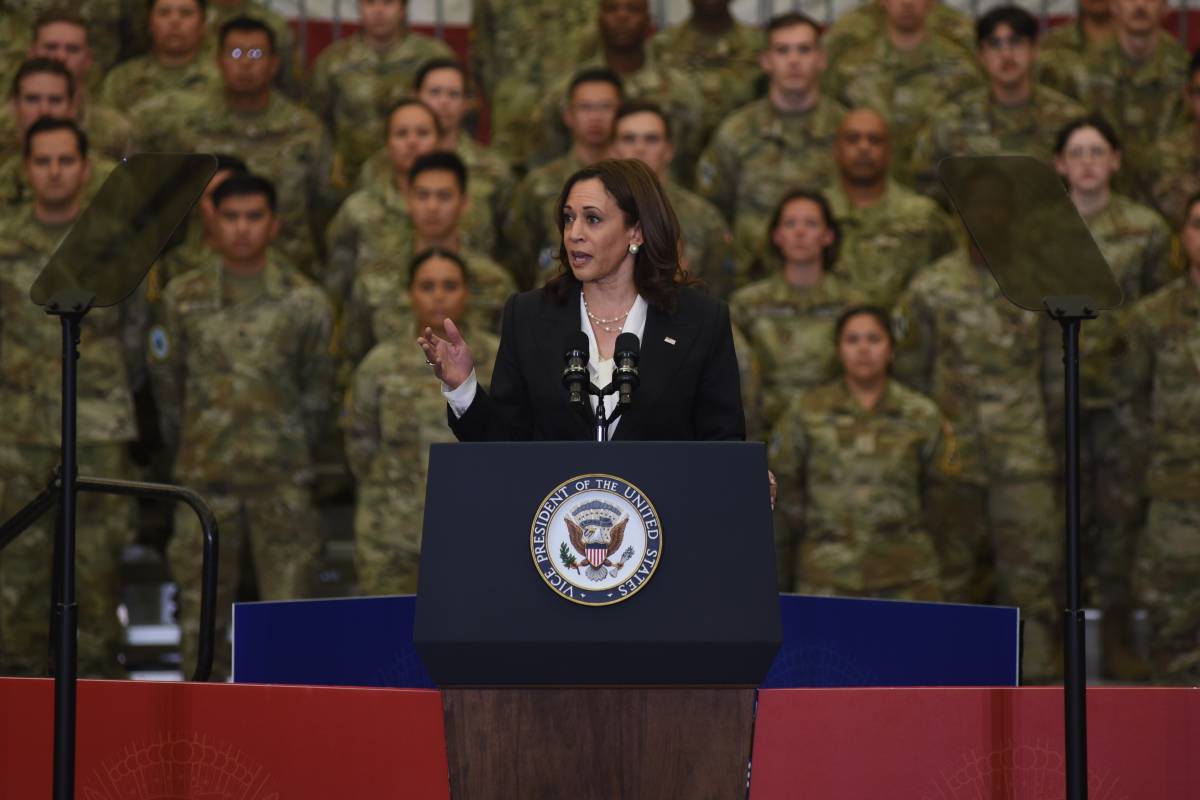
Overall, these tests jeopardise the long-term sustainability of outer space and imperil the exploration and use of space by all nations, the US Vice President added…reports Asian Lite News
US Vice President Kamala Harris has declared that the country will no longer conduct destructive, direct ascent anti-satellite (ASAT) missile testing to reduce space debris and safeguard satellites in low-Earth orbit.
Calling on other nations to make similar commitments and to work together in establishing this as a norm, Harris said in a statement late on Monday that such efforts benefit all countries.
“The destruction of space objects through direct-ascent ASAT missile testing is reckless and irresponsible,” she said at the Vandenberg Space Force Base in California.
The US is the first nation to make such a declaration.
The commitment addresses one of the most pressing threats to the security and sustainability of space, as demonstrated by Russia’s November 2021 destructive direct ascent ASAT missile test.
China also conducted a similar test in 2007.
“The long-lived debris created by these tests now threaten satellites and other space objects that are vital to all nations’ security, economic, and scientific interests, and increases risk to astronauts in space,” Harris emphasised.
Overall, these tests jeopardise the long-term sustainability of outer space and imperil the exploration and use of space by all nations, the US Vice President added.
At the Joe Biden-Harris Administration’s first National Space Council meeting in December, Harris tasked the National Security Council staff to work with national security agencies to develop proposals for national security space norms.
“This is especially important as there is an ever-increasing number of states and non-governmental entities that rely on space services and space assets which are vulnerable to debris,” said Harris.
Meaningfully reducing ASAT testing and debris generation advances national security interests and protects long-term US interests in space exploration, space science, and space-enabled economic development.
The Biden-Harris Administration had made clear that the US will engage the international community to uphold and strengthen a rules-based international order for space.
ALSO READ-White House holds first Easter Egg Roll in two years