February 28, 2023
2 mins read

CPN-UML quits Nepal’s fragile ruling coalition

The decision by the party comes in the wake of a changed political equation in the run-up to the presidential election…reports Asian Lite News

Ahead of the Presidential elections in Nepal, the country’s coalition government has been thrown into turmoil as the Communist Party of Nepal-Unified Marxist Leninist (CPN-UML) Ministers on Monday submitted their resignations to Prime Minister Pushpa Kamal Dahal.

With CPN-UML ministers submitting their resignations, the incumbent government formed in late December last year has lost its majority and now it may dissolve. Prachanda now leads a minority government and would need to undertake a vote of confidence within a month.

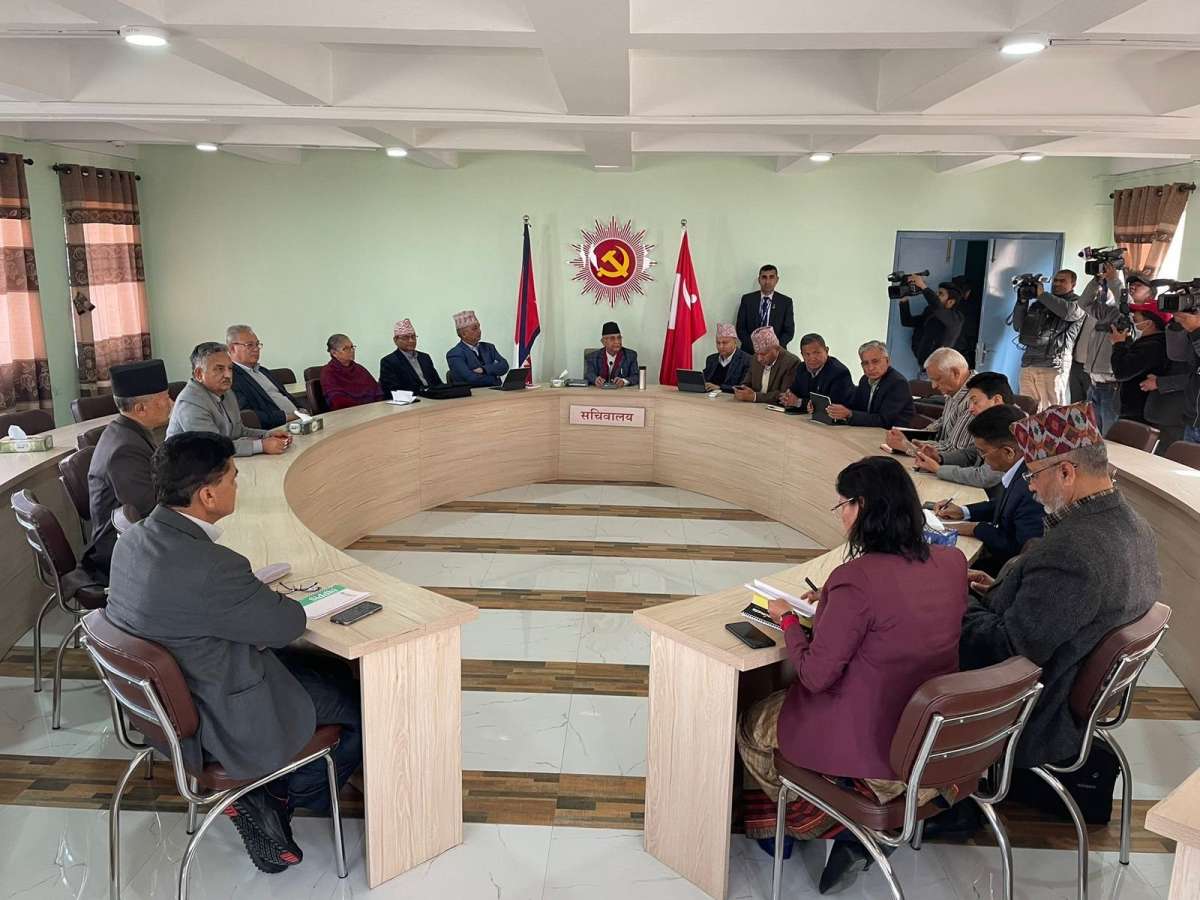
In the morning today, in a secretariat meeting of the CPN-UMP, the party decided to quit the Pushpa Kamal Dahal-led government and withdraw its support.

The decision by the party comes in the wake of a changed political equation in the run-up to the presidential election.

Earlier this morning, UML decided to wait till the Presidential election which was scheduled to take place on March 9 but in today’s meeting, the party’s vice-chairman Bishnu Paudel said they decided to pull out of the government after PM Dahal ‘started working in a different fashion’.

The party, riled by the prime minister’s direction to Minister for Foreign Affairs Bimala Rai Paudyal to cancel her Geneva trip, had summoned the secretariat meeting.

“We had tried our best to remain afloat the government despite the differences we had (with Maoist Centre) and continue the support to the government but Prime Minister lately attempted to go on a different path. So we decided to withdraw our support and walk out of the government,” Paudel told ANI over the phone.

Further, he said, “Prime Minister blocked the scheduled visit of the Foreign Minister to Switzerland. The message about withdrawing from the government or being dismissed from the post was conveyed to us which left us with no reason to stay on board.”

Recently, Prachanda had asked Foreign Minister Bimala Rai Paudyal to cancel her scheduled visit to Geneva to attend a high-level session of the UN Human Rights Council. Paudyal who is from UML was leading a five-member delegation including a secretary from the prime minister’s office, foreign ministry officials and former minister Govinda Bandi as an expert. (ANI)
ALSO READ-Nepal records lowest Q1 growth in 7 years

Previous Story

Nepal records lowest Q1 growth in 7 years

Next Story

Sunak declares new Brexit pact

Previous Story

Nepal records lowest Q1 growth in 7 years

Next Story

Sunak declares new Brexit pact

Latest from Nepal

Nepal Floods Cause $1.66 Billion In Damage, Says World Bank

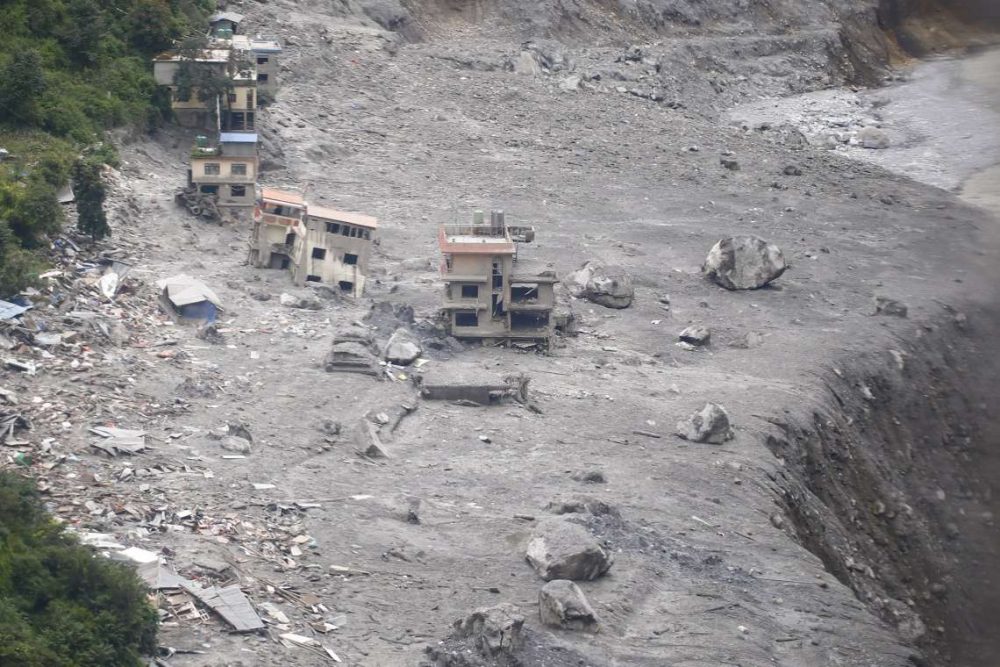
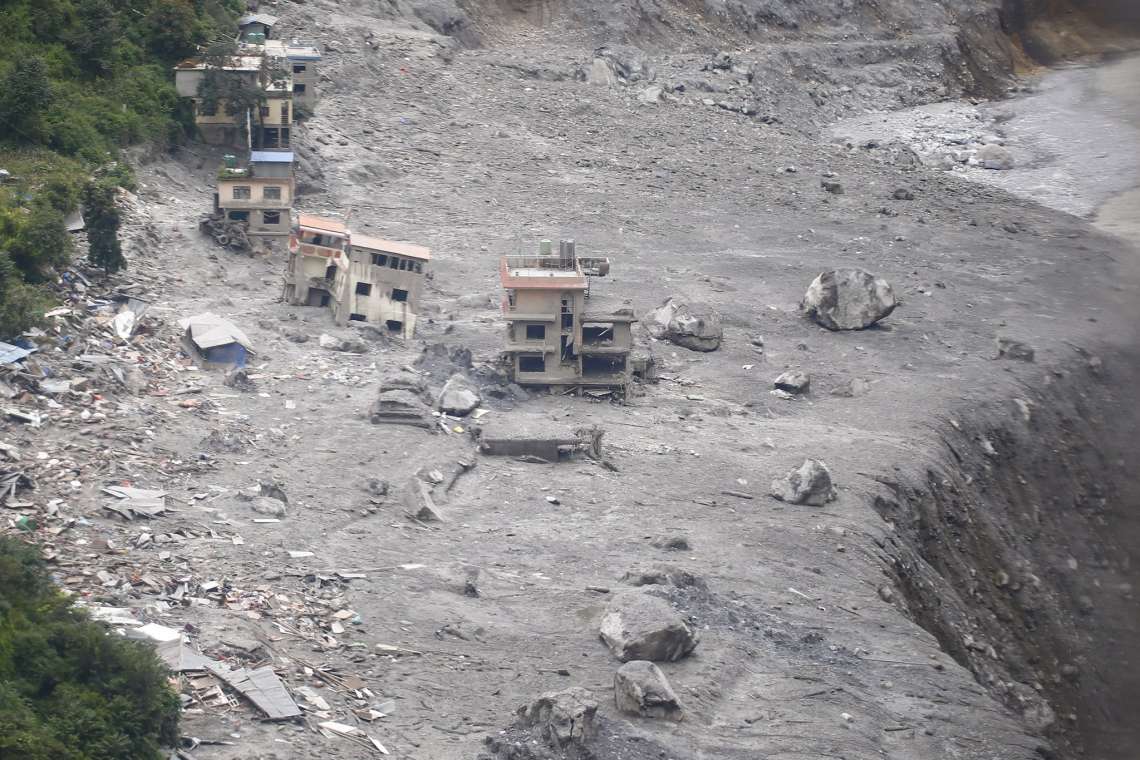
Nepal’s August 2026 floods caused an estimated US$1.66 billion in direct physical damage, with infrastructure accounting for 83 per cent of the total…reports Asian Lite News Desk Nepal’s devastating floods in August 2026 caused an estimated US$1.66 billion in direct physical damage, with infrastructure accounting for 83 per cent of the total, according to a World Bank report. The estimate, included in the World Bank’s Nepal Development Update unveiled this week, is close to the Nepal government’s preliminary Rapid Damage and Needs Assessment (RDNA), which put physical damage at US$1.81 billion. The government’s assessment also estimated losses beyond physical assets at US$883.32 million, taking the total economic effects of the disaster to approximately US$2.7 billion. The World Bank’s Global Rapid Post-Disaster Damage Estimation (GRADE) found that infrastructure suffered the greatest damage, estimated at US$1.38 billion, or 83 per cent of the total. Residential buildings accounted for US$185 million, or 11 per cent, while non-residential buildings sustained damage worth US$101 million, or 6 per cent. The floods along the Bhotekoshi and Trishuli rivers caused extensive damage to hydropower projects, solar energy facilities, electricity transmission infrastructure and transport networks. The energy sector, particularly hydropower, was among the worst affected. The August 2026 floods affected 12 hydropower projects and one solar project, involving 281.1 MW of operational capacity and 395.02 MW of capacity under construction. Damage to transmission lines and substations also disrupted the transmission of 149.6 MW of electricity to the national grid. The total affected capacity reached approximately 430.7 MW, equivalent to 10.6 per cent of Nepal’s installed hydropower and solar capacity at the end of fiscal year 2025-26, which concluded in mid-July. The disaster also severely damaged transport infrastructure along the 82-km Rasuwa trade corridor, which connects Kathmandu with the Rasuwagadhi border point with China. More than 55 km of the corridor was damaged, including 40 km that was completely destroyed. The floods also damaged 37 motorable bridges and 68 suspension bridges. The disaster resulted in significant human losses along the affected corridor and beyond. According to Nepal’s National Disaster Risk Reduction and Management Authority, 1,455 people had been confirmed dead, while 5,285 remained missing following the disaster. The World Bank report found that the physical damage was concentrated in three districts in central Nepal: Rasuwa, Nuwakot and Dhading. Rasuwa was the worst-affected district, accounting for US$1.07 billion, or 64 per cent, of the total direct damage. Nuwakot recorded an estimated US$551 million in damage, while Dhading suffered approximately US$39 million. “The findings highlight the concentration of physical damage in a small number of districts and the disproportionate impact on infrastructure, underscoring the scale of the reconstruction challenge facing the affected areas,” the World Bank said. The global development financier said the floods had demonstrated the scale and complexity of disaster risks in Nepal’s Himalayan environment. The event also showed how a single extreme weather event could trigger cascading impacts across sectors and geographical areas. The report said recovery efforts should extend beyond restoring infrastructure to its pre-disaster condition. While the principle of “Build Back Better” remained relevant, the World Bank stressed that rebuilding infrastructure to higher engineering standards in the same locations might not always be sufficient. “In some cases, simply rebuilding the same infrastructure in the same location to a higher engineering standard may not be sufficient. Nepal may need to build differently — based on a better understanding of risk, more careful decisions about location and design, greater redundancy in critical networks, stronger monitoring and early warning, and a more integrated approach to infrastructure development in the Himalayas,” the report said. The World Bank said Nepal’s recovery strategy should incorporate improved risk assessment, more informed infrastructure planning, stronger monitoring systems and better early warning mechanisms. The report emphasised that reconstruction should not only restore damaged assets but also reduce the impact of future disasters, particularly in the country’s vulnerable Himalayan regions.

Nepal Plans Period Leave for Women Workers

Nepal has proposed introducing menstrual leave for women civil servants as part of amendments to its federal civil service law….reports Asian Lite News Desk Nepal is considering introducing menstrual leave for women

Nepal seeks bigger role between India and China

Nepal is seeking to turn its location between India and China into an economic advantage by expanding trade, energy exports and connectivity with both neighbours…reports Asian Lite News Desk Nepal wants to
Go toTop

Don't Miss

BRI promises falling apart in Nepal

The superfluous promises included improving the institutional capacity of the

Nepal’s Oli makes new coalition deal public

The prime minister has made the details of the midnight