February 1, 2023
5 mins read

Faulty policies, jihad funding fuel Pakistan to abyss

The current economic crisis is the doing of Pakistan itself, a culmination of decades of its faulty policies. It has become a state at war with itself. By supporting and patronising extremism and militancy in the name of jihad, it has hardly ever focused on long-term economic growth, and instead showcased short-sightedness in waging a war, direct or proxy, with India…. Writes Dr Sakariya Kareem

Pakistan’s economy is facing a deep crisis. Its deflating economy is faced with spiralling inflation, depreciation of the Pakistani Rupee, shrinking forex reserves, and a general downward spiral of other macroeconomic parameters. The situation is so grim that the Pakistani state is almost on the verge of being bankrupt.

The credit rating agency Moody’s made a blistering statement on Pakistan stating that the “country’s ability to afford its own debt is one of the weakest among the sovereigns.” The numbers clearly show this poor state of affairs. With the debt servicing obligations tuning to $15.5 billion in FY23, the interest payments alone now comprise 50 per cent of the government’s revenue this fiscal, which saw a nearly 25 per cent jump from the last year. The condition is such that the external debt rose from $66 billion in FY17 to over $100 billion today. However, with no corresponding growth in the ability to carry this debt burden, Pakistan has no room left to borrow anymore. As per a UNDP report, Pakistan is facing a debt of over $250 billion, much more than the carrying capacity of the Pakistani state, wherein it has to pay back a debt of $33 billion by FY23. The continued slump of the Pakistani Rupee (PKR), reaching a record low of 267.48 per dollar, is further worsening the crisis.

Police targeted in Peshawar mosque attack; toll mounts to 47

The crisis is pushing millions of people into poverty and even starvation with the non-availability of the state to import even basic and essential items. Frequent power outages is now a new normal for Pakistan. The situation can be gauged from the fact that the government had to ask shopping malls, wedding halls, restaurants and markets to close early to conserve electricity, generated mostly from imported oil. Meanwhile, all the government departments have been ordered to reduce their electricity consumption by 30%. The government has even banned the production of electric fans from coming July to reduce the energy crisis pressure.

The crisis is hitting people hard with the food prices and cost of living increasing manifold, and at the same time, salaries and allowances of government employees have been stalled in many places.

With forex reserves plunging at a galloping pace, reaching $3.67 billion, the lowest since 2014, Pakistan has only a few weeks of import cover left. Meanwhile, the government has banned the import of many items that include sanitary pads for women and nappies for babies, amongst other items.

The crisis in Pakistan worsened due to a combination of many factors including its faltering GDP growth, global economic slowdown, rising global inflation owing to the Ukraine war, plunging Pakistani rupee making imports costlier, compounded by a catastrophic flood which caused massive destruction affecting over 33 million people.

However, the present crisis is the doing of Pakistan itself, a culmination of decades of faulty policies. It has become a state at war with itself. By supporting and patronising extremism and militancy in the name of jihad, it has hardly ever focused on long-term economic growth, and instead showcased short-sightedness in waging a war, direct or proxy, with India. The rise of terrorist groups such as Tehreek-e-Taliban Pakistan, which was backed by Pakistan’s army and intelligence agency ISI, is now waging a war against the Pakistani state itself killing innocent civilians and law enforcers.
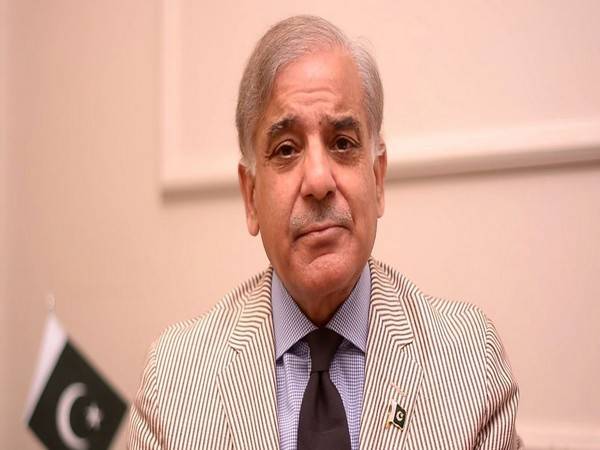
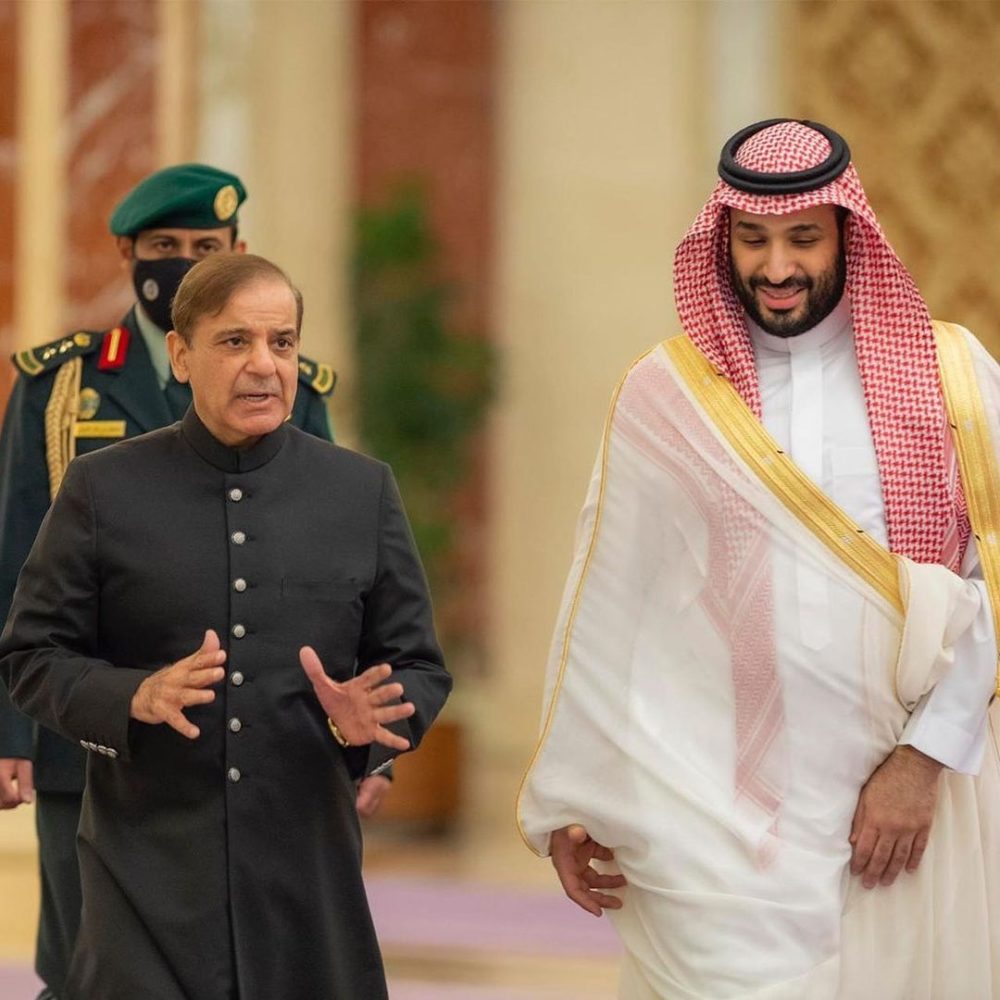
Prime Minister Shahbaz Sharif

The current economic crisis is attributed to its myopic policy decision resulting in excessive spending on non-developmental and economically unviable projects. Economic mismanagement and financing of futile infrastructure projects like the Gwadar-Kashgar Railway line project through long-term debt instruments, and relying massively on external borrowing rather than from domestic institutions added to its troubles. The China-Pakistan Economic Corridor (CPEC) under the Chinese Belt and Road Initiative (BRI) which Pakistan readily joined has now put Pakistan under a Chinese debt of $64 billion.

Pakistan could hardly attract sustainable foreign investments in its infrastructure and industries due to a lack of any long-term economic planning, falling confidence of investors in Pakistan’s political stability and low credit ratings coupled with the greylisting in the Financial Action Task Force (FATF) till recent past. As per the State Bank of Pakistan data, the FDI inflows into Pakistan reached a maximum of 1 per cent of its GDP in the last 10 years. The vicious cycle of seeking fresh debts and paying old ones, which Pakistan practised for a long, has pushed Pakistan into a precarious debt trap. Pakistan did not bring structural economic reforms in its fiscal and monetary policies, and its economy reeked of corruption and nepotism. For instance, a recent United Nations report suggests that an elite group of citizens in Pakistan receive economic privileges of around $17.4 billion in the form of tax breaks and preferential access to public capital.

With bankruptcy looming around, Pakistan is seeking a $7 billion bailout package from the IMF to prevent the collapse of the state seeking help in a do-or-die situation. While the IMF delegation is visiting Pakistan, tough times are ahead for Pakistan. To secure this loan, Pakistan will have to undertake very unpopular austerity measures including cutting subsidies drastically and bringing in market reforms. Pakistan has become a textbook lesson in the political economy of how nations that rear extremism, indulge in state-sponsored terrorism, have no growth and development strategy and have utter disregard for the welfare of their common citizens, eventually collapse.

Previous Story

Good Governance Brings Growth in Bangladesh

Next Story

Sending jets to Ukraine not right approach, says UK govt

Previous Story

Good Governance Brings Growth in Bangladesh

Next Story

Sending jets to Ukraine not right approach, says UK govt

Latest from Asia News

Pakistan Risks Overstretching Itself in Yemen War

Pakistan’s expanding military role in Saudi Arabia amid the Yemen conflict could strain its defence resources and fragile finances…reports Asian Lite News Desk Pakistan’s military involvement in the war in Yemen may prove unsustainable because of mounting financial pressures and competing security demands, according to a new report. Islamabad’s growing military presence in Saudi Arabia risks stretching its defence resources while exposing the country to greater strategic and economic challenges. An article by Andrew Wilson in One World Outlook describes Pakistan’s involvement as a case of “fiscal and strategic overreach”, arguing that the country lacks the financial flexibility to sustain an expanded military commitment. Pakistan’s external finances depend heavily on an International Monetary Fund (IMF) programme, financial support from Gulf countries and remittances from Pakistani workers in the region. The report argues that deeper military involvement in the conflict could place additional pressure on these sources of financial stability. It also warns that deploying troops and military equipment abroad could weaken Pakistan’s capacity to address security challenges along its eastern border and deal with two domestic insurgencies. The move could also draw Islamabad into a conflict it has sought to approach cautiously. A Reuters report in May, citing Pakistani security and government sources, said Islamabad had deployed around 8,000 troops, a squadron of approximately 16 aircraft, mostly JF-17 fighter jets, two drone squadrons and a Chinese HQ-9 air-defence battery to Saudi Arabia. According to those sources, Riyadh was financing the deployment, with Pakistani personnel operating the equipment. The sources also said a confidential agreement contemplated the possibility of deploying up to 80,000 troops. Islamabad has not confirmed those figures, although it has acknowledged its military presence in Saudi Arabia, including the deployment of fighter jets at King Abdulaziz Air Base from April. The One World Outlook article argues that Saudi financial support can cover allowances and operating expenses but cannot easily replace military equipment needed elsewhere or resolve the political and strategic challenges of participating in the Yemen conflict. Pakistan’s defence budget is another concern. For the 2026-27 financial year, the federal government allocated PKR 3 trillion, or approximately $10.8 billion, to defence services. The allocation represents an 18 per cent increase from the original PKR 2.55 trillion provision and amounts to around 2.1 per cent of projected gross domestic product (GDP). Defence spending accounts for approximately 16 per cent of the federal government’s PKR 18.8 trillion expenditure. Military pensions are budgeted separately at PKR 822 billion, while debt servicing costs stand at approximately PKR 8 trillion, more than two-and-a-half times the defence allocation. The report argues that these competing financial obligations leave little room for additional military expenditure without placing further pressure on public finances. Pakistan’s reliance on IMF assistance also limits its fiscal flexibility. The country must meet the conditions attached to the programme, including a primary budget surplus target of 2 per cent of GDP and continued restraint on development spending. According to the article, these requirements make it difficult for Islamabad to finance an additional military commitment without compromising other budgetary priorities. Pakistan’s economic indicators offer limited reassurance. Economic growth for the 2025-26 financial year is estimated at between 3.6 and 3.7 per cent, while inflation reached approximately 10.3 per cent in September following an energy price shock. Foreign exchange reserves stood at around $21.5 billion at the end of September. Although this marks an improvement from the low levels recorded in 2023, the report notes that the reserves cover only a few months of imports. Financial assistance from Gulf partners remains central to Pakistan’s external stability. The article says Islamabad holds approximately $8 billion in Saudi deposits at its central bank. In July, the State Bank of Pakistan said Riyadh had extended the maturity of $5 billion in deposits to December 2028, easing the country’s immediate external financing requirements. A further $3 billion deposit was also extended in the spring. However, the article argues that these arrangements provide temporary relief rather than long-term financial independence, particularly as regional conflict threatens the stability of the Gulf economies on which Pakistan relies. The report concludes that Pakistan faces a difficult balance between supporting Saudi Arabia militarily and preserving the financial and military resources needed to address its domestic and regional challenges.

Economic tide is turning in Bangladesh

If there is one thing that can bring some comfort to the struggling Bangladeshi economy, it is good relations with India. Bangladesh should remember that Delhi’s backing, through easy supplies of essentials

DP World Lands 15-Year Bangladesh Port Deal

The agreement between the Chittagong Port Authority (CPA) and DP World covers the New Mooring Container Terminal…reports Asian Lite News Desk Bangladesh has signed a 15-year concession agreement with global ports operator

Nepal Floods Cause $1.66 Billion In Damage, Says World Bank

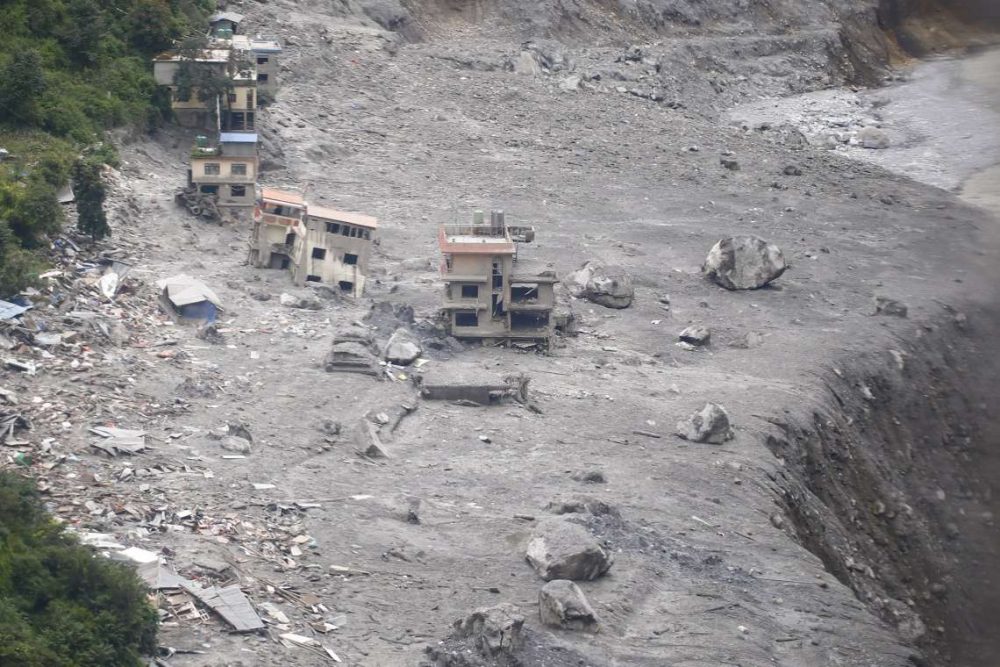
Nepal’s August 2026 floods caused an estimated US$1.66 billion in direct physical damage, with infrastructure accounting for 83 per cent of the total…reports Asian Lite News Desk Nepal’s devastating floods in August 2026 caused an estimated US$1.66 billion in direct physical damage, with infrastructure accounting for 83 per cent of the total, according to a World Bank report. The estimate, included in the World Bank’s Nepal Development Update unveiled this week, is close to the Nepal government’s preliminary Rapid Damage and Needs Assessment (RDNA), which put physical damage at US$1.81 billion. The government’s assessment also estimated losses beyond physical assets at US$883.32 million, taking the total economic effects of the disaster to approximately US$2.7 billion. The World Bank’s Global Rapid Post-Disaster Damage Estimation (GRADE) found that infrastructure suffered the greatest damage, estimated at US$1.38 billion, or 83 per cent of the total. Residential buildings accounted for US$185 million, or 11 per cent, while non-residential buildings sustained damage worth US$101 million, or 6 per cent. The floods along the Bhotekoshi and Trishuli rivers caused extensive damage to hydropower projects, solar energy facilities, electricity transmission infrastructure and transport networks. The energy sector, particularly hydropower, was among the worst affected. The August 2026 floods affected 12 hydropower projects and one solar project, involving 281.1 MW of operational capacity and 395.02 MW of capacity under construction. Damage to transmission lines and substations also disrupted the transmission of 149.6 MW of electricity to the national grid. The total affected capacity reached approximately 430.7 MW, equivalent to 10.6 per cent of Nepal’s installed hydropower and solar capacity at the end of fiscal year 2025-26, which concluded in mid-July. The disaster also severely damaged transport infrastructure along the 82-km Rasuwa trade corridor, which connects Kathmandu with the Rasuwagadhi border point with China. More than 55 km of the corridor was damaged, including 40 km that was completely destroyed. The floods also damaged 37 motorable bridges and 68 suspension bridges. The disaster resulted in significant human losses along the affected corridor and beyond. According to Nepal’s National Disaster Risk Reduction and Management Authority, 1,455 people had been confirmed dead, while 5,285 remained missing following the disaster. The World Bank report found that the physical damage was concentrated in three districts in central Nepal: Rasuwa, Nuwakot and Dhading. Rasuwa was the worst-affected district, accounting for US$1.07 billion, or 64 per cent, of the total direct damage. Nuwakot recorded an estimated US$551 million in damage, while Dhading suffered approximately US$39 million. “The findings highlight the concentration of physical damage in a small number of districts and the disproportionate impact on infrastructure, underscoring the scale of the reconstruction challenge facing the affected areas,” the World Bank said. The global development financier said the floods had demonstrated the scale and complexity of disaster risks in Nepal’s Himalayan environment. The event also showed how a single extreme weather event could trigger cascading impacts across sectors and geographical areas. The report said recovery efforts should extend beyond restoring infrastructure to its pre-disaster condition. While the principle of “Build Back Better” remained relevant, the World Bank stressed that rebuilding infrastructure to higher engineering standards in the same locations might not always be sufficient. “In some cases, simply rebuilding the same infrastructure in the same location to a higher engineering standard may not be sufficient. Nepal may need to build differently — based on a better understanding of risk, more careful decisions about location and design, greater redundancy in critical networks, stronger monitoring and early warning, and a more integrated approach to infrastructure development in the Himalayas,” the report said. The World Bank said Nepal’s recovery strategy should incorporate improved risk assessment, more informed infrastructure planning, stronger monitoring systems and better early warning mechanisms. The report emphasised that reconstruction should not only restore damaged assets but also reduce the impact of future disasters, particularly in the country’s vulnerable Himalayan regions.
Go toTop

Don't Miss

Xi’s art of smart dictatorship

Historically, whenever a dictator’s ambition exceeded the bounds of worldwide

Pakistanis Seek to Migrate Abroad for Better Opportunities

In the first three months of 2023, more than 450,000