The Taliban says narcotics production is rising in neighbouring countries as Afghanistan pushes for a regional crackdown…reports Asian Lite News Desk
Afghanistan’s Taliban authorities have accused neighbouring countries of expanding narcotics cultivation and production, calling for regional cooperation to tackle drug trafficking. The allegations come as research and United Nations reporting point to possible shifts in drug production across the region following Afghanistan’s crackdown on narcotics.
Afghanistan’s Taliban administration has raised concerns about increasing narcotics cultivation in neighbouring countries, marking a shift in its public messaging as it seeks to position itself as an enforcer of anti-drug measures.
Foreign Minister Amir Khan Muttaqi reiterated the regime’s concerns while addressing a conference titled ‘The Islamic Emirate’s Fight Against Narcotics’, according to Afghan broadcaster Tolo News on Tuesday. The conference, held at the Ministry of Foreign Affairs, was attended by representatives of regional countries and international organisations.
Muttaqi called for joint regional efforts to combat drug cultivation, production and trafficking. He also said Afghanistan was ready to facilitate field visits by regional representatives and international organisations so they could assess the country’s anti-narcotics efforts firsthand.
The comments come against the backdrop of Afghanistan’s long association with the narcotics trade, which expanded during decades of conflict. During the Soviet occupation in the 1980s, Pakistan served as a key conduit for US and Saudi support to the Mujahideen through the CIA’s covert programme, Operation Cyclone. Several academic and journalistic accounts have linked the conflict to the expansion of opium cultivation and heroin trafficking in Afghanistan and Pakistan.
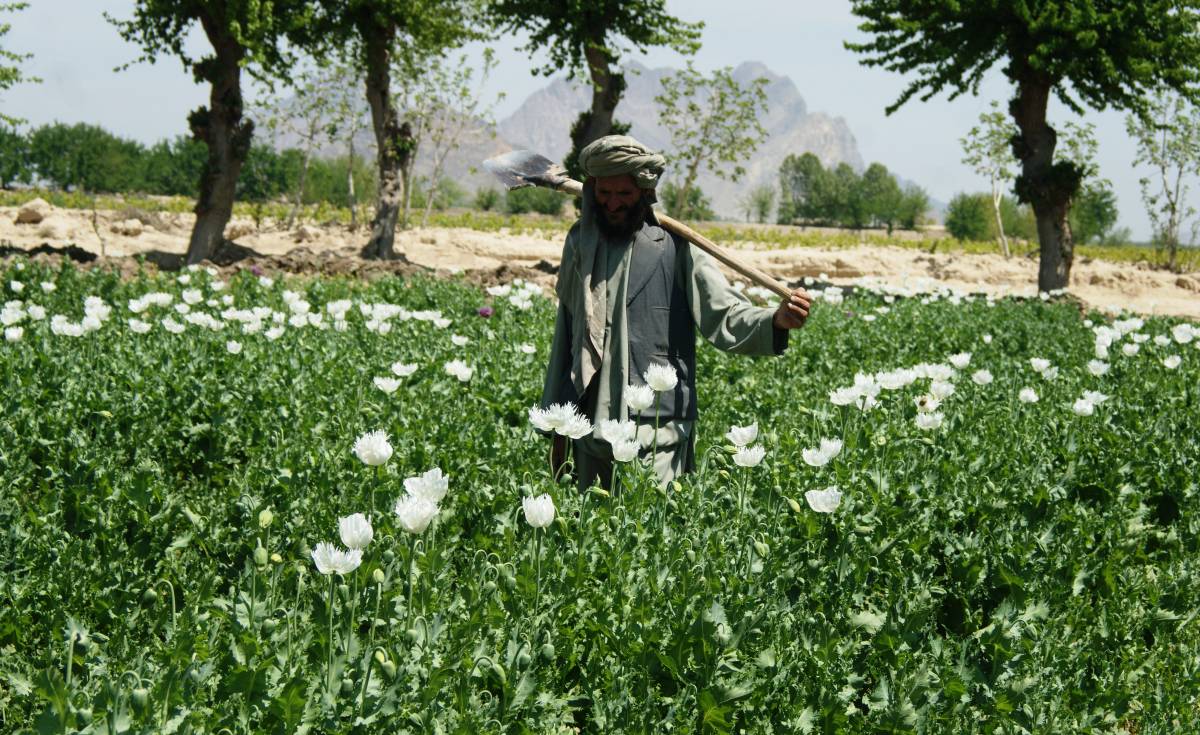
After Soviet forces withdrew in 1989, some Mujahideen groups allegedly continued the trade to finance their struggles against rivals. The Taliban later launched crackdowns on narcotics, publicising the destruction of opium and cannabis fields and drug-processing facilities.

Drug production shifts towards border regions
British researcher David Mansfield said in a research article earlier this year that Afghanistan’s narcotics ban had shifted some production to Pakistan and parts of Iran, according to media reports.
Mansfield reported that the production of industrial drugs, including methamphetamine and ephedrine, had declined inside Afghanistan while expanding in border areas of Pakistan and Iran. He also said the Taliban’s continued suppression of methamphetamine production had raised transaction costs and reduced the income of those involved in the supply chain.
Following reports of increased drug production in areas adjoining Afghanistan, Ministry of Interior spokesperson Abdul Matin Qani called on the United Nations and the international community to investigate the issue. He urged them to take measures to prevent narcotics cultivation, production and trafficking from Iran and Pakistan into Afghanistan and other countries in the region, Tolo News reported.
Historical research has also examined the relationship between conflict, security networks and the narcotics trade. Alfred W. McCoy, a researcher who has documented illicit drugs and their trafficking for about five decades, has argued that CIA-backed covert operations and Pakistan’s security apparatus helped create conditions that facilitated the trade.
McCoy has written about the influence of illicit drugs on US foreign policy between 1979 and 2019, linking the issue to what he described as the failure of the prolonged wars in Afghanistan. Accounts of his research describe heroin refineries operating in Pakistan’s former North-West Frontier Province, allegedly under the protection of influential political and security figures. The same logistical environment that moved weapons intended for the Mujahideen also enabled heroin trafficking, according to these accounts.
The United Nations Office on Drugs and Crime (UNODC) has similarly linked Afghanistan’s emergence as a major opium producer to the period of war that began in 1979.
UN report points to possible ‘balloon effect’
The UNODC’s Afghanistan Opium Survey 2025 noted that Afghanistan’s de facto authorities reported eradicating more than 4,000 hectares of opium poppy in 2025, although the agency said it could not technically verify the figure.
The report also recorded an increase in opium poppy eradication in two countries near Afghanistan, from 5,868 hectares in 2022 to 13,200 hectares in 2023. It attribut
ed the trend potentially to a “balloon effect”, in which stricter enforcement in one country displaces illegal activity to another.
“More information and close monitoring of the situation are needed to fully understand the extent to which cultivation may have shifted to countries in the region and far beyond Afghanistan,” the report said.
The findings point to the difficulty of assessing the regional impact of Afghanistan’s anti-narcotics campaign. While the Taliban authorities have called for neighbouring countries and international organisations to address alleged increases in drug production, the UNODC said further monitoring was needed to establish the extent of any cross-border shift.