September 14, 2023
3 mins read

Arab Nations Unite in Aid for Libya, Morocco

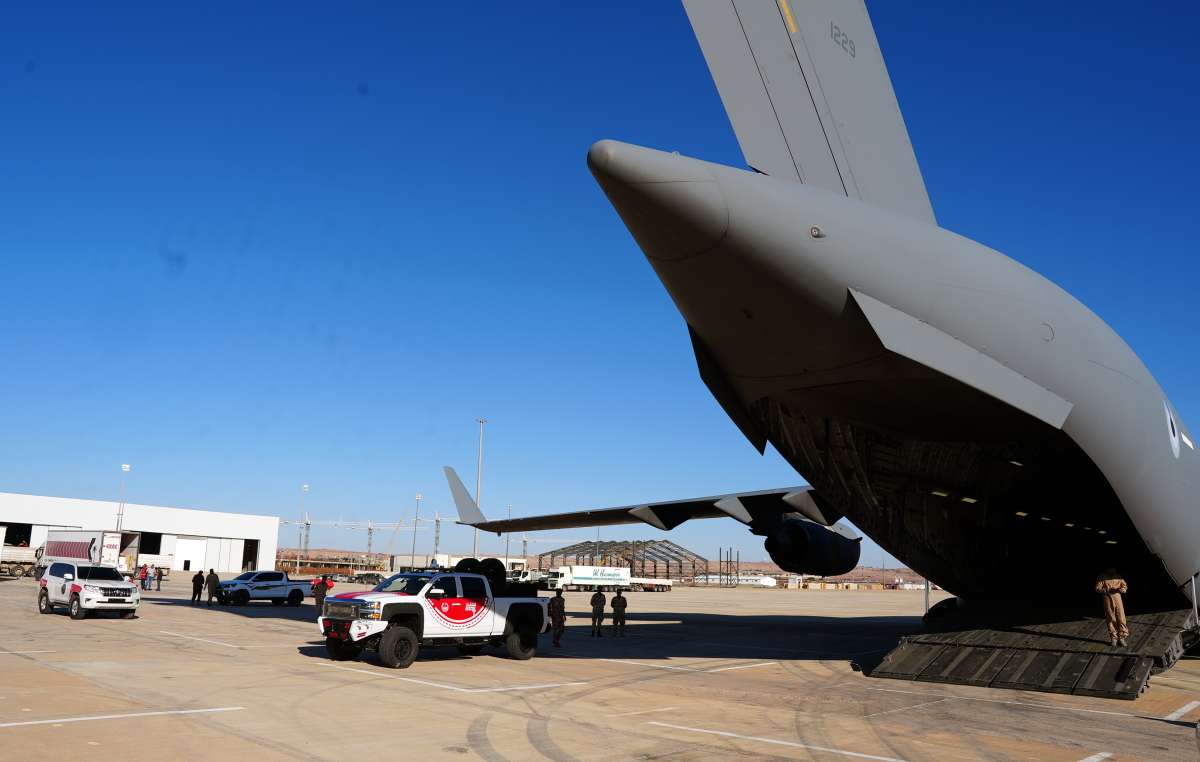
Five Emirati planes arrived in Benghazi, carrying three rescue teams, urgent relief and medical aid, as part of the air bridge launched by the UAE to provide relief to the Libya…reports Asian Lite News

North Africa has been hit by two devastating disasters within three days, sparking a global outpouring of aid and support. First, a powerful earthquake with a magnitude of 6.8 struck Morocco in the Atlas Mountains, leaving a trail of destruction. Then, catastrophic flooding in crisis-stricken Libya added to the region’s woes.

On Friday, the earthquake wreaked havoc about 70 km south of Marrakech, flattening entire villages and claiming the lives of over 2,900 people, with countless more left homeless. This marked Morocco’s deadliest earthquake since 1960 and the most powerful in over a century. Isolated farming communities in Al-Haouz province found themselves cut off from assistance, prompting a swift international response.

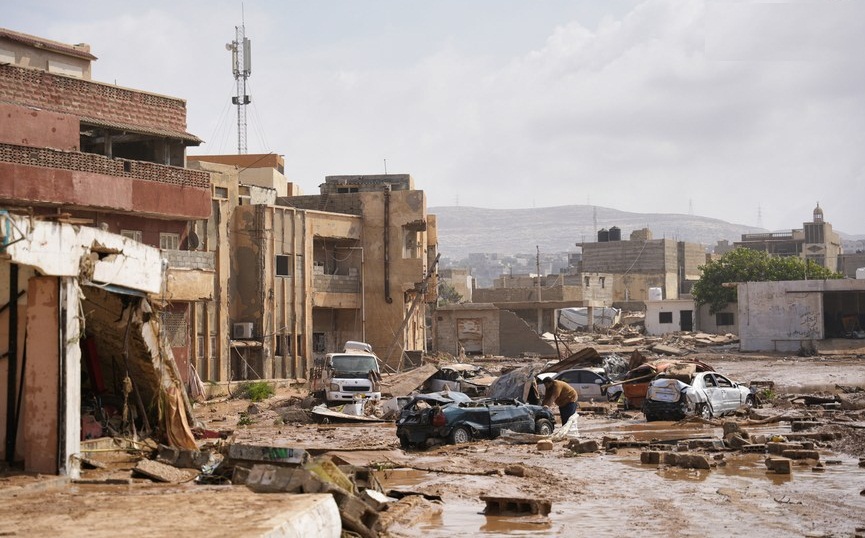
As aid agencies and donor nations mobilised to aid Morocco, another catastrophe unfolded in Libya. Storm Daniel caused two river dams to burst, sending a massive surge of water crashing through the coastal city of Derna. The devastation was immense, with buildings, vehicles, and people swept into the sea. The confirmed death toll exceeded 5,000, while thousands remained missing.

Saudi Arabia’s King Salman and Crown Prince Mohammed bin Salman ordered aid flights to Morocco and expressed their solidarity with the Moroccan people. Egypt’s President Abdel Fattah El-Sisi declared a three-day mourning period and directed military personnel to provide humanitarian aid, including rescue teams, relief supplies, and shelter camps for both Libya and Morocco.

UAE President Sheikh Mohamed bin Zayed Al Nahyan responded swiftly by dispatching urgent relief and search-and-rescue teams to Libya, sending two aid planes carrying 150 tons of essential supplies.

Later, five Emirati planes arrived at Benina Airport in Benghazi city, carrying three rescue teams, urgent relief and medical aid, as part of the air bridge launched by the UAE to provide relief to the Libyan people.
The 64-member search and rescue team has started their missions with the necessary machinery, equipment and devices. The total number of relief and medical supplies transported by planes from the UAE to Libya reached 200 tonnes.

Kuwait and Jordan also contributed to the relief efforts, with Kuwait sending 40 tons of supplies to Libya and Jordan dispatching a military plane loaded with food, tents, blankets, and mattresses. The international community has rallied to support North Africa during this time of dual crisis.

Meanwhile, UAE’s etisalat by e& announced free calls from UAE networks to Libya as a expression of solidarity to support customers, colleagues and their loved ones affected by the floods demonstrating its commitment to ongoing efforts in the country.

etisalat by e& UAE customers who are Libyan nationals will receive 30 free international minutes to call for a week until 20th September, and while all its customers who are on the roaming network in Libya will benefit from unlimited outgoing minutes and 30 incoming minutes for six days.

This is in line with etisalat by e&’s commitment to supporting UAE government’s flood relief efforts and joining hands to making a lasting impact and bringing stability to the affected communities, according to a statement.

Social responsibility and community support is a core of part of its operations especially at this critical moment where collective actions make a meaningful different in the lives of those affected and work towards recovery and healing, the statement added.

Death toll rises

More than 6000 people have lost their lives due to heavy flooding that caused massive devastation across Libya, reported CNN.

The death toll was revised on Wednesday morning local time, according to health ministry undersecretary of the Unity Government in Tripoli, Saadeddin Abdul Wakil.

According to workers, mortuaries are overflowing in hospitals that are still closed despite the pressing need to treat disaster survivors. As per Egypt’s emigration ministry, the government buried 87 Egyptian victims who died in Libya.

Authorities fear 10,000 more people remain missing, maybe swept out to sea or buried beneath rubble strewn over the metropolis that formerly housed over 100,000 people.

The flooding in Derna has displaced over 30,000 people, according to the International Organisation for Migration (IOM) in Libya. The extensive damage to the region’s infrastructure has rendered some affected areas inaccessible to humanitarian organisations, CNN reported.

ALSO READ: Libya Floods: 6,000 Dead, 30,000 Displaced

Previous Story

Nearly quarter of UK shopping basket at high risk

Next Story

Tata Steel, UK govt close to finalising £500 mn deal  

Previous Story

Nearly quarter of UK shopping basket at high risk

Next Story

Tata Steel, UK govt close to finalising £500 mn deal  

Latest from -Top News

Nepal Floods Cause $1.66 Billion In Damage, Says World Bank

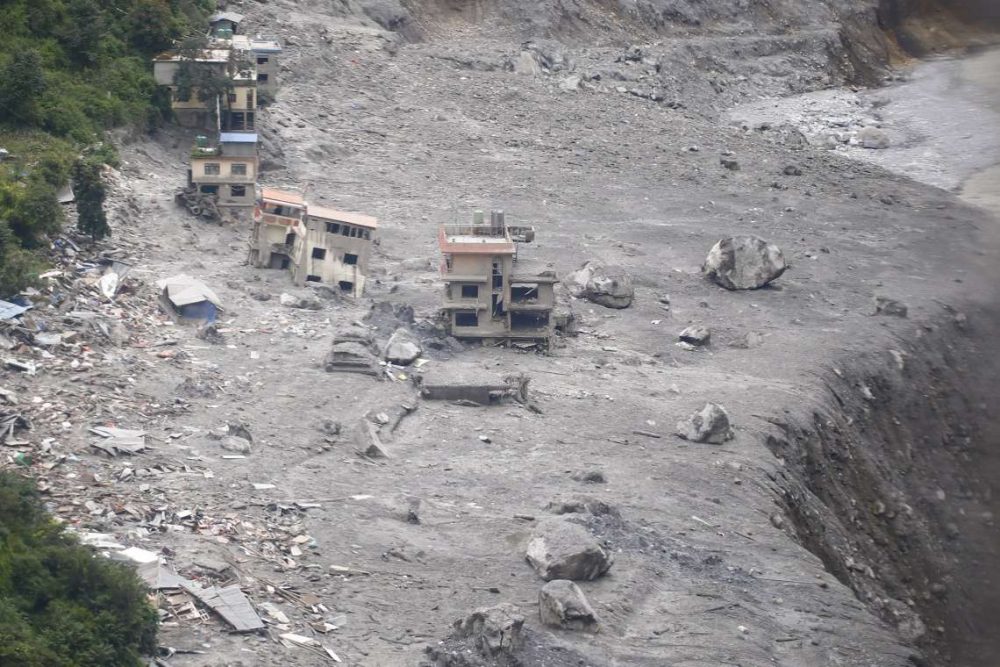
Nepal’s August 2026 floods caused an estimated US$1.66 billion in direct physical damage, with infrastructure accounting for 83 per cent of the total…reports Asian Lite News Desk Nepal’s devastating floods in August 2026 caused an estimated US$1.66 billion in direct physical damage, with infrastructure accounting for 83 per cent of the total, according to a World Bank report. The estimate, included in the World Bank’s Nepal Development Update unveiled this week, is close to the Nepal government’s preliminary Rapid Damage and Needs Assessment (RDNA), which put physical damage at US$1.81 billion. The government’s assessment also estimated losses beyond physical assets at US$883.32 million, taking the total economic effects of the disaster to approximately US$2.7 billion. The World Bank’s Global Rapid Post-Disaster Damage Estimation (GRADE) found that infrastructure suffered the greatest damage, estimated at US$1.38 billion, or 83 per cent of the total. Residential buildings accounted for US$185 million, or 11 per cent, while non-residential buildings sustained damage worth US$101 million, or 6 per cent. The floods along the Bhotekoshi and Trishuli rivers caused extensive damage to hydropower projects, solar energy facilities, electricity transmission infrastructure and transport networks. The energy sector, particularly hydropower, was among the worst affected. The August 2026 floods affected 12 hydropower projects and one solar project, involving 281.1 MW of operational capacity and 395.02 MW of capacity under construction. Damage to transmission lines and substations also disrupted the transmission of 149.6 MW of electricity to the national grid. The total affected capacity reached approximately 430.7 MW, equivalent to 10.6 per cent of Nepal’s installed hydropower and solar capacity at the end of fiscal year 2025-26, which concluded in mid-July. The disaster also severely damaged transport infrastructure along the 82-km Rasuwa trade corridor, which connects Kathmandu with the Rasuwagadhi border point with China. More than 55 km of the corridor was damaged, including 40 km that was completely destroyed. The floods also damaged 37 motorable bridges and 68 suspension bridges. The disaster resulted in significant human losses along the affected corridor and beyond. According to Nepal’s National Disaster Risk Reduction and Management Authority, 1,455 people had been confirmed dead, while 5,285 remained missing following the disaster. The World Bank report found that the physical damage was concentrated in three districts in central Nepal: Rasuwa, Nuwakot and Dhading. Rasuwa was the worst-affected district, accounting for US$1.07 billion, or 64 per cent, of the total direct damage. Nuwakot recorded an estimated US$551 million in damage, while Dhading suffered approximately US$39 million. “The findings highlight the concentration of physical damage in a small number of districts and the disproportionate impact on infrastructure, underscoring the scale of the reconstruction challenge facing the affected areas,” the World Bank said. The global development financier said the floods had demonstrated the scale and complexity of disaster risks in Nepal’s Himalayan environment. The event also showed how a single extreme weather event could trigger cascading impacts across sectors and geographical areas. The report said recovery efforts should extend beyond restoring infrastructure to its pre-disaster condition. While the principle of “Build Back Better” remained relevant, the World Bank stressed that rebuilding infrastructure to higher engineering standards in the same locations might not always be sufficient. “In some cases, simply rebuilding the same infrastructure in the same location to a higher engineering standard may not be sufficient. Nepal may need to build differently — based on a better understanding of risk, more careful decisions about location and design, greater redundancy in critical networks, stronger monitoring and early warning, and a more integrated approach to infrastructure development in the Himalayas,” the report said. The World Bank said Nepal’s recovery strategy should incorporate improved risk assessment, more informed infrastructure planning, stronger monitoring systems and better early warning mechanisms. The report emphasised that reconstruction should not only restore damaged assets but also reduce the impact of future disasters, particularly in the country’s vulnerable Himalayan regions.

Vaccine Delays Fuel Bangladesh Measles Outbreak

More than 32,000 suspected cases and over 250 deaths have been reported since mid-March, with children making up most of the fatalities….reports Asian Lite News Desk Bangladesh’s measles outbreak has intensified, with

Tsai: Stand With Taiwan, Strengthen The Indo-Pacific

The former president said stronger international partnerships would help Taiwan withstand mounting military, cyber and economic pressure while reinforcing democratic resilience….repots Asian Lite News Desk Former Taiwan President Tsai Ing-wen has called
Go toTop

Don't Miss

71 refugees resettled from Libya to Canada UN

The UN High Commissioner for Refugees (UNHCR) has said it

Libya’s High Council of State chief ready to meet rival on constitutional issues

The Head of Libya’s Tripoli-based High Council of State has