September 14, 2023
3 mins read

Nearly quarter of UK shopping basket at high risk

The authors warn that further warming would mean more harvest-destroying extreme weather events, leaving consumers facing more price rises and empty shelves…reports Asian Lite News

Bananas, grapes, avocados, coffee and tea are among staples of the UK shopping baskets in the firing line as climate impacts bite, according to a study.

The study by Christian Aid, which maps key food imports, found a shopping basket of goods likely to be hit as the planet warms.

Researchers focused on households in Britain, Italy and Germany and found that a significant portion of the fruit, vegetables, pulses and meat products, specifically, 22, 23, and 15 per cent, respectively, originate from countries with high climate change vulnerability and low climate readiness levels.

The authors warn that further warming would mean more harvest-destroying extreme weather events, leaving consumers facing more price rises and empty shelves.

It comes weeks after the UK government’s five-year adaptation plan warned that climate change threatened the UK’s national security and food supplies.

Last month National Farmers Union President, Minette Batters, highlighted that climate change was causing havoc with food supplies.

She said: “I have never known such volatility in the global food system. Climate change is wreaking havoc on food production across the world, with farmers in Southern Europe literally fighting fires while farmers here are despairing as they now must spend thousands of pounds to dry sodden grain.”

This was echoed by Alain-Richard Donwahi, a former Ivory Coast defence minister, who led last year’s UN Cop15 summit on desertification.

He said the impacts of the climate crisis combined with water scarcity and poor farming practices threaten global agriculture.

The findings build on 2022 analysis by UK government advisors the Committee on Climate Change (CCC) which warned “risks are rising for international supply chains” and urged the ministers to raise spending on adaptation and “increase capacity building through its overseas programmes to improve global capacity for climate resilience, including supply chains”.

A typical UK food shop would see 22 per cent of fruit, vegetables, pulses and meat products coming from high-risk climate change countries, says Christian Aid.

More broadly, eight out of 25 UK’s top import trade partners are countries with high climate vulnerability and low climate readiness.

These include Brazil, South Africa, India, Vietnam, Peru, Colombia, Cote d’Ivoire and Kenya, where the UK imports the majority of its tea from.

These goods reflect a five-day diet typical for a four-person family from the three countries and underscore the risks consumers face in a world where extreme weather is hitting hard.

The report comes after the UN warned the world may tip over the 1.5 degree Celsius warming limit agreed by governments in the coming years, which experts reckon will lead to a spate of more serious extreme weather events.

UK supplies of tomatoes, cucumbers, lettuce, peppers and citrus fruits ground to a halt earlier in 2023 as drought hit parts of Spain and Morocco.

Rising temperatures are also hitting olive oil supplies, with Lebanon’s famed olive groves deemed at growing risk.

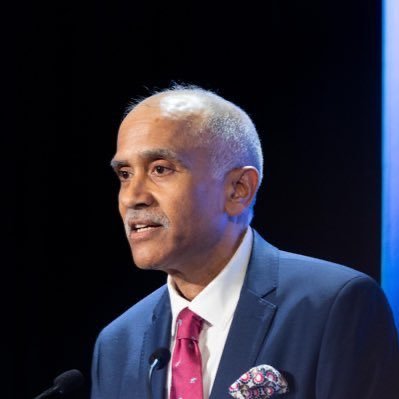
Patrick Watt, Christian Aid’s Chief Executive, said: “The UK may be an island but in an ever more interconnected world we cannot escape the damage caused by climate change.

“Our record on carbon emissions has helped cause the climate crisis. Farmers in some of the world’s poorest countries are now struggling to cope with droughts, storms and rising temperatures.

“The climate crisis is increasingly disrupting the supply chains of the food in British shopping baskets and risks adding to the cost-of-living crisis. The case for action has never been clearer.

“The UK government must work with others to provide the financial support needed to help vulnerable communities adapt to a fast-changing climate.”

ALSO READ-Amid rising gas prices, US inflation soars to 3.7%

Previous Story

Mamata Meets Sri Lankan President in Dubai

Next Story

Arab Nations Unite in Aid for Libya, Morocco

Previous Story

Mamata Meets Sri Lankan President in Dubai

Next Story

Arab Nations Unite in Aid for Libya, Morocco

Latest from -Top News

India Funds Hindi News Service at UN

Hindi continues to retain its non-official language status at the United Nations, with India voluntarily funding initiatives to share UN news and information in the language…reports Asian Lite News Desk Hindi continues

Houthis Claim Missile Strike on Riyadh Airport

Yemen’s Houthi group claims a ballistic missile struck Riyadh’s King Khalid International Airport, with Saudi authorities yet to confirm the latest attack…reports Asian Lite News Desk Yemen’s Houthi group has claimed responsibility

US Green Card Freeze Hits Indian IT Giants

The Trump administration has suspended employment-based green card processing for eight major technology companies, including Infosys, TCS, Wipro and HCL, citing ongoing investigations…reports Asian Lite News Desk The Trump administration has suspended a key employment-based green card process for eight major technology and outsourcing companies, including Indian IT giants Infosys, Tata Consultancy Services, Wipro and HCL, as Vice President JD Vance announced a crackdown on alleged visa fraud. The suspension, announced on Thursday by US Labour Secretary Keith Sonderling at a press conference led by Vance, also covers Cognizant, Capgemini, Microsoft and Adobe. It bars the companies from filing new permanent labour certification applications and halts the processing of pending applications under the programme. Sonderling said the decision followed ongoing criminal and federal investigations into the companies. “Due to ongoing criminal investigations led by the Department of Labour’s Inspector General Anthony DiEsposito, who will get into this shortly, I am hereby suspending from the Permanent Labour Certification Program some of the largest IT outsourcing firms in the world, Cognizant, Infosys, Tata, Wipro, HCL, and Capgemini,” Sonderling said. He added that Microsoft and Adobe were also being suspended because of multiple active federal investigations. “We will not accept or process any pending permanent labour certification applications involving these companies,” he said. The Permanent Labour Certification programme, commonly known as PERM, is a key step in the process through which employers sponsor foreign workers for employment-based permanent residence in the United States. According to figures presented by Sonderling, the eight companies had collectively requested nearly three million foreign workers since 2009. They had received more than 230,000 H-1B visa approvals and over 100,000 permanent labour certifications. The administration did not disclose company-specific findings or provide details of the alleged violations during the press conference. Vance accused employers of using the H-1B visa programme to replace American workers with lower-paid foreign employees. He said the programme was intended to help companies recruit highly skilled workers for positions that could not be filled by American employees. “The H-1B visa program is meant to allow companies to bring in really the best of the best from outside the United States of America for positions that are completely impossible to fill with American workers,” he said. Vance singled out Microsoft, alleging that the company had laid off 6,000 American workers while benefiting from 6,300 H-1B visas and nearly 3,000 green cards. He said the administration wanted companies to change their hiring practices rather than withdraw from the American market. Asked whether the suspension would be temporary or permanent, Vance said, “The suspension of PERM is gonna last as long as it needs to.” He added that the administration had the tools to continue the suspension indefinitely but wanted the companies to improve their conduct. The US Justice Department also announced that it was actively investigating companies suspected of favouring foreign workers over American employees. Attorney General Todd Blanche said the authorities could pursue criminal prosecutions and civil lawsuits as part of the enforcement measures. The decision could have significant implications for Indian technology professionals and outsourcing companies operating in the United States, where Indian firms have long relied on employment-based immigration programmes to deploy skilled workers to American clients. The H-1B visa programme allows US employers to hire foreign workers in qualifying specialised occupations on a temporary basis. PERM, meanwhile, is part of a separate process through which employers seek to sponsor eligible foreign workers for permanent residence. The suspension announced on Thursday specifically concerns permanent labour certification applications involving the eight named companies. It does not, by itself, establish the cancellation of existing H-1B visas or green cards. The impact on individual employees will depend on their immigration status and the stage of their applications. The administration did not provide a detailed timeline for the suspension or specify when processing might resume.

Nepal Floods Cause $1.66 Billion In Damage, Says World Bank

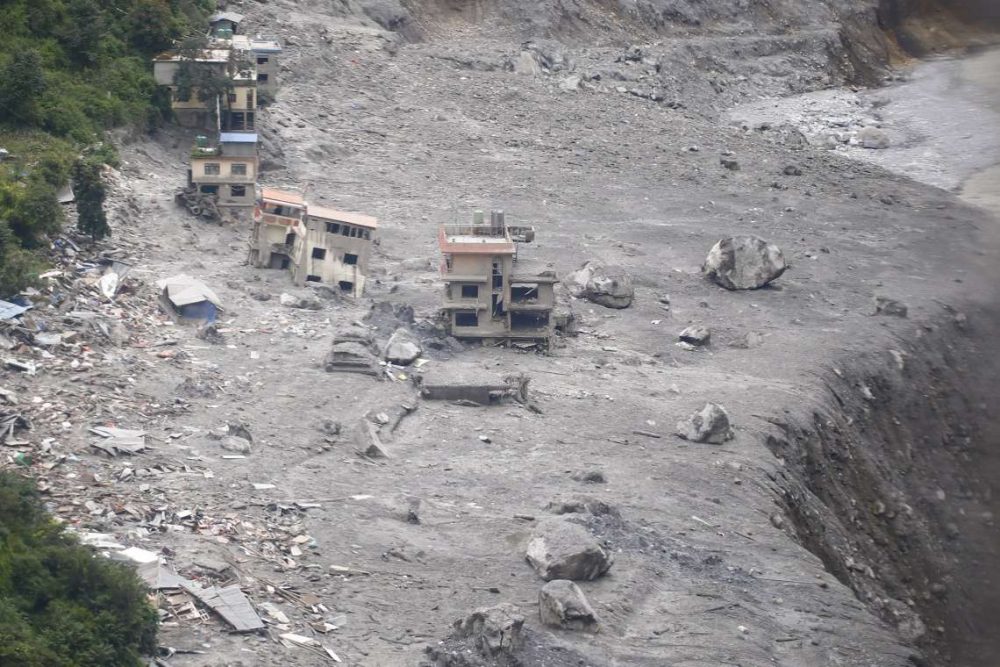
Nepal’s August 2026 floods caused an estimated US$1.66 billion in direct physical damage, with infrastructure accounting for 83 per cent of the total…reports Asian Lite News Desk Nepal’s devastating floods in August 2026 caused an estimated US$1.66 billion in direct physical damage, with infrastructure accounting for 83 per cent of the total, according to a World Bank report. The estimate, included in the World Bank’s Nepal Development Update unveiled this week, is close to the Nepal government’s preliminary Rapid Damage and Needs Assessment (RDNA), which put physical damage at US$1.81 billion. The government’s assessment also estimated losses beyond physical assets at US$883.32 million, taking the total economic effects of the disaster to approximately US$2.7 billion. The World Bank’s Global Rapid Post-Disaster Damage Estimation (GRADE) found that infrastructure suffered the greatest damage, estimated at US$1.38 billion, or 83 per cent of the total. Residential buildings accounted for US$185 million, or 11 per cent, while non-residential buildings sustained damage worth US$101 million, or 6 per cent. The floods along the Bhotekoshi and Trishuli rivers caused extensive damage to hydropower projects, solar energy facilities, electricity transmission infrastructure and transport networks. The energy sector, particularly hydropower, was among the worst affected. The August 2026 floods affected 12 hydropower projects and one solar project, involving 281.1 MW of operational capacity and 395.02 MW of capacity under construction. Damage to transmission lines and substations also disrupted the transmission of 149.6 MW of electricity to the national grid. The total affected capacity reached approximately 430.7 MW, equivalent to 10.6 per cent of Nepal’s installed hydropower and solar capacity at the end of fiscal year 2025-26, which concluded in mid-July. The disaster also severely damaged transport infrastructure along the 82-km Rasuwa trade corridor, which connects Kathmandu with the Rasuwagadhi border point with China. More than 55 km of the corridor was damaged, including 40 km that was completely destroyed. The floods also damaged 37 motorable bridges and 68 suspension bridges. The disaster resulted in significant human losses along the affected corridor and beyond. According to Nepal’s National Disaster Risk Reduction and Management Authority, 1,455 people had been confirmed dead, while 5,285 remained missing following the disaster. The World Bank report found that the physical damage was concentrated in three districts in central Nepal: Rasuwa, Nuwakot and Dhading. Rasuwa was the worst-affected district, accounting for US$1.07 billion, or 64 per cent, of the total direct damage. Nuwakot recorded an estimated US$551 million in damage, while Dhading suffered approximately US$39 million. “The findings highlight the concentration of physical damage in a small number of districts and the disproportionate impact on infrastructure, underscoring the scale of the reconstruction challenge facing the affected areas,” the World Bank said. The global development financier said the floods had demonstrated the scale and complexity of disaster risks in Nepal’s Himalayan environment. The event also showed how a single extreme weather event could trigger cascading impacts across sectors and geographical areas. The report said recovery efforts should extend beyond restoring infrastructure to its pre-disaster condition. While the principle of “Build Back Better” remained relevant, the World Bank stressed that rebuilding infrastructure to higher engineering standards in the same locations might not always be sufficient. “In some cases, simply rebuilding the same infrastructure in the same location to a higher engineering standard may not be sufficient. Nepal may need to build differently — based on a better understanding of risk, more careful decisions about location and design, greater redundancy in critical networks, stronger monitoring and early warning, and a more integrated approach to infrastructure development in the Himalayas,” the report said. The World Bank said Nepal’s recovery strategy should incorporate improved risk assessment, more informed infrastructure planning, stronger monitoring systems and better early warning mechanisms. The report emphasised that reconstruction should not only restore damaged assets but also reduce the impact of future disasters, particularly in the country’s vulnerable Himalayan regions.
Go toTop

Don't Miss

UK-led JEF announces major air defence package for Ukraine

The funding for air defence is the first of five

UK: Calls for security beef-up intensify after Khalistan assault

India House on Aldwych is located on a roadside with