Analysts say China has a long-term game plan in mind in criticizing Israel and condoning Hamas; to gain favour in the Middle East as well as with countries sympathetic to the Palestinian cause in regions such as Africa and Latin America and wean them away from the fold of the United States .. writes Dr Haroon Rashid
The Hamas terror attack on Israel and the subsequent Israeli military action in the Gaza Strip have provided Beijing with the opportunity to fish in troubled water. Instead of working with the world community to find a solution to the crisis, the mandarins of the Communist Party of China are trying to muddy the water even more to increase their geopolitical influence in the Middle East and fulfil the ambition of China emerging as a superpower.
In the light of such a Chinese design, there is much merit in the stand of India to abstain from voting in the recent motion before the United Nations for a ceasefire in Gaza. For one thing, New Delhi cannot side with the cause of terror; particularly in view of the fact that India itself is one of the worst victims of terror sponsored by Islamic fundamentalism. But India has seen through the game of China and New Delhi is now doubly cautious so that the Chinese designs in the Middle East do not succeed.
President of the United States Joe Biden gave a hint on October 26 in a joint Press conference in Washington with Prime Minister of Australia Anthony Albanese of what Beijing could be up to in the Gaza Strip. He said he was convinced that one of the reasons why Hamas launched the terrorist attack on Israel was the recent announcement in the G-20 Summit in New Delhi of the India – Middle East – Europe Economic Corridor that would integrate the entire region with a railroad network. If this is true, it is all the more the reason New Delhi should not take any stand that will encourage Hamas in any way. And, Presidents of the United States usually do not talk through the hat.

The new economic corridor was jointly announced by the U.S., India, Saudi Arabia, the United Arab Emirates, France, Germany, Italy and the European Union on the occasion of the G20 Summit in New Delhi last September. Many see this as an alternative to the Belt and Road Initiative of China. India is a member of I2U2, a partnership formed at the initiative of the United States in 2021; the three other members of the partnership being Israel, the UAE and the USA. This partnership identifies bankable projects and initiatives to tackle challenges confronting the world. Some see in this initiative an alternative offered by the democratic world to the growing influence of Beijing in the Gulf countries and beyond, in Africa.
Behind the Hamas attack in Israel could have been a wily ploy to instigate Israel to launch an attack on Gaza Strip so that the entire Islamic world is antagonized and the Gulf countries decide not to do anything with a partnership with Israel as a member, say analysts. The question remains then if Hamas has been working at the behest of any vested interest; and who this vested interest is. So far, Beijing has not condemned in strong terms the terror attack launched by Hamas that killed about 1,400 people in Israel. A large number of Israeli citizens were also taken hostage by Hamas. On the other hand, Beijing has criticized Tel Aviv in strong terms, saying the Israeli response has been out of proportion with the offence committed by Hamas.
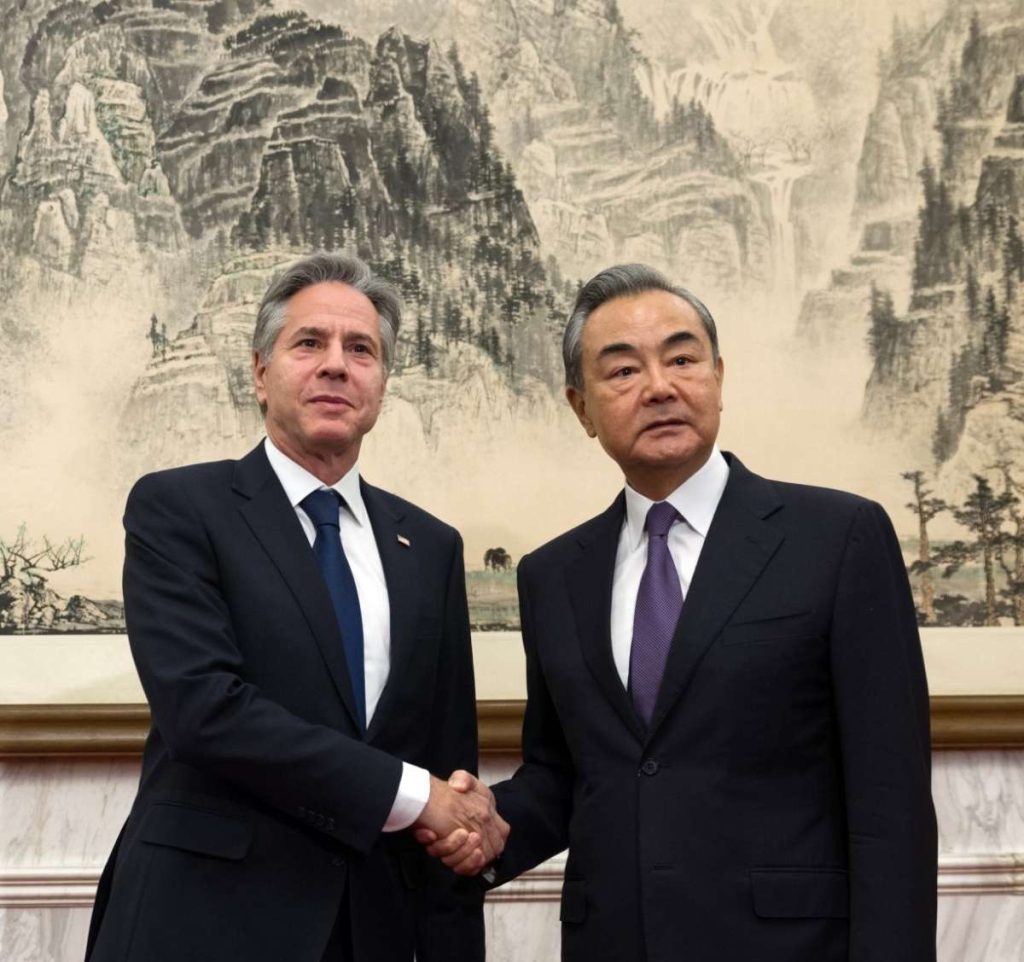
Foreign Minister of China Wang Yi has gone on record saying that the acts of Israel in Gaza to target Hamas had “gone beyond self-defence.” In its first statement following the Hamas attack and initial Israeli reaction, China had urged both sides to “exercise restraint” and opt for a “two-state solution.” In response, senior official in the Israeli embassy in Beijing Yuval Waks had expressed disappointment. Israel thought China was a friend, he said. “When people are being murdered, slaughtered in the streets, this s not the time to call for a two-state solution,” he said.
Analysts say China has a long-term game plan in mind in criticizing Israel and condoning Hamas; to gain favour in the Middle East as well as with countries sympathetic to the Palestinian cause in regions such as Africa and Latin America and wean them away from the fold of the United States. “China is clearly afraid of offending the Arab side,” former U.S. Ambassador to Syria Robert Ford, now with Washington-based think-tank Middle East Institute, has been quoted as saying.
But in making such statements, Beijing has really been working on a long-term game-plan and thinking far beyond the Middle East. Through its anti-Israel rhetoric, Beijing is trying to get close to nations where it has plans to extend investment in infrastructure under the Belt and Road Initiative, from highways to polluting thermal power plants to massive new ports. These are the countries in Africa and Latin America which often say the fight of the Palestinians against Israel is something like fighting colonization. South Africa, for instance, has said that “the new conflagration has arisen from the continued illegal occupation of Palestinian land and oppression of the people.”
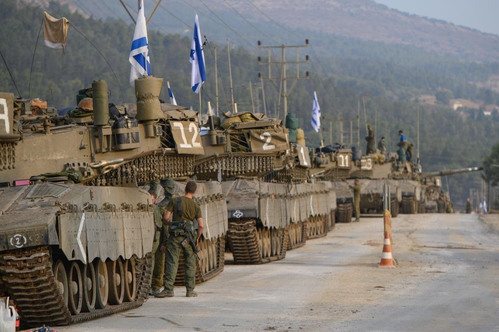
Euronews has commented that Chinese state agents are using the information chaos surrounding the war between Israel and Hamas to Beijing’s advantage; glorifying violence, promoting hate and helping to spread false claims on what is happening on the ground in the Middle East; posting misinformation to promote anti-Semitic feelings and phobia in Islamic countries.
A study by the U.K. – based Institute for Strategic Dialogue which monitors the spread of extremism and misinformation online, has found that Chinese agents are exploiting the crisis to advance the geopolitical agenda of Beijing. Data collected from Facebook and X accounts belonging to officials of the Communist Party of China, diplomatic representatives and the state media between October 7 and 18, right after the surprise attack of Hamas on Israel, indicate that Beijing is using the information chaos to serve the interests of China. “While Facebook posts remained neutral, insisting on condemning all acts that harm civilians, Chinese state media accounts on X denounced the U.S. for supposedly seeking economic advantage from the escalation,” the report is quoted to have said. “The same accounts have called out Western politicians and mainstream media for turning a ‘blind eye’ to the victims of Gaza.”
Senior Analyst of ID Julia Smirnova has been quoted to have said: “It may not come as a surprise that authoritarian states are trying to exploit the confusion around the Israel – Hamas conflict to advance their own geopolitical agenda,” and to “deepen mistrust towards democratic institutions and the media.”
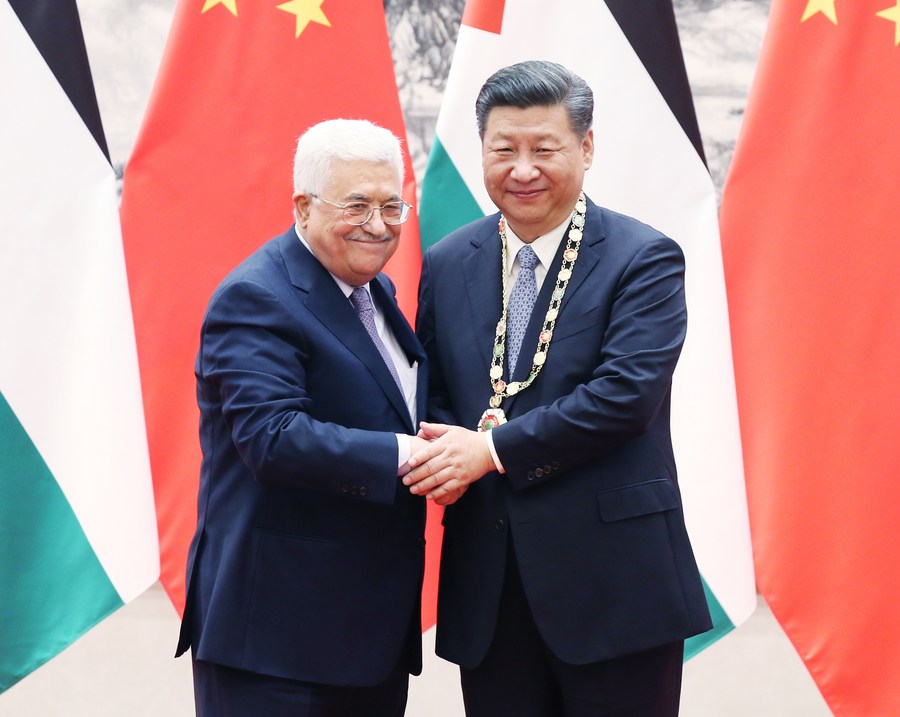
Notably, in June 2023 President of China Xi Jinping and President of Palestine Mahmoud Abbas finalized a “strategic partnership,” with Beijing pledging to increase cooperation with and funding to the Palestinian Authority. “China and Palestine are close friends and partners who trust and support each other,” President Xi was quoted to have said on the occasion.”
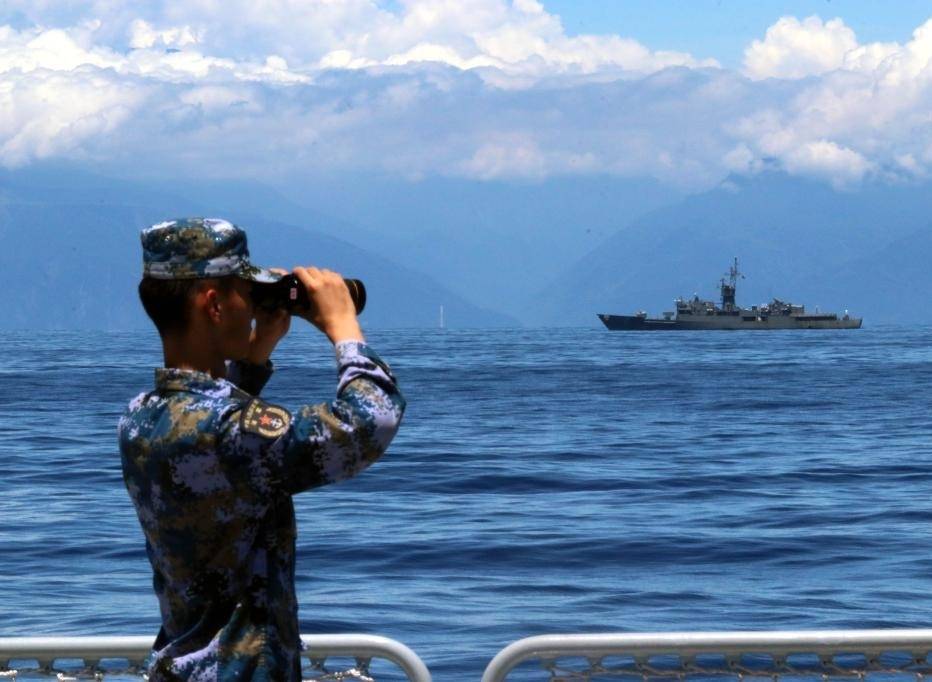
It will surely help the cause of China in Taiwan if the U.S. becomes too busy managing the two wars which are already raging in two corners of the globe, in Ukraine and Gaza Strip. It will thus help the Chinese strategy to extend moral support to the terrorist group Hamas, if stopping short of actually extending material support to them. There is one factor, however, which may prevent Beijing from openly supporting the cause of terror. Alienating Israel may come at a high cost for China, say analysts. China has a lucrative tech-sector trade with Israel, with Beijing often importing more than $1 billion worth of semiconductors a year from Israel.
China has been one of four countries that had voted in favour of a U.N. Security Council resolution drafted by Russia on October 16, urging a humanitarian ceasefire in the Israel – Hamas war that was rejected for not condemning the surprise attack of Hamas on Israel. There were five votes in favour and four against. For the Security Council to adopt a resolution, the proposal must receive at least nine votes in favour; with none of its five permanent members opposing or casting a veto.
“This makes it clear where China stands,” the Time magazine has commented. “China’s unwillingness to condemn Hamas and its call for an end to violence on both sides may stem from the interest in keeping itself in the good grace of Arab states in the region where China is eyeing an ambitious economic expansion — through the BRI.”
The war in Palestine has alarmed China as the region is crucial to the BRI for its energy exports. Chinese investments and construction projects in Saudi Arabia and the UAE under BRI have totalled $56.28 billion and $40.81 billion, according to the Time magazine. In this backdrop, the formation of the I2U2 partnership has clearly unnerved China as the partnership is challenging the BRI. Beijing has no qualms about extending moral support to a terrorist group like Hamas to protect its vested interests in the Middle East.
ALSO READ: China, US Discuss Preventing Spread of Gaza War
ALSO READ: Why Did China’s BRI Falter in Nepal?