November 2, 2023
4 mins read

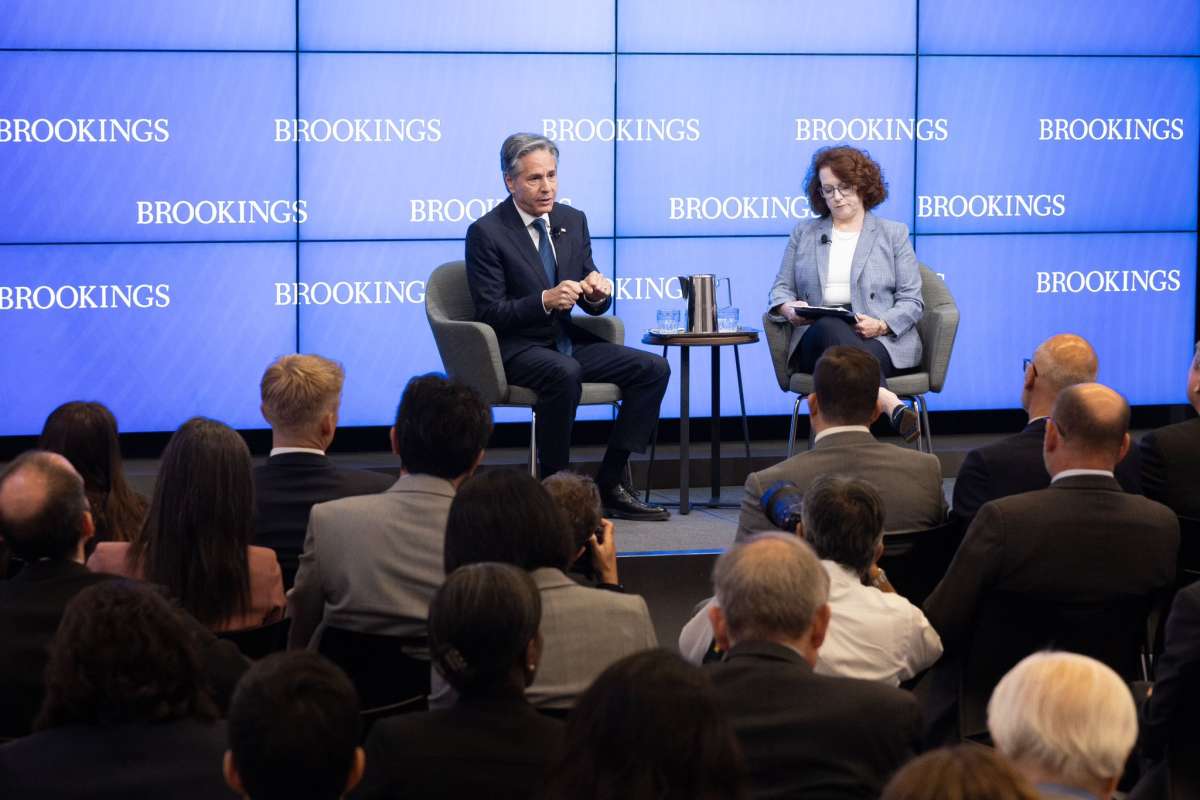
Blinken to visit India for 2+2 ministerial dialogue

During his visit to India, the Secretary of State will be accompanied by US Secretary of Defence Lloyd Austin…reports Asian Lite News

US Secretary of State Antony Blinken will embark on the visit of five nations, whose conclusion will be marked by his visit to India to participate in the 2+2 Ministerial Dialogue in November, the State Department informed in a statement.

Blinken will be visiting Israel, Jordan, Japan, South Korea and lastly, India.

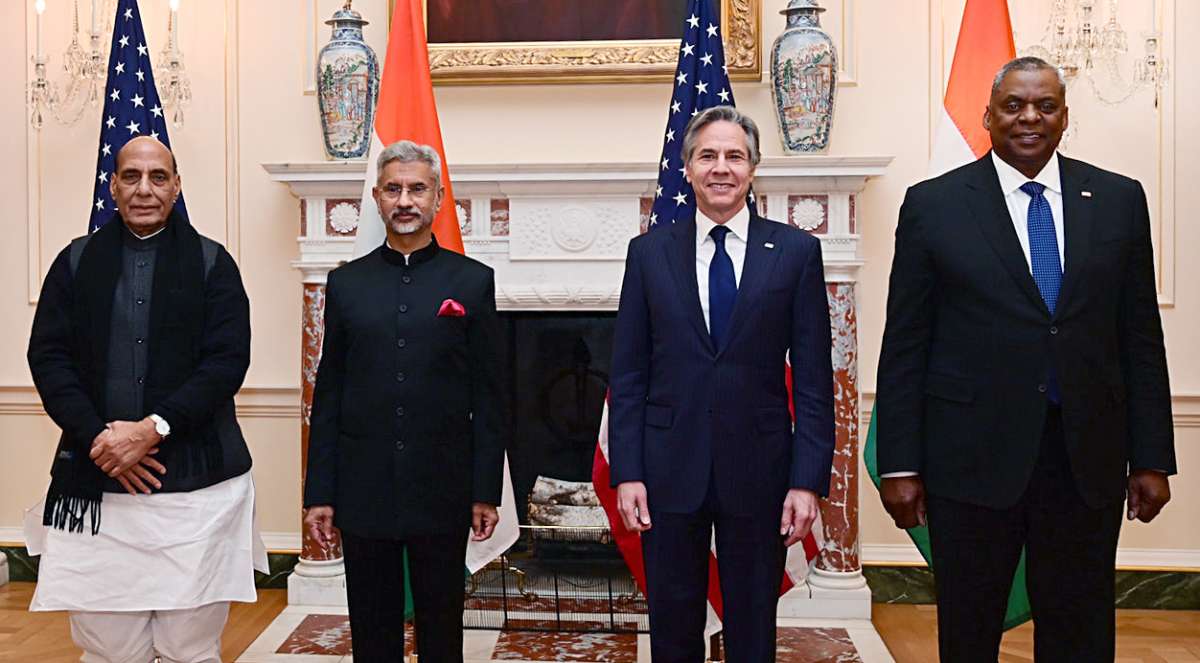
During his visit to India, Blinken will be accompanied by US Secretary of Defence Lloyd Austin. The US delegation will meet External Affairs Minister S Jaishankar and Defence Minister Rajnath Singh and other senior Indian officials to discuss both bilateral and global concerns and developments in the Indo-Pacific.

The central focus of these talks is to address the ongoing conflicts and regional security concerns while strengthening the strategic ties between India and the United States. The agenda is expansive, encompassing the India-US Strategic Relationship, as well as exploring avenues to enhance bilateral relations and collaboration within international forums such as the QUAD (Quadrilateral Security Dialogue) and I2U2.

One prominent subject for discussion is the military standoff on the northern borders between India and China. Both countries have a vested interest in resolving this standoff amicably, thereby contributing to regional stability.

Another matter of great concern is the global security implications of the Russia-Ukraine war. As members of the QUAD, a coalition dedicated to ensuring security in the Indo-Pacific region, India and the U.S. are likely to deliberate on their respective roles in the context of this global event. The ongoing conflict between Hamas and Israel in the Gaza region may also find a place on the agenda, with a focus on containment to prevent further escalation.

Defense hardware cooperation is a substantial part of these talks, given India’s significant purchases of American weaponry, including over US$3 billion worth of Predator drones and related systems from General Atomics. This not only strengthens India’s defense capabilities but also underscores the deepening partnership between the two nations in the defense sector.

On the defense front, both sides will review the progress on the implementation of the Roadmap for US-India Defense Industrial Cooperation. This includes assessing the progress on co-production initiatives announced during Prime Minister Narendra Modi’s visit to the US in June.

Recently, India and the US made commitments to expedite negotiations on the Security of Supply Arrangement and Reciprocal Defense Procurement agreements, further solidifying their defense ties and cooperation in this critical sector.

The agenda of these talks also involves identifying opportunities to enhance interoperability and logistics cooperation. This includes joint maritime engagements in the Indian Ocean region and expanded collaboration in the domains of space and cyber security.

These talks hold immense significance, not only in bolstering India-US relations but also in addressing complex regional and global security challenges. Observers from around the world will closely watch the outcomes of these discussions as India and the United States navigate the intricate web of international diplomacy and geopolitics.

In Israel, Blinken will reiterate US support for Israel’s right to defend itself against terrorism consistent with international humanitarian law and discuss efforts to safeguard US citizens in Israel, the West Bank, and Gaza, work to secure the immediate release of hostages, increase the pace and volume of humanitarian assistance entering Gaza for distribution to Palestinian civilians, and prevent the conflict from spreading, the statement read.

After this, he will go to Jordan, where Blinken will underscore the importance of protecting civilian lives and our shared commitment to facilitating the increased, sustained delivery of life-saving humanitarian assistance to civilians in Gaza, the resumption of essential services, and ensuring that Palestinians are not forcibly displaced outside of Gaza.

He will also discuss urgent mechanisms to stem violence, calm rhetoric, reduce regional tensions, and reaffirm the US commitment to working with partners to set the conditions necessary for a durable and sustainable peace in the Middle East, including the establishment of a Palestinian state, the State Department added.

“Secretary Blinken will then lead US delegations to Tokyo, Seoul, and New Delhi to advance collaborative efforts to support a free and open Indo-Pacific region that is prosperous, secure, connected, and resilient,” it added.

In Tokyo, Blinken will participate in the second G7 Foreign Ministers’ Meeting of 2023, where G7 foreign ministers will build on the commitments made by leaders at the G7 Hiroshima Summit.

Blinken will also thank Japan for its successful G7 presidency. The Secretary will also have bilateral meetings with Prime Minister Kishida Fumio and Foreign Minister Kamikawa Yoko to discuss bilateral priorities, including supporting Ukraine’s economic recovery and energy needs and strengthening our cooperation in the Indo-Pacific.
ALSO READ-India’s Metro Network Set to Overtake USA

Previous Story

Meet The Most Influential Woman In Middle East

Next Story

High-Profile Exits At Unacademy Continue

Previous Story

Meet The Most Influential Woman In Middle East

Next Story

High-Profile Exits At Unacademy Continue

Latest from -Top News

Pakistan Risks Overstretching Itself in Yemen War

Pakistan’s expanding military role in Saudi Arabia amid the Yemen conflict could strain its defence resources and fragile finances…reports Asian Lite News Desk Pakistan’s military involvement in the war in Yemen may prove unsustainable because of mounting financial pressures and competing security demands, according to a new report. Islamabad’s growing military presence in Saudi Arabia risks stretching its defence resources while exposing the country to greater strategic and economic challenges. An article by Andrew Wilson in One World Outlook describes Pakistan’s involvement as a case of “fiscal and strategic overreach”, arguing that the country lacks the financial flexibility to sustain an expanded military commitment. Pakistan’s external finances depend heavily on an International Monetary Fund (IMF) programme, financial support from Gulf countries and remittances from Pakistani workers in the region. The report argues that deeper military involvement in the conflict could place additional pressure on these sources of financial stability. It also warns that deploying troops and military equipment abroad could weaken Pakistan’s capacity to address security challenges along its eastern border and deal with two domestic insurgencies. The move could also draw Islamabad into a conflict it has sought to approach cautiously. A Reuters report in May, citing Pakistani security and government sources, said Islamabad had deployed around 8,000 troops, a squadron of approximately 16 aircraft, mostly JF-17 fighter jets, two drone squadrons and a Chinese HQ-9 air-defence battery to Saudi Arabia. According to those sources, Riyadh was financing the deployment, with Pakistani personnel operating the equipment. The sources also said a confidential agreement contemplated the possibility of deploying up to 80,000 troops. Islamabad has not confirmed those figures, although it has acknowledged its military presence in Saudi Arabia, including the deployment of fighter jets at King Abdulaziz Air Base from April. The One World Outlook article argues that Saudi financial support can cover allowances and operating expenses but cannot easily replace military equipment needed elsewhere or resolve the political and strategic challenges of participating in the Yemen conflict. Pakistan’s defence budget is another concern. For the 2026-27 financial year, the federal government allocated PKR 3 trillion, or approximately $10.8 billion, to defence services. The allocation represents an 18 per cent increase from the original PKR 2.55 trillion provision and amounts to around 2.1 per cent of projected gross domestic product (GDP). Defence spending accounts for approximately 16 per cent of the federal government’s PKR 18.8 trillion expenditure. Military pensions are budgeted separately at PKR 822 billion, while debt servicing costs stand at approximately PKR 8 trillion, more than two-and-a-half times the defence allocation. The report argues that these competing financial obligations leave little room for additional military expenditure without placing further pressure on public finances. Pakistan’s reliance on IMF assistance also limits its fiscal flexibility. The country must meet the conditions attached to the programme, including a primary budget surplus target of 2 per cent of GDP and continued restraint on development spending. According to the article, these requirements make it difficult for Islamabad to finance an additional military commitment without compromising other budgetary priorities. Pakistan’s economic indicators offer limited reassurance. Economic growth for the 2025-26 financial year is estimated at between 3.6 and 3.7 per cent, while inflation reached approximately 10.3 per cent in September following an energy price shock. Foreign exchange reserves stood at around $21.5 billion at the end of September. Although this marks an improvement from the low levels recorded in 2023, the report notes that the reserves cover only a few months of imports. Financial assistance from Gulf partners remains central to Pakistan’s external stability. The article says Islamabad holds approximately $8 billion in Saudi deposits at its central bank. In July, the State Bank of Pakistan said Riyadh had extended the maturity of $5 billion in deposits to December 2028, easing the country’s immediate external financing requirements. A further $3 billion deposit was also extended in the spring. However, the article argues that these arrangements provide temporary relief rather than long-term financial independence, particularly as regional conflict threatens the stability of the Gulf economies on which Pakistan relies. The report concludes that Pakistan faces a difficult balance between supporting Saudi Arabia militarily and preserving the financial and military resources needed to address its domestic and regional challenges.

UK and Germany Ratify Kensington Treaty

Britain and Germany ratify the Kensington Treaty, agreeing new cooperation on AI, quantum research, defence and security while targeting investment, jobs and Russian hybrid threats…reports Asian Lite News Desk Britain and Germany

Economic tide is turning in Bangladesh

If there is one thing that can bring some comfort to the struggling Bangladeshi economy, it is good relations with India. Bangladesh should remember that Delhi’s backing, through easy supplies of essentials
Go toTop

Don't Miss

Blinken arrives in Delhi for G20 Foreign Ministers’ Meeting

A US State Department official had said last week that

Blinken to Meet Palestinian President Abbas in Jordan

Besides visiting Israel, Blinken is also scheduled to travel to