This was the second International Women’s Day observed under the Taliban-led government in Afghanistan, which swept back to power in August 2021, and more or less marked a year-and-a-half of increasing misery for Afghan women, writes Asad Mirza
The slew of anti-women measures adopted by the Taliban government in Afghanistan has essentially gone against them, further isolating them globally and making them a pariah.
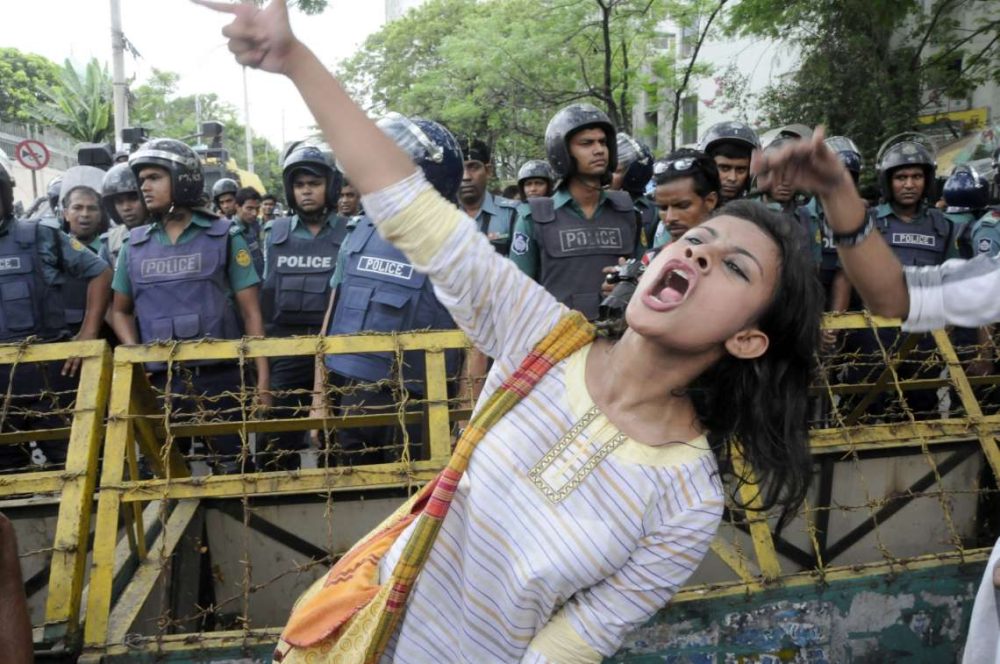
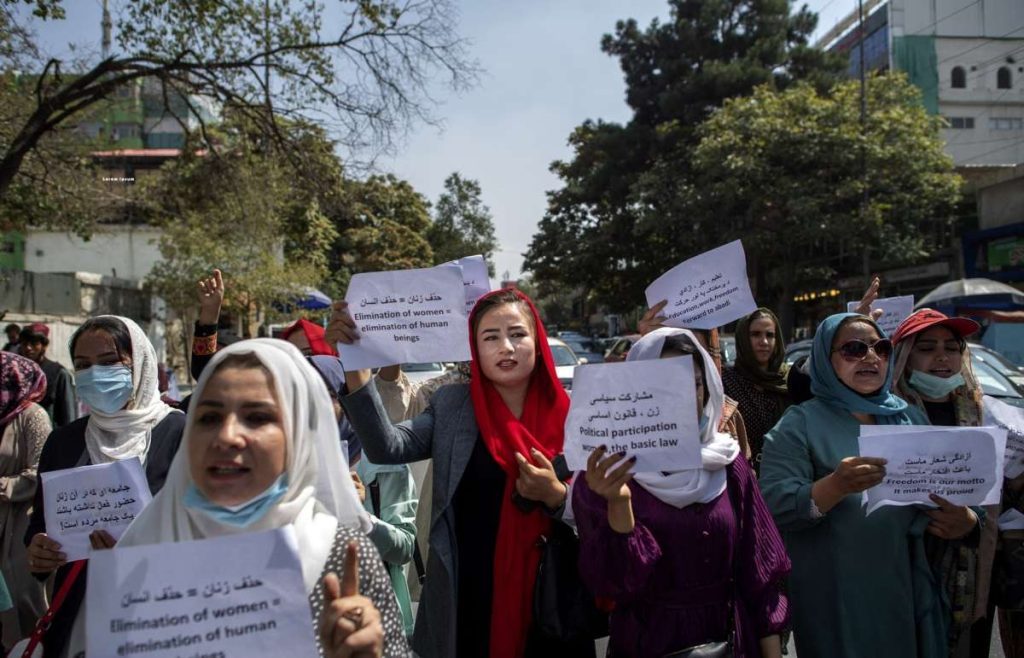
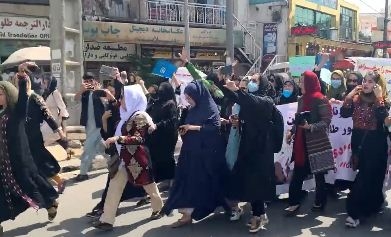
Reportedly, a handful of Afghan women courageously held a demonstration in the Afghan capital, Kabul, on 8 March, calling on the international community to protect Afghan women.
This was the second International Women’s Day observed under the Taliban-led government in Afghanistan, which swept back to power in August 2021, and more or less marked a year-and-a-half of increasing misery for Afghan women.
In a statement to mark the International Women’s Day, the head of the UN mission in Afghanistan, RozaOtunbayeva said it has been distressing to witness the Taliban’s methodical, deliberate, and systematic efforts to push Afghan women and girls out of the public sphere.
The UN mission said the crackdown was a “colossal act of national self-harm” at a time when Afghanistan faces some of the world’s largest humanitarian and economic crises.
The anti-women Taliban decisions have faced international condemnation, including by some Muslim countries even. The State of Qatar, earlier this week expressed deep concern over the Afghan caretaker government’s decisions which negatively affect Afghan women and girls’ rights, especially suspending their studies in secondary schools and universities and banning their work in non-governmental organisations.
The Qatari condemnation was conveyed in a statement delivered by the Permanent Representative of the State of Qatar to the United Nations Office in Geneva, HE Dr. Hind Abdul Rahman Al Muftah during an interactive dialogue with the Special Rapporteur on the situation of human rights in Afghanistan, within the framework of the 52nd regular session of the Human Rights Council.
The deputy foreign minister of Turkiye, Mehmet Kemal Bozay, has said that the international community must not allow the situation in Afghanistan to deteriorate “even further.” The Secretary General of the Organisation of the Islamic Cooperation (OIC), Hissein Brahim Taha, spoke in Geneva and, reiterated the OIC’s condemnation of Kabul’s edicts banning women from education and work, saying: “It is against our religion.”
Anti-women diktats
The biggest crackdown on teenage girls and university students came just days before Women’s Day, when earlier this week the authorities banned them from secondary schools and higher educational institutions. No country has officially recognised the Taliban government as Afghanistan’s legitimate ruler, with the right to education for women a sticking point in negotiations over aid and recognition.
According to UNESCO, currently, 80 percent of school-aged Afghan girls and young women – totalling 2.5 million people – are out of school.The Taliban’s decision to keep girls’ schools shuttered has reversed significant gains in female education during the past 20 years.
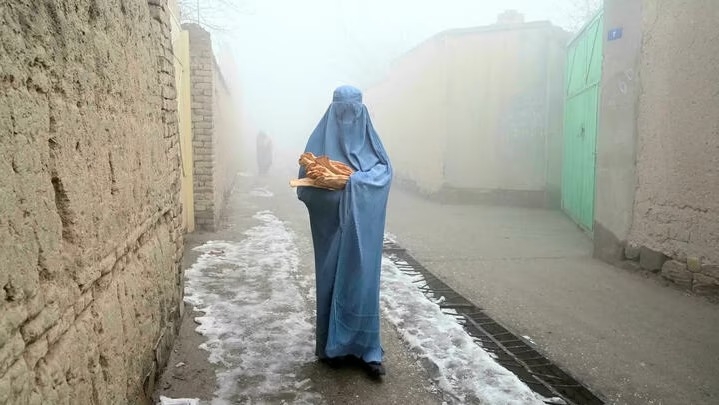
In another anti-women diktat, Taliban government has annulled divorce in Afghanistan, forcing divorced women to go back to abusive husbands. Lawyers say that several women have reported being dragged back into abusive marriages after Taliban commanders annulled their divorces.
Latest international efforts
UN deputy spokesman Farhan Haq said last Friday that a delegation headed by UN Deputy Secretary General Amina Mohammed to Afghanistan recently, found that some Taliban officials were more open to restoring women’s rights, but others were clearly opposed.
Mohammed, a former Nigerian Cabinet minister is the UN’s highest-ranking woman, she was joined on the trip by Sima Bahous, executive director of UN Women, which promotes gender equality and women’s rights, and Assistant Secretary General for political affairs Khaled Khiari.
The UN team met with the Taliban administration in the capital Kabul and talks focused on the restrictive measures the Taliban government has imposed on women and girls since they re-took power.
The UN has stressed that Afghan women are crucial to delivering humanitarian help to civilians, the majority of them women and children.
The Taliban government adheres to an austere interpretation of Islam and has imposed severe restrictions on women’s lives that the United Nations called “gender-based apartheid”.
Notably, the Ministry of Women’s Affairs and the Human Rights Commission in Afghanistan have been erased under the Taliban regime.
According to the UN Mission in the country, nine out of 10 women in Afghanistan experience physical, sexual or psychological violence from their partner. Divorce, however, is far greater a taboo than the abuse itself and women who part with their husbands sustain many atrocities at the hands of society.
The United Nations’ special representative for women in Afghanistan, Alison Davidian said the implications of the government’s policies “impact all Afghans and will resonate throughout generations”. Meanwhile, a prominent group of Afghan and Iranian women are backing a campaign calling for gender apartheid to be recognised as a crime under international law.
The campaign, launched on International Women’s Day, reflects a belief that the current laws covering discrimination against women do not capture the systematic nature of the policies imposed in Afghanistan and Iran to downgrade the status of women in society.
The authors of the open letter, including international lawyers, argue that the legal definition of apartheid as a crime against humanity, adopted by the UN in 1973 and supported by the 1998 Rome Statute, does not fit the case of Afghanistan and Iran, even if the descriptive term does.
Taliban Mindset
Initially, when the Taliban 2.0 took over power in Afghanistan in August 2021, there was some euphoria that now they might be a changed Taliban, looking forward to mend their earlier ways and chart a new course of development for their country.
However, starting with their first diktat in September 2021, urging for segregated classrooms for boys and girls at schools, the caretaker Taliban government has followed it up with a slew of anti-women measures.
What perplexes one is that though the Taliban describe most of these decisions as Islamic, in fact they are completely unIslamic. Islam gives equal rights to men and women in all spheres of life, including, education, inheritance, right to work, say in marriage. Yet, in action Taliban goes completely against the spirit and teachings of Islam.
Instead, if they had adopted a new pragmatic and forward looking approach towards reorganising the Afghan society, it would have gone in their favour and would have helped them to consolidate their power in the country. As currently there seems to be no political force in the country, which could counter the Taliban. In addition, it would have provided them legitimacy and support from the so-called Islamic countries, if only they would have chosen to uphold the Islamic teachings, which in reality, they have failed to do.