March 28, 2023
4 mins read

‘Infighting among US volunteers in Ukraine weakens war effort’

The interviews and research reveal a series of deceptions, mistakes and squabbles that have hindered the volunteer drive that began after Russia’s full-scale invasion in February 2022….reports Asian Lite News

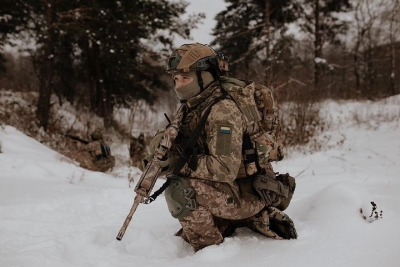
The infighting between the US volunteers who went to Ukraine to fight Russia’s full-scale invasion in February 2022, when President Volodymyr Zelensky called for help, is undermining the war effort.

Justin Scheck, an international investigative reporter, and Thomas Gibbons-Neff, the Ukraine correspondent, in an article in The New York Times (NYT) said that after a year of combat, many of these homespun groups of volunteers are fighting with themselves and undermining the war effort. Some have wasted money or stolen valour. Others have cloaked themselves in charity while also trying to profit off the war, records show.

They rushed to Ukraine by the thousands and promised to bring military experience, money or supplies to the battleground of a righteous war. Hometown newspapers hailed their commitment, and donors backed them with millions of dollars, reported NYT.

One retired Marine lieutenant colonel from Virginia is the focus of a US federal investigation into the potentially illegal export of military technology. A former Army soldier arrived in Ukraine only to turn traitor and defect to Russia, said Scheck and Gibbons-Neff.

A Connecticut man who lied about his military service has posted live updates from the battlefield — including his exact location — and boasted about his easy access to American weapons. A former construction worker is hatching a plan to use fake passports to smuggle in fighters from Pakistan and Iran, NYT said.

And in one of the more curious entanglements, one of the largest volunteer groups is embroiled in a power struggle involving an Ohio man who falsely claimed to have been both a US Marine and a LongHorn Steakhouse assistant manager, reported NYT.

Such characters have a place in Ukraine’s defence because of the United States’ arms-length role: The Biden administration sends weapons and money but not professional troops.

That means people who would not be allowed anywhere near the battlefield in a US-led war are active on the Ukrainian front — often with unchecked access to weapons and military equipment, said Scheck and Gibbons-Neff.

The New York Times reviewed more than 100 pages of documents from inside volunteer groups and interviewed more than 30 volunteers, fighters, fund-raisers, donors and American and Ukrainian officials. Some spoke on the condition of anonymity to discuss sensitive information.

The interviews and research reveal a series of deceptions, mistakes and squabbles that have hindered the volunteer drive that began after Russia’s full-scale invasion in February 2022.

Thousands answered Zelensky’s call. Some joined military groups like the International Legion, which Ukraine formed for foreign fighters. Others took roles in support or fund-raising.

With Kyiv, Ukraine’s capital, under attack, there was little time for vetting arrivals. So people with problematic pasts, including checkered or fabricated military records, became entrenched in the Legion and a constellation of other volunteer groups, said Scheck and Gibbons-Neff.

While ideology likely is one motivation for these soldiers, incentives such as high salaries, bonuses and opportunities for promotion and medals — as well as pressure from families — are also believed to play a major role.

An estimated 1,000 to 3,000 such foreign fighters are believed to be active, with most serving in three battalions of the International Legion, according to analysts and academics monitoring them, who stressed that the numbers were rough approximations.

The Ukrainian military did not reply to requests for details about the volunteers, or estimates of their numbers. They also did not address specific issues but did say that it was on guard because Russian agents regularly tried to infiltrate volunteer groups, reported NYT.

Ukrainian officials initially boasted of 20,000 potential Legion volunteers, but far fewer actually enlisted. Currently, there are around 1,500 members in the organization, say people with knowledge of the Legion.

Internal documents show that the Legion is struggling. Recruitment has stagnated. The Washington-based Counter Extremism Project wrote in March that the Legion and affiliated groups “continue to feature individuals widely seen as unfit to perform their duties.”

Meanwhile, US volunteers are involved in a messy, distracting power struggle. Moreover, as per Pentagon many of them had no military experience.

Examples of wasted money in the hands of well-intentioned people are common. Mriya Aid, a group led by an active-duty Canadian lieutenant colonel, spent about USD 100,000 from donors on high-tech US-style night-vision devices. They ended up being less-effective Chinese models, internal documents show, reported NYT.

Earlier this year, the Mozart Group, which two former Marines established to help Ukraine, disbanded after one sued the other, alleging theft and harassment. (ANI)

ALSO READ: Trump grand jury likely to resume session on April 3

Previous Story

Anushka & Virat merge their non-profit initiatives

Next Story

First Citizens Bank acquires failed SVB

Previous Story

Anushka & Virat merge their non-profit initiatives

Next Story

First Citizens Bank acquires failed SVB

Latest from -Top News

Pakistan Risks Overstretching Itself in Yemen War

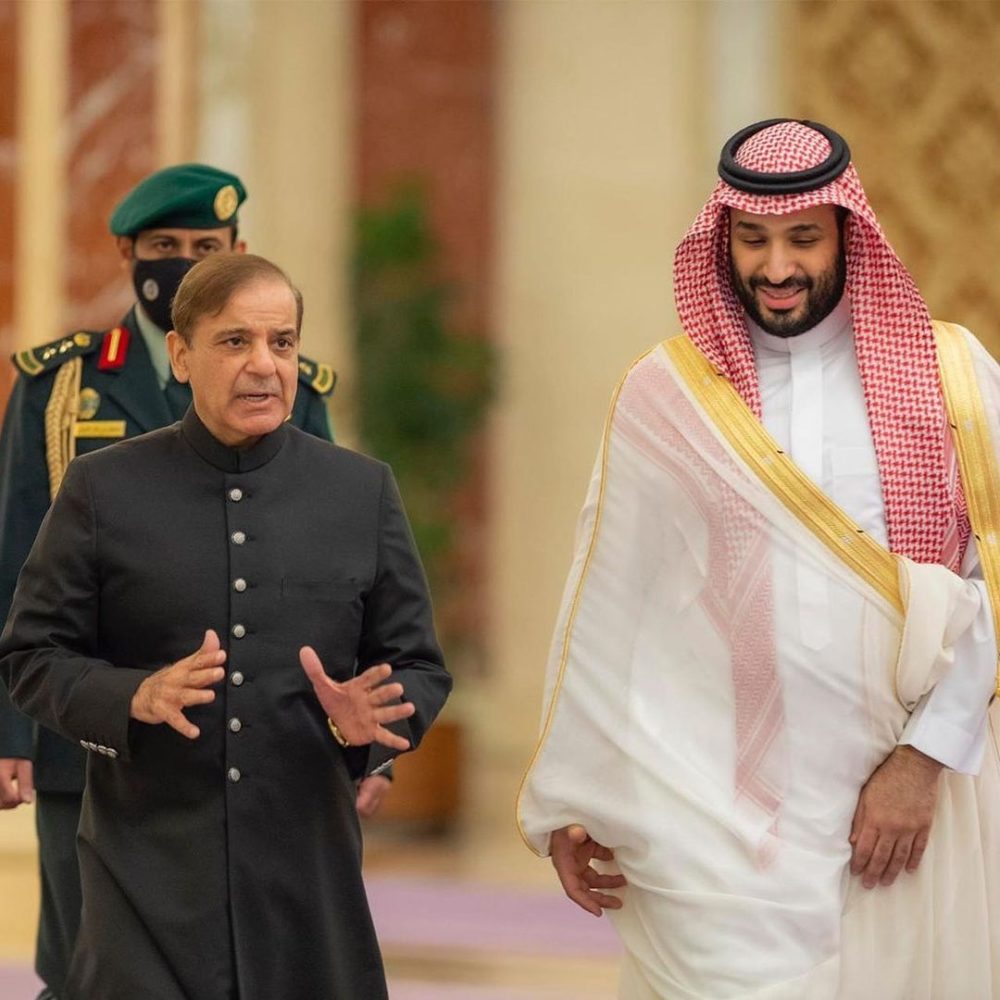
Pakistan’s expanding military role in Saudi Arabia amid the Yemen conflict could strain its defence resources and fragile finances…reports Asian Lite News Desk Pakistan’s military involvement in the war in Yemen may prove unsustainable because of mounting financial pressures and competing security demands, according to a new report. Islamabad’s growing military presence in Saudi Arabia risks stretching its defence resources while exposing the country to greater strategic and economic challenges. An article by Andrew Wilson in One World Outlook describes Pakistan’s involvement as a case of “fiscal and strategic overreach”, arguing that the country lacks the financial flexibility to sustain an expanded military commitment. Pakistan’s external finances depend heavily on an International Monetary Fund (IMF) programme, financial support from Gulf countries and remittances from Pakistani workers in the region. The report argues that deeper military involvement in the conflict could place additional pressure on these sources of financial stability. It also warns that deploying troops and military equipment abroad could weaken Pakistan’s capacity to address security challenges along its eastern border and deal with two domestic insurgencies. The move could also draw Islamabad into a conflict it has sought to approach cautiously. A Reuters report in May, citing Pakistani security and government sources, said Islamabad had deployed around 8,000 troops, a squadron of approximately 16 aircraft, mostly JF-17 fighter jets, two drone squadrons and a Chinese HQ-9 air-defence battery to Saudi Arabia. According to those sources, Riyadh was financing the deployment, with Pakistani personnel operating the equipment. The sources also said a confidential agreement contemplated the possibility of deploying up to 80,000 troops. Islamabad has not confirmed those figures, although it has acknowledged its military presence in Saudi Arabia, including the deployment of fighter jets at King Abdulaziz Air Base from April. The One World Outlook article argues that Saudi financial support can cover allowances and operating expenses but cannot easily replace military equipment needed elsewhere or resolve the political and strategic challenges of participating in the Yemen conflict. Pakistan’s defence budget is another concern. For the 2026-27 financial year, the federal government allocated PKR 3 trillion, or approximately $10.8 billion, to defence services. The allocation represents an 18 per cent increase from the original PKR 2.55 trillion provision and amounts to around 2.1 per cent of projected gross domestic product (GDP). Defence spending accounts for approximately 16 per cent of the federal government’s PKR 18.8 trillion expenditure. Military pensions are budgeted separately at PKR 822 billion, while debt servicing costs stand at approximately PKR 8 trillion, more than two-and-a-half times the defence allocation. The report argues that these competing financial obligations leave little room for additional military expenditure without placing further pressure on public finances. Pakistan’s reliance on IMF assistance also limits its fiscal flexibility. The country must meet the conditions attached to the programme, including a primary budget surplus target of 2 per cent of GDP and continued restraint on development spending. According to the article, these requirements make it difficult for Islamabad to finance an additional military commitment without compromising other budgetary priorities. Pakistan’s economic indicators offer limited reassurance. Economic growth for the 2025-26 financial year is estimated at between 3.6 and 3.7 per cent, while inflation reached approximately 10.3 per cent in September following an energy price shock. Foreign exchange reserves stood at around $21.5 billion at the end of September. Although this marks an improvement from the low levels recorded in 2023, the report notes that the reserves cover only a few months of imports. Financial assistance from Gulf partners remains central to Pakistan’s external stability. The article says Islamabad holds approximately $8 billion in Saudi deposits at its central bank. In July, the State Bank of Pakistan said Riyadh had extended the maturity of $5 billion in deposits to December 2028, easing the country’s immediate external financing requirements. A further $3 billion deposit was also extended in the spring. However, the article argues that these arrangements provide temporary relief rather than long-term financial independence, particularly as regional conflict threatens the stability of the Gulf economies on which Pakistan relies. The report concludes that Pakistan faces a difficult balance between supporting Saudi Arabia militarily and preserving the financial and military resources needed to address its domestic and regional challenges.

UK and Germany Ratify Kensington Treaty

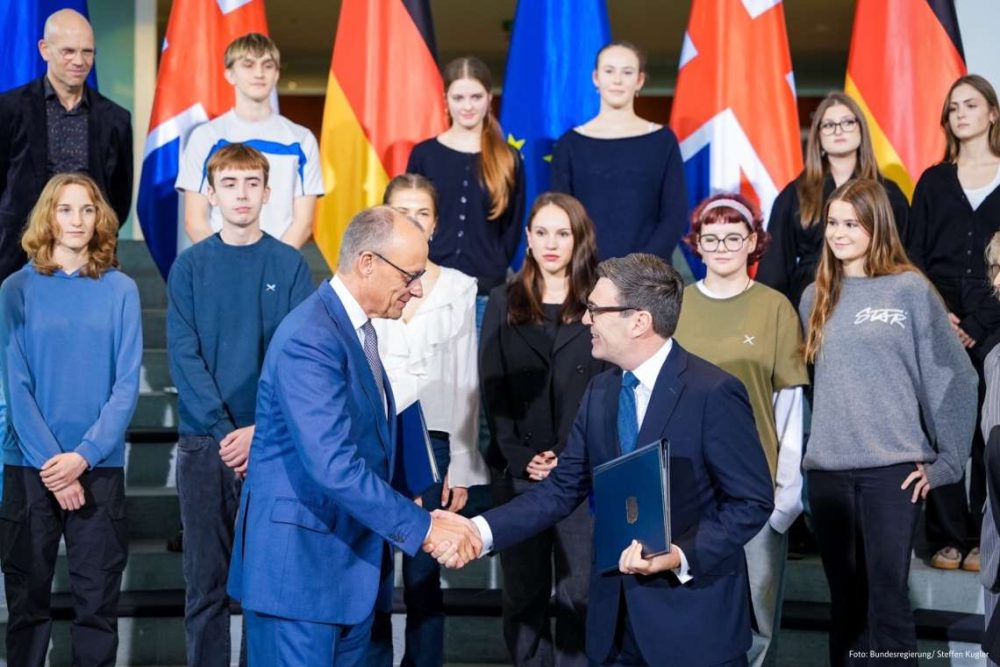
Britain and Germany ratify the Kensington Treaty, agreeing new cooperation on AI, quantum research, defence and security while targeting investment, jobs and Russian hybrid threats…reports Asian Lite News Desk Britain and Germany

Economic tide is turning in Bangladesh

If there is one thing that can bring some comfort to the struggling Bangladeshi economy, it is good relations with India. Bangladesh should remember that Delhi’s backing, through easy supplies of essentials
Go toTop

Don't Miss

UK accidentally sent military emails meant for US to Russian ally

British officials sent the messages to an address ending with

Kerry meets Chinese officials amid push to stabilise ties

Ties between the countries have hit a historic low amid