August 21, 2023
4 mins read

Pakistan sets up special court for Army Act & OSA related cases

The special court will be headed by Anti-Terrorism Court (ATC) court number 1’s judge Abdul Hasnatt…reports Hamza Ameer

The caretaker government in Pakistan has constituted a special court in Islamabad to hear the critical Cipher case against former Prime Minister Imran Khan, former Foreign Minister Shah Mehmood Qureshi and his associates, as well as all other cases in which charges are framed under the Official Secrets Act (OSA) and Army Act 1952.

The special court will be headed by Anti-Terrorism Court (ATC) court number 1’s judge Abdul Hasnat, while proceedings into all cases that come under the two Acts will be heard in the Judicial Complex building in Islamabad. 

The development comes after President Arif Alvi denied the approval of two amendment bills (Army Act Amendment Bill 2023 & Official Secrets Act Amendment Bill 2023), stating that his staff at the Prime Minister’s Office undermined his demand and acted against his directive to return the bill to Parliament. 

“As God is my witness, I did not sign Official Secrets Amendment Bill 2023 & Pakistan Army Amendment Bill 2023 as I disagreed with these laws. I asked my staff to return the bills unsigned within stipulated time to make them ineffective. I confirmed from them many times that whether they have been returned & was assured that they were. However I have found out today that my staff undermined my will and command. As Allah knows all, He will forgive IA. But I ask forgiveness from those who will be effected,” the President said in a tweet. 

Alvi’s tweet came over a day after it was reported that he had signed and approved both the bills.

These developments have stirred yet another conspiracy as many are questioning the timing of the tweet and have also expressed reservations over the intent of President Alvi, who they say, may have flouted his own public office to show his affiliation with Khan’s Pakistan Tehreek-e-Insaf (PTI). 

“Its shocking to see how President Alvi, who is not only the head of the state, he is the commander in chief of the Pakistan armed forces also, has presented himself as powerless, helpless and extremely weak to the extent that he couldn’t even manage his own office and its staff in handling such a sensitive matter.” said Javed Siddique, a political analyst. 

Legal experts have a different view of the interpretation of the powers and procedures of the President in issuing his assent of dissent on any bill that is sent to the President by the parliament. 

“Article 75 of the Constitution of Pakistan gives two options to the President. Once a bill is approved from the National Assembly and the Senate, it is sent to the President for approval. He then has the stipulated time of 10 days to either give his assent on the bill and sign it, or he can return the bill with a letter detailing his concerns over the bill and requesting a reconsideration,” said Hafiz Ahsaan Ahmed Khokhar, an advocate of the Supreme Court of Pakistan. 

“If the President does not respond in the stipulated time, and he does not assent nor does he return the bill with his recommendations, it is deemed to have been assented and becomes a law,” he added. 

The lawyer also explained that if President returns the bills unsigned and with his recommendations, a joint session of Parliament will be called in to review the recommendations and pass the bill again through majority vote.

After approval from the joint session, the bill will again ne sent to the President for assent within a 10-day stipulated time.  

“After the joint session approval, President has 10 days to give his assent. Otherwise, the bill is deemed to have been assented and becomes law,” Ahsaan added. 

On the other hand, other senior lawyers maintain that two crucial amendments cannot be deemed as assented when President has not signed them, nor has returned them with recommendations. 
“If, in the first stage, the president has received the bills and has not signed them nor has he returned the bills in stipulated time — this is no way can be understood as deemed to have been assented. Either way, the parliament has to call in a joint session and approve the same bills again and send them back to the president for assent,” said senior lawyer Salman Akram Raja. 

Political experts say that President Alvi has opened up a new Pandora’s Box in which his own staff and office has been pushed into severe scrutiny.  

“President Alvi has put his own credibility at stake, his office under questions, his position as president at risk. Instead of taking action against his staff for their conduct and alleged undermining of his orders, he opted to take it to public domain and tweet about it. This is strange,” said senior journalist Shahzeb Khanzada. 

The Army Act and Official Secrets Act are being applied in the Cipher case against Khan and Qureshi, who have been booked for mishandling and sharing details of a secret document regarding meeting between American diplomat Donald Lu and Pakistan’s then Ambassador Asad Majeed, details of which were later used by the former premier to spread his narrative of US-led regime change against his government. 
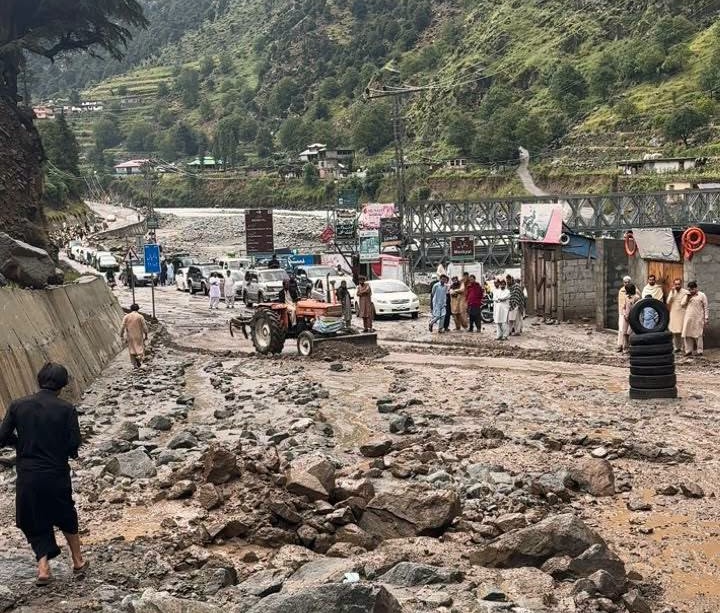
ALSO READ: 10,000 evacuated as Sutlej River floods Pakistan

Previous Story

Karnataka CM condemns vandalism of Gandhi statue

Next Story

Gonzalez, Noboa lead Ecuador’s first round election

Previous Story

Karnataka CM condemns vandalism of Gandhi statue

Next Story

Gonzalez, Noboa lead Ecuador’s first round election

Latest from -Top News

Pakistan Risks Overstretching Itself in Yemen War

Pakistan’s expanding military role in Saudi Arabia amid the Yemen conflict could strain its defence resources and fragile finances…reports Asian Lite News Desk Pakistan’s military involvement in the war in Yemen may prove unsustainable because of mounting financial pressures and competing security demands, according to a new report. Islamabad’s growing military presence in Saudi Arabia risks stretching its defence resources while exposing the country to greater strategic and economic challenges. An article by Andrew Wilson in One World Outlook describes Pakistan’s involvement as a case of “fiscal and strategic overreach”, arguing that the country lacks the financial flexibility to sustain an expanded military commitment. Pakistan’s external finances depend heavily on an International Monetary Fund (IMF) programme, financial support from Gulf countries and remittances from Pakistani workers in the region. The report argues that deeper military involvement in the conflict could place additional pressure on these sources of financial stability. It also warns that deploying troops and military equipment abroad could weaken Pakistan’s capacity to address security challenges along its eastern border and deal with two domestic insurgencies. The move could also draw Islamabad into a conflict it has sought to approach cautiously. A Reuters report in May, citing Pakistani security and government sources, said Islamabad had deployed around 8,000 troops, a squadron of approximately 16 aircraft, mostly JF-17 fighter jets, two drone squadrons and a Chinese HQ-9 air-defence battery to Saudi Arabia. According to those sources, Riyadh was financing the deployment, with Pakistani personnel operating the equipment. The sources also said a confidential agreement contemplated the possibility of deploying up to 80,000 troops. Islamabad has not confirmed those figures, although it has acknowledged its military presence in Saudi Arabia, including the deployment of fighter jets at King Abdulaziz Air Base from April. The One World Outlook article argues that Saudi financial support can cover allowances and operating expenses but cannot easily replace military equipment needed elsewhere or resolve the political and strategic challenges of participating in the Yemen conflict. Pakistan’s defence budget is another concern. For the 2026-27 financial year, the federal government allocated PKR 3 trillion, or approximately $10.8 billion, to defence services. The allocation represents an 18 per cent increase from the original PKR 2.55 trillion provision and amounts to around 2.1 per cent of projected gross domestic product (GDP). Defence spending accounts for approximately 16 per cent of the federal government’s PKR 18.8 trillion expenditure. Military pensions are budgeted separately at PKR 822 billion, while debt servicing costs stand at approximately PKR 8 trillion, more than two-and-a-half times the defence allocation. The report argues that these competing financial obligations leave little room for additional military expenditure without placing further pressure on public finances. Pakistan’s reliance on IMF assistance also limits its fiscal flexibility. The country must meet the conditions attached to the programme, including a primary budget surplus target of 2 per cent of GDP and continued restraint on development spending. According to the article, these requirements make it difficult for Islamabad to finance an additional military commitment without compromising other budgetary priorities. Pakistan’s economic indicators offer limited reassurance. Economic growth for the 2025-26 financial year is estimated at between 3.6 and 3.7 per cent, while inflation reached approximately 10.3 per cent in September following an energy price shock. Foreign exchange reserves stood at around $21.5 billion at the end of September. Although this marks an improvement from the low levels recorded in 2023, the report notes that the reserves cover only a few months of imports. Financial assistance from Gulf partners remains central to Pakistan’s external stability. The article says Islamabad holds approximately $8 billion in Saudi deposits at its central bank. In July, the State Bank of Pakistan said Riyadh had extended the maturity of $5 billion in deposits to December 2028, easing the country’s immediate external financing requirements. A further $3 billion deposit was also extended in the spring. However, the article argues that these arrangements provide temporary relief rather than long-term financial independence, particularly as regional conflict threatens the stability of the Gulf economies on which Pakistan relies. The report concludes that Pakistan faces a difficult balance between supporting Saudi Arabia militarily and preserving the financial and military resources needed to address its domestic and regional challenges.

UK and Germany Ratify Kensington Treaty

Britain and Germany ratify the Kensington Treaty, agreeing new cooperation on AI, quantum research, defence and security while targeting investment, jobs and Russian hybrid threats…reports Asian Lite News Desk Britain and Germany

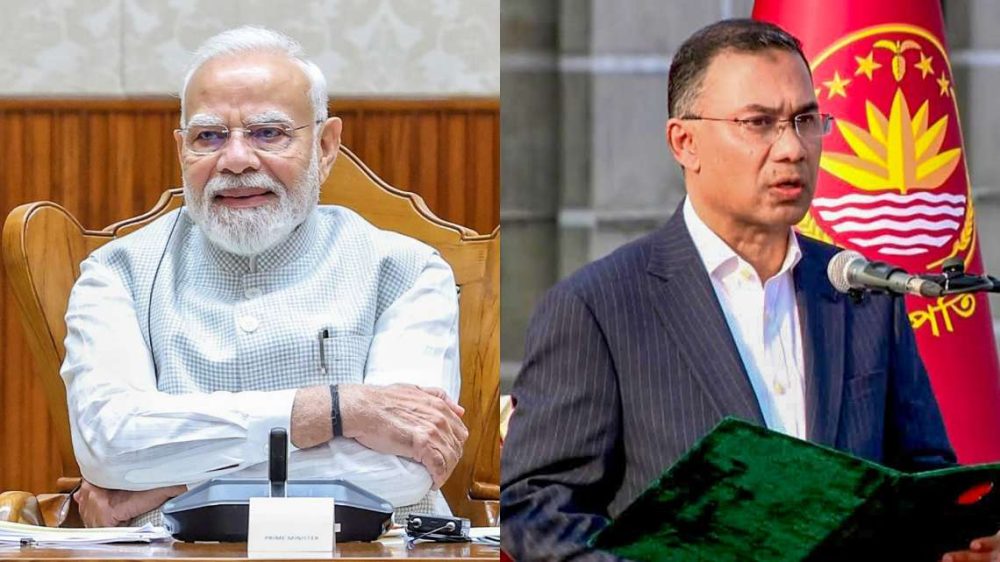
Economic tide is turning in Bangladesh

If there is one thing that can bring some comfort to the struggling Bangladeshi economy, it is good relations with India. Bangladesh should remember that Delhi’s backing, through easy supplies of essentials
Go toTop

Don't Miss

Saudi-Pak deal won’t dent India ties

Analysts emphasise that Saudi Arabia remains a key strategic and

Cop among 12 injured in Quetta blast targeting police van

An investigation has been initiated, and bomb disposal squads are