February 9, 2023
3 mins read

Turkey-Syria quake toll mounts to 15,383

Since the disaster struck on Monday, 70 countries and 14 international organisations have offered Turkey relief…reports Asian Lite News

As rescuers are racing against time to find more survivors in Turkey and Syria amid the harsh freezing temperatures, the death toll from the devastating earthquake that struck the two countries earlier this week has increased to 15,383 as of Thursday, according to authorities.

In its latest update, Turkey’s Disaster and Emergency Management Agency (AFAD) said the country’s overall death toll currently stood at 12,391 people, with 62,914 others injured, reports Anadolu News Agency.

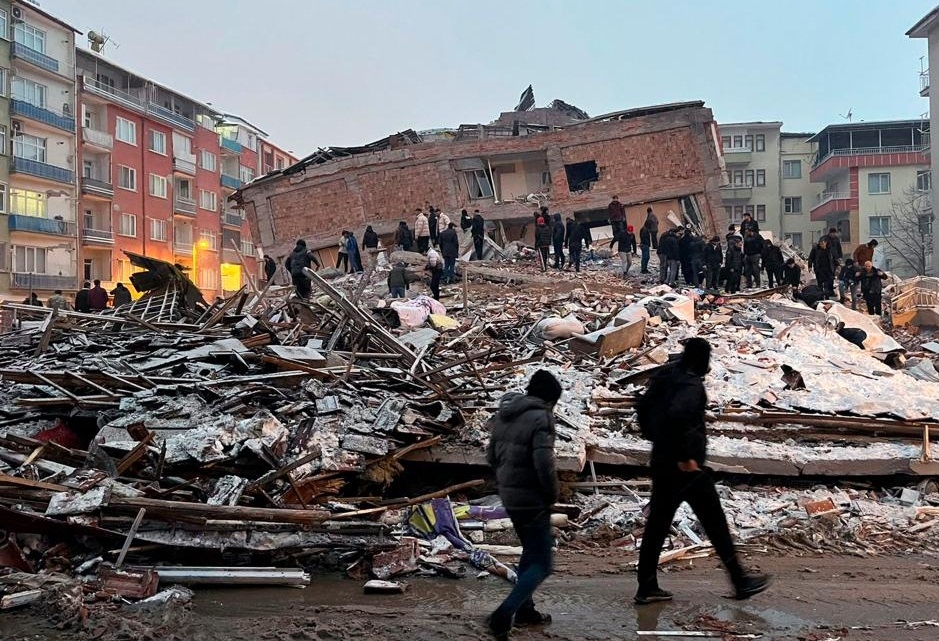
More than 6,000 buildings collapsed in the aftermath of Monday’s massive 7.8-magnitude quake, while more than 13 million people have been impacted so far in the 10 Turkish regions of Kahramanmaras, Gaziantep, Hatay, Osmaniye, Adiyaman, Malatya, Sanliurfa, Adana, Diyarbakir and Kilis.

In Syria, there were at least 2,992 deaths, of which 1,730 were reported in rebel-held areas in the northwest, according to the “White Helmets” civil defence group, and 1,262 fatalities were registered in government-controlled parts of the country, says the state media, CNN reported.

Since the disaster struck on Monday, 70 countries and 14 international organisations have offered Turkey relief, according to President Recep Tayyip Erdogan.

However, the international aid situation in Syria is less clear as the Country has been heavily sanctioned due to the ongoing civil war.

So far, the UAE, Iraq, Iran, Libya, Egypt, Algeria and India have sent relief directly to regime-controlled airports, reports CNN.

Others such as the Taliban-ruled Afghanistan, Saudi Arabia, Qatar, Oman, China, Canada and the Vatican have pledged aid, though it is unclear if that relief will be sent directly to the regime.

The EU has confirmed it will send 3.5 million euroes in aid to Syria following a government request for assistance, but said the aid must be delivered to both government- and rebel-controlled areas.
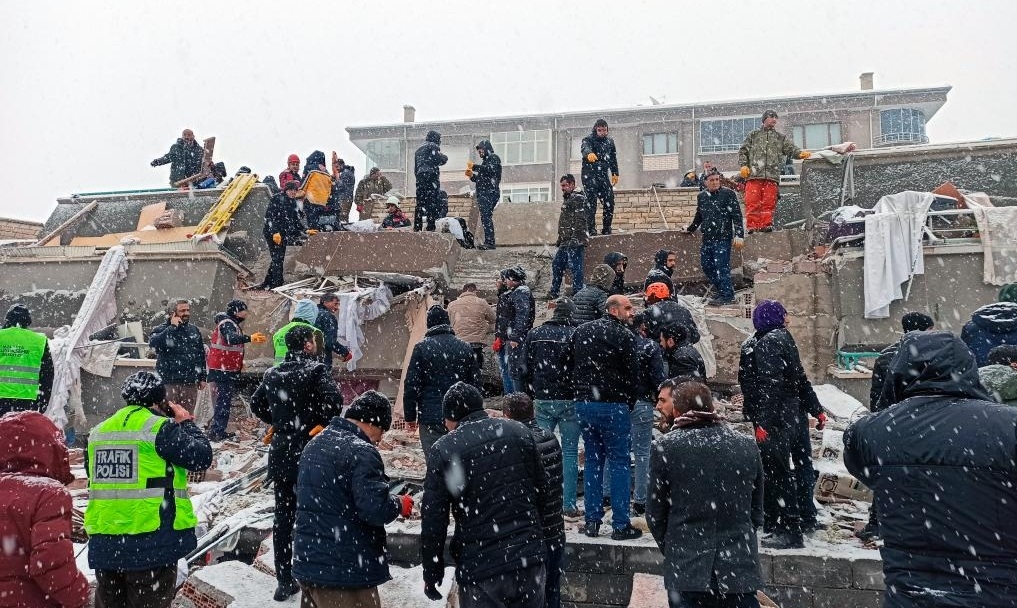
People check damaged buildings after the earthquakes in Malatya, Turkey, on Feb. 6, 2023. At least 284 people were killed and 2,323 others injured after two strong earthquakes jolted Türkiye early Monday and damaged more than 1,700 buildings, Turkish Vice President Fuat Oktay said. (Photo by Mustafa Kaya/Xinhua)

Earlier on Wednesday, the Syrian government said it has set up more than a hundred shelters equipped with aid supplies for those affected by the earthquake across government-controlled areas, including in the cities of Aleppo, Hama, Homs, Tartus and Latakia, a coastal city which has the highest number of earthquake deaths counted in Syria so far, and over 100 collapsed buildings.

Meanwhile, Turkish President Erdogan, who visited the quake-hit areas on Wednesday, has defended his government’s response, saying it was impossible to prepare for the scale of the disaster after critics claimed the emergency services’ response was too slow, the BBC reported.

Addressing reporters in Hatay, he accepted the government had encountered some problems, but said the situation was now “under control”.

Rescuers and volunteers are working round the clock to locate the trapped under rubble as the survival rate without food or water drops drastically after the 72nd hour, which is rapidly approaching, reports Xinhua news agency.

Experts have warned that the 72-hour window for rescuing those trapped by the earthquakes may be much smaller than anticipated, given the low temperatures that have swept through the earthquake-hit regions will increase the risk of hypothermia.

The devastating 7.8 tremor struck Turkey’s southern province of Kahramanmaras at 4.17 a.m. on Monday morning, which was followed by a 6.4-magnitude temblor a few minutes later in Gaziantep province.

The epicentre of the 7.8-magnitude quake was 23 km east of Nurdagi in Gaziantep, at a depth of 24.1 km.

At around 1.30 p.m, a third 7.5-magnitude tremor hit Kahramanmaras, which officials said was “not an aftershock”.


ALSO READ: China has more ICBM launchers than US

Previous Story

Zelensky asks France, Germany for fighter jets

Next Story

NATO must not be part of Ukraine war: Scholz

Previous Story

Zelensky asks France, Germany for fighter jets

Next Story

NATO must not be part of Ukraine war: Scholz

Latest from -Top News

Nepal Floods Cause $1.66 Billion In Damage, Says World Bank

Nepal’s August 2026 floods caused an estimated US$1.66 billion in direct physical damage, with infrastructure accounting for 83 per cent of the total…reports Asian Lite News Desk Nepal’s devastating floods in August 2026 caused an estimated US$1.66 billion in direct physical damage, with infrastructure accounting for 83 per cent of the total, according to a World Bank report. The estimate, included in the World Bank’s Nepal Development Update unveiled this week, is close to the Nepal government’s preliminary Rapid Damage and Needs Assessment (RDNA), which put physical damage at US$1.81 billion. The government’s assessment also estimated losses beyond physical assets at US$883.32 million, taking the total economic effects of the disaster to approximately US$2.7 billion. The World Bank’s Global Rapid Post-Disaster Damage Estimation (GRADE) found that infrastructure suffered the greatest damage, estimated at US$1.38 billion, or 83 per cent of the total. Residential buildings accounted for US$185 million, or 11 per cent, while non-residential buildings sustained damage worth US$101 million, or 6 per cent. The floods along the Bhotekoshi and Trishuli rivers caused extensive damage to hydropower projects, solar energy facilities, electricity transmission infrastructure and transport networks. The energy sector, particularly hydropower, was among the worst affected. The August 2026 floods affected 12 hydropower projects and one solar project, involving 281.1 MW of operational capacity and 395.02 MW of capacity under construction. Damage to transmission lines and substations also disrupted the transmission of 149.6 MW of electricity to the national grid. The total affected capacity reached approximately 430.7 MW, equivalent to 10.6 per cent of Nepal’s installed hydropower and solar capacity at the end of fiscal year 2025-26, which concluded in mid-July. The disaster also severely damaged transport infrastructure along the 82-km Rasuwa trade corridor, which connects Kathmandu with the Rasuwagadhi border point with China. More than 55 km of the corridor was damaged, including 40 km that was completely destroyed. The floods also damaged 37 motorable bridges and 68 suspension bridges. The disaster resulted in significant human losses along the affected corridor and beyond. According to Nepal’s National Disaster Risk Reduction and Management Authority, 1,455 people had been confirmed dead, while 5,285 remained missing following the disaster. The World Bank report found that the physical damage was concentrated in three districts in central Nepal: Rasuwa, Nuwakot and Dhading. Rasuwa was the worst-affected district, accounting for US$1.07 billion, or 64 per cent, of the total direct damage. Nuwakot recorded an estimated US$551 million in damage, while Dhading suffered approximately US$39 million. “The findings highlight the concentration of physical damage in a small number of districts and the disproportionate impact on infrastructure, underscoring the scale of the reconstruction challenge facing the affected areas,” the World Bank said. The global development financier said the floods had demonstrated the scale and complexity of disaster risks in Nepal’s Himalayan environment. The event also showed how a single extreme weather event could trigger cascading impacts across sectors and geographical areas. The report said recovery efforts should extend beyond restoring infrastructure to its pre-disaster condition. While the principle of “Build Back Better” remained relevant, the World Bank stressed that rebuilding infrastructure to higher engineering standards in the same locations might not always be sufficient. “In some cases, simply rebuilding the same infrastructure in the same location to a higher engineering standard may not be sufficient. Nepal may need to build differently — based on a better understanding of risk, more careful decisions about location and design, greater redundancy in critical networks, stronger monitoring and early warning, and a more integrated approach to infrastructure development in the Himalayas,” the report said. The World Bank said Nepal’s recovery strategy should incorporate improved risk assessment, more informed infrastructure planning, stronger monitoring systems and better early warning mechanisms. The report emphasised that reconstruction should not only restore damaged assets but also reduce the impact of future disasters, particularly in the country’s vulnerable Himalayan regions.

Vaccine Delays Fuel Bangladesh Measles Outbreak

More than 32,000 suspected cases and over 250 deaths have been reported since mid-March, with children making up most of the fatalities….reports Asian Lite News Desk Bangladesh’s measles outbreak has intensified, with

Tsai: Stand With Taiwan, Strengthen The Indo-Pacific

The former president said stronger international partnerships would help Taiwan withstand mounting military, cyber and economic pressure while reinforcing democratic resilience….repots Asian Lite News Desk Former Taiwan President Tsai Ing-wen has called
Go toTop

Don't Miss

Earth quake kills more than 1000 in Turkey, Syria

The powerful quake that occurred at 4.17 a.m. at a

Turkey to broker peace between Russia, Ukraine 

Turkey expressed the hope that the meeting will contribute to