Maritime trade and submarine cables should play a bigger role in Ankara’s regional engagement….reports Asian Lite News Desk
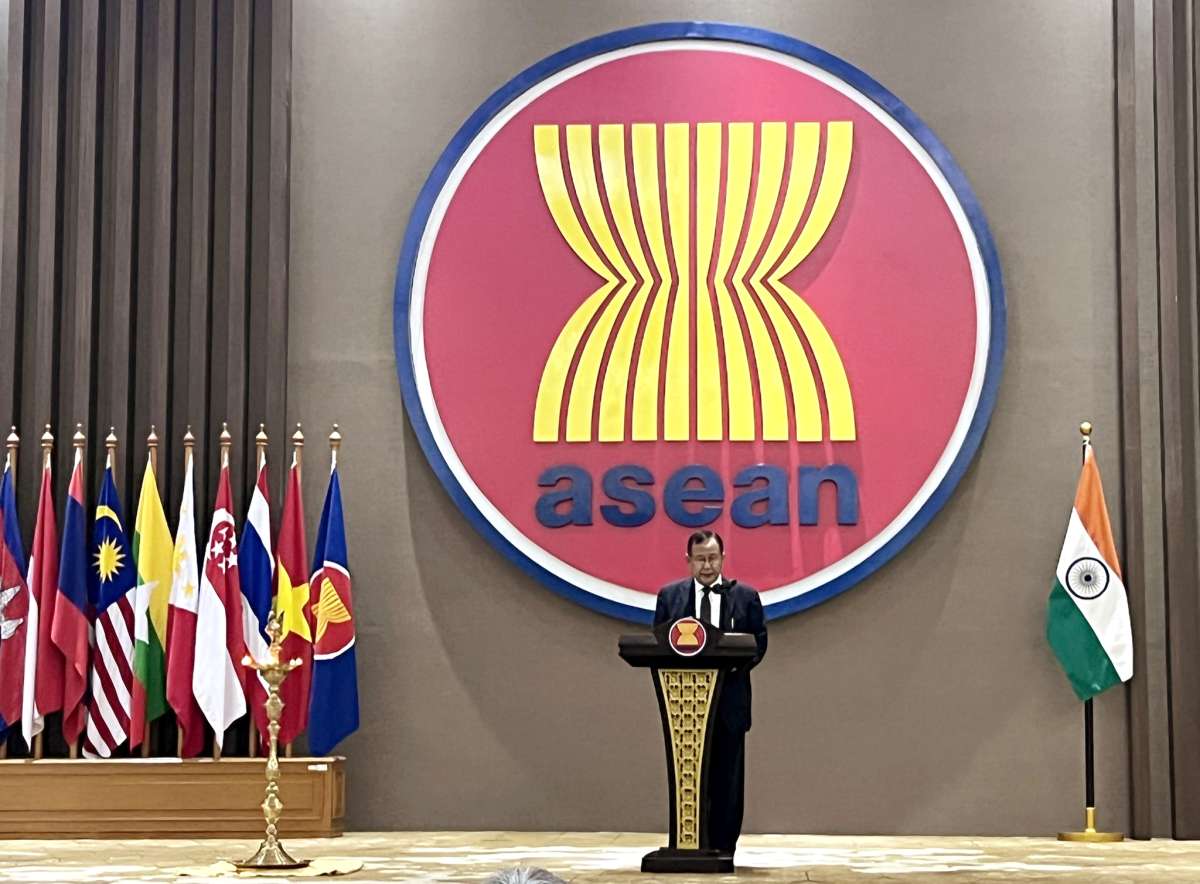
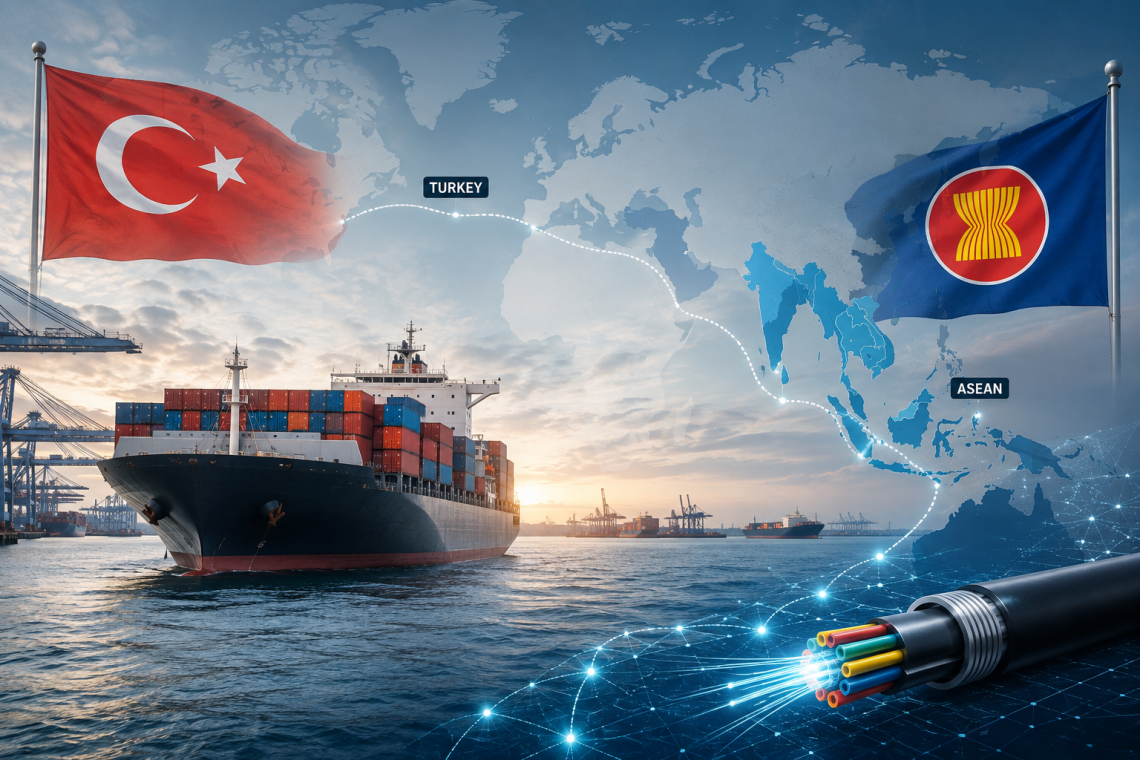
Turkey’s engagement with Southeast Asia risks overlooking a critical dimension of connectivity by focusing heavily on land-based links while neglecting the maritime routes, undersea cables and shipping networks that already connect the two regions, according to a report.
Turkey has long projected itself as a bridge between continents, an image that fits its growing engagement with Southeast Asia. However, its approach remains focused largely on the land routes linking the two ends of Eurasia, while paying insufficient attention to the seas that carry container vessels, oil tankers and critical digital infrastructure, the article published in India Narrative argued.
According to the article by Mehmet Enes Beşer, maritime networks are already doing much of the work of connecting Turkey with Southeast Asia, but Ankara’s policy has yet to fully reflect that reality.
Around 96 per cent of the nearly 10 million containers transported annually between China and Europe travel by sea, making maritime transport the primary commercial route rather than an alternative to overland connectivity, the report noted.
While rail links remain important, a continental view alone cannot adequately explain a relationship whose commercial activity depends heavily on shipping, it added.
The article also highlighted institutional fragmentation within Turkey’s bureaucracy as a major challenge. Different government departments handle Southeast Asia, the Gulf, East Africa, energy supplies, ports, customs and digital infrastructure separately, despite these sectors being closely interconnected along maritime trade routes.
It suggested that Turkey need not establish another major institution but could instead use the coordination mechanisms already created under its Asia Anew initiative to develop a dedicated Indian Ocean working track involving government agencies and commercial operators.
Such a mechanism could map Turkey’s exposure along key maritime routes, including ports, transshipment hubs, submarine cable networks, energy flows and insurance risks at strategic chokepoints.
The report further suggested that Turkey and ASEAN partners could pursue a small number of practical port-to-port projects focusing on electronic documentation, cold-chain logistics, data exchange and greener transport.
Digital connectivity should also form a key part of the agenda, the article said. Submarine cables carry more than 99 per cent of international data traffic, while the Red Sea remains a strategically important cable route where access restrictions can delay repairs.
Turkey and ASEAN governments may not directly manage privately owned cable networks, but they can help reduce regulatory barriers and facilitate access for repair vessels, the report argued.
The article cautioned against Ankara pursuing an “Indian Ocean strategy” primarily as a geopolitical branding exercise, saying such an approach may find limited resonance in ASEAN.
Instead, it said Turkey could build stronger regional ties through practical cooperation, including assisting ports, sharing technical expertise and supporting regional institutions without presenting every initiative as part of great-power competition.