Wang Yi grasped the significance of the two centenary goals, which completely changed the diplomatic conduct of Chinese foreign policy, a report by Atul Aneja
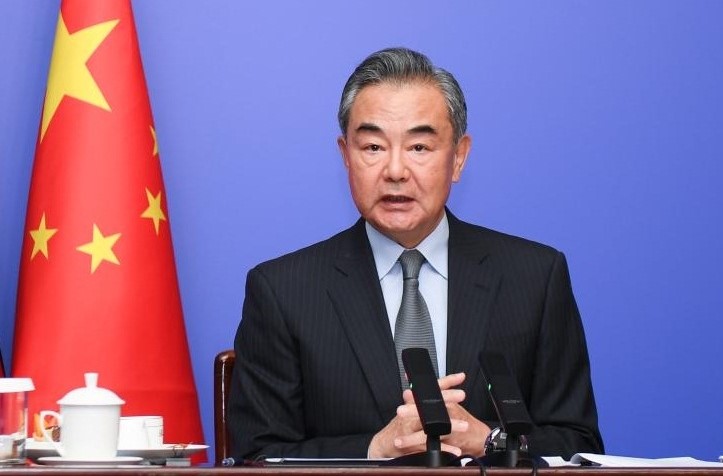
Earlier this week, the world was surprised when Wang Yi returned as China’s foreign minister replacing Qin Gang, who had mysteriously disappeared from public eye since June 25.
By becoming foreign minister as well as the head of the central foreign affairs commission of the Communist Party of China (CPC)—a more powerful and prestigious post than foreign minister—Wang has emerged as China’s powerful foreign policy Czar.
There are three key reasons why Chinese President Xi Jinping reposed his trust in Wang, and not anybody else to handle China’s troubled external relations.
First, Wang arguably has an unrivalled understanding of advancing Chinese foreign policy in Xi Jinping’s so-called “new era.” His track record speaks for itself.
A career diplomat, Wang majored in Japanese from the Beijing International Studies University. At the age of 29, he had joined China’s Ministry of Foreign Affairs.
Riding on his domain knowledge of Japan, Wang was appointed China’s ambassador in Tokyo from 2004-07.
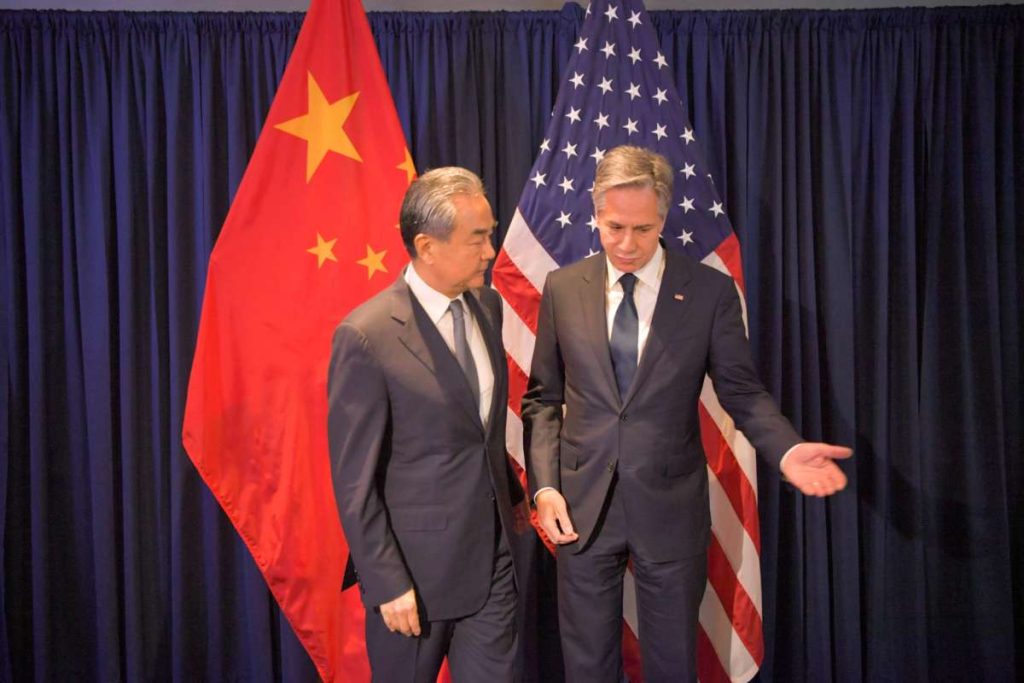
He continued to climb the diplomatic ladder, leading the politically sensitive Taiwan Affairs Office from 2008, before his appointment as foreign minister for the first time in 2013. He served on that post without any hiccups till 2022, before being elevated to the powerful post of Director, central foreign affairs commission of the CPC—a position held earlier by the high-profile trouble shooter Yang Jieche. Simultaneously, Wang rose in party ranks. From a member of the Central Committee when he was foreign minister, he was elevated to the more powerful 25-member politburo at the 20th party congress that was held last year.
Second and more importantly, Wang is a diligent practitioner of Xi’s “thought on diplomacy.” Xi’s diplomatic doctrine can be traced to the 19th party congress held in October 2017. During a marathon speech at the Great Hall of the People in Beijing, Xi unveiled the two centenary goals. The first targeted lifting extreme poverty by 2021, in tune with the centenary celebrations of the CPC’s formation in 1921. The second pledged to foist China as the world’s most advanced country in all spheres of human endeavour by 2049, marking 100 years of the formation of the People’s Republic of China in 1949.
Wang grasped the significance of the two centenary goals, which completely changed the diplomatic conduct of Chinese foreign policy. Wang became one of the pioneering practitioners of the China’s assertive engagement with the world, marked by what has been now commonly known as an aggressive Wolf Warrior diplomacy—a term derived from the film Wolf Warrior 2 which became a mega-hit with Chinese audiences, carefully released a few months ahead of the 19th Party Congress.
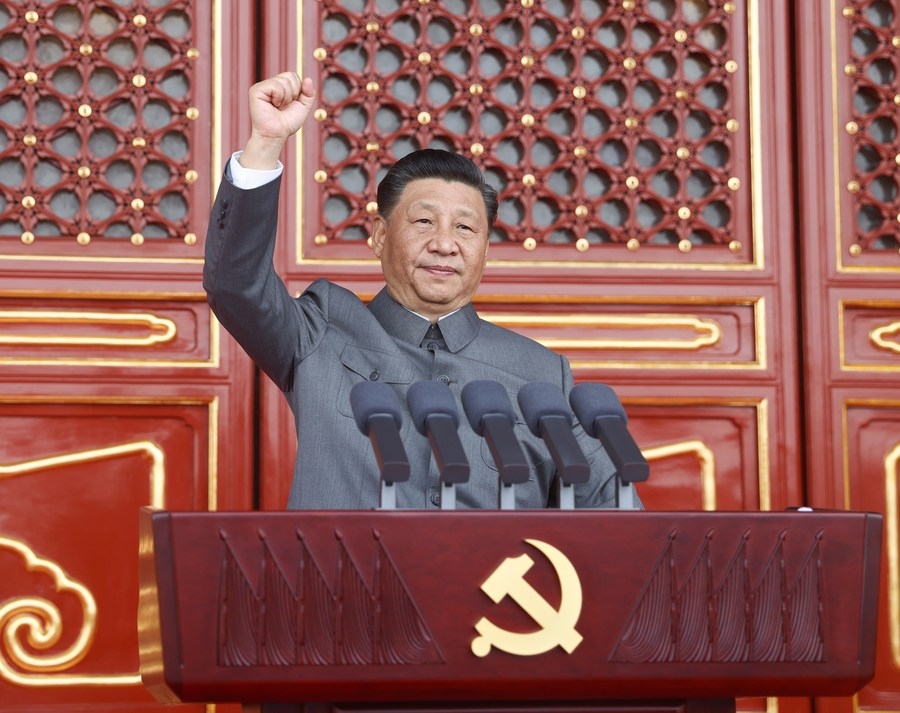
In later years, Xi’s thought on diplomacy was fleshed out into two doctrines—the Global Development Initiative (GDI) announced in 2021 and the Global Security Initiative (GSI). Both the doctrines have left no doubt about China’s intent to become the world’ s most powerful country, amplifying the second centenary goal.
Third, President Xi needs a seasoned hand when China is passing through a turbulent post-Covid transition, and faces a busy diplomatic season ahead. The BRICS summit is round the corner next month followed by the G-20 summit in September. It is quite likely that Xi and Joe Biden will summit on the sidelines of APEC in November, completing the cycle of high-level meetings that have begun with the visit to Beijing in June by US Secretary of State Antony Blinken to reboot the currently fractious Beijing-Washington ties.
ALSO READ: A Tale of Transformation: China’s Impact on India-US Ties