September 3, 2023
4 mins read

Gutsy British Indian women find their niche

She adds that a major achievement for IIW has been organising the She Inspires Awards in the British parliament to recognise the work of women…reports Asian Lite News

As the Indian diaspora witnesses monumental changes in its profile and confidence across the world, Indian women stepping out of the country too reflect that change. The new generation of women settling in the UK come equipped with education and attitudinal understanding which makes them stand apart from the ones who migrated a generation earlier.

Despite the progress, Indian women in the diaspora still have to surmount challenges in a foreign land, some of which can be formidable.

Rashmi Mishra of Inspiring Indian Women (IIW), an entity that she set up in 2016 in London to support women in the diaspora who faced assorted challenges – right from domestic abuse and hostile in-laws to lack of work opportunities and a non-existent social circle in an alien land.

Mishra says that one of her motivations to start IIW was to support well-qualified women who arrived on dependent visas and were looking for suitable work. “It was very frustrating for me as I had to get into ‘supply teacher work’ – where I would get teaching assignments only if a regular teacher went on leave. My long-term experience of teaching in India was not counted. Because of my experiences as an expat, I could understand the emotions of educated women who were engineers and IT professionals but could not find jobs in London”.

She began to connect women from the diaspora so that they leave behind the drudgery of their homes, find the right opportunities and do better in their personal and professional lives. Many women were able to hold exhibitions while others were happy to meet others women and share experiences.

Mishra also realised that she could not just stop at creating networking opportunities as diaspora women were facing other challenges like domestic abuse. “Lots of cases come up in London, therefore, we set up an online group called Sister Support where women ask and provide answers from their experiences related to domestic violence”.

Narrating an incident, she mentions how a woman who was “beaten up black and blue” by her husband bit him in self-defence. “The mother-in-law called up the police and the woman had to spend a night in jail for the assault. I took guarantee for her and got her out of jail but then she had nowhere to go. She did not want to go back to India to face her family and society”.

Mishra says she gets immense support from local authorities. “The Indian High Commission is very helpful. In this woman’s case, the high commission provided hotel accommodation for 10 days. Similarly, social systems here and the British authorities are supportive. The local council helped her and we got help from care workers”, she adds. Even as the legal case carries on, the woman is out of the toxic relationship and settled down in the UK.

Despite occasional hostile incidents at home, the diaspora is witnessing far-reaching changes. Mishra says dowry is going down among the Indians settled in the UK. “Now it has become an embarrassment to ask for it”.

IIW was registered as a company house entity as opposed to organisations existing only as WhatsApp and Facebook groups. Mishra says she has been filing accounts for the last eight years which has made the organisation transparent and accountable. “We do not take any money for personal gain. Our donations go entirely into activities. We have extended our work to underprivileged girls in Santa Cruz in Mumbai”, Mishra says.

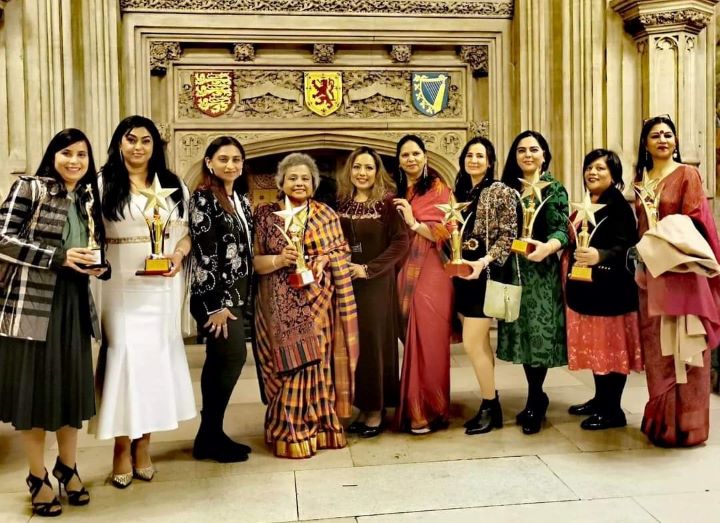
She adds that a major achievement for IIW has been organising the She Inspires Awards in the British parliament to recognise the work of women.

“Member of Parliament, Bob Blackman hosts the awards under numerous categories. We honour mothers who have sacrificed their careers for their families and children. We felicitated a 75-year-old woman who was winding up her business. She had opened up the first ayurvedic store in the UK decades back. It was a great moment for her as well as her family”.

Now, IIW has extended the awards to include women in India, like Meenakshi Walke who promote unusual vocations like teaching bamboo art.

An active IIW member, Vini Kalia says that because of IIW Indian women have established newer networks and are in fact expanding those across the UK, adding that she also discovered newer skills and confidence within. Often, she finds herself holding meetings with officials as well as arranging logistics for IIW events.

On the other extreme, Sudha Rawat also corroborates that IIW helped her express her creativity. “I am interested in graphic designing and playing with photos and videos. It was through IIW that I got a platform to express my video-making skills”. Besides making videos, Rawat now spends her time organising events and getting other women into the fold.

Her husband, Ravi Rawat says that diaspora women are becoming achievers and getting recognition their families had not thought possible earlier. Adding a touch of humour he adds: “Now many of us feel jealous that the women are organising events at the parliament or the holding meetings at the Indian High Commission – something which even we had not done”.

ALSO READ-UK announces $125 mn support for Afghanistan

Previous Story

India to assist Kenya’s defence industry

Next Story

Sudan-based hackers shut down X for hours

Previous Story

India to assist Kenya’s defence industry

Next Story

Sudan-based hackers shut down X for hours

Latest from -Top News

Pakistan Risks Overstretching Itself in Yemen War

Pakistan’s expanding military role in Saudi Arabia amid the Yemen conflict could strain its defence resources and fragile finances…reports Asian Lite News Desk Pakistan’s military involvement in the war in Yemen may prove unsustainable because of mounting financial pressures and competing security demands, according to a new report. Islamabad’s growing military presence in Saudi Arabia risks stretching its defence resources while exposing the country to greater strategic and economic challenges. An article by Andrew Wilson in One World Outlook describes Pakistan’s involvement as a case of “fiscal and strategic overreach”, arguing that the country lacks the financial flexibility to sustain an expanded military commitment. Pakistan’s external finances depend heavily on an International Monetary Fund (IMF) programme, financial support from Gulf countries and remittances from Pakistani workers in the region. The report argues that deeper military involvement in the conflict could place additional pressure on these sources of financial stability. It also warns that deploying troops and military equipment abroad could weaken Pakistan’s capacity to address security challenges along its eastern border and deal with two domestic insurgencies. The move could also draw Islamabad into a conflict it has sought to approach cautiously. A Reuters report in May, citing Pakistani security and government sources, said Islamabad had deployed around 8,000 troops, a squadron of approximately 16 aircraft, mostly JF-17 fighter jets, two drone squadrons and a Chinese HQ-9 air-defence battery to Saudi Arabia. According to those sources, Riyadh was financing the deployment, with Pakistani personnel operating the equipment. The sources also said a confidential agreement contemplated the possibility of deploying up to 80,000 troops. Islamabad has not confirmed those figures, although it has acknowledged its military presence in Saudi Arabia, including the deployment of fighter jets at King Abdulaziz Air Base from April. The One World Outlook article argues that Saudi financial support can cover allowances and operating expenses but cannot easily replace military equipment needed elsewhere or resolve the political and strategic challenges of participating in the Yemen conflict. Pakistan’s defence budget is another concern. For the 2026-27 financial year, the federal government allocated PKR 3 trillion, or approximately $10.8 billion, to defence services. The allocation represents an 18 per cent increase from the original PKR 2.55 trillion provision and amounts to around 2.1 per cent of projected gross domestic product (GDP). Defence spending accounts for approximately 16 per cent of the federal government’s PKR 18.8 trillion expenditure. Military pensions are budgeted separately at PKR 822 billion, while debt servicing costs stand at approximately PKR 8 trillion, more than two-and-a-half times the defence allocation. The report argues that these competing financial obligations leave little room for additional military expenditure without placing further pressure on public finances. Pakistan’s reliance on IMF assistance also limits its fiscal flexibility. The country must meet the conditions attached to the programme, including a primary budget surplus target of 2 per cent of GDP and continued restraint on development spending. According to the article, these requirements make it difficult for Islamabad to finance an additional military commitment without compromising other budgetary priorities. Pakistan’s economic indicators offer limited reassurance. Economic growth for the 2025-26 financial year is estimated at between 3.6 and 3.7 per cent, while inflation reached approximately 10.3 per cent in September following an energy price shock. Foreign exchange reserves stood at around $21.5 billion at the end of September. Although this marks an improvement from the low levels recorded in 2023, the report notes that the reserves cover only a few months of imports. Financial assistance from Gulf partners remains central to Pakistan’s external stability. The article says Islamabad holds approximately $8 billion in Saudi deposits at its central bank. In July, the State Bank of Pakistan said Riyadh had extended the maturity of $5 billion in deposits to December 2028, easing the country’s immediate external financing requirements. A further $3 billion deposit was also extended in the spring. However, the article argues that these arrangements provide temporary relief rather than long-term financial independence, particularly as regional conflict threatens the stability of the Gulf economies on which Pakistan relies. The report concludes that Pakistan faces a difficult balance between supporting Saudi Arabia militarily and preserving the financial and military resources needed to address its domestic and regional challenges.

UK and Germany Ratify Kensington Treaty

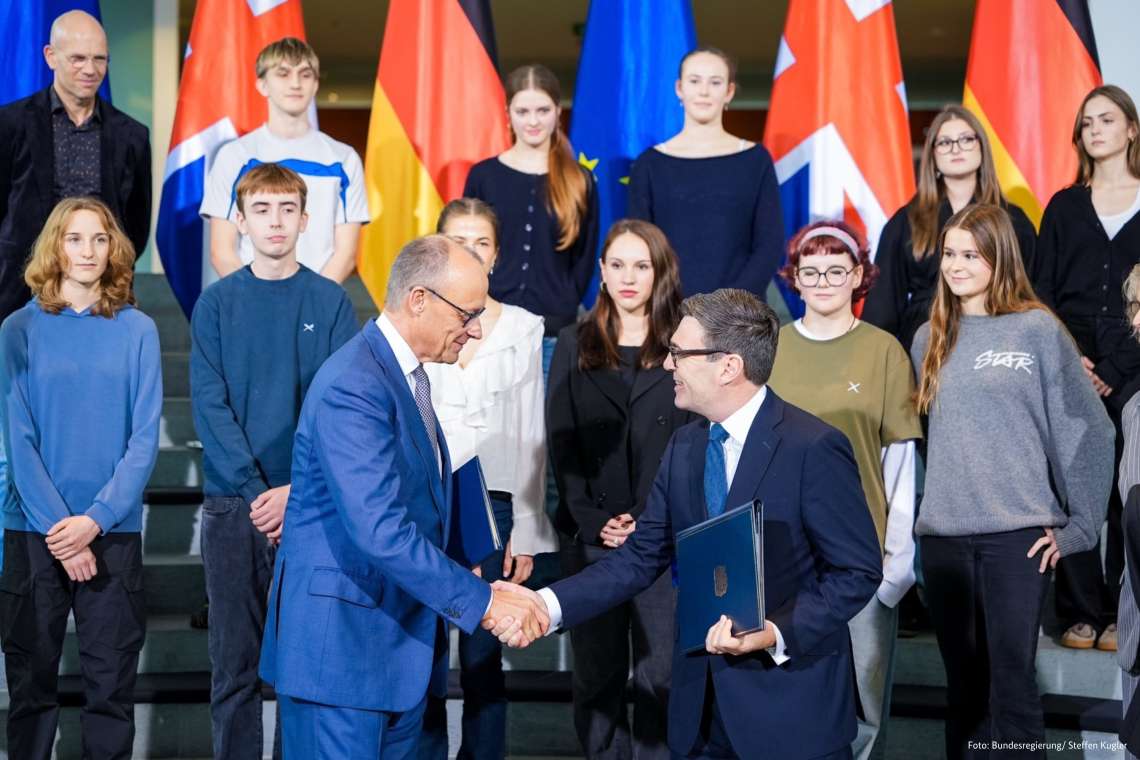
Britain and Germany ratify the Kensington Treaty, agreeing new cooperation on AI, quantum research, defence and security while targeting investment, jobs and Russian hybrid threats…reports Asian Lite News Desk Britain and Germany

Economic tide is turning in Bangladesh

If there is one thing that can bring some comfort to the struggling Bangladeshi economy, it is good relations with India. Bangladesh should remember that Delhi’s backing, through easy supplies of essentials
Go toTop

Don't Miss

India Backs Philippines, Strong Protest on South China Sea

S. Jaishankar extended his support to the nation, and called

Jaishankar Questions UNSC’s Credibility Sans India

Jaishankar compared the five permanent members, who are vested with