September 14, 2023
2 mins read

UK Parliament adopts Northern Ireland Troubles ‘legacy’ bill

More than 3,500 people were killed during the conflict that began in the 1960s over British rule in Northern Ireland…reports Asian Lite News

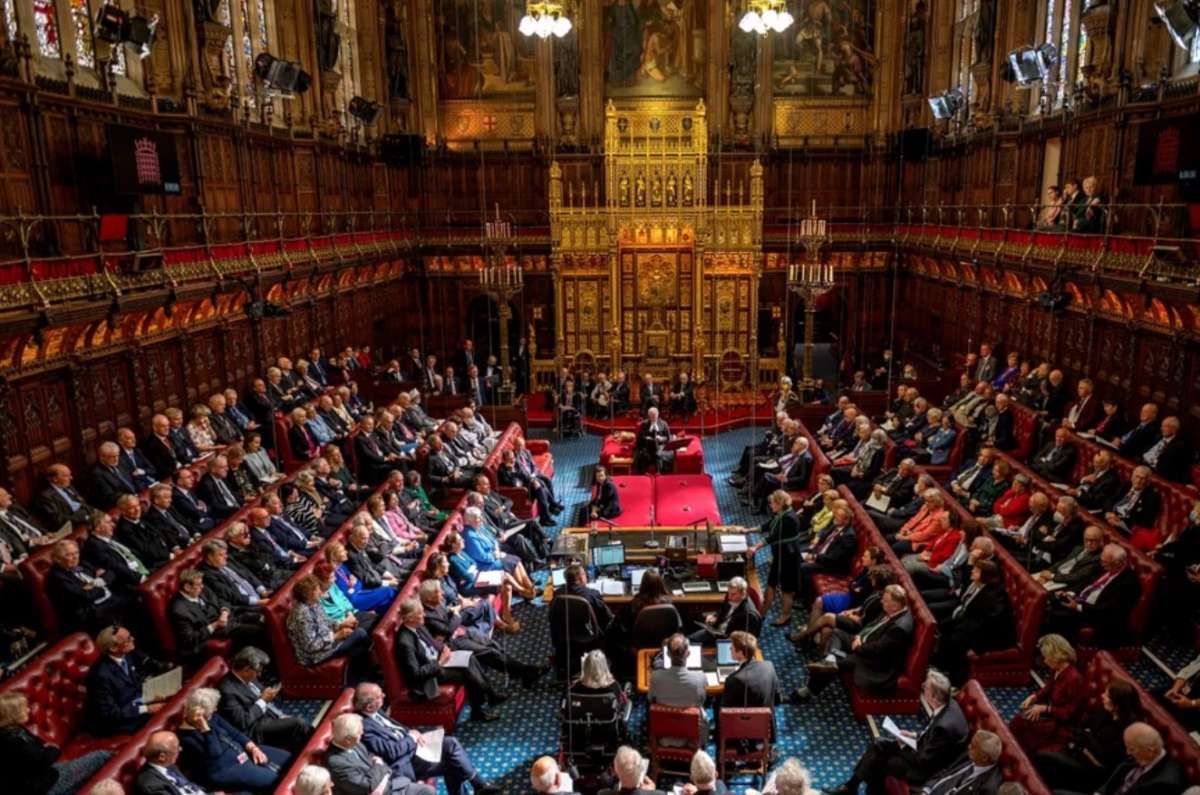
The UK Parliament has voted to adopt a controversial law granting immunity to fighters involved in the 30 years of sectarian violence in Northern Ireland known as the Troubles despite criticism from Ireland and the Council of Europe.

The Northern Ireland Troubles (Legacy and Reconciliation) Bill, proposed by the Conservative government in May 2022 and approved by the legislature on Tuesday, calls for the creation of a truth and recovery commission offering amnesty to British security personnel and paramilitaries if they cooperate with its enquiries.

More than 3,500 people were killed during the conflict that began in the 1960s over British rule in Northern Ireland.

About 1,200 deaths remain under investigation, according to the UK government.

The law has been fiercely criticised by families of those who died during that period, by all political parties in Northern Ireland, and by the Irish government, which said earlier this month that it was considering legal action against it.

The new legislation “threatens to harm Britain’s standing” internationally, according to Alan Brecknell, a case worker at the Pat Finucane Centre – a human rights group advocating a non-violent resolution of the conflict on the island of Ireland.

“The number of cases impacted by this bill could run into the hundreds if not thousands,” he said. “It doesn’t just have implications for this place. You’re going to have a lot of countries – some of them not as democratised as Britain claims to be – saying, ‘Well, look, if Britain can do this and get away with it, why can’t we?’ And I think that is not a good place for Britain’s standing in the world to be seen to be,” Brecknell said.

Europe’s leading rights watchdog, the Council of Europe, has expressed “serious concerns” about the amnesty and its compatibility with the European Convention on Human Rights (ECHR), of which the UK is a signatory.

But veterans’ groups have welcomed the move, saying former soldiers have been unfairly targeted in prosecutions for taking part in the conflict.

In November 2022, former British serviceman David Holden became the first soldier convicted of a killing committed during the Troubles following the signing of the 1998 peace accord.

He later received a three-year suspended sentence for manslaughter for shooting 23-year-old Aidan McAnespie.

The UN Human Rights Office said on Tuesday: “We deeply regret the passage of the Northern Ireland Troubles Bill despite concerns … that it violates the UK’s international human rights obligations.”

“We urge its reconsideration and call for victims’ rights to be central in addressing the Troubles’ legacy,” it posted on X, formerly known as Twitter.

ALSO READ-Sunak to meet Biden in Northern Ireland

Previous Story

Tata Steel, UK govt close to finalising £500 mn deal  

Next Story

Tories warned candidates might be Chinese spies

Previous Story

Tata Steel, UK govt close to finalising £500 mn deal  

Next Story

Tories warned candidates might be Chinese spies

Latest from -Top News

Nepal Floods Cause $1.66 Billion In Damage, Says World Bank

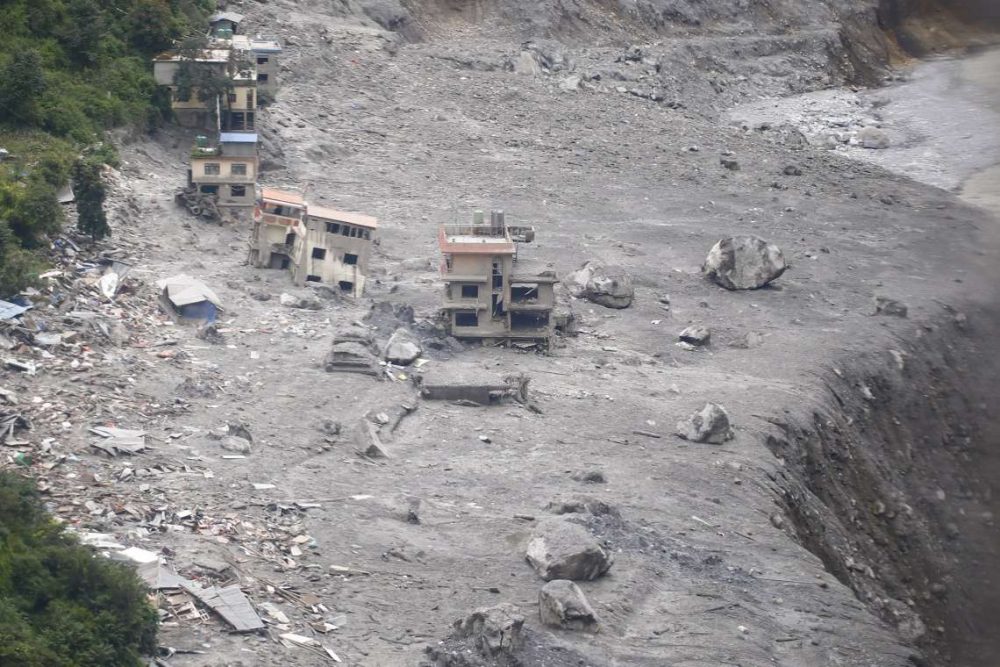
Nepal’s August 2026 floods caused an estimated US$1.66 billion in direct physical damage, with infrastructure accounting for 83 per cent of the total…reports Asian Lite News Desk Nepal’s devastating floods in August 2026 caused an estimated US$1.66 billion in direct physical damage, with infrastructure accounting for 83 per cent of the total, according to a World Bank report. The estimate, included in the World Bank’s Nepal Development Update unveiled this week, is close to the Nepal government’s preliminary Rapid Damage and Needs Assessment (RDNA), which put physical damage at US$1.81 billion. The government’s assessment also estimated losses beyond physical assets at US$883.32 million, taking the total economic effects of the disaster to approximately US$2.7 billion. The World Bank’s Global Rapid Post-Disaster Damage Estimation (GRADE) found that infrastructure suffered the greatest damage, estimated at US$1.38 billion, or 83 per cent of the total. Residential buildings accounted for US$185 million, or 11 per cent, while non-residential buildings sustained damage worth US$101 million, or 6 per cent. The floods along the Bhotekoshi and Trishuli rivers caused extensive damage to hydropower projects, solar energy facilities, electricity transmission infrastructure and transport networks. The energy sector, particularly hydropower, was among the worst affected. The August 2026 floods affected 12 hydropower projects and one solar project, involving 281.1 MW of operational capacity and 395.02 MW of capacity under construction. Damage to transmission lines and substations also disrupted the transmission of 149.6 MW of electricity to the national grid. The total affected capacity reached approximately 430.7 MW, equivalent to 10.6 per cent of Nepal’s installed hydropower and solar capacity at the end of fiscal year 2025-26, which concluded in mid-July. The disaster also severely damaged transport infrastructure along the 82-km Rasuwa trade corridor, which connects Kathmandu with the Rasuwagadhi border point with China. More than 55 km of the corridor was damaged, including 40 km that was completely destroyed. The floods also damaged 37 motorable bridges and 68 suspension bridges. The disaster resulted in significant human losses along the affected corridor and beyond. According to Nepal’s National Disaster Risk Reduction and Management Authority, 1,455 people had been confirmed dead, while 5,285 remained missing following the disaster. The World Bank report found that the physical damage was concentrated in three districts in central Nepal: Rasuwa, Nuwakot and Dhading. Rasuwa was the worst-affected district, accounting for US$1.07 billion, or 64 per cent, of the total direct damage. Nuwakot recorded an estimated US$551 million in damage, while Dhading suffered approximately US$39 million. “The findings highlight the concentration of physical damage in a small number of districts and the disproportionate impact on infrastructure, underscoring the scale of the reconstruction challenge facing the affected areas,” the World Bank said. The global development financier said the floods had demonstrated the scale and complexity of disaster risks in Nepal’s Himalayan environment. The event also showed how a single extreme weather event could trigger cascading impacts across sectors and geographical areas. The report said recovery efforts should extend beyond restoring infrastructure to its pre-disaster condition. While the principle of “Build Back Better” remained relevant, the World Bank stressed that rebuilding infrastructure to higher engineering standards in the same locations might not always be sufficient. “In some cases, simply rebuilding the same infrastructure in the same location to a higher engineering standard may not be sufficient. Nepal may need to build differently — based on a better understanding of risk, more careful decisions about location and design, greater redundancy in critical networks, stronger monitoring and early warning, and a more integrated approach to infrastructure development in the Himalayas,” the report said. The World Bank said Nepal’s recovery strategy should incorporate improved risk assessment, more informed infrastructure planning, stronger monitoring systems and better early warning mechanisms. The report emphasised that reconstruction should not only restore damaged assets but also reduce the impact of future disasters, particularly in the country’s vulnerable Himalayan regions.

Vaccine Delays Fuel Bangladesh Measles Outbreak

More than 32,000 suspected cases and over 250 deaths have been reported since mid-March, with children making up most of the fatalities….reports Asian Lite News Desk Bangladesh’s measles outbreak has intensified, with

Tsai: Stand With Taiwan, Strengthen The Indo-Pacific

The former president said stronger international partnerships would help Taiwan withstand mounting military, cyber and economic pressure while reinforcing democratic resilience….repots Asian Lite News Desk Former Taiwan President Tsai Ing-wen has called
Go toTop

Don't Miss

Britain to make new offer on Northern Ireland in talks with EU

The “carrot and stick” approach taken by Truss is intended

DUP blocks restoration of government in Northern Ireland

Northern Ireland’s Democratic Unionist Party (DUP) lived up to its