The UK has been reluctant to be seen to be at loggerheads with Ukraine over the issue…reports Asian Lite News
Britain is likely to keep Russian state assets immobilised for some time after the war in Ukraine ends, and certainly until Moscow has agreed to pay compensation for the damage it has inflicted, British officials have confirmed.
The Council of Europe summit last week established a digital register of damage for Ukraine as the first step towards an international compensation mechanism for victims of Russian aggression.
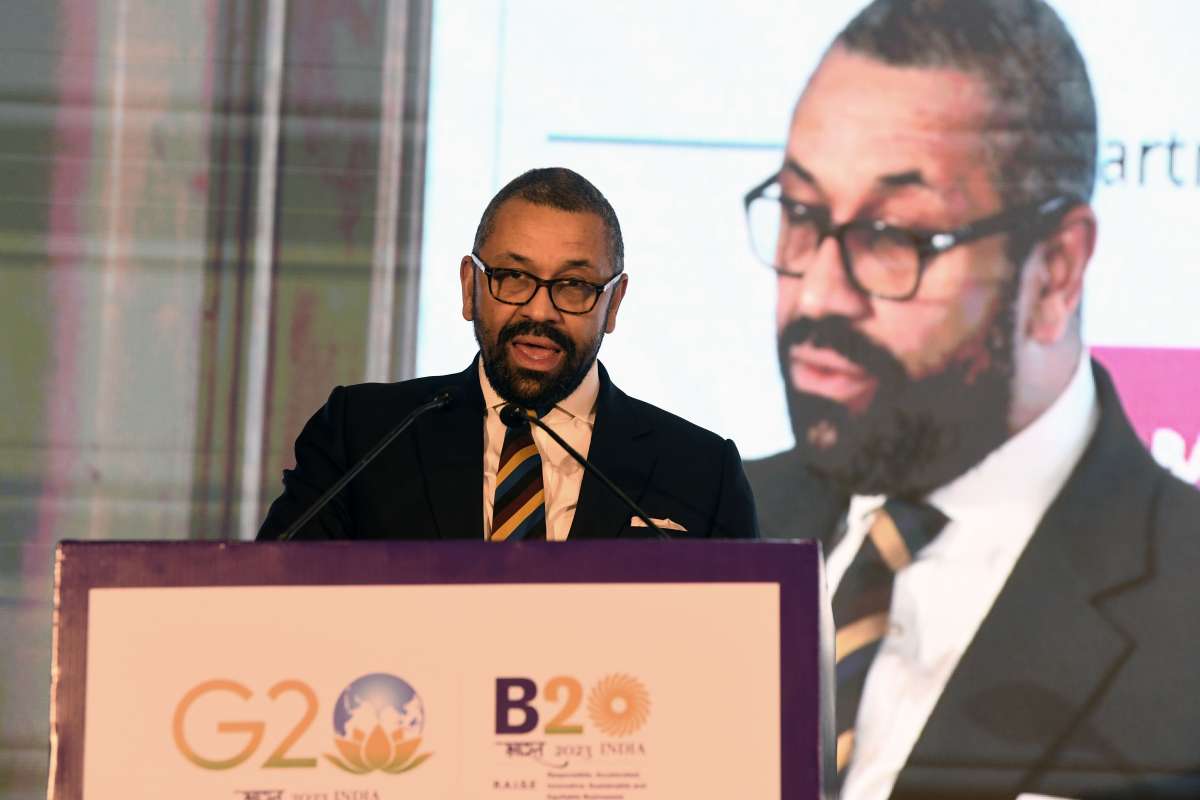
Last Friday, the foreign secretary, James Cleverly, insisted that Russia’s sovereign assets would remain immobilised until Russia agreed to pay for the damage it had caused in Ukraine. But the consequences of the evolving British position on postwar negotiations with Russia, including the retention of Russian central bank assets as leverage for compensation, are only gradually emerging. It is thought that about $300bn (£243bn) in Russian central bank reserves were in G7 states at the time of the freezing, but the mapping of the assets is not complete.
Officials say work is continuing day and night, including with the EU, over the feasibility of confiscating Russian state assets, but no solution has yet been found. Tory backbench MPs, the Labour party and the Ukrainian government are pressing for Russian state assets held in the UK – valued at £26bn last year – to be seized outright and then handed directly to Ukraine for reconstruction.
But an alternative, less legally risky strategy is gaining ground whereby the west holds on to the assets until Russia agrees to pay compensation. The same objective of Russia’s funding of Ukraine’s reconstruction would be achieved, but without taking the risk of breaching international law by simply seizing Russian assets.
The Commons has already passed a motion requiring the government to come up with a plan on the use of Russian state assets, but for months it has been refusing to commit to the effective expropriation of the Russian central bank assets stored in the UK, fearing the move would set a precedent that would paralyse the international financial system, and lead to countermeasures against the UK.
The UK has been reluctant to be seen to be at loggerheads with Ukraine over the issue.
But at last week’s Council of Europe summit in Reykjavik, a total of 44 countries and the EU indicated their intention to back a new register of damages with its offices in The Hague. A satellite office in Ukraine will be established.
The Dutch prime minister, Mark Rutte, underlined that “Russia must be held accountable, including for damage suffered by Ukraine and its people. We are therefore proud that the seat of the register of damage will be in The Hague, the legal capital of the world.” The register will be established for an initial period of three years and will serve as a record of evidence and claims information on damage, loss or injury caused by the Russian aggression against Ukraine and its people. It paves the way towards a future international comprehensive compensation mechanism for the victims of the Russian aggression, something the UN has already endorsed.
The foreign affairs select committee was told on Tuesday that seizing as opposed to freezing Russian state assets would be in breach of international law. Antonios Tzanakopoulos, professor of public international law at St Anne’s College, University of Oxford, said the sovereign assets of the Russian Federation were generally protected by sovereign immunity as an embodiment of the state, but a freezing of those assets, a temporary violation of the rule of immunity, could be justified as a countermeasure in response to Russia’s violation of international law.
But he added the essence of a countermeasure was that it was intended to induce the state to comply with the law, and as a result the measure must be temporary and reversible. On this basis a disposal or seizure of the assets as a punitive measure was explicitly not allowed in international law, he said.