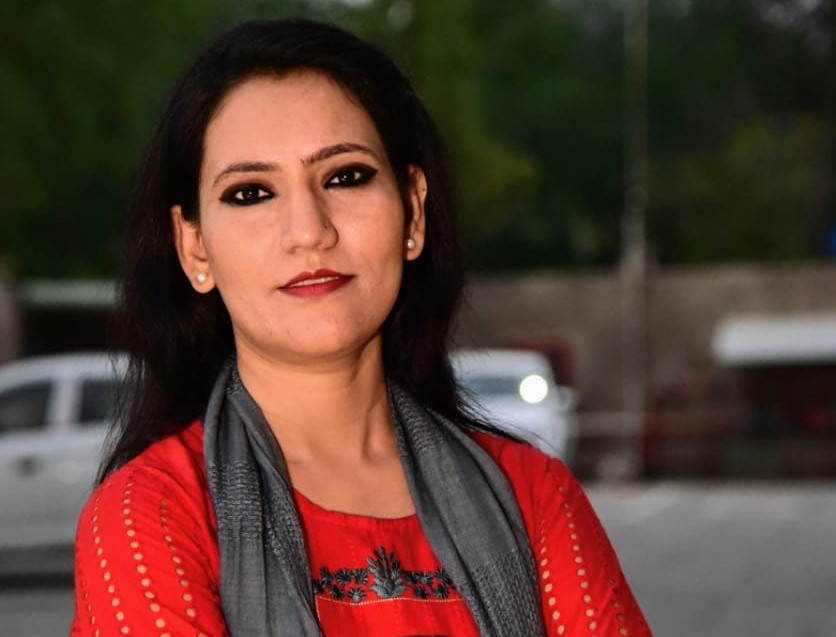
Tasneem Khan, a small town award-winning author, emerges as rehnuma (guide) of women … She has charted her course through words. She has not only given voice to her own self, but recorded the struggle of those women who are struggling for their due rights in the society … writes Dr Shujaat Ali Quadri
It’s never been easy for women to break the glass ceiling of the patriarchy. All alleys, windows and doors have been closed for them since ages. Yet, there have been women of rare grit and gumption who have managed to carve an identity for themselves in this fog of despair. One such name is Tasneem Khan, a writer-journalist from a small town in Rajasthan.
Tasneem has charted her course through words. She has not only given voice to her own self but recorded the struggle of those women who are struggling for their due rights in society.
Journalism is a field for gutsy people. Not only does it demand hard work, one has to have the power of imagination, sound intellect and analytical skills. Similarly, the field of literature conditions the possession of these skills in higher degrees. Tasneem developed them while growing up in the Didwana tehsil of Nagaur district in Rajasthan. Living in a small town and groomed under her educated parents, she developed sharp debating and reasoning skills. She won several laurels in her school and college.
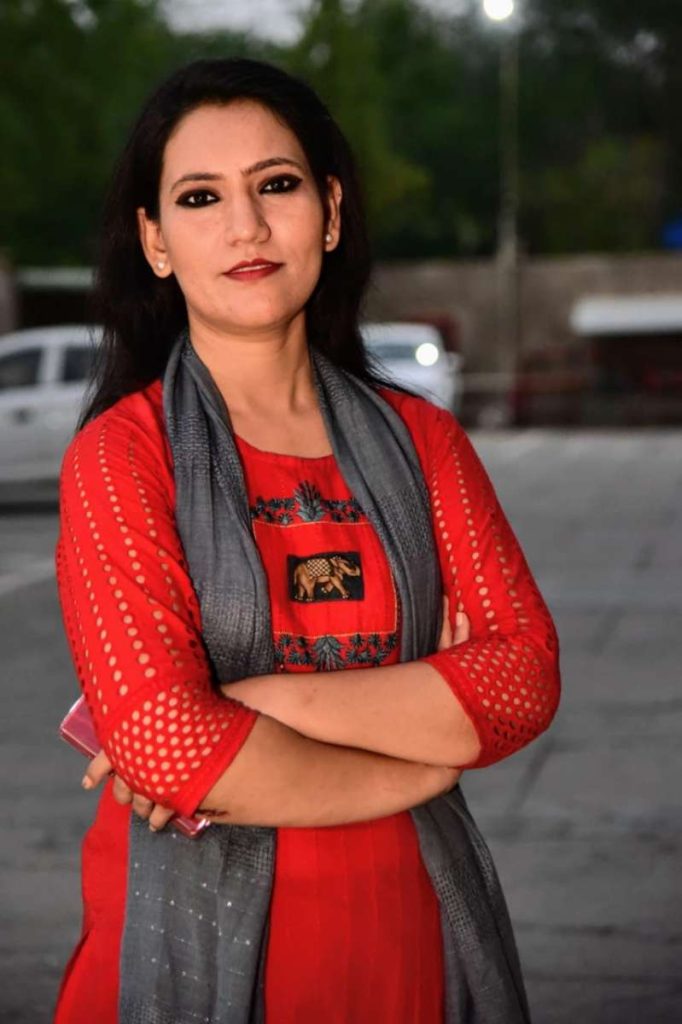
She joined journalism formally in 2005. She wrote excessively on issues related to gender sensitivity. Her reports caught the attention of everyone. Her sense of capturing sensitivity to women’s issues was sharp and empathetic. As she came into contact with other journalists and the working atmosphere of journalism, her grasp of politics improved and she began to take part in political debates. She hosted a TV programme titled Samar Shesh Hai (Battle is Yet to be Fought), which dealt with issues of women and their socio-political locus standi. Later, her regular show on Patrika TV, Aadhi Duniya, Poori Baat with Tasneem Khan (Half World, Fulll Conversation with Tasneem Khan) became hugely popular. She has recently been conferred the coveted Laadli Media Award presented by Population First and UNFPA. She bagged this award for her incredibly reported show Gharelu Hinsa Per Kab Lagega Lockdown?’ (When will domestic violence come under lockdown?). The jury in its remark said that Tasneem is being honoured to tell the world that women inside homes during the lockdown have faced an equally traumatic pandemic.
However, it’s not that like most women writers, Tasneem too has adopted a complaining tone. She says that she writes on women’s problems from the point of view of solutions. “I try to provide a wholesome rational perspective to issues of women. The purpose of my writing is not to celebrate or merely explain the agony of women, but to mull over solutions to their problems. If my writings can help bring out a solution to the problem of any woman, I will feel that my life has been successful,” she says.
While being a journalist, Tasneem turned an author-novelist in 2015. Her first novel, Mere Rehnuma (My Guide), was published by the prestigious Jnanpith Trust. In fact, this novel was selected in a competition of avant-garde writings of youth writers. She was the only second woman writer from Rajasthan whose first novel was published by Jnanpith. This novel unearths various issues in the lives of women with words used like a scalpel. It says that the perception that economic well-being ensures the overall empowerment of women is wrong. Tasneem writes emphatically that no woman from a middle-class background has ever been empowered by merely acquiring a respectable job. “A higher post doesn’t catapult a woman to a higher pedestal socially, politically and economically… Their lives largely remain like those of uneducated women. The empowerment of educated women will remain hollow until society will change its attitude towards them. Society has paved the way for the daughters to get educated, but it fears their real empowerment. Powerful women scare society. Society is yet to learn how to adopt powerful women and follow them.”
This novel has been the subject of a PhD and an M Phil. Her story collection, Daastan e Hazrat Mahal (Story of Hazrat Mahal) was published in 2019. It bagged her Chandarbai award. In another feather in her cap, she was honoured with Shakuntalam Award 2021 conferred by the Progressive Writers Association, Rajasthan.
Her story Rukh e Gulzar (Way to Garden) was translated by Bharatiya Anuvad Parishad. Her other story, Khamoshiyon Ka Rang Neela (Colour of Silence is Blue), was translated into Urdu and published in a Pakistani magazine. It was honoured with the Mirror Award. Another story Mere Hissse Ki Chandni (My Share of Happiness) will soon be published in an Oxford University Press anthology of Muslim Women Writers.
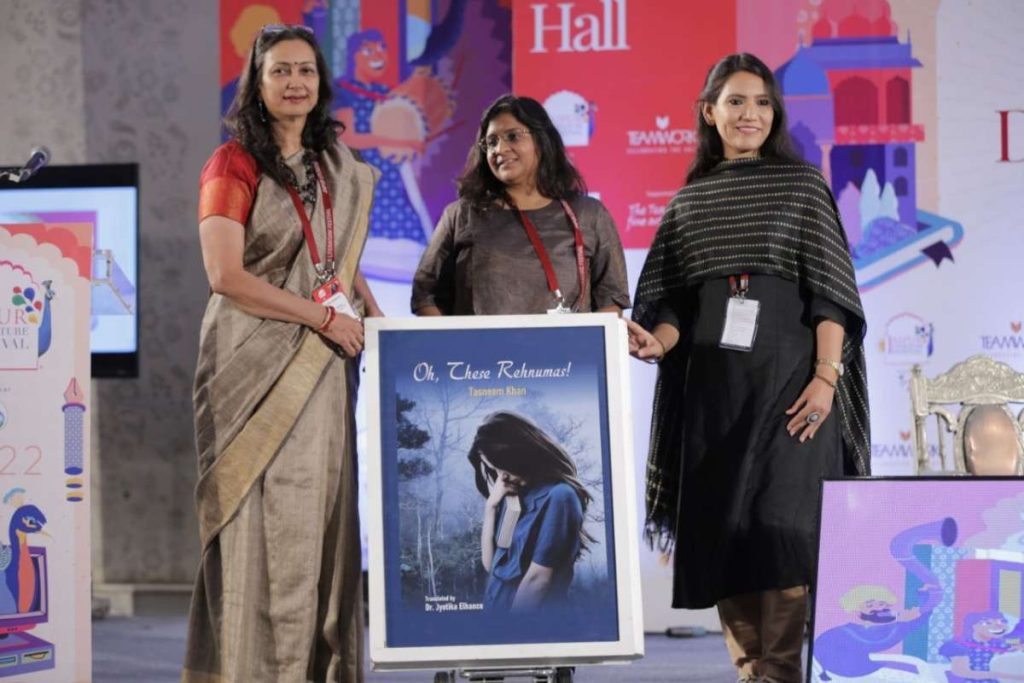
About her writing, Tasneem says that she has been a voracious reader since her childhood. “The reading habit of my mother rubbed off on me. I have been reading all sorts of books since very early in my life. When you spend your childhood surrounded by books, your world becomes different. You start observing characters in the people around you. And gradually, they take the shape of some characters.
Sometimes, these characters thrill you, sometimes they make you sad. I tried to peep deep into these characters and then unleash my insight into words. These characters around me have made me the writer. I have lived with them and they have compelled me to write about them. They agitate my soul and this agitation is not pacified until some story is born out of my pen,” she says.
Tasneem says she was lucky to have found very supportive parents. Whenever she faced difficult curves in life, her parents came to the rescue and encourage her. “The education of your parents plays a decisive part in determining your life and professional career. I have seen that many girls couldn’t properly educate themselves, as their parents were ill-educated and didn’t know the importance of education for their children,” she says.
On the quest of her writing, Tasneem says that the protagonist of her novel Mere Rehnuma craves for freedom or salvation (mukti). “But she keeps chasing this mirage. She remains on the mercy of her rehnuma (guides). If I am able to guide this woman towards salvation, my writing will be successful,” she avers.