February 26, 2024
5 mins read

Sunak defends Tories against Islamophobia claims

PM under mounting pressure to directly address the issue and condemn the remarks made by his former colleague…reports Asian Lite News

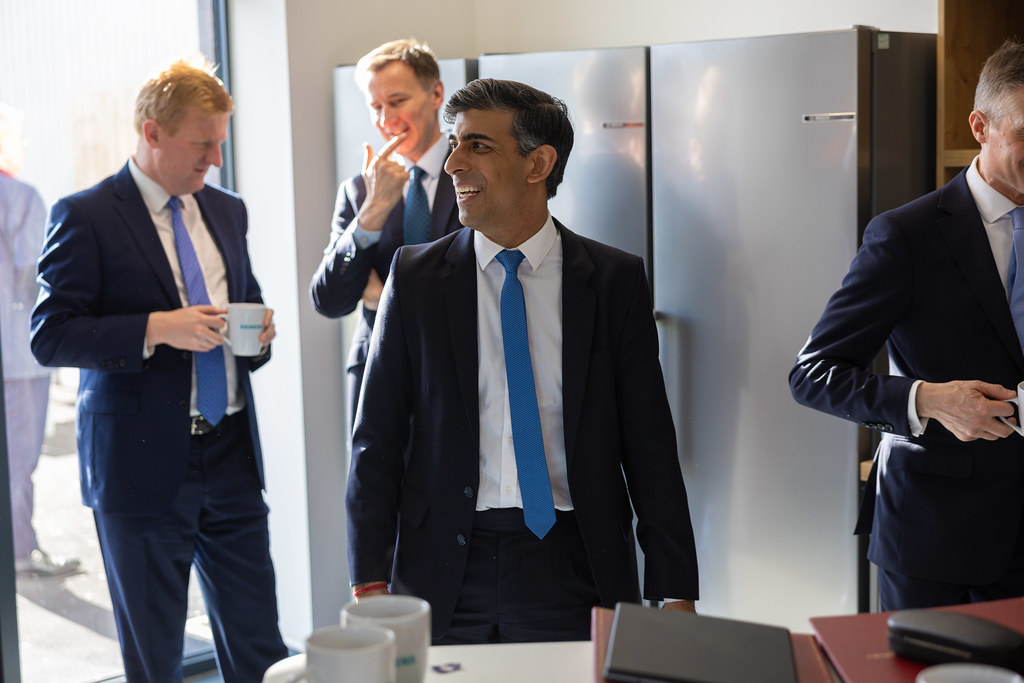
Prime Minister Rishi Sunak was forced to defend the Conservatives against allegations of Islamophobia as the row over a Tory MP’s remarks against London Mayor Sadiq Khan continued to dominate the headlines.

Sunak was asked during a BBC radio interview round in northern England if the Conservative Party had Islamophobic tendencies after MP Lee Anderson was suspended from the Tory party last week for stating that Islamists had got control of Pakistani-origin Khan, a member of the Opposition Labour Party, who branded the remarks “Islamophobic, racist and anti-Islam”.

Sunak had been under mounting pressure to directly address the issue and condemn the remarks made by his former party colleague. “No, of course it doesn’t. I think it is incumbent on all of us, especially those elected to Parliament, not to inflame our debates in a way that is harmful to others,” he said in response to the question about whether the Conservative Party has a problem of Islamophobia.

Asked to address the controversial remarks made by Lee Anderson, he added: Lee’s comments weren’t acceptable, they were wrong and that is why he has had the whip suspended. “Words matter, especially in the current environment where tensions are running high. I think it’s incumbent on all of us to choose them carefully.”

The row followed scenes of chaos in Parliament last week over an Israel-Gaza conflict vote and came in response to an article in The Daily Telegraph’ by former home secretary Suella Braverman, who wrote that “the Islamists, the extremists and the anti-Semites are in charge” of the country. “I don’t actually believe that these Islamists have got control of our country, but what I do believe is that they’ve got control of Khan, they’ve got control of London. He’s actually given our capital city away to his mates,” Anderson told GB News’ in response to a question.

Following his suspension from the Conservative Party, Anderson refused to apologise for his comments, saying instead: “Following a call with the chief whip, I understand the difficult position that I have put both he and the prime minister in with regards to my comments. “I fully accept that they had no option but to suspend the whip in these circumstances. However, I will continue to support the government’s efforts to call out extremism in all its forms be that antisemitism or islamophobia.”

While the Labour Party has insisted that Anderson’s comments were racist, most senior Tories have refrained from using the term even as they insist the words were wrong. There are also some reports of support for the suspended Tory MP from within certain quarters of the Conservative Party.

Meanwhile, it has proved a major distraction for Sunak who is touring the north of England to draw attention to unprecedented investment for better transport connectivity for the region. He announced on Monday that the north will receive GBP 2.5 billion and the Midlands region of England will receive GBP 2.2 billion from April 2025 to improve local transport connections that so many people rely on every day, particularly across smaller cities, towns, and rural areas.

We have a clear plan to level up our country with greater transport links that people need and deliver the right long-term change for a brighter future, said Sunak. The Local Transport Fund will deliver a new era of transport connectivity. This unprecedented investment will benefit more people, in more places, more quickly than HS2 (High-Speed rail) ever would have done, and comes alongside the billions of pounds worth of funding we’ve already invested into our roads, buses and local transport services across the country, he said.

It comes as the British prime minister also decided to host his first Cabinet meeting in the Yorkshire and Humber region of northern England. As part of the initiative, ministers across government will be meeting with communities, businesses, and organisations across the north and Midlands to discuss their priorities for the Local Transport Fund and how their area can best benefit from the funding.

Conservative Muslim Forum seeks talks

The Conservative Muslim Forum has said it is seeking to meet with senior government figures as UK Prime Minister Rishi Sunak and his party continue to battle ongoing allegations of Islamophobia.

It comes after the party’s former deputy party chair, Lee Anderson, was suspended by the Conservatives for remarks about Mayor of London Sadiq Khan last week, and an article by former Home Secretary Suella Braverman for the Daily Telegraph claimed that “the Islamists, the extremists and the antisemites are in charge” of the UK.

Anderson refused to apologize for his claim that Islamists had “got control” of Khan and London.

Naveed Asghar, deputy chair of the CMF, told The Guardian: “Is the party racist or Islamophobic? I would say no, from my heart. Individuals? Yes. Are these people pandering to the vote base in their seats? I can’t see what’s going on.

“If he (Anderson) is doubling down on the comments, then the party should absolutely be having a word with him. I was hoping that the suspension would be enough. Any inflammatory remarks are just not acceptable, whether it’s people on the left making antisemitic comments or people on the right making anti-Muslim comments.”

On a visit to East Yorkshire on Monday, Sunak refused condemn Braverman’s article, saying: “I think that those comments were not about an individual in particular.”

He also stopped short of calling Anderson’s comments Islamophobic, saying: “I’ve been very clear that what he said was wrong, it was unacceptable, and that’s why we suspended (him).

“It’s important that everybody, but particularly elected politicians, are careful with their words and do not inflame tensions.”

ALSO READ-Sunak warns of “toxic” politics 

Previous Story

‘Sitharaman, Jaishankar’s candidature in LS polls certain’

Next Story

Houthi Red Sea strikes hits UK retailers

Previous Story

‘Sitharaman, Jaishankar’s candidature in LS polls certain’

Next Story

Houthi Red Sea strikes hits UK retailers

Latest from -Top News

Pakistan Risks Overstretching Itself in Yemen War

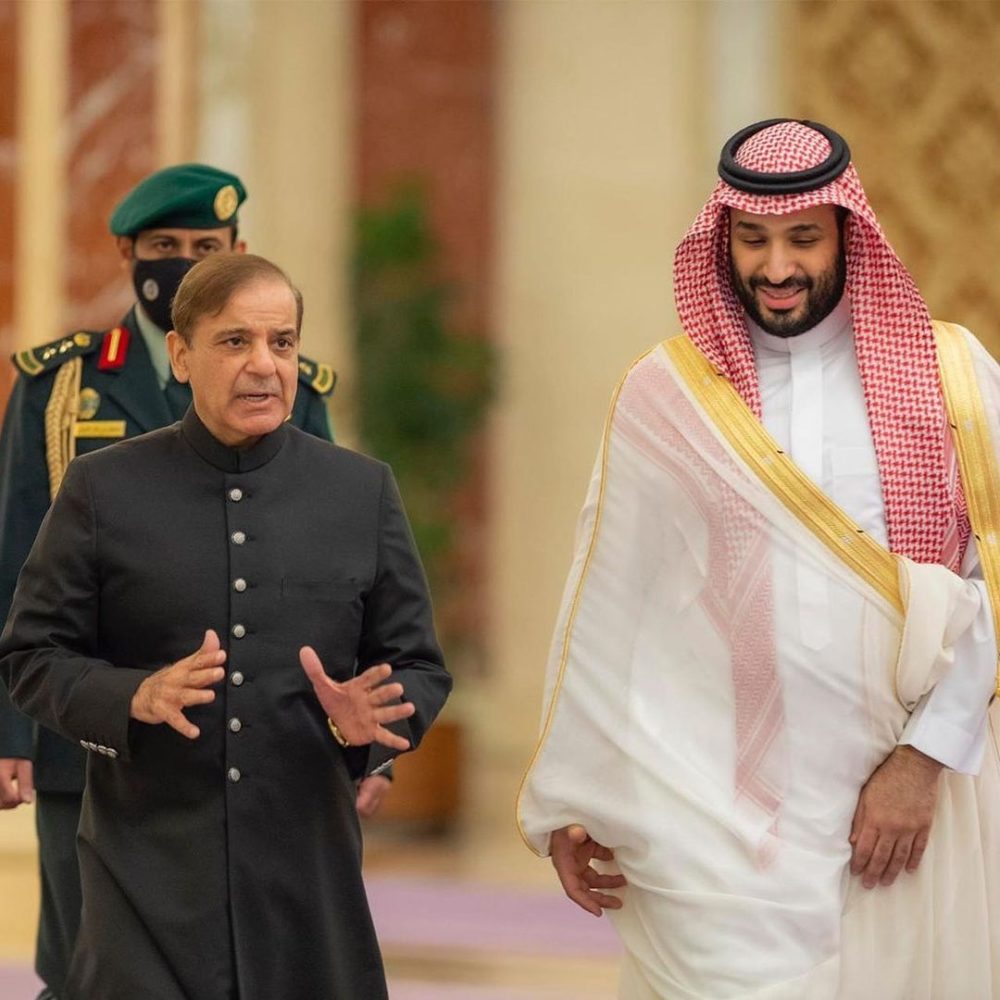
Pakistan’s expanding military role in Saudi Arabia amid the Yemen conflict could strain its defence resources and fragile finances…reports Asian Lite News Desk Pakistan’s military involvement in the war in Yemen may prove unsustainable because of mounting financial pressures and competing security demands, according to a new report. Islamabad’s growing military presence in Saudi Arabia risks stretching its defence resources while exposing the country to greater strategic and economic challenges. An article by Andrew Wilson in One World Outlook describes Pakistan’s involvement as a case of “fiscal and strategic overreach”, arguing that the country lacks the financial flexibility to sustain an expanded military commitment. Pakistan’s external finances depend heavily on an International Monetary Fund (IMF) programme, financial support from Gulf countries and remittances from Pakistani workers in the region. The report argues that deeper military involvement in the conflict could place additional pressure on these sources of financial stability. It also warns that deploying troops and military equipment abroad could weaken Pakistan’s capacity to address security challenges along its eastern border and deal with two domestic insurgencies. The move could also draw Islamabad into a conflict it has sought to approach cautiously. A Reuters report in May, citing Pakistani security and government sources, said Islamabad had deployed around 8,000 troops, a squadron of approximately 16 aircraft, mostly JF-17 fighter jets, two drone squadrons and a Chinese HQ-9 air-defence battery to Saudi Arabia. According to those sources, Riyadh was financing the deployment, with Pakistani personnel operating the equipment. The sources also said a confidential agreement contemplated the possibility of deploying up to 80,000 troops. Islamabad has not confirmed those figures, although it has acknowledged its military presence in Saudi Arabia, including the deployment of fighter jets at King Abdulaziz Air Base from April. The One World Outlook article argues that Saudi financial support can cover allowances and operating expenses but cannot easily replace military equipment needed elsewhere or resolve the political and strategic challenges of participating in the Yemen conflict. Pakistan’s defence budget is another concern. For the 2026-27 financial year, the federal government allocated PKR 3 trillion, or approximately $10.8 billion, to defence services. The allocation represents an 18 per cent increase from the original PKR 2.55 trillion provision and amounts to around 2.1 per cent of projected gross domestic product (GDP). Defence spending accounts for approximately 16 per cent of the federal government’s PKR 18.8 trillion expenditure. Military pensions are budgeted separately at PKR 822 billion, while debt servicing costs stand at approximately PKR 8 trillion, more than two-and-a-half times the defence allocation. The report argues that these competing financial obligations leave little room for additional military expenditure without placing further pressure on public finances. Pakistan’s reliance on IMF assistance also limits its fiscal flexibility. The country must meet the conditions attached to the programme, including a primary budget surplus target of 2 per cent of GDP and continued restraint on development spending. According to the article, these requirements make it difficult for Islamabad to finance an additional military commitment without compromising other budgetary priorities. Pakistan’s economic indicators offer limited reassurance. Economic growth for the 2025-26 financial year is estimated at between 3.6 and 3.7 per cent, while inflation reached approximately 10.3 per cent in September following an energy price shock. Foreign exchange reserves stood at around $21.5 billion at the end of September. Although this marks an improvement from the low levels recorded in 2023, the report notes that the reserves cover only a few months of imports. Financial assistance from Gulf partners remains central to Pakistan’s external stability. The article says Islamabad holds approximately $8 billion in Saudi deposits at its central bank. In July, the State Bank of Pakistan said Riyadh had extended the maturity of $5 billion in deposits to December 2028, easing the country’s immediate external financing requirements. A further $3 billion deposit was also extended in the spring. However, the article argues that these arrangements provide temporary relief rather than long-term financial independence, particularly as regional conflict threatens the stability of the Gulf economies on which Pakistan relies. The report concludes that Pakistan faces a difficult balance between supporting Saudi Arabia militarily and preserving the financial and military resources needed to address its domestic and regional challenges.

UK and Germany Ratify Kensington Treaty

Britain and Germany ratify the Kensington Treaty, agreeing new cooperation on AI, quantum research, defence and security while targeting investment, jobs and Russian hybrid threats…reports Asian Lite News Desk Britain and Germany

Economic tide is turning in Bangladesh

If there is one thing that can bring some comfort to the struggling Bangladeshi economy, it is good relations with India. Bangladesh should remember that Delhi’s backing, through easy supplies of essentials
Go toTop

Don't Miss

OIC urges media to confront Islamophobia

The Organisation of Islamic Cooperation (OIC) has called for cinematic,

Anti-Muslim incidents in US hit record high in 2023  

Human rights advocates have similarly reported a global rise in