June 26, 2024
5 mins read

Congress declares Rahul Gandhi as Leader of Opposition 

Lok Sabha did not have Leader of Opposition in the last 10 years…reports Asian Lite News

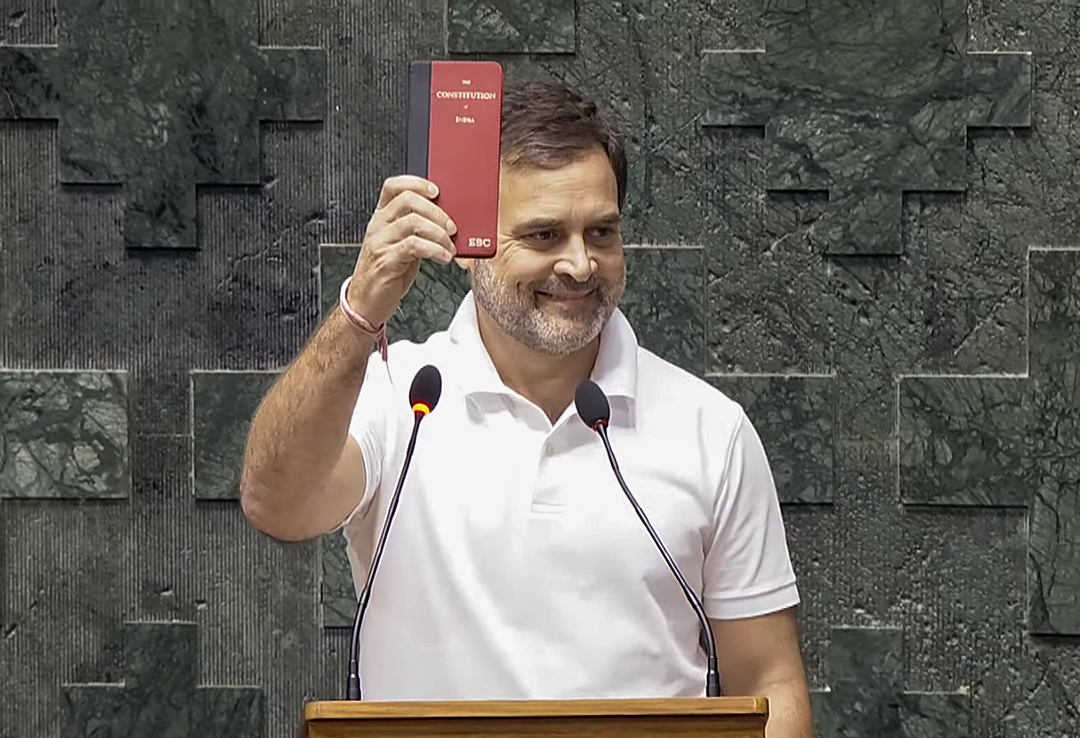
Congress on Tuesday declared that Rahul Gandhi, party’s MP from Raebareli will be Leader of the Opposition in the 18th Lok Sabha, ending the 10-year spell of no LoP in the Lower House since 2014.

“Congress MP Rahul Gandhi has been appointed as the LoP in the Lok Sabha..” Venugopal said while addressing the media here in the national capital.

Notably, Lok Sabha did not have Leader of Opposition in the last 10 years because no political party, other than the ruling party, was able to secure the minimum Lok Sabha seats required to nominate a Leader of the Opposition.

In the 2019 Lok Sabha Elections, the Congress emerged as the second-largest party with 52 seats. This was three short of the requisite numbers. In the 2014 Lok Sabha polls, the Congress, again the second largest party, won 44 Lok Sabha seats — way below the mark.

After the 2024 Lok Sabha Polls, the Congress emerged as the second-largest party in the election and improved its tally to 100, from 52 in the 2019 Lok Sabha poll. The total tally of the INDIA bloc stood at 234. The announcement of Rahul Gandhi as LoP comes a day before the election for the post of Lok Sabha Speaker.

Rahul Gandhi won from both Raebareli and Wayanad Lok Sabha constituencies in the recently concluded Lok Sabha polls. While Rahul Gandhi won with a margin of 364422 votes from Wayanad defeating Communist Party of India’s Annie Raja, in Raebareli, he won with a margin of 390030 votes from Raebareli defeating Bharatiya Janata Party’s Dinesh Pratap Singh.

However, after Rahul Gandhi announced that he would resign as an MP from Wayanad and will keep the Raebareli constituency, Congress president Mallikarjun Kharge announced Priyanka Gandhi’s candidature from Wayanad last week.

If Priyanka Gandhi wins from Wayanad, three members of the Nehru-Gandhi family will be in Parliament – Sonia Gandhi in Rajya Sabha and Rahul Gandhi and Priyanka Gandhi in the Lok Sabha. Earlier, Gandhi took the oath as the Member of Parliament, carrying a copy of the Constitution in his hands.

The leader of the largest opposition party having not less than one-tenth seats of the total strength of the Lok Sabha is recognised as the leader of the Opposition. He will be a member of crucial committees such as Public Accounts (Chairman), Public Undertakings, Estimates and several Joint Parliamentary Committees.

He is entitled to be a member of various selection committees responsible for appointing heads of statutory bodies like the Central Vigilance Commission, the Central Information Commission, the CBI, the NHRC, and the Lokpal.

He provides constructive criticism of the government policies and to provide an alternative government. The leader of Opposition in both the Houses were accorded statutory recognition under the Salaries and Allowances of Leader of Opposition in Parliament Act, 1977 and are entitled to the salary, allowances and other facilities equivalent to that of a cabinet minister. The office of the leader of the opposition is not mentioned in the Constitution.

Kharge lauds move

Meanwhile, Congress chief Mallikarjun Kharge on Tuesday praised Gandhi’s appointment as Leader of the Opposition in Lok Sabha and said that the House of the People shall truly reflect the aspirations of the last person standing, with Rahul Gandhi becoming their voice.

“In the 18th Lok Sabha, the House of the People shall truly reflect the aspirations of the last person standing, with Rahul Gandhi becoming their voice,” Kharge posted on X.

He further expressed his confidence in Rahul Gandhi and said that he would raise the voice of the people. “As Congress President, I am confident that a leader who has traversed the length and breadth of the country from Kanyakumari to Kashmir, and from Manipur to Maharashtra shall raise the voice of the people — especially the marginalised and the poor,” he added. The Congress chief reiterated the party’s commitment to “protect Democracy and the Constitution, by upholding its eternal principles of Justice, Liberty, Equality and Fraternity.”

Meeting at Kharge’s residence

The opposition INDIA bloc held a meeting of its floor leaders at the residence of Congress president Mallikarjun Kharge in Delhi on Tuesday, the second day of the inaugural session of the 18th Lok Sabha, to strategize on the election of the Speaker.

Congress MPs Rahul Gandhi, KC Venugopal, president of the Rashtriya Loktantrik Party, Hanuman Beniwal and other leaders of the INDIA bloc were present in the meeting.

The meeting comes ahead of the election to the post of Speaker for which both the ruling NDA and the opposition INDIA bloc have fielded their respective candidates.

Efforts by the BJP’s top leadership to reach a consensus on the Speaker of the 18th Lok Sabha came to naught when the INDIA bloc decided to nominate 8-time MP K Suresh for the post.

His nomination followed the filing of nomination by BJP’s Kota MP Om Birla for the same position. Birla previously served as the Speaker in the 17th Lok Sabha.

Traditionally, the Lok Sabha Speaker and Deputy Speaker have been elected by consensus between the ruling party and the opposition.

The election for the post of Speaker has taken place at least twice in India’s parliamentary history. The first instance was in 1952 when Congress’ GV Malvankar contested against CPI’s candidate Shankar Shantaram More. The second instance was in 1976 when Congress’ BR Bhagat contested against Jagannathrao Joshi from Jan Sangh and was supported by Congress O.

Rahul Gandhi said that his party had informed Rajnath Singh that the Opposition is prepared to support NDA’s Speaker candidate, on the condition that the Deputy Speaker position is given to the opposition.

ALSO READ: Modi lauds GST for improved lives of 140 cr Indians
Previous Story

Om Birla elected LS Speaker

Next Story

India, Russia eyeing PM’s Moscow visit in early July

Previous Story

Om Birla elected LS Speaker

Next Story

India, Russia eyeing PM’s Moscow visit in early July

Latest from Asia News

Nepal Floods Cause $1.66 Billion In Damage, Says World Bank

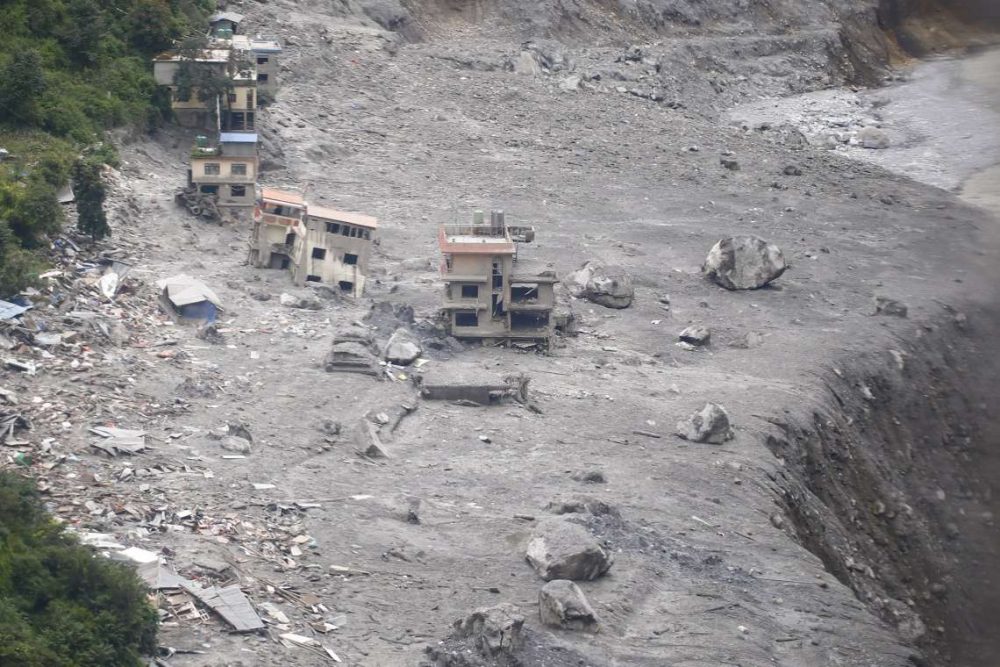
Nepal’s August 2026 floods caused an estimated US$1.66 billion in direct physical damage, with infrastructure accounting for 83 per cent of the total…reports Asian Lite News Desk Nepal’s devastating floods in August 2026 caused an estimated US$1.66 billion in direct physical damage, with infrastructure accounting for 83 per cent of the total, according to a World Bank report. The estimate, included in the World Bank’s Nepal Development Update unveiled this week, is close to the Nepal government’s preliminary Rapid Damage and Needs Assessment (RDNA), which put physical damage at US$1.81 billion. The government’s assessment also estimated losses beyond physical assets at US$883.32 million, taking the total economic effects of the disaster to approximately US$2.7 billion. The World Bank’s Global Rapid Post-Disaster Damage Estimation (GRADE) found that infrastructure suffered the greatest damage, estimated at US$1.38 billion, or 83 per cent of the total. Residential buildings accounted for US$185 million, or 11 per cent, while non-residential buildings sustained damage worth US$101 million, or 6 per cent. The floods along the Bhotekoshi and Trishuli rivers caused extensive damage to hydropower projects, solar energy facilities, electricity transmission infrastructure and transport networks. The energy sector, particularly hydropower, was among the worst affected. The August 2026 floods affected 12 hydropower projects and one solar project, involving 281.1 MW of operational capacity and 395.02 MW of capacity under construction. Damage to transmission lines and substations also disrupted the transmission of 149.6 MW of electricity to the national grid. The total affected capacity reached approximately 430.7 MW, equivalent to 10.6 per cent of Nepal’s installed hydropower and solar capacity at the end of fiscal year 2025-26, which concluded in mid-July. The disaster also severely damaged transport infrastructure along the 82-km Rasuwa trade corridor, which connects Kathmandu with the Rasuwagadhi border point with China. More than 55 km of the corridor was damaged, including 40 km that was completely destroyed. The floods also damaged 37 motorable bridges and 68 suspension bridges. The disaster resulted in significant human losses along the affected corridor and beyond. According to Nepal’s National Disaster Risk Reduction and Management Authority, 1,455 people had been confirmed dead, while 5,285 remained missing following the disaster. The World Bank report found that the physical damage was concentrated in three districts in central Nepal: Rasuwa, Nuwakot and Dhading. Rasuwa was the worst-affected district, accounting for US$1.07 billion, or 64 per cent, of the total direct damage. Nuwakot recorded an estimated US$551 million in damage, while Dhading suffered approximately US$39 million. “The findings highlight the concentration of physical damage in a small number of districts and the disproportionate impact on infrastructure, underscoring the scale of the reconstruction challenge facing the affected areas,” the World Bank said. The global development financier said the floods had demonstrated the scale and complexity of disaster risks in Nepal’s Himalayan environment. The event also showed how a single extreme weather event could trigger cascading impacts across sectors and geographical areas. The report said recovery efforts should extend beyond restoring infrastructure to its pre-disaster condition. While the principle of “Build Back Better” remained relevant, the World Bank stressed that rebuilding infrastructure to higher engineering standards in the same locations might not always be sufficient. “In some cases, simply rebuilding the same infrastructure in the same location to a higher engineering standard may not be sufficient. Nepal may need to build differently — based on a better understanding of risk, more careful decisions about location and design, greater redundancy in critical networks, stronger monitoring and early warning, and a more integrated approach to infrastructure development in the Himalayas,” the report said. The World Bank said Nepal’s recovery strategy should incorporate improved risk assessment, more informed infrastructure planning, stronger monitoring systems and better early warning mechanisms. The report emphasised that reconstruction should not only restore damaged assets but also reduce the impact of future disasters, particularly in the country’s vulnerable Himalayan regions.

Vaccine Delays Fuel Bangladesh Measles Outbreak

More than 32,000 suspected cases and over 250 deaths have been reported since mid-March, with children making up most of the fatalities….reports Asian Lite News Desk Bangladesh’s measles outbreak has intensified, with

Tsai: Stand With Taiwan, Strengthen The Indo-Pacific

The former president said stronger international partnerships would help Taiwan withstand mounting military, cyber and economic pressure while reinforcing democratic resilience….repots Asian Lite News Desk Former Taiwan President Tsai Ing-wen has called

Pakistan Knitwear Exporters Seek Relief As Costs Soar

Pakistan’s hosiery and knitwear exporters are seeking urgent government support as rising production, energy and freight costs threaten international competitiveness….reports Asian Lite News Desk Pakistan’s hosiery and knitwear export industry is facing
Go toTop

Don't Miss

SP-Congress alter UP’s political dynamics

The Samajwadi Party and Congress functionaries hope that the bonhomie

Govt ran away from debate: Congress

As the Lower House met for the day, Speaker Om