February 22, 2024
3 mins read

Brazil Slams UNSC’s ‘Paralysis’ on Gaza, Ukraine

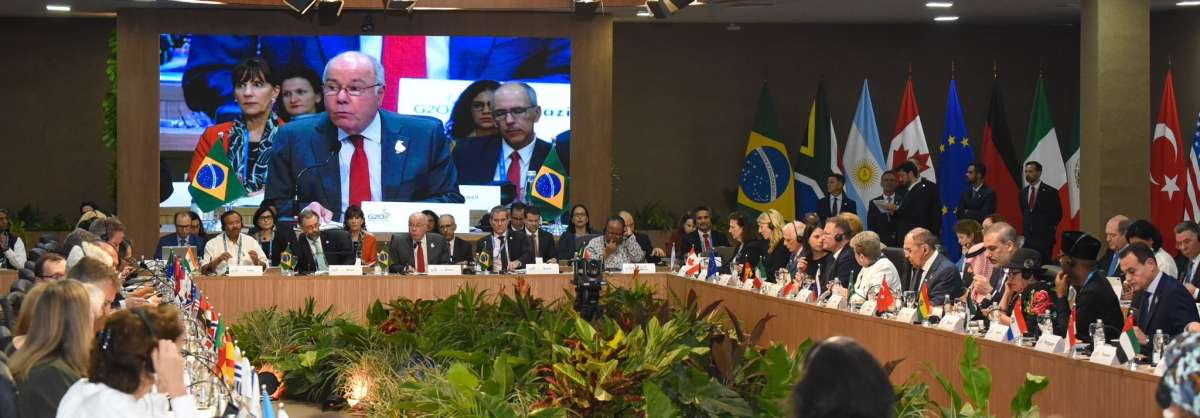
At the two-day G20 meeting in Rio De Janeiro, Brazil has denounced ‘paralysis’ of the UN Security Council over Gaza, Ukraine….reports Asian Lite News

As the G20 convenes in Rio de Janeiro, Brazil voiced frustration over the UN Security Council’s failure to address conflicts in Gaza and Ukraine.

Brazilian Foreign Minister Mauro Vieira highlighted the ineffectiveness of international institutions like the UN, citing the Security Council’s ‘paralysis.’

The ongoing crises in Gaza and Ukraine, Vieira argued, result in tragic loss of innocent lives. The G20, led by Brazil since December, had hoped to address such issues but faces challenges after former president Lula’s controversial remarks accusing Israel of “genocide.”

Despite efforts to de-escalate tensions, divisions persist within the G20, particularly concerning Russia’s actions in Ukraine. UK Foreign Secretary David Cameron plans to confront Russian aggression directly at the summit.

Meanwhile, Russian Foreign Minister Sergei Lavrov criticised the West for arming Ukraine and blamed the lack of political will for the conflict’s resolution.

US Secretary of State Antony Blinken expressed skepticism about diplomatic prospects for Ukraine. Alongside addressing conflicts, Brazil aims to prioritise poverty and climate change during its G20 presidency.

However, tensions may hinder bilateral discussions, including a potential encounter between Blinken and Lavrov. Established in 1999, the G20 initially focused on economic matters but has expanded its scope to include global political issues.

Amid recent struggles for consensus, the requirement for joint statements at G20 meetings has been waived, except for the annual leaders’ summit in November.

Recently, the Brazilian government had called its ambassador in Tel Aviv, Frederico Meyer, back to the country for consultations after President Luiz Inacio Lula da Silva voiced harsh criticism of Israeli attacks on the Gaza Strip, in response to the fact that Israel summoned the diplomat for statements, the Brazilian Foreign Ministry confirmed.

The Ministry said on Monday in a statement that Foreign Affairs Minister Mauro Vieira also summoned Israel’s ambassador in Brazil, Daniel Zonshine, Xinhua news agency reported.

The Israeli government declared Lula da Silva “persona non grata” on Monday. Lula da Silva on Sunday accused Israel of committing “genocide” against Palestinian civilians living in the Gaza Strip.

In January, Brazil joined South Africa in bringing a case of genocide against Israel at the International Court of Justice.

Last week, during a tour of Africa, Lula da Silva announced Brazil will make new contributions to the United Nations Relief and Works Agency for Palestine Refugees in the Near East (UNRWA).
Blinken Conveys US Disagreement to Lula on Israel

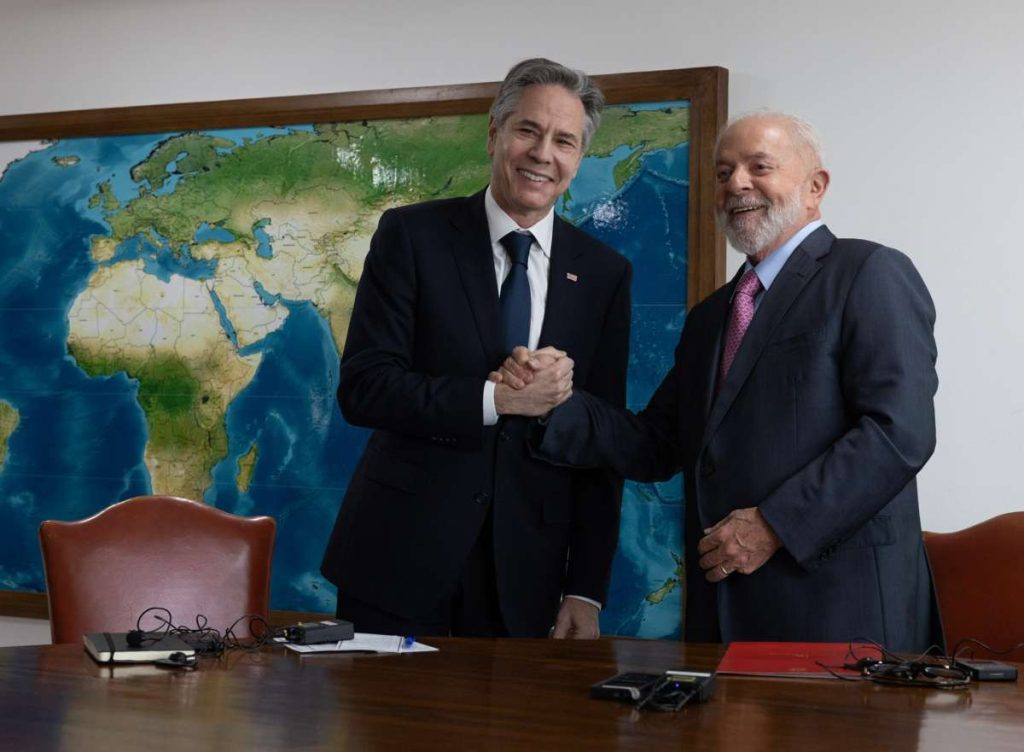
U.S. Secretary of State Antony Blinken and Brazilian President Luiz Inacio Lula da Silva engaged in a candid conversation on Wednesday, during which Blinken expressed the United States’ disagreement with Lula’s recent remarks regarding the conflict in Gaza, media reported.

Lula’s comparison of the situation in Gaza to the Nazi genocide during World War Two had led to a diplomatic rift with Israel, resulting in his exclusion from the country until he retracts his comments.

“I would say that it was a frank exchange, with the secretary making clear that we don’t agree with those comments,” Reuters quoted a senior State Department official as saying.

U.S. officials had previously said they expected Lula and Blinken to have a robust conversation on issues of global security, including the conflict in Gaza that was sparked by attacks in Israel by Hamas militants on Oct. 7, the Reuters reported.

Meanwhile, according to Brazil’s presidential office, the meeting, which lasted nearly two hours in Brasilia, covered various topics, including the G20 summit and peace efforts in Gaza and Ukraine.

Lula reiterated his commitment to peace and resolution in both regions, with a shared agreement on the necessity of establishing a Palestinian state, the Brazilian government said in a statement.

ALSO READ: Sheikh Mohammed Orders More Critical Supplies to Gaza

Previous Story

US Launches Network to Assess Cancer Screening Tech

Next Story

Biden Calls Putin A ‘Crazy ***’

Previous Story

US Launches Network to Assess Cancer Screening Tech

Next Story

Biden Calls Putin A ‘Crazy ***’

Latest from -Top News

Pakistan Risks Overstretching Itself in Yemen War

Pakistan’s expanding military role in Saudi Arabia amid the Yemen conflict could strain its defence resources and fragile finances…reports Asian Lite News Desk Pakistan’s military involvement in the war in Yemen may prove unsustainable because of mounting financial pressures and competing security demands, according to a new report. Islamabad’s growing military presence in Saudi Arabia risks stretching its defence resources while exposing the country to greater strategic and economic challenges. An article by Andrew Wilson in One World Outlook describes Pakistan’s involvement as a case of “fiscal and strategic overreach”, arguing that the country lacks the financial flexibility to sustain an expanded military commitment. Pakistan’s external finances depend heavily on an International Monetary Fund (IMF) programme, financial support from Gulf countries and remittances from Pakistani workers in the region. The report argues that deeper military involvement in the conflict could place additional pressure on these sources of financial stability. It also warns that deploying troops and military equipment abroad could weaken Pakistan’s capacity to address security challenges along its eastern border and deal with two domestic insurgencies. The move could also draw Islamabad into a conflict it has sought to approach cautiously. A Reuters report in May, citing Pakistani security and government sources, said Islamabad had deployed around 8,000 troops, a squadron of approximately 16 aircraft, mostly JF-17 fighter jets, two drone squadrons and a Chinese HQ-9 air-defence battery to Saudi Arabia. According to those sources, Riyadh was financing the deployment, with Pakistani personnel operating the equipment. The sources also said a confidential agreement contemplated the possibility of deploying up to 80,000 troops. Islamabad has not confirmed those figures, although it has acknowledged its military presence in Saudi Arabia, including the deployment of fighter jets at King Abdulaziz Air Base from April. The One World Outlook article argues that Saudi financial support can cover allowances and operating expenses but cannot easily replace military equipment needed elsewhere or resolve the political and strategic challenges of participating in the Yemen conflict. Pakistan’s defence budget is another concern. For the 2026-27 financial year, the federal government allocated PKR 3 trillion, or approximately $10.8 billion, to defence services. The allocation represents an 18 per cent increase from the original PKR 2.55 trillion provision and amounts to around 2.1 per cent of projected gross domestic product (GDP). Defence spending accounts for approximately 16 per cent of the federal government’s PKR 18.8 trillion expenditure. Military pensions are budgeted separately at PKR 822 billion, while debt servicing costs stand at approximately PKR 8 trillion, more than two-and-a-half times the defence allocation. The report argues that these competing financial obligations leave little room for additional military expenditure without placing further pressure on public finances. Pakistan’s reliance on IMF assistance also limits its fiscal flexibility. The country must meet the conditions attached to the programme, including a primary budget surplus target of 2 per cent of GDP and continued restraint on development spending. According to the article, these requirements make it difficult for Islamabad to finance an additional military commitment without compromising other budgetary priorities. Pakistan’s economic indicators offer limited reassurance. Economic growth for the 2025-26 financial year is estimated at between 3.6 and 3.7 per cent, while inflation reached approximately 10.3 per cent in September following an energy price shock. Foreign exchange reserves stood at around $21.5 billion at the end of September. Although this marks an improvement from the low levels recorded in 2023, the report notes that the reserves cover only a few months of imports. Financial assistance from Gulf partners remains central to Pakistan’s external stability. The article says Islamabad holds approximately $8 billion in Saudi deposits at its central bank. In July, the State Bank of Pakistan said Riyadh had extended the maturity of $5 billion in deposits to December 2028, easing the country’s immediate external financing requirements. A further $3 billion deposit was also extended in the spring. However, the article argues that these arrangements provide temporary relief rather than long-term financial independence, particularly as regional conflict threatens the stability of the Gulf economies on which Pakistan relies. The report concludes that Pakistan faces a difficult balance between supporting Saudi Arabia militarily and preserving the financial and military resources needed to address its domestic and regional challenges.
Go toTop

Don't Miss

‘Last 6 months saw worst Amazon wildfires in 2 decades’

This surge in wildfires presents a challenge for President Luiz

Lula: Brazil Won’t Bow to US

Trump said Brazil is a “horrible trading partner,” calling the