The meeting emphasised expanding joint research in transformative areas, including hydrogen technologies and sustainable innovation…reports Asian Lite News
India and Slovenia has announced a five-year plan to strengthen their scientific and technological collaboration in various areas.
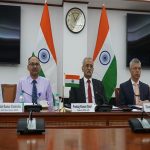
Union Minister of State (Independent Charge) for Science and Technology, Dr Jitendra Singh, and Slovenian Minister Dr Igor Papic, met here to finalise the Programme of Cooperation (PoC) for 2024–2029.
The meeting emphasised expanding joint research in transformative areas, including hydrogen technologies and sustainable innovation.
“We are happy to deepen our ties with Slovenia as we finalise the Programme of Cooperation (PoC) for five years. This initiative will open avenues for research and foster networks among scientists of both nations,” said Dr Singh.
With this move, India and Slovenia are set to embark on an ambitious new phase of scientific collaboration.
Dr Singh highlighted the success of existing collaborations, noting that over 20 joint projects have already been implemented in fields such as health, artificial intelligence, renewable energy and smart cities.
“This partnership has consistently delivered impactful results, and the new PoC will enhance cooperation across emerging research domains,” the minister said.
Dr Papic, accompanied by Slovenian Ambassador Mateja Vodeb Ghosh and Economic Counsellor Tea Pirih, hailed the opportunity to work closely on hydrogen technologies, a focus area critical to achieving global energy sustainability.
The India-Slovenia partnership, rooted in a 1995 agreement, has grown through programmes such as the Joint Working Group on Scientific and Technological Cooperation.
As both countries prepare for a Joint Committee meeting in Slovenia early next year, the new PoC promises to pave the way for further collaborative breakthroughs, said the government.
They also discussed plans for a new joint call for research projects, which will focus on mutually agreed areas to drive innovation and deepen academic and industrial connections between the two nations.
“With this renewed commitment, India and Slovenia are poised to set a benchmark for international cooperation in science and technology, contributing to global progress in critical fields,” the government said.
ALSO READ: India, the Forgotten Epicentre of Knowledge and Trade: Dalrymple