June 9, 2024
2 mins read

NASA awards over $10mn to 7 firms for Mars mission

Once completed, NASA aims to assess all studies to consider alterations or enhancements to the Mars Sample Return architecture….reports Asian Lite News

NASA on Saturday announced a grant of about $1.5 million each to seven companies for studies exploring more affordable and faster methods for the Mars sample return mission.

The companies, which include Lockheed Martin, SpaceX, Blue Origin, Quantum Space, and Northrop Grumman, will conduct ten three-month-long studies.

In addition, NASA centres, NASA’s Jet Propulsion Laboratory in Southern California, and Johns Hopkins’ Applied Physics Laboratory are also producing studies.

Once completed, NASA aims to assess all studies to consider alterations or enhancements to the Mars Sample Return architecture.

NASA Administrator Bill Nelson said that the Mars sample return mission “will be one of the most complex” that the US space agency has undertaken. He said, “It is critical to carry it out more quickly, with less risk, and at a lower cost.”

“I’m excited to see the vision that these companies, centres, and partners present as we look for fresh, exciting, and innovative ideas to uncover great cosmic secrets from the Red Planet,” Nelson said.

NASA has been engaging in several missions over the last century to determine the early history of Mars and to understand the formation and evolution of habitable worlds, including Earth.

NASA’s Mars Sample Return is a strategic partnership with ESA (the European Space Agency) that has been a long-term goal of international planetary exploration for the past two decades.

Apollo 8 astronaut Anders dies

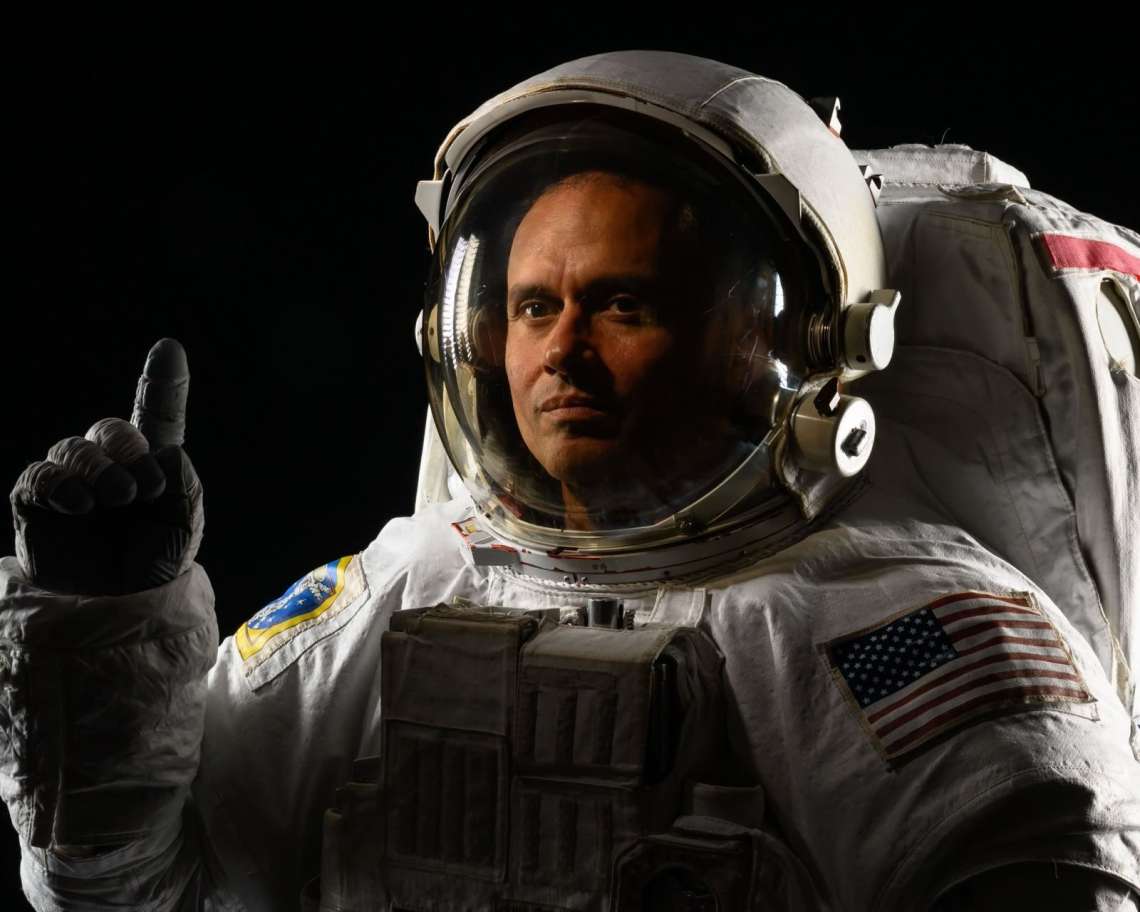
Former US astronaut William Anders, who was part of the Apollo 8 mission which saw the first crew orbit the moon in 1968, has died in a plane crash north-west of Seattle, US media reported on Friday citing his son. Anders was 90 years old.

He was flying alone in a small aircraft when it went down off the coast of Washington state, according to the reports. Authorities have launched an investigation into the cause of the crash.

During the Apollo 8 mission, Anders took the famous Earthrise photo which depicts the moon with the Earth “rising” in space in the background. The image has been credited with changing human perception of the planet and became a symbol for Earth’s fragility. Some even consider it to be the origin of today’s environmental movements.

“Anders offered to humanity among the deepest of gifts an astronaut can give,” NASA chief Bill Nelson wrote on X.

“He traveled to the threshold of the Moon and helped all of us see something else: ourselves. He embodied the lessons and the purpose of exploration. We will miss him.”

Following his NASA career, Anders served as US presidential adviser and US ambassador. He also worked for different nuclear energy and aviation companies, among others.

Most recently, Anders lived on the San Juan Islands off Washington state on the US north-west coast. He was married and had six children.
ALSO READ: David Cameron falls victim to hoax video call

Previous Story

CERT-In finds multiple vulnerabilities in Android

Next Story

UAE Foreign Minister chairs meeting of Education Council

Previous Story

CERT-In finds multiple vulnerabilities in Android

Next Story

UAE Foreign Minister chairs meeting of Education Council

Latest from -Top News

Pakistan Risks Overstretching Itself in Yemen War

Pakistan’s expanding military role in Saudi Arabia amid the Yemen conflict could strain its defence resources and fragile finances…reports Asian Lite News Desk Pakistan’s military involvement in the war in Yemen may prove unsustainable because of mounting financial pressures and competing security demands, according to a new report. Islamabad’s growing military presence in Saudi Arabia risks stretching its defence resources while exposing the country to greater strategic and economic challenges. An article by Andrew Wilson in One World Outlook describes Pakistan’s involvement as a case of “fiscal and strategic overreach”, arguing that the country lacks the financial flexibility to sustain an expanded military commitment. Pakistan’s external finances depend heavily on an International Monetary Fund (IMF) programme, financial support from Gulf countries and remittances from Pakistani workers in the region. The report argues that deeper military involvement in the conflict could place additional pressure on these sources of financial stability. It also warns that deploying troops and military equipment abroad could weaken Pakistan’s capacity to address security challenges along its eastern border and deal with two domestic insurgencies. The move could also draw Islamabad into a conflict it has sought to approach cautiously. A Reuters report in May, citing Pakistani security and government sources, said Islamabad had deployed around 8,000 troops, a squadron of approximately 16 aircraft, mostly JF-17 fighter jets, two drone squadrons and a Chinese HQ-9 air-defence battery to Saudi Arabia. According to those sources, Riyadh was financing the deployment, with Pakistani personnel operating the equipment. The sources also said a confidential agreement contemplated the possibility of deploying up to 80,000 troops. Islamabad has not confirmed those figures, although it has acknowledged its military presence in Saudi Arabia, including the deployment of fighter jets at King Abdulaziz Air Base from April. The One World Outlook article argues that Saudi financial support can cover allowances and operating expenses but cannot easily replace military equipment needed elsewhere or resolve the political and strategic challenges of participating in the Yemen conflict. Pakistan’s defence budget is another concern. For the 2026-27 financial year, the federal government allocated PKR 3 trillion, or approximately $10.8 billion, to defence services. The allocation represents an 18 per cent increase from the original PKR 2.55 trillion provision and amounts to around 2.1 per cent of projected gross domestic product (GDP). Defence spending accounts for approximately 16 per cent of the federal government’s PKR 18.8 trillion expenditure. Military pensions are budgeted separately at PKR 822 billion, while debt servicing costs stand at approximately PKR 8 trillion, more than two-and-a-half times the defence allocation. The report argues that these competing financial obligations leave little room for additional military expenditure without placing further pressure on public finances. Pakistan’s reliance on IMF assistance also limits its fiscal flexibility. The country must meet the conditions attached to the programme, including a primary budget surplus target of 2 per cent of GDP and continued restraint on development spending. According to the article, these requirements make it difficult for Islamabad to finance an additional military commitment without compromising other budgetary priorities. Pakistan’s economic indicators offer limited reassurance. Economic growth for the 2025-26 financial year is estimated at between 3.6 and 3.7 per cent, while inflation reached approximately 10.3 per cent in September following an energy price shock. Foreign exchange reserves stood at around $21.5 billion at the end of September. Although this marks an improvement from the low levels recorded in 2023, the report notes that the reserves cover only a few months of imports. Financial assistance from Gulf partners remains central to Pakistan’s external stability. The article says Islamabad holds approximately $8 billion in Saudi deposits at its central bank. In July, the State Bank of Pakistan said Riyadh had extended the maturity of $5 billion in deposits to December 2028, easing the country’s immediate external financing requirements. A further $3 billion deposit was also extended in the spring. However, the article argues that these arrangements provide temporary relief rather than long-term financial independence, particularly as regional conflict threatens the stability of the Gulf economies on which Pakistan relies. The report concludes that Pakistan faces a difficult balance between supporting Saudi Arabia militarily and preserving the financial and military resources needed to address its domestic and regional challenges.

UK and Germany Ratify Kensington Treaty

Britain and Germany ratify the Kensington Treaty, agreeing new cooperation on AI, quantum research, defence and security while targeting investment, jobs and Russian hybrid threats…reports Asian Lite News Desk Britain and Germany

Economic tide is turning in Bangladesh

If there is one thing that can bring some comfort to the struggling Bangladeshi economy, it is good relations with India. Bangladesh should remember that Delhi’s backing, through easy supplies of essentials
Go toTop

Don't Miss

NASA delays Moon missions, pushes back Artemis II to 2026 

NASA will continue stacking its SLS (Space Launch System) rocket

ISRO astronauts set for NASA training in Houston

NASA will have a hand in training two Indian astronauts,