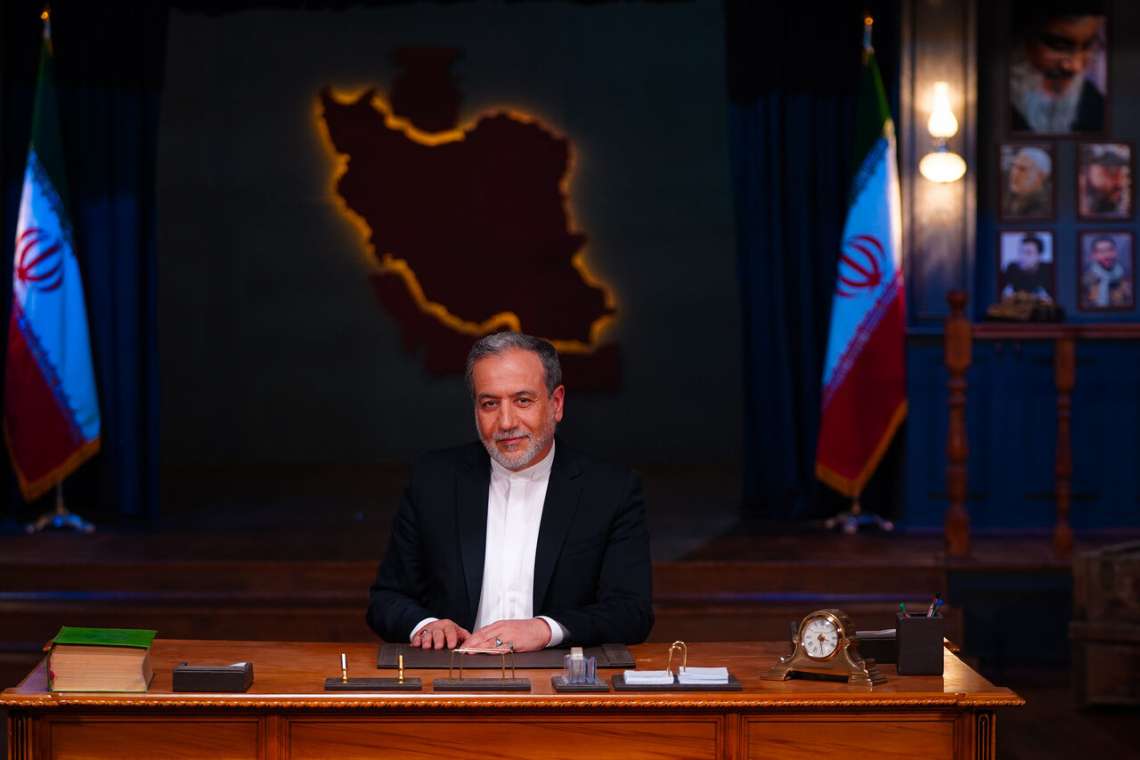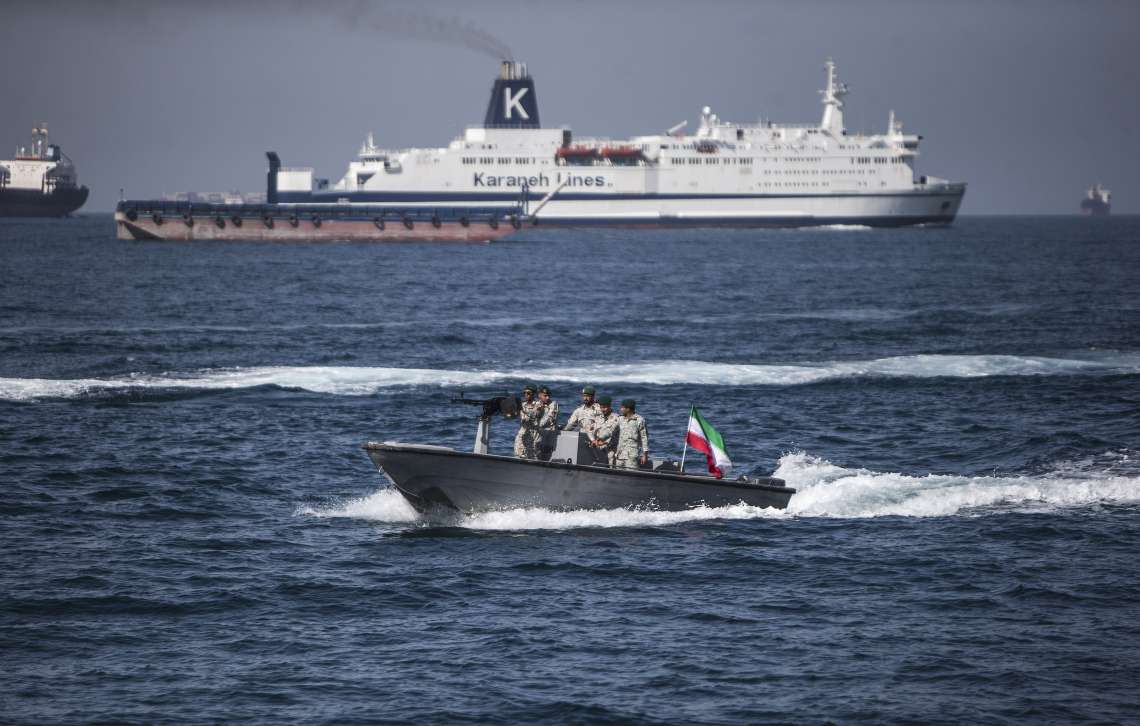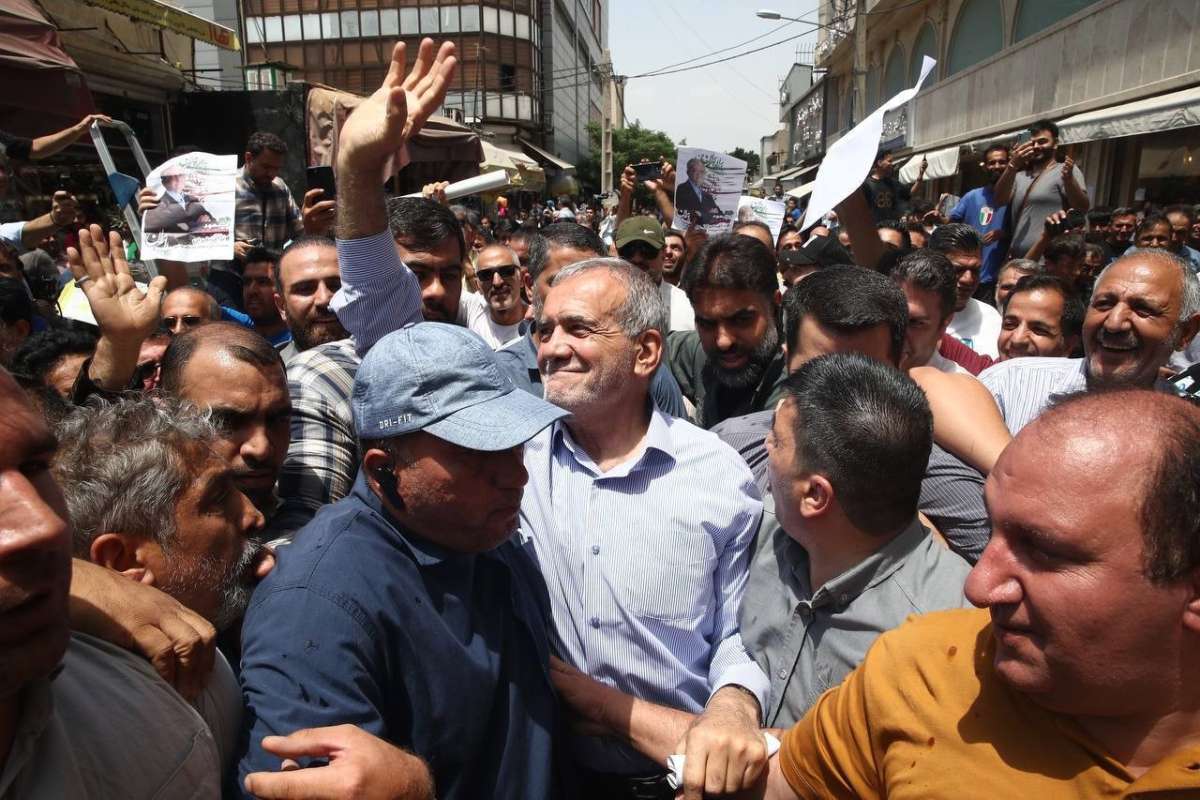
Masoud Pezeshkian will become the president of a country that is facing rising international isolation, internal discontent, a spiralling economy and the prospect of direct conflict with Israel.
Reformist candidate Masoud Pezeshkian has secured a win in the presidential elections in Iran, CNN reported, citing Press TV.
Out of 30.5 million votes counted in Friday’s runoff, Pezeshkian received over 16.3 million votes while his ultraconservative rival Saeed Jalili got more than 13.5 million votes, CNN said.
According to election headquarters under the auspices of the interior ministry, the voter turnout was 49.8 per cent in the Iran’s presidential elections, the report said.
Pezeshkian was elected in a second round of voting after he received the highest number of votes in the first round, ahead of Jalili. The first round witnessed lowest turnout for a presidential election since Iran was established in 1979.
He will become the president of a country that is facing rising international isolation, internal discontent, a spiralling economy and the prospect of direct conflict with Israel.
Snap elections were held in Iran after President Ebrahim Raisi died in a chopper crash along with Foreign Minister Hossein Amir-Abdollahian and other officials in Iran’s remote northwest in May.
Pezeshkian was the only reformist candidate who was contesting for the top elected seat in Iran after dozens of other candidates were stopped from running. He has backed holding talks with Iran’s foes, especially over its nuclear program and considers that as a means to address domestic issues in Iran.
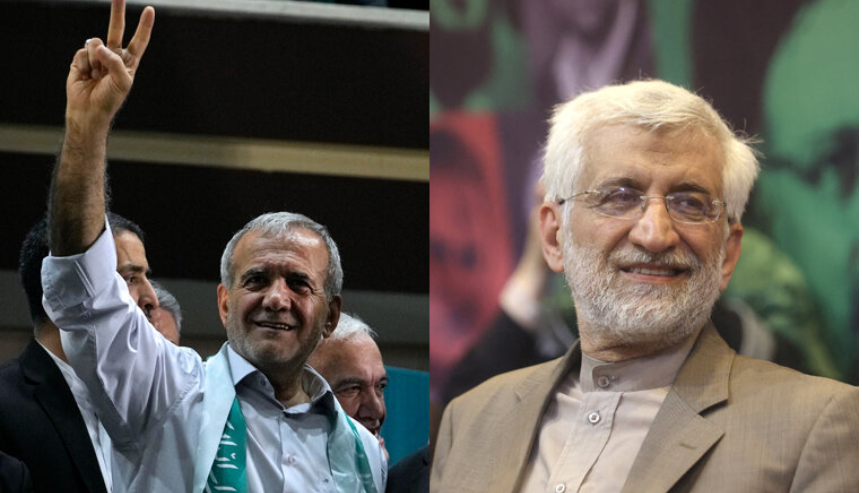
At a recent presidential debate, Pezeshkian said, “The primary issue is the perspective: Do we want to solve our problems with the world or not? I believe we must get out of the deadlock to solve the country’s problems.”
President in Iran enjoys some powers. However, the ultimate authority lies with Iran’s supreme leader, who has the final say on the matters of state.
Masoud Pezeshkian was a health minister under reformist president Mohammad Khatami. He is a trained heart surgeon and lawmaker. He gained the attention of people for his stance against the crackdown on the 2009 pro-democracy protests and the violence perpetrated by the notorious morality police in 2022 after Mahsa Amini’s death.
Mahsa Amini died in the custody of morality police after being detained for not following Iran’s strict dress code for women. Hundreds of people were killed and thousands were arrested as the authorities wanted to suppress the protest, CNN reported, citing the United Nations.
Amini died in the custody of the morality police after being detained for not adhering to the Islamic Republic’s strict dress code for women. Hundreds were killed and thousands arrested as the authorities sought to crush the protests, according to the United Nations.
During the 2022 protests, Pezeshkian, in an interview with Iran’s IRINN TV, said, “It is our fault. We want to implement religious faith through the use of force. This is scientifically impossible.”
He said, “I bear part of the blame, the distinguished religious scholars and the mosques bear part of the blame, and the (Iranian) broadcasting authority bears part of the blame.”
He added, “Everybody should step forward and be held accountable, rather than capture that girl, beat her up, and eventually deliver her body (to her family).”
Pezeshkian (69) has presented himself as a candidate for all the people of Iran. After he lost his wife and one of his children in a car crash in 1994, he devoted much of his time to politics. He ran for president in 2013 and 2021 polls. However, he was unable to make headway.
He hails from an ethnically mixed family. His father is Azeri and his mother is Kurdish and his mother tongue is not Persian. That has burnishe
The 69-year-old hails from an ethnically mixed family – his father is Azeri and his mother is Kurdish. Persian isn’t his mother tongue. That has burnished his image for minorities in Iran. However, it has him open to xenophobic attacks from some opponents.
According to experts, a more moderate face as Iran’s President could facilitate talks between Iran and Western nations. Pezeshkian might also bring some social changes, which he had talked about during his election campaign. However, experts have said that such moves are far from guaranteed.
Sanam Vakil, director of the Middle East and North Africa Programme at the Chatham House think tank in London, said it’s unlikely that Pezeshkian’s election would immediately translate into policy changes.
Vakil further said, “But Pezeshkian has made it clear that he will try to work through and within the system in order to perhaps accommodate a less repressive environment,” CNN reported.
She stated that reformist did not guarantee that he could make those changes, adding that this shows the limits of presidential powers in Iran. Vakil added, “But (it may add) a bit more room for maneuver on social freedoms.”
He will become Iran’s President at a time when Iran is facing escalating tensions with Israel and its western allies, triggered by the war between Israel and Hamas in Gaza and the advancement of Iran’s nuclear program.
A few months ago, Iran and Israel exchanged fire for the first time as the conflict in Gaza widened. Israel is now preparing for a potential second front against Hezbollah in Lebanon.
Last week, Iran’s mission to the United Nations said that should Israel “embark on full-scale military aggression” against Lebanon, then “an obliterating war will ensue,” CNN reported.
In a post on X, Iran’s mission to UN stated, “All options, including the full involvement of all Resistance Fronts, are on the table.”
In response, Israeli Foreign Minister Israel Katz said that “a regime that threatens destruction deserves to be destroyed.” According to experts, Pezeshkian is not expected to change the trajectory on Israel. (ANI)
ALSO READ: Iran voices concerns regarding Afghanistan in Doha meeting