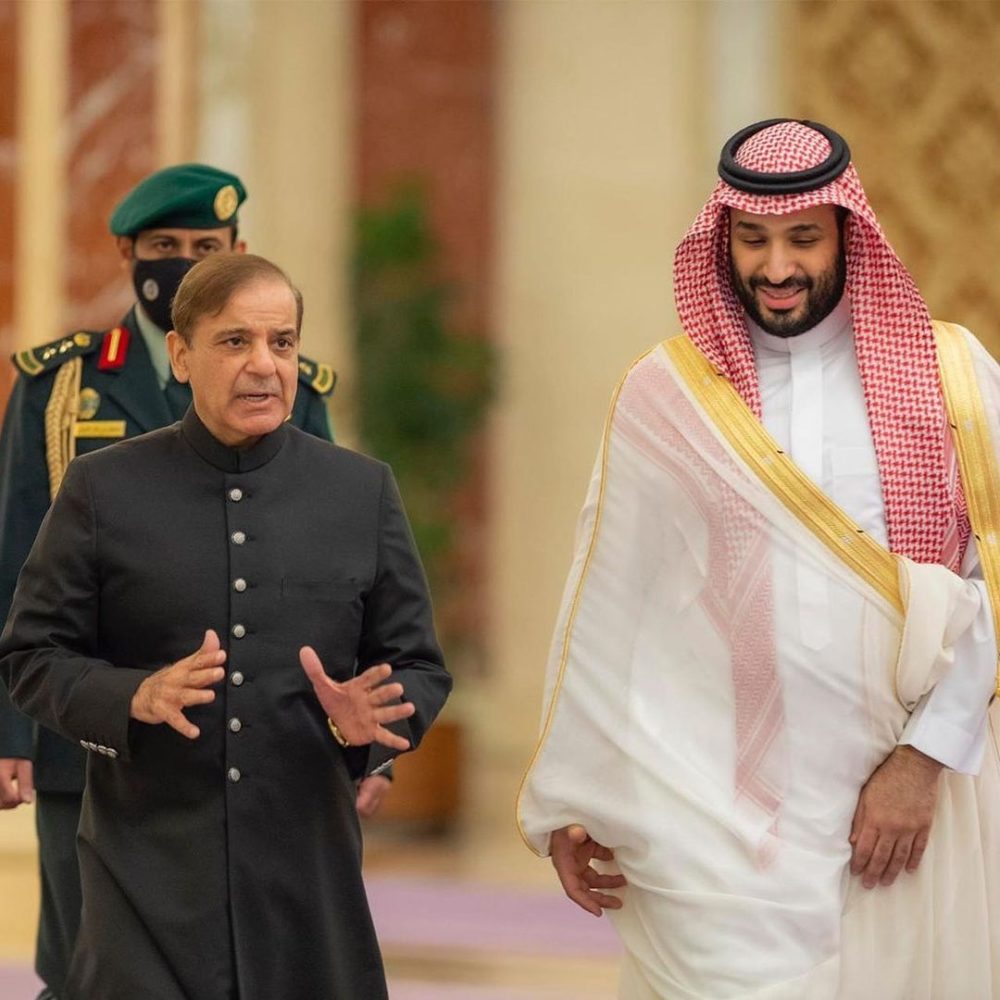
Trump criticised Harris for declining to attend Israel PM Benjamin Netanyahu’s recent address to Congress….reports Asian Lite News
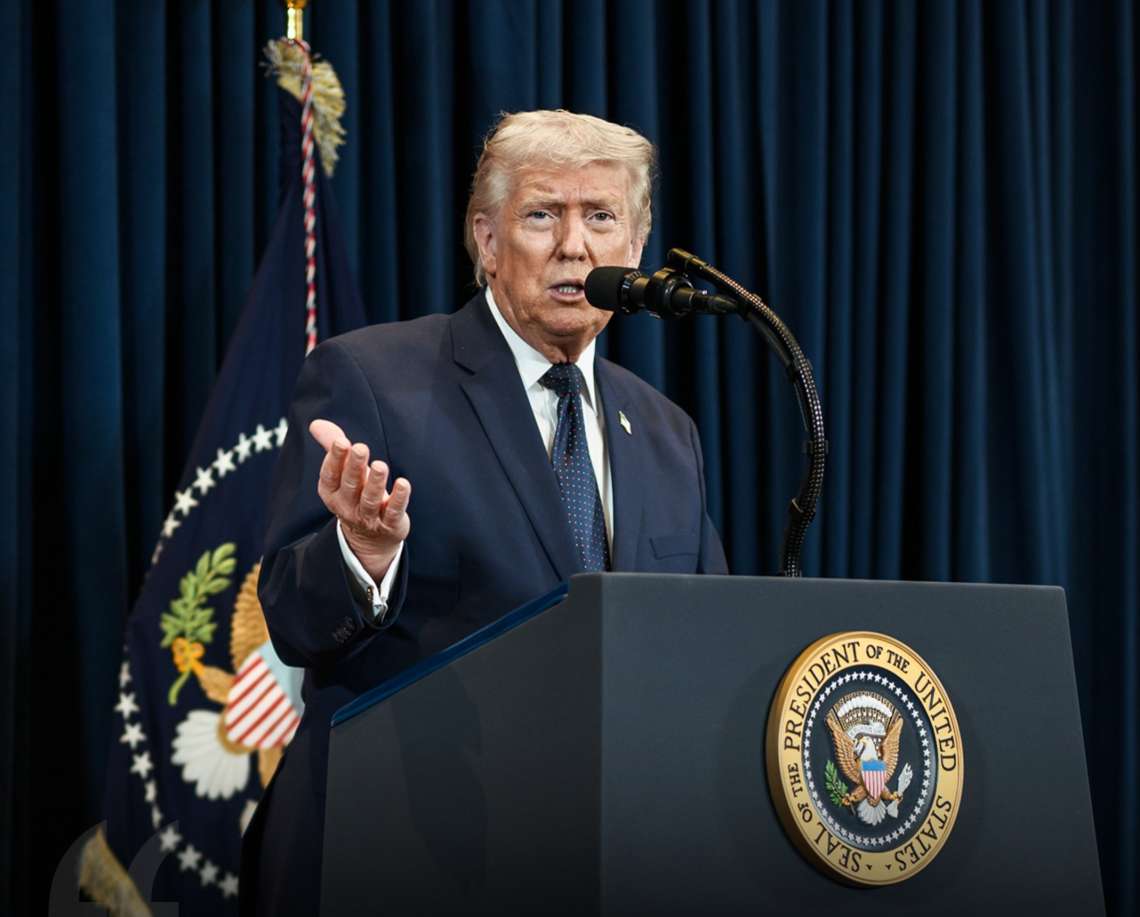
Former President Donald Trump ramped up his attacks against Vice President Kamala Harris, the likely Democrat nominee for the US presidential poll, in front of a conservative audience in Florida, claiming that she doesn’t like Jews and Israel.
Trump criticised Harris for declining to attend Israel PM Benjamin Netanyahu’s recent address to Congress.
“She doesn’t like Jewish people, she doesn’t like Israel,” he alleged about Harris whose husband, Doug Emhoff, is Jewish.
In his Friday’s address at the Turning Point USA’s Believers’ Summit in West Palm Beach, Florida, Trump asked the crowd, “Does everyone here understand the radical left ideology Kamala supports is really militantly hostile towards Americans of faith?”
Trump termed Harris as “the most incompetent, unpopular and far-left vice president in American history.”
The Republican nominee also called Harris a “bum”. “She was a bum three weeks ago,” Trump said adding. “She was a bum, a failed vice president.”
Kamala Harris’s campaign immediately responded to “Trump’s strange speech.”
“Donald Trump… insulted the faith of Jewish and Catholic Americans, lied about the election (again)… bragged about repealing Roe, proposed cutting billions in education funding, announced he would appoint more extremist judges, revealed he planned to fill a second Trump term with more criminals like himself, attacked lawful voting,” read a statement put out by her campign.
“America can do better than the bitter, bizarre, and backward looking delusions of criminal Donald Trump. Vice President Kamala Harris offers a vision for America’s future focused on freedom, opportunity, and security,” James Singer, a spokesperson for Harris’s campaign, said in a statement on Friday night.
Meanwhile, in his Florida address, Trump focused on reaching conservative voters and promised attendees that in a second term, we would once again “appoint rock solid conservative judges who will protect religious liberty”.
He also announced that he “just took off the last bandage” after his assassination attempt nearly two weeks ago. Trump also said that he will return to Butler, Pennsylvania, at the scene of the attempt on his life on July 13 to hold a “big and beautiful” rally to pay a tribute to firefighter Corey Comperatore, who died that day when struck by gunfire.
“We want to thank each and every one of the believers in this room for your prayers and your incredible support, I really did appreciate it,” said Trump at the event.
Trump asserted he “accepted” an “apology” from the FBI after Bureau confirmed he had been shot by a bullet during an assassination attempt earlier this month. The FBI confirmed Trump had been clipped in the ear by a gunman’s bullet, on July 13 at a Pennsylvania rally.
“What struck former President Trump in the ear was a bullet, whether whole or fragmented into smaller pieces, fired from the deceased subject’s rifle,” the bureau said in a statement. (ANI)
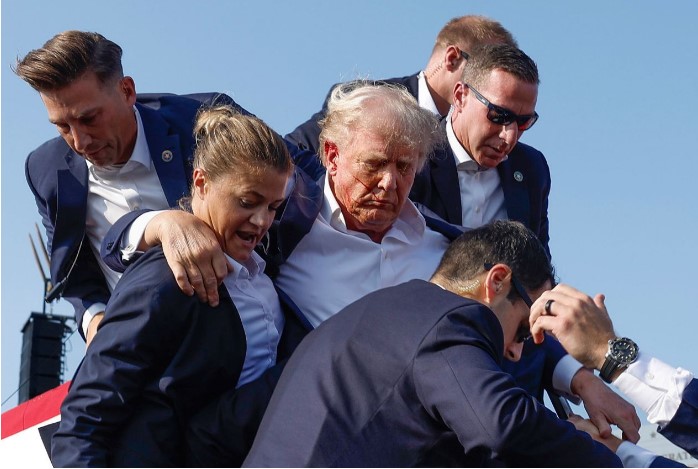
FBI says Trump was indeed struck by bullet
Nearly two weeks after Donald Trump’s near assassination, the FBI confirmed Friday that it was indeed a bullet that struck the former president’s ear, moving to clear up conflicting accounts about what caused the former president’s injuries after a gunman opened fire at a Pennsylvania rally.
“What struck former President Trump in the ear was a bullet, whether whole or fragmented into smaller pieces, fired from the deceased subject’s rifle,” the agency said in a statement.
The statement from the FBI marked the most definitive law enforcement account of Trump’s injuries and followed ambiguous comments earlier in the week from Director Christopher Wray that appeared to cast doubt on whether Trump had actually been hit by a bullet.
The comment drew fury from Trump and his allies and further stoked conspiracy theories that have flourished on both sides of the political aisle amid a dearth of information following the July 13 attack.
Up until now, federal law enforcement agents involved in the investigation, including the FBI and Secret Service, had repeatedly refused to provide information about what caused Trump’s injuries. Trump’s campaign has also declined to release medical records from the hospital where he was first treated or to make the doctors there available for questions.
Updates have instead come either from Trump himself or from Trump’s former White House doctor, Ronny Jackson, a staunch ally who who now represents Texas in Congress. Though Jackson has been treating Trump since the night of the attack, he has come under considerable scrutiny and is not Trump’s primary care physician.
The FBI’s apparent reluctance to immediately vouch for the former president’s version of events — along with the ire he and some supporters have directed at the bureau in the shooting’s aftermath — has also raised fresh tension between the Republican nominee and the nation’s premier federal law enforcement agency, which he could soon exert control over once again.
Trump and his supporters have repeatedly accused federal law enforcement of being weaponized against him.
Questions about the extent and nature of Trump’s wound began immediately after the attack, as his campaign and law enforcement officials declined to answer questions about his condition or the treatment he received after Trump narrowly escaped death in an attempted assassination by a gunman with a high-powered rifle.
Those questions have persisted despite photos showing the trace of a projectile speeding past Trump’s head, photographs that show Trump’s teleprompter glass intact after the shooting, and the account Trump himself gave in a Truth Social post within hours of the shooting saying he had been “shot with a bullet that pierced the upper part of my right ear.”
“I knew immediately that something was wrong in that I heard a whizzing sound, shots, and immediately felt the bullet ripping through the skin,” he wrote.
Days later, in a speech accepting the nomination at the Republican National Convention in Milwaukee, Trump described the horrific scene in detail, while wearing a large, white, gauze bandage over his right ear.
“I heard a loud whizzing sound and felt something hit me really, really hard, on my right ear. I said to myself, ‘Wow, what was that? It can only be a bullet,’” he said.
“If I had not moved my head at that very last instant,” Trump said, “the assassin’s bullet would have perfectly hit its mark, and I would not be here tonight.”
But the first medical account of Trump’s condition didn’t come until a full week after the shooting, when Jackson released his first letter last Saturday evening. In that letter, he said the bullet that struck Trump had “produced a 2 cm wide wound that extended down to the cartilaginous surface of the ear.” He also revealed that Trump had received a CT scan at the hospital.
But federal law enforcement involved in the investigation, including the FBI and Secret Service, had declined to confirm that account. And Wray’s testimony offered apparently conflicting answers on the issue.
“There’s some question about whether or not it’s a bullet or shrapnel that hit his ear,” Wray testified, before he seemed to suggest it was indeed a bullet.
“I don’t know whether that bullet, in addition to causing the grazing, could have also landed somewhere else,” he said.
The following day, the FBI sought to clarify matters with a statement affirming that the shooting was an “attempted assassination of former President Trump which resulted in his injury, as well as the death of a heroic father and the injuries of several other victims.” The FBI also said Thursday that its Shooting Reconstruction Team continues to examine bullet fragments and other evidence from the scene.
Jackson, who has been treating the former president since the night of the July 13 shooting, told The Associated Press on Thursday that any suggestion Trump’s ear was bloodied by anything other than a bullet was reckless.
“It was a bullet wound,” said Jackson. “You can’t make statements like that. It leads to all these conspiracy theories.”
In his letter Friday, Jackson insisted “there is absolutely no evidence” Trump was struck by anything other than a bullet and said it was “wrong and inappropriate to suggest anything else.”
He wrote that at Butler Memorial Hospital, where the GOP nominee was rushed after the shooting, he was evaluated and treated for a “Gunshot Wound to the Right Ear.”
“Having served as an Emergency Medicine physician for over 20 years in the United States Navy, including as a combat physician on the battlefield in Iraq,” he wrote, “I have treated many gunshot wounds in my career. Based on my direct observations of the injury, my relevant clinical background, and my significant experience evaluating and treating patients with similar wounds, I completely concur with the initial assessment and treatment provided by the doctors at nurses at Butler Memorial Hospital on the day of the shooting.”
The FBI declined to comment on the Jackson letters.
Asked if the campaign would release those hospital records, or allow the doctors who treated him there to speak, Trump campaign spokesperson Steven Cheung blasted the media for asking.
“The media has no shame in engaging in disgusting conspiracy theories,” he said. “The facts are the facts, and to question an abhorrent assassination attempt that ultimately cost a life and injured two others is beyond the pale.”
In emails last week, he told the AP that “medical readouts” had already been provided.
“It’s sad some people still don’t believe a shooting happened,” Cheung said, “even after one person was killed and others were injured.”
Anyone who believes the conspiracies, he added, “is either mentally deficient or willfully peddling falsehoods for political reasons.”
Sen. Lindsey Graham, R-S.C., a close Trump ally, also urged Wray to correct his testimony in a letter Friday to the FBI director, saying the fact Trump had been hit by a bullet “was made clear in briefings my office received and should not be a point of contention.”
“As head of the FBI, you should not be creating confusion about such matters, as it further undercuts the agency’s credibility with millions of Americans,” he wrote.
Trump also lashed out at Wray in a post on his Truth Social network, saying it was “No wonder the once storied FBI has lost the confidence of America!”
“No, it was, unfortunately, a bullet that hit my ear, and hit it hard. There was no glass, there was no shrapnel,” he wrote.
On Friday, he called Wray’s comments “so damaging to the Great People that work in the FBI.”
Jackson has faced significant scrutiny over the years.
After administering a physical to Trump in 2018, he drew headlines for suggesting that “if he had a healthier diet over the last 20 years, he might live to be 200 years old.”
He was reportedly demoted by the Navy after the Department of Defense inspector general released a scathing report on his conduct as a top White House physician that found Jackson had made “sexual and denigrating” comments about a female subordinates and took prescription-strength sleeping medication that prompted worries from his colleagues about his ability to provide proper medical care.
ALSO READ: Modi To Visit Ukraine, First Since Russia’s Invasion