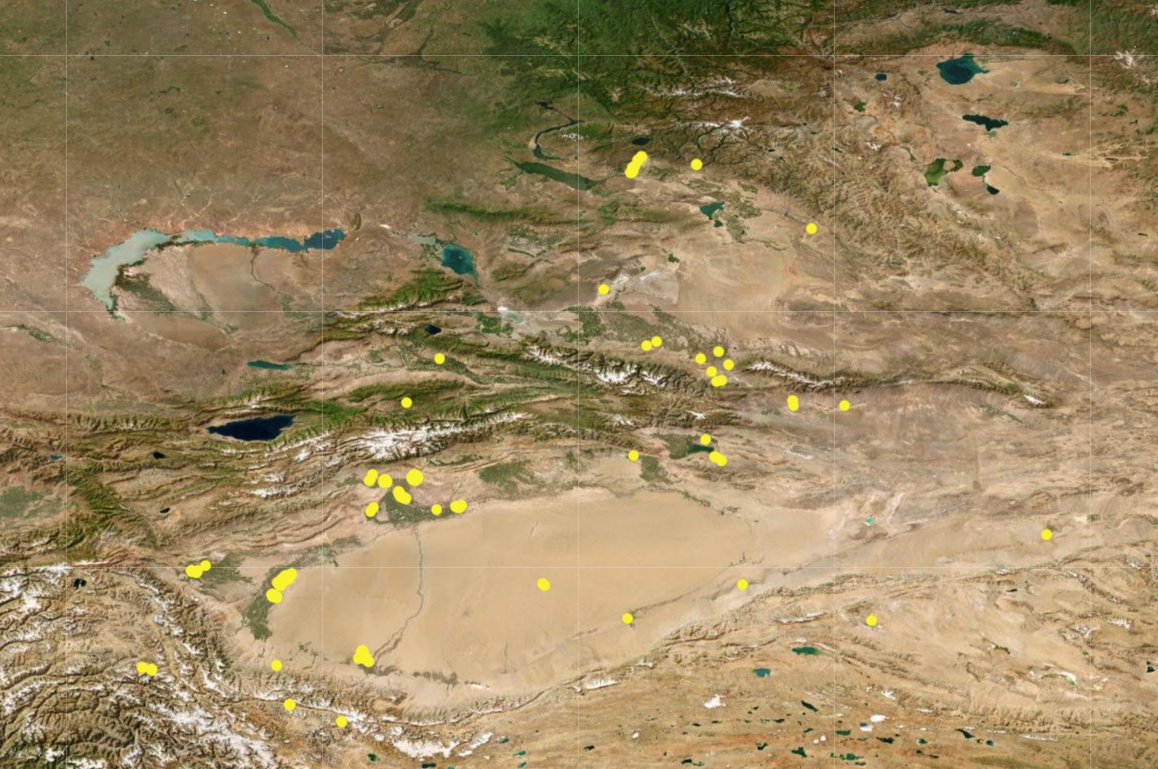
Recent reports reveal ongoing construction and expansion of military infrastructure, such as barracks and training facilities….reports Asian Lite News
China has been intensifying its military presence in Xinjiang as part of its efforts to assert authority over the region, said Uyghur leader, adding that the Chinese have already built over 360 military installations, including airbases and heliports.
Recent reports reveal ongoing construction and expansion of military infrastructure, such as barracks and training facilities.
Geopolitical analyses from entities like the United States Department of Defence and global think tanks underscore these developments, viewing them within China’s larger strategy.
Foreign Affairs and Security Minister of East Turkistan Government in Exile and the Uyghur leader, Salih Hudayar stated in a post on X, “The Chinese invaders have built over 360 military installations, including airbases and heliports, across occupied East Turkistan, not even counting China’s PAP and XPCC bases. This overwhelming military presence isn’t a demonstration of power–it’s a glaring admission of fear.”
East Turkistan loosely includes the area designated as the “Xinjiang” Uyghur Autonomous Region.
On September 14, 2004, the East Turkistan Government in Exile was established in Washington, DC. This declaration was made by members of the worldwide East Turkistani community, led by Anwar Yusuf Turani.
In his post, Salih further stated, “Beijing’s desperate attempts to maintain its occupation reveal deep anxiety about losing their grip on East Turkistan, the Achilles’ heel of their empire. The massive military, paramilitary, and police presence, along with their ongoing campaign to annihilate the East Turkistani people, expose China’s profound vulnerability and fear of resistance.”
The situation in Xinjiang has been marked by significant geopolitical tensions and human rights concerns. The region is home to the Uyghurs and other predominantly Muslim ethnic groups, who have faced increasing scrutiny and repression from the Chinese government in recent years.
In recent decades, the Chinese government has implemented policies aimed at assimilating and controlling the Uyghur population in Xinjiang.
These policies include strict surveillance measures, cultural and religious repression, forced labour programs and mass internment camps euphemistically termed “re-education centres.”
The Chinese authorities, on the other hand, justify these actions as necessary for countering terrorism and maintaining stability in the region.
The international community, including human rights organisations and several Western governments, has condemned China’s policies in Xinjiang.
Reports of human rights abuses, including forced labour, arbitrary detention, and cultural suppression, have drawn widespread criticism and calls for accountability. (ANI)
ALSO READ: NATO leaders pledge $43 bn in military aid to Ukraine