December 13, 2024
4 mins read

Govt announces new funding for UNRWA 

Starmer gave his condolences to the agency for the deaths of staff members killed in Gaza…reports Asian Lite News

Prime Minister Keir Starmer has pledged an additional £13 million ($16.56 million) to the UN Relief and Works Agency for Palestine Refugees. The announcement followed a meeting between him and UNRWA chief Philippe Lazzarini in London. 

Starmer gave his condolences to the agency for the deaths of staff members killed in Gaza. The pair agreed that more needs to be done to protect aid workers in the Palestinian enclave, and reiterated their calls for an immediate ceasefire and the release of all hostages held by Hamas. 

The money will come on top of the £21 million per year already given to UNRWA by the UK, which was temporarily suspended by the former government after Israel accused 12 agency members of taking part in the Oct. 7 Hamas attack in 2023. 

Foreign Secretary David Lammy said he was “reassured” that UNRWA met UK government standards for vetting employees following an independent review of the situation. 

UNRWA was established in 1949 to help Palestinian refugees. In October, Israel banned it from operating in its territory, hampering its ability to operate in the Occupied Territories. 

Starmer condemned the decision, saying it had left him “gravely concerned” and would make it “impossible” for vital work to be done helping displaced and vulnerable Palestinian civilians. 

Last month, Israel withdrew its recognition of the United Nations Relief and Works Agency, Israeli Ambassador to the UN Danny Danon tweeted on Monday morning. 

Danon tweeted a copy of a letter notifying Secretary General Antonio Guterres. The development follows up on the Knesset passing legislation barring Israeli officials from cooperating with the embattled UN agency. 

“Following the legislation on UNRWA, the State of Israel officially notified the President of the General Assembly of the termination of cooperation with the agency,” Danon tweeted. 

“Despite the overwhelming evidence we submitted to the UN that substantiate Hamas’ infiltration of UNRWA, the UN did nothing to rectify the situation. The State of Israel will continue to cooperate with humanitarian organizations but not with organizations that promote terrorism against us.” 

UNRWA has been under fire for months, with Israeli officials demanding the agency be stripped of its authority in Gaza and defunded amid revelations that members of the agency’s staff participated in Hamas’s October 7 attacks. 

Palestinian refugees are the only refugee population with its own dedicated UN agency. The rest of the world’s refugees fall under the mandate of the UN High Commissioner for Refugees. 

More than 100 survivors of Hamas’s October 7 attacks filed a $1 billion lawsuit against UNRWA in June, accusing the agency of “aiding and abetting” the terror group. According to the suit, the lead plaintiff, 84-year-old Ditza Heiman of Kibbutz Nir Oz, was held captive for seven weeks in the home of a Palestinian man who said he was a UNRWA teacher at a boy’s school. 

Israel’s largest bank froze UNRWA’s account in February over suspicious financial transfers that the agency failed to adequately explain. That same month, Israeli forces discovered a Hamas complex located directly under the UNRWA’s Gaza City headquarters and connected directly to the agency’s electricity system. The facility included numerous computer servers belonging to the terror group. 

UNRWA was also ordered to vacate its Jerusalem offices in May over lease violations. 

At least 1,200 people were killed, and 252 Israelis and foreigners were taken hostage in Hamas’s attacks on Israeli communities near the Gaza border on October 7. Of the 97 remaining hostages, more than 30 have been declared dead. Hamas has also been holding captive two Israeli civilians since 2014 and 2015, and the bodies of two soldiers killed in 2014.  

Israeli conducts airstrikes  

Israel launched airstrikes on Hamas terrorists in southern Gaza overnight after intelligence determined they were gathering at two locations to hijack humanitarian aid trucks, the Israel Defense Forces disclosed on Thursday. 

“The terrorists operated on the humanitarian corridor in the southern Gaza Strip. The strike was intended to ensure the safe delivery of humanitarian aid to civilians in the Gaza Strip,” the army said. “All of the terrorists that were eliminated were members of Hamas and planned to violently hijack humanitarian aid trucks and transfer them to Hamas in support of continuing terrorist activity, preventing them from reaching Gazan civilians, as was done in previous cases.” 

The IDF stressed that no delivery trucks were struck and that the humanitarian corridor remains open for aid deliveries. 

Since mid-November, Hamas and criminal gangs associated with the terror group stepped up their stealing of deliveries of food, water, medicine and other humanitarian supplies. At one point, 85% of all trucks entering the Strip were hijacked. The Press Service of Israel has learned that Hamas has granted distribution lines to these groups to ensure that humanitarian aid exclusively reaches Hamas. In return, these gangs receive money, food and vouchers. Hamas also pays these gangs USD 10,000 a month to maintain checkpoints. 

Meanwhile, sacks of flour and rice donated by the West are being sold for USD 700 and USD 500 respectively while a pack of cigarettes costs USD 1,500. In September, Palestinian sources told TPS-IL that Hamas was charging $800 for donated tents. 

ALSO READ: Regulator finds serious failings at Castle Point Borough Council   

ALSO READ: ‘Every pound spent will deliver Plan for Change’  

Previous Story

UK has ‘unique opportunity’ to bolster Gulf relations, forum told 

Next Story

More trains between Bristol and Oxford 

Previous Story

UK has ‘unique opportunity’ to bolster Gulf relations, forum told 

Next Story

More trains between Bristol and Oxford 

Latest from -Top News

Nepal Floods Cause $1.66 Billion In Damage, Says World Bank

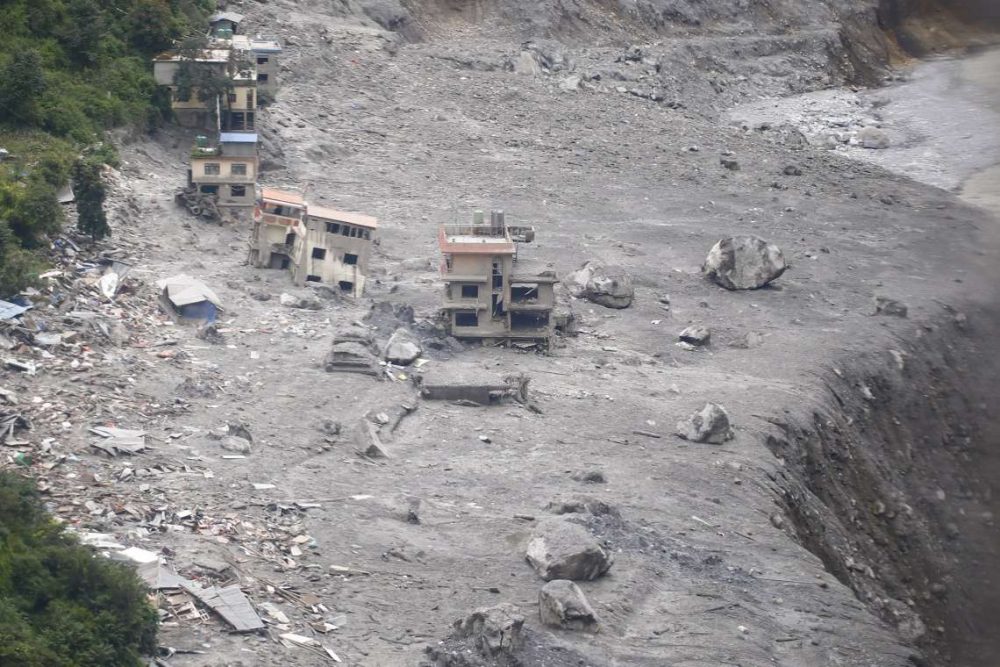
Nepal’s August 2026 floods caused an estimated US$1.66 billion in direct physical damage, with infrastructure accounting for 83 per cent of the total…reports Asian Lite News Desk Nepal’s devastating floods in August 2026 caused an estimated US$1.66 billion in direct physical damage, with infrastructure accounting for 83 per cent of the total, according to a World Bank report. The estimate, included in the World Bank’s Nepal Development Update unveiled this week, is close to the Nepal government’s preliminary Rapid Damage and Needs Assessment (RDNA), which put physical damage at US$1.81 billion. The government’s assessment also estimated losses beyond physical assets at US$883.32 million, taking the total economic effects of the disaster to approximately US$2.7 billion. The World Bank’s Global Rapid Post-Disaster Damage Estimation (GRADE) found that infrastructure suffered the greatest damage, estimated at US$1.38 billion, or 83 per cent of the total. Residential buildings accounted for US$185 million, or 11 per cent, while non-residential buildings sustained damage worth US$101 million, or 6 per cent. The floods along the Bhotekoshi and Trishuli rivers caused extensive damage to hydropower projects, solar energy facilities, electricity transmission infrastructure and transport networks. The energy sector, particularly hydropower, was among the worst affected. The August 2026 floods affected 12 hydropower projects and one solar project, involving 281.1 MW of operational capacity and 395.02 MW of capacity under construction. Damage to transmission lines and substations also disrupted the transmission of 149.6 MW of electricity to the national grid. The total affected capacity reached approximately 430.7 MW, equivalent to 10.6 per cent of Nepal’s installed hydropower and solar capacity at the end of fiscal year 2025-26, which concluded in mid-July. The disaster also severely damaged transport infrastructure along the 82-km Rasuwa trade corridor, which connects Kathmandu with the Rasuwagadhi border point with China. More than 55 km of the corridor was damaged, including 40 km that was completely destroyed. The floods also damaged 37 motorable bridges and 68 suspension bridges. The disaster resulted in significant human losses along the affected corridor and beyond. According to Nepal’s National Disaster Risk Reduction and Management Authority, 1,455 people had been confirmed dead, while 5,285 remained missing following the disaster. The World Bank report found that the physical damage was concentrated in three districts in central Nepal: Rasuwa, Nuwakot and Dhading. Rasuwa was the worst-affected district, accounting for US$1.07 billion, or 64 per cent, of the total direct damage. Nuwakot recorded an estimated US$551 million in damage, while Dhading suffered approximately US$39 million. “The findings highlight the concentration of physical damage in a small number of districts and the disproportionate impact on infrastructure, underscoring the scale of the reconstruction challenge facing the affected areas,” the World Bank said. The global development financier said the floods had demonstrated the scale and complexity of disaster risks in Nepal’s Himalayan environment. The event also showed how a single extreme weather event could trigger cascading impacts across sectors and geographical areas. The report said recovery efforts should extend beyond restoring infrastructure to its pre-disaster condition. While the principle of “Build Back Better” remained relevant, the World Bank stressed that rebuilding infrastructure to higher engineering standards in the same locations might not always be sufficient. “In some cases, simply rebuilding the same infrastructure in the same location to a higher engineering standard may not be sufficient. Nepal may need to build differently — based on a better understanding of risk, more careful decisions about location and design, greater redundancy in critical networks, stronger monitoring and early warning, and a more integrated approach to infrastructure development in the Himalayas,” the report said. The World Bank said Nepal’s recovery strategy should incorporate improved risk assessment, more informed infrastructure planning, stronger monitoring systems and better early warning mechanisms. The report emphasised that reconstruction should not only restore damaged assets but also reduce the impact of future disasters, particularly in the country’s vulnerable Himalayan regions.

Vaccine Delays Fuel Bangladesh Measles Outbreak

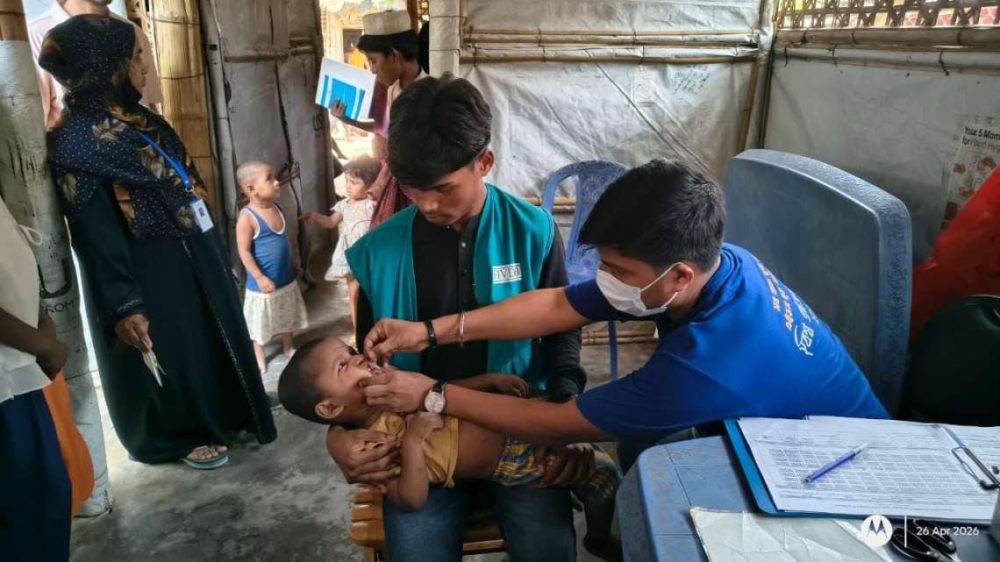
More than 32,000 suspected cases and over 250 deaths have been reported since mid-March, with children making up most of the fatalities….reports Asian Lite News Desk Bangladesh’s measles outbreak has intensified, with

Tsai: Stand With Taiwan, Strengthen The Indo-Pacific

The former president said stronger international partnerships would help Taiwan withstand mounting military, cyber and economic pressure while reinforcing democratic resilience….repots Asian Lite News Desk Former Taiwan President Tsai Ing-wen has called
Go toTop

Don't Miss

Job vacancies hit record high amid worker shortages

Though there’s a shortfall in workers, the statistics agency said

UK sanctions 22 individuals linked to int’l corruption

22 Individuals across various countries also targeted with the measures