A growing number of academics have backed students’ demands that their universities cut ties with companies supplying arms to Israel…reports Asian Lite News
Academics have called on the government to avoid “inflaming” the situation on British campuses, as students protest against the war in Gaza and their universities’ links to Israel.
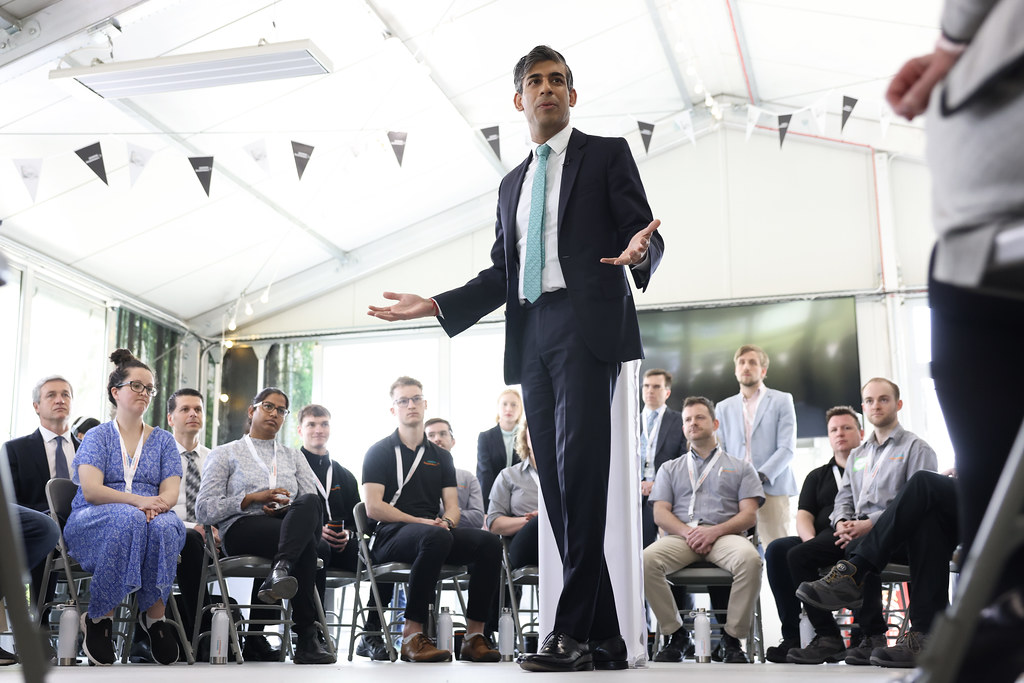
Some senior staff accused Rishi Sunak of “scaremongering” by summoning vice-chancellors to Downing Street last Thursday to urge them to “take personal responsibility” for protecting Jewish students.
There are now 15 student protest encampments across England and Scotland, although vice-chancellors and academics say they are overwhelmingly peaceful, unlike the dramatic scenes on US college campuses, where hundreds of students and faculty members have been arrested.
Prof Steve West, former president of Universities UK who is vice-chancellor of the University of the West of England in Bristol, said there was “no evidence” student protests in the UK were getting out of hand. He said: “I would say to the government: please work with us to make sure we don’t inadvertently inflame a situation that is currently being managed well.”
West told the Observer: “We are trying to straddle complex and nuanced issues and manage tensions with an understanding of our own university environment, our staff and our students. I would argue that we are better placed to manage that than any member of government.”
A growing number of academics have backed students’ demands that their universities cut ties with companies supplying arms to Israel.
Hundreds of staff at universities including Cambridge, Oxford and Edinburgh have signed open letters expressing solidarity with the students camping out in tents and accusing their universities of complicity in Israeli attacks on Palestinians in Gaza. Staff are also giving food, sleeping bags and hot water bottles. Members of the University and Colleges Union at Leeds University have called for academics to organise talks or “teach outs” alongside the tents.
Vice-chancellors insist they have no desire to quell challenge or stop difficult discussions on their campuses, arguing that this is part of the core purpose of a university. But the Union of Jewish Students (UJS) has called on them to ensure that Jewish students feel safe.
Oxford professor Naomi Waltham-Smith, who has signed the Oxford pro-Palestinian solidarity letter, said: “One might say the prime minister’s actions this week were an attempt to scaremonger that we might see unlawful actions. I think it is irresponsible to raise anxieties among students.”
She argued that students’ “sense of security” was threatened far more by “other issues the government isn’t addressing”, including funding of universities, the cost of living crisis and the “crisis of productivity” that students would graduate into.
Waltham-Smith described the atmosphere at the Oxford encampment she visited this week as peaceful and “more like an extension of a tutorial”. I overheard students chatting in some depth about geopolitical issues and disagreeing but in reasoned intellectual conversations,” she said.
Edward Isaacs, the president of the UJS, told a round table hosted by the prime minister on Friday that they were in the middle of “the worst antisemitism crisis on campus that we have seen for a generation”. He cited hundreds of calls to the UJS’s welfare hotline, and told the 17 vice-chancellors present that Jewish students felt “alone, marginalised and vulnerable ”.
Downing Street said the discussions on Thursday covered the importance of using disciplinary procedures to crack down on any students who incited hatred or violence, as well as concerns over non-students joining campus protests and the role of the police.
Nick Hillman, director of the Higher Education Policy Institute thinktank, said: “Vice-chancellors are definitely right not to invite police on to campus. That is something you regret for decades as the images live on in people’s minds.”
Academic freedom gave university staff more “room to manoeuvre” than employees in many other professions. But Hillman added: “It is reasonable to ask, as an academic, whether some of your students will feel less safe as a result of you signing this letter.”
ALSO READ-Fresh Blow For Sunak As Elphicke Defects