The anticipated credit boom signals a structural shift in banks’ role, transforming them from passive supporters of economic activity to strategic drivers of India’s next wave of industrial expansion
India is poised to embark on one of its most significant investment upcycles in decades, with a new report projecting an unprecedented Rs 200 lakh crore in corporate capital expenditure over the next five years. The findings, released by OmniScience Capital, mark a defining moment for India Inc. after nearly ten years of cautious spending, deleveraging, and balance-sheet repair.
According to the report, Indian corporates have emerged from a decade of structural deleveraging with exceptionally strong fundamentals — clean balance sheets, multi-year-high profitability, and improving asset utilisation. These conditions, combined with a robust macroeconomic backdrop, have positioned the country for what analysts describe as a “corporate capex super cycle” that could shape India’s growth trajectory through the decade.
One of the biggest beneficiaries of this capex surge will be India’s banking sector. OmniScience Capital estimates that banks could capture nearly half of the projected corporate borrowing — around Rs 99.50 lakh crore — over the next five years. Based on RBI’s FY24 corporate credit stock, this translates into a potential 16 per cent compounded annual growth rate (CAGR) in corporate credit, a sharp revival compared to the near-flat credit growth of the last decade.
The report notes that the banking system is entering this phase from a position of strength. After years of provisioning, consolidation, and capital infusion, both public and private sector banks are well-capitalised and exhibit healthier asset quality. “This dual recovery — healthy borrowers and well-capitalised lenders — has created a powerful, long-term investment opportunity,” the report said.
The anticipated credit boom signals a structural shift in banks’ role, transforming them from passive supporters of economic activity to strategic drivers of India’s next wave of industrial expansion.
While private sector capex is set to dominate the investment cycle, the central and state governments will reinforce this momentum with their own infrastructure spending. The report highlights a massive projected government-driven capex of Rs 96 lakh crore over the next five years.
Large-scale investments in roads, railways, ports, airports, renewable energy, and urban infrastructure have already begun reshaping the economic landscape. This sustained public expenditure serves as a critical catalyst, crowding in private investment and accelerating capacity expansion across sectors.
Multiple structural and cyclical factors are expected to support India’s credit and capex revival. A stabilised and rationalised GST framework, income tax cuts, and an upcoming monetary policy easing cycle are expected to bolster consumer demand.
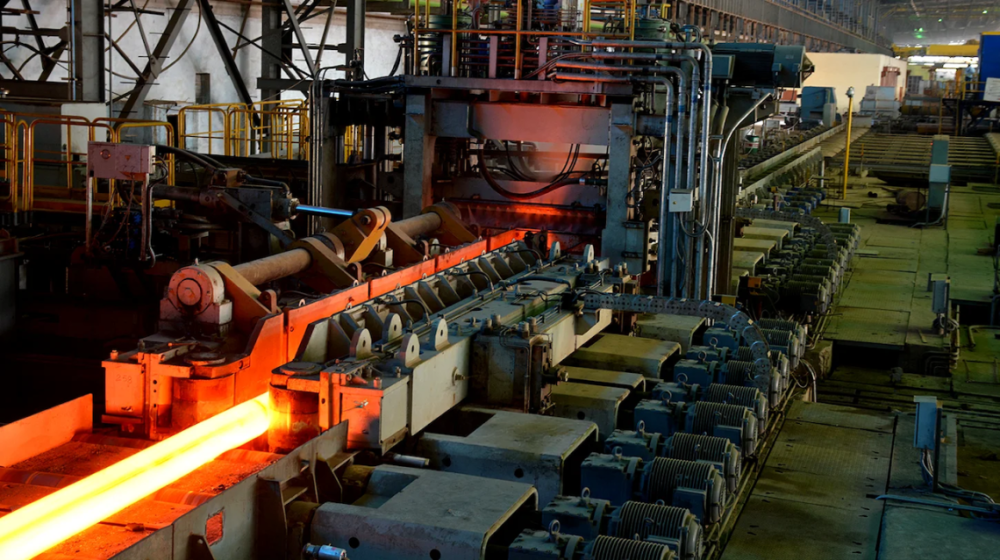
Additionally, India’s manufacturing capacity utilisation is steadily rising, inching toward the 75–80 per cent threshold that typically triggers fresh private investment. Once this threshold is sustainably breached, broad-based capacity creation across sectors such as steel, cement, automobiles, electronics, petrochemicals, and energy is expected.
Already the world’s fourth-largest economy, India is projected to become the third-largest by 2030 with a GDP of $7.3 trillion. The projected capex boom is widely seen as integral to this transformation.
India’s economic ascent reflects not just cyclical momentum but also the impact of long-term structural reforms, including the Insolvency and Bankruptcy Code (IBC), corporate tax cuts, improved ease of doing business, and the rollout of transformative digital infrastructure.
The report highlights India’s deepening integration with global supply chains, aided by geopolitical shifts, supply-chain diversification, and targeted industrial incentives such as the Production-Linked Incentive (PLI) schemes. These factors have collectively strengthened India’s position as a global investment destination.
The combination of healthy corporate and bank balance sheets, strong domestic demand, government-led infrastructure expansion, and a stable policy environment has created ideal conditions for a long-term capex super cycle. If realised, the projected Rs 200 lakh crore investment wave will not only fuel economic growth but also reshape India’s industrial, financial, and infrastructure landscape.
For investors, lenders, policymakers, and businesses, the next five years could mark one of the most transformative phases in India’s modern economic history — one that sets the foundation for the nation’s journey toward becoming a global economic powerhouse.